
能源密集型产业

Search documents
颠覆自贸理念?欧盟要推“含欧量”标签
Huan Qiu Shi Bao· 2026-01-18 22:58
Group 1 - The European Commission is preparing to unveil a proposal called the "Industrial Accelerator Act," which may disrupt decades of free trade policies by imposing strict conditions on foreign investments exceeding 100 million euros, including technology sharing, local hiring, and joint ventures with European companies [1] - The act aims to promote decarbonization in energy-intensive industries while maintaining Europe's production competitiveness, as the region faces ongoing industrial slowdowns, with EU industrial output projected to decline by 2025 and significant job losses in manufacturing sectors in Germany, France, and Italy [1] - High fuel prices resulting from the Russia-Ukraine conflict and supply chain disruptions have increased costs for some energy-intensive industries in the EU, while Chinese advancements in clean technology are putting EU companies at a competitive disadvantage [1] Group 2 - The draft legislation establishes a "Made in Europe" label for products meeting EU production standards, prioritizing companies for public procurement contracts worth billions of euros annually, with a proposed minimum of 60% to 80% of components being "Made in Europe" [2] - The proposal includes the potential establishment of "reserve centers" for critical raw materials to better prepare the EU for future supply shocks, as well as expedited project approvals and the creation of a new "green label" for the steel industry [2] - The plan has sparked internal disputes within the EU, with supporters arguing it could significantly enhance industrial competitiveness, while critics warn of excessive protectionism that could undermine the EU's single market competitiveness [2]
德国推出改革举措提振经济
Ren Min Ri Bao· 2025-12-03 22:29
Group 1: Economic Reforms and Initiatives - The German coalition government has reached a consensus on reforms in three key areas: establishing a new basic social security system, optimizing the pension system, and upgrading transportation infrastructure [1] - The new "basic security payment" will replace the existing citizen allowance, aimed at tightening the rules for benefit eligibility and reducing misuse [1] - The introduction of an "active pension" system will allow seniors who continue to work past retirement age to earn up to €2,000 per month tax-free, set to take effect on January 1 next year [1] - The government plans to allocate approximately €3 billion for electric vehicle purchase subsidies and an additional €3 billion for transportation infrastructure projects, including roads and railways [1] Group 2: Economic Challenges and Forecasts - Germany's economy has contracted for two consecutive years due to rising energy prices, manufacturing decline, and unfavorable external conditions, with significant downward risks identified by major economic research institutes [2] - A report indicates that production in energy-intensive industries is expected to decline by nearly 20% by spring 2025 compared to 2022 levels [2] - A survey shows that 83% of businesses find future planning increasingly difficult, and 63% are delaying or planning to delay investments [2] Group 3: Economic Recovery Indicators - Germany's industrial output increased by 1.3% month-on-month in September, primarily influenced by fluctuations in the automotive sector, though this is not seen as a fundamental recovery [3] - Predictions suggest a rebound in private consumption and a slow recovery in construction investment, with expectations for an improved labor market next year [3] - The latest economic forecast anticipates a modest growth of 0.2% in 2025, with recovery momentum expected to strengthen by the end of this year and into early next year, potentially reaching a growth rate of 1.3% in 2026 [3] - The German government emphasizes the need for substantial government spending and structural reforms to support economic recovery [3]
欧洲懒汉们慌了,自己明明啥也没干,以前的好日子怎么没了?
Sou Hu Cai Jing· 2025-11-22 11:02
Core Points - The article discusses the weakening economic engine of Europe, highlighting the challenges faced by the region's long-standing welfare model and its reliance on cheap energy and goods [1][3][5] Economic Performance - Eurozone GDP is projected to grow only 0.2% quarter-on-quarter in Q3 2025, with Germany experiencing zero growth [3] - Inflation is eroding purchasing power, leading to corporate relocations and a burdened welfare system [3][9] Welfare System Challenges - EU social welfare spending reached 26.8% of GDP in 2023, with some countries exceeding 30%, creating a heavy financial burden amid economic stagnation [9][11] - The phenomenon of "lazy economy" is prevalent, with young people in Belgium preferring unemployment benefits over work, complicating recruitment for businesses [9][11] Energy Crisis and Industrial Relocation - The war in Ukraine has led to skyrocketing energy prices, with German electricity prices reaching €0.50 per kWh, making it one of the highest globally [7] - Energy-intensive industries are relocating, with BASF closing some German production lines in favor of facilities in China and the U.S. [7][9] Demographic and Structural Issues - Europe faces structural challenges, including an aging population, with over 20% of the EU's population aged 65 and older [11][13] - Labor shortages and difficulties in integrating immigrants are exacerbating social tensions, with far-right movements gaining traction [13] Future Economic Strategies - The European Central Bank has lowered interest rates to stimulate growth, but the effectiveness remains limited due to low consumer and business confidence [15][17] - Strengthening economic cooperation with China is seen as a potential avenue for recovery, despite mutual dependencies [17][19] Competitive Landscape - European companies, particularly in the automotive sector, are facing increased competition from Chinese brands in the high-end market [19] - The choice between maintaining a high-welfare society and enhancing competitiveness is a pressing issue for European leaders [19][22]


德国将为能源密集型产业提供补贴电价
中国能源报· 2025-11-04 10:53
Core Viewpoint - Germany will provide subsidized electricity prices for energy-intensive industries starting January next year, aimed at reducing operational costs and enhancing competitiveness in sectors like steel and chemicals [3]. Group 1 - The German Minister of Economy and Energy, Katrin Reiche, announced the subsidy initiative at the EU "Friends of Industry" conference [3]. - The implementation of the industrial electricity price is expected to begin on January 1, 2026, with the aim of supporting high-energy-consuming enterprises [3]. - The European Commission has previously laid the groundwork for the implementation of industrial electricity prices under specific conditions, indicating potential support for Germany's initiative [3].
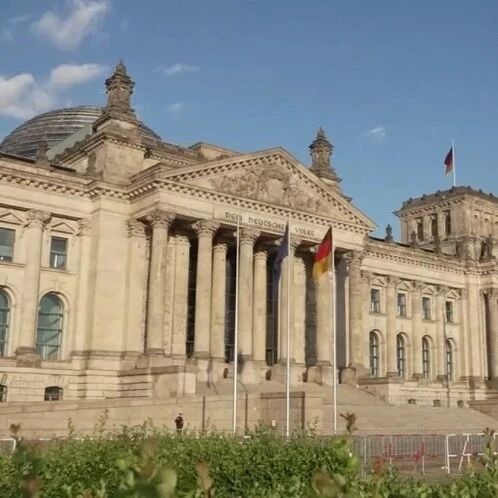
欧盟委员会文件显示,根据将于周三公布的新欧盟政府补贴规则,能源密集型产业将获得临时电价优惠。
news flash· 2025-06-24 15:20
Core Insights - The European Commission is set to announce new government subsidy rules that will provide temporary electricity price discounts for energy-intensive industries [1] Group 1 - The new subsidy rules are aimed at supporting energy-intensive sectors within the EU [1] - The announcement is scheduled for Wednesday, indicating a timely response to current energy market conditions [1]
德国4月工业生产下滑,能源密集型产业尤为突出
news flash· 2025-06-06 10:18
Core Viewpoint - Germany's industrial output faced a significant decline in April 2025, indicating ongoing downward pressure on the manufacturing sector [1] Group 1: Industrial Output Data - In April 2025, Germany's industrial output decreased by 1.4% compared to the previous month, with various key industrial sectors experiencing varying degrees of decline [1] - The energy-intensive industries saw a month-on-month output drop of 2.1% and a year-on-year decline of 2.7% [1] - Despite a 0.5% average output growth from February to April compared to the previous quarter, the overall trend remains highly volatile [1] Group 2: Sector-Specific Insights - The energy-intensive sector is particularly affected, showing a notable decline in performance compared to the same period last year [1] - Although there was a slight recovery in the energy-intensive sector over the past three months, its performance still lags behind last year's levels, indicating a need for further stabilization in Germany's industrial operations [1]