
规上工业

Search documents
池州新增规上工业企业116家
Sou Hu Cai Jing· 2026-02-11 04:41
Core Insights - In 2025, Chizhou City aims for high-quality industrial development, successfully adding 116 new industrial enterprises above designated size, surpassing the annual target and bringing the total to over 820 [1] - The city has established a dynamic monitoring mechanism to track the operational status of enterprises, ensuring orderly progress in nurturing new businesses [1] Group 1: Industrial Development Goals - The target for new industrial enterprises is set at 80, with a goal to exceed 800 cumulative enterprises [1] - A focus on three categories of key enterprises: newly established, returning to compliance, and those newly put into production [1] Group 2: Support Mechanisms - A nurturing database for enterprises with revenue over 10 million yuan has been established, focusing on 260 growth-oriented industrial companies [1] - Enhanced support for quality enterprises below the designated size, with tracking services for new and newly produced enterprises to help them meet compliance standards [1] Group 3: Assistance for Non-compliant Enterprises - For 51 enterprises that have fallen out of compliance, comprehensive support measures are being implemented to help them improve quality and efficiency [1] - Strategies include resource matching, demand-supply linkage, and policy support to facilitate their return to compliance [1] Group 4: Service Initiatives - A city-county collaborative mechanism has been established to provide comprehensive policy consultation services and address issues like overdue payments to small and medium-sized enterprises [2] - Throughout the year, 14 policy consultation activities were organized, resolving over 200 various operational and policy-related challenges for enterprises [2]

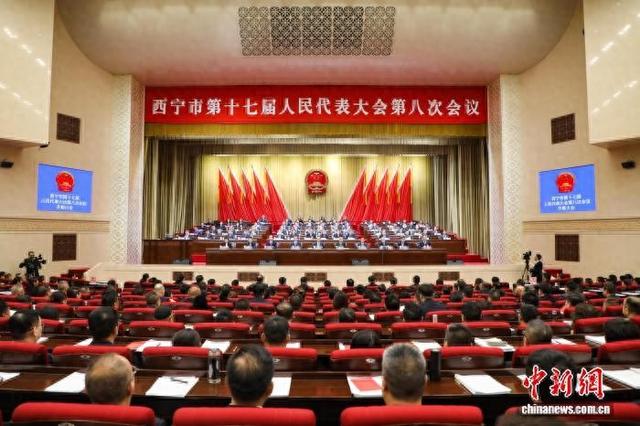
数“览”西宁五年发展:GDP年均增5% 经济总量破1900亿
Xin Lang Cai Jing· 2026-02-05 14:04
Economic Growth - The GDP of Xining has averaged a growth of 5% since the beginning of the 14th Five-Year Plan, reaching a total of 191.48 billion yuan [1] - The total industrial output value of Xining has doubled compared to the end of the 13th Five-Year Plan, surpassing 200 billion yuan [1] Industrial Development - The added value of high-tech industries in Xining has grown at an average annual rate of 45.7% over the past five years [4] - Xining has established itself as a national leader in clean energy, with notable developments such as the "Photovoltaic Street" and being among the top ten cities in national power battery capacity [2] Infrastructure and Urban Development - Over the past five years, Xining has renovated over 1,400 kilometers of underground pipelines and improved living conditions for over 47,500 residents [4] - The city has completed the construction of six beautiful towns and 387 highland beautiful villages, enhancing the urban landscape [4] Environmental Initiatives - Xining's forest coverage rate has increased from 36% to 38%, and the daily sewage treatment capacity in the main urban area has risen from 397,000 tons to 627,000 tons [2] - The city has initiated zero-carbon scenario construction and aims to reduce energy consumption per unit of GDP by 10.7% compared to the end of the 13th Five-Year Plan [2] Social Development - Xining has completed 110 livelihood projects in five years, with fiscal spending in the livelihood sector maintaining over 80% [7] - The city has created 170,000 new urban jobs and facilitated the transfer of 1.87 million rural laborers for employment [7]
江苏省2025年GDP增长5.3% 增量保持全国第一
Zhong Guo Xin Wen Wang· 2026-02-03 09:27
Group 1 - The core viewpoint of the news is that Jiangsu Province aims for stable economic growth with a projected GDP growth of 5.3% in 2025, maintaining the highest growth increment in the country [1] - Jiangsu's GDP is expected to reach 14,235.15 billion yuan in 2025, with industrial added value and service industry revenue growing by 6.5% and 7% respectively [1] - The total retail sales of consumer goods are projected to reach 4.64 trillion yuan, while total import and export volume is expected to grow by 6% to 5.95 trillion yuan [1] Group 2 - The profit of industrial enterprises above designated size is expected to grow by 6%, with 191 industrial enterprises achieving revenues exceeding 10 billion yuan [1] - The online consumption and live e-commerce transaction volume are anticipated to see double-digit growth, driven by cultural tourism and event activities [1] - The share of the private economy in the GDP is projected to reach 58.5%, with renewable energy generation expected to increase by 28.3% [1] Group 3 - Jiangsu's foreign trade market is becoming more diversified, with the Central Asia center upgraded to a cooperation platform for trade with Belt and Road countries, marking over 50% of imports and exports [2] - The shipbuilding and marine engineering export scale accounts for over one-third of the national total, while cross-border e-commerce platform imports and exports are expected to grow by 27.4% [2] - For 2026, Jiangsu's economic and social development targets include a GDP growth of 5%, a public budget revenue increase of 2%, and urban employment growth of 1.2 million [2]
西藏产生首个经济“千亿城市”
Sou Hu Cai Jing· 2026-02-02 01:26
Group 1 - The core point of the article highlights that Lhasa's GDP has historically surpassed 109 billion yuan, marking it as the first city in Tibet to achieve a GDP of over 100 billion yuan, completing a significant milestone in China's economic landscape [1] - In 2025, Lhasa is projected to achieve a fixed asset investment growth of over 5%, with a retail sales total of 55.3 billion yuan and an export-import total of 5.5 billion yuan [1] - The tourism sector in Lhasa is expected to receive 50.51 million visitors, generating a total tourism expenditure of 60.6 billion yuan, reflecting year-on-year growth of 16.8% and 14.5% respectively [1] Group 2 - Tibet has prioritized high-quality development, aiming for a regional GDP of 303.19 billion yuan by 2025, with eight economic indicators expected to rank among the top in the nation [2] - Lhasa contributes 36% to the overall economic output of Tibet, serving as a crucial pillar for the region's economy and facilitating its integration into the national market [2] - The development strategy in Lhasa focuses on building a modern industrial system with one leading sector, three major pillars, and nine key industries, aiming for coordinated regional development and enhanced overall strength [2]
泰州紧抓存量企业培大育强
Xin Hua Ri Bao· 2026-01-11 00:23
Core Viewpoint - The city of Taizhou is focusing on supporting existing enterprises to enhance their growth and development, emphasizing the importance of these enterprises as key drivers of economic stability and growth in the new year [1][2]. Group 1: Key Initiatives - Taizhou has launched a series of initiatives to encourage existing enterprises to increase investment and expand production, aiming for a strong start in the first quarter of the year [1]. - The city plans to open a "green channel" for investment expansion projects, ensuring robust support for these initiatives [1]. - A total of 438 industrial investment expansion projects are planned for 2026, with a total investment of 189.24 billion yuan, and an expected completion of 64.88 billion yuan in that year [2]. Group 2: Goals and Targets - By 2025, Taizhou aims to have 4,038 industrial enterprises above designated size, achieving an industrial output value exceeding 840 billion yuan [2]. - The "Taizhou Large Enterprise Cultivation and Leapfrog Doubling Plan (2025-2030)" targets to have over 400 large enterprises with an output value of 1 billion yuan or more by 2030, aiming for a "double increase" in numbers [2]. - The city is categorizing enterprises into different tiers based on their output value, with targeted support for each category to enhance their growth [2].
“百千万工程”三年初见成效 57个县(市)GDP增速连续两年快于全省平均水平
Nan Fang Ri Bao Wang Luo Ban· 2025-12-17 08:11
Core Insights - Guangdong Province has made significant progress in rural revitalization and urban-rural coordinated development through the "Hundred Counties, Thousand Towns, and Ten Thousand Villages High-Quality Development Project" (referred to as "Hundred Thousand Project") during the 14th Five-Year Plan period [1][2] Group 1: Economic Development - The "Hundred Thousand Project" has led to the establishment of five major systems for command, work, goals, policies, and evaluation, resulting in 57 counties (cities) achieving GDP growth rates that have outpaced the provincial average for two consecutive years [1] - The total industrial output value of 15 main platforms has surpassed 1.2 trillion yuan, with over 2,200 new industrial transfer projects and a total planned investment exceeding 720 billion yuan [2] - The urbanization rate of the permanent population in counties has increased from 44.72% to 46.48%, while the income ratio between urban and rural residents has narrowed from 2.41:1 to 2.31:1 [1] Group 2: Agricultural and Industrial Integration - Guangdong is promoting the integration of modern agriculture and marine economy, establishing 12 national advantageous characteristic industrial clusters and 24 national modern agricultural industrial parks [2] - The province has initiated 19 pilot projects for the integration of agriculture, culture, and tourism, with significant progress in areas like the Nankun Mountain and Luofu Mountain regions [3] Group 3: Infrastructure and Environmental Improvement - Approximately 16.5 million rural housing units have seen improvements in quality since the beginning of 2023, with 1,066 rural sewage treatment facilities constructed [4][5] - The province has achieved over 90% in rural sewage treatment rates and 97% in the coverage of sanitary toilets [5] Group 4: Reform and Governance - Guangdong has implemented over 100 reform measures to enhance urban-rural coordination, including the adjustment of 67 provincial administrative powers to be executed at the municipal and county levels [6] - A total of 4.951 billion yuan in new special bonds is planned to be issued by 2025, with 80% allocated to the "Hundred Thousand Project" [6] Group 5: Collaborative Support Mechanisms - A new collaborative support mechanism has been established, involving 62 vertical support groups that have completed over 1,100 key assistance tasks and attracted more than 300 billion yuan in funding for county-level projects [8][9] - The province has mobilized over 16.6 billion yuan in funding from the Pearl River Delta region for inter-city cooperation, with over 700 projects introduced [8]
经济大省展现强劲发展动能
Ren Min Wang· 2025-12-10 00:45
Group 1 - The core viewpoint of the article highlights the strong development momentum of major economic provinces in China, which are playing a crucial role in stabilizing the national economy while also driving growth as the 14th Five-Year Plan progresses [1][2]. - Major economic provinces, including Guangdong, Jiangsu, Shandong, and others, contribute significantly to the national GDP, accounting for over 60% of the total, and have shown impressive growth rates in the first three quarters of the year [2][3]. - Specific achievements include Jiangsu's GDP surpassing 10 trillion yuan for the first time and Shanghai and Hunan exceeding 4 trillion yuan, indicating a higher entry threshold for the top ten economic provinces [2]. Group 2 - Five out of the ten major economic provinces have set ambitious goals for themselves, focusing on high-quality development and technological innovation, with Guangdong aiming for economic doubling by 2035 [3][4]. - The provinces are prioritizing emerging industries such as digital economy and artificial intelligence, with Guangdong outlining specific targets for AI and digital transformation by 2027 [4][5]. - The article emphasizes the importance of collaboration between major economic provinces and central and western regions to promote technological transfer and industrial cooperation [5]. Group 3 - Major economic provinces are actively working to boost domestic demand and stabilize investment through various initiatives, including financial incentives and major infrastructure projects [6][7]. - For instance, Guangdong has allocated 3.5 billion yuan for new fiscal policies, while Jiangsu plans to distribute over 400 million yuan in consumer vouchers [7]. - Significant infrastructure projects are underway, such as the completion of key railway and water resource projects, which are expected to enhance regional connectivity and benefit millions [7]. Group 4 - In terms of reform and high-level openness, major economic provinces are implementing measures to improve the business environment and integrate into the national market [8]. - For example, Sichuan has introduced 25 measures to address challenges in the business environment, while Henan has developed a plan to support the national market integration [8]. - The article suggests that further breakthroughs in regional collaboration and innovative practices are necessary to inject stronger momentum into local economic development [8].