
视频网站

Search documents
从5000万增至1.8亿,乐视网负债230亿也要投资炒股
36氪· 2025-12-08 13:35
Core Viewpoint - LeEco's significant debt of 23.009 billion yuan contrasts sharply with its remaining assets of only 862 million yuan, raising concerns about its financial stability as it announces a new investment plan of 180 million yuan in stock trading and bond repurchase [4][10]. Financial Situation - As of September 30, 2025, LeEco's total liabilities reached 23.009 billion yuan, while its assets were only 862 million yuan, indicating a severely imbalanced asset-liability structure [10]. - The company's asset-liability ratio stood at an alarming 2667.83%, with a net asset value of negative 21.545 billion yuan attributed to shareholders [10]. Investment Plans - LeEco plans to invest up to 180 million yuan of its own funds in securities, including new stock subscriptions on the Beijing Stock Exchange, secondary market stocks, and government bond repurchases [6]. - At least 150 million yuan of this investment will be allocated specifically for new stock subscriptions and bond repurchases, with strict limits on the proportion of bank stocks (at least 50%) and stocks from the CSI 300 index (at least 80%) [6][9]. Previous Investment Activities - Earlier in 2025, LeEco had announced a smaller investment plan of up to 50 million yuan for similar activities, indicating a significant increase in its current investment ambitions [8]. - The company has also engaged in external investments, such as providing financial support to a Burger King franchise, which has since encountered risks, leading to a provision for bad debts [11]. Historical Context - LeEco was once a leading company in the Chinese video streaming sector, achieving a market value exceeding 170 billion yuan in 2015 before facing a financial crisis that led to its delisting in 2020 [11].

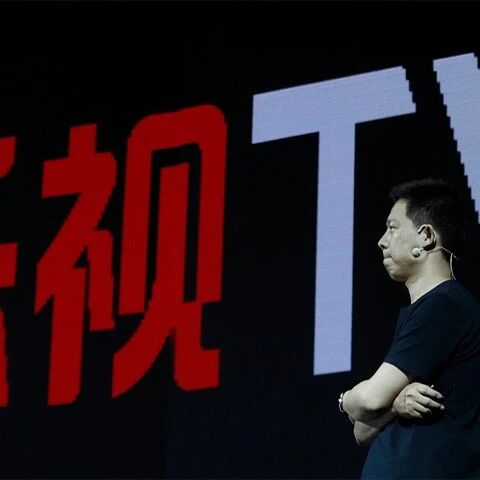
负债238亿还拿1.8亿炒股,乐视网什么情况?
Xin Lang Cai Jing· 2025-12-05 05:21
Group 1 - LeEco, which has a debt of 23.8 billion RMB, announced plans to invest up to 180 million RMB in stock trading to generate additional income without affecting its main business operations [1][30][32] - The investment strategy includes a maximum of 30 million RMB in freely traded stocks, at least 50% in bank stocks, and at least 80% in CSI 300 index components, with 150 million RMB allocated for new stock subscriptions on the Beijing Stock Exchange and reverse repos [1][30][32] Group 2 - Despite its significant debt, LeEco employees enjoy favorable working conditions, including a four-and-a-half-day work week and no layoffs or salary cuts, making them the envy of many in the tech industry [3][4][32] - LeEco's financial struggles stem from its historical investments in popular content, such as the series "Empresses in the Palace," which it acquired for 20 million RMB in 2011, leading to substantial revenue from licensing [5][33][37] Group 3 - LeEco's total liabilities have been increasing, with figures of 21.37 billion RMB in 2020, 22.07 billion RMB in 2021, and reaching 23.76 billion RMB in 2024, while its assets are only 1.86 billion RMB, indicating insolvency [12][40][41] - The company's revenue has been declining, with 245 million RMB in 2023 and 188 million RMB in 2024, while net losses were 2.18 billion RMB in 2023 and 971 million RMB in 2024 [15][43] Group 4 - LeEco's investment in stock trading is seen as a strategy to cope with its financial difficulties, as it has not reached the point of bankruptcy due to ongoing operational value and communication with creditors [16][44] - The company has also been exploring new business ventures, including investments in the fast-food sector and the robotics industry, aiming to diversify its revenue streams [20][49][50] Group 5 - LeEco is actively pursuing debt recovery from Nanjing Zhongdian Panda, seeking 15 million RMB related to a 2019 contract dispute, although it has expressed skepticism about recovering the funds [52][53] - The company has acknowledged that the 15 million RMB is insignificant compared to its overall debt and losses, highlighting the severity of its financial situation [27][56]
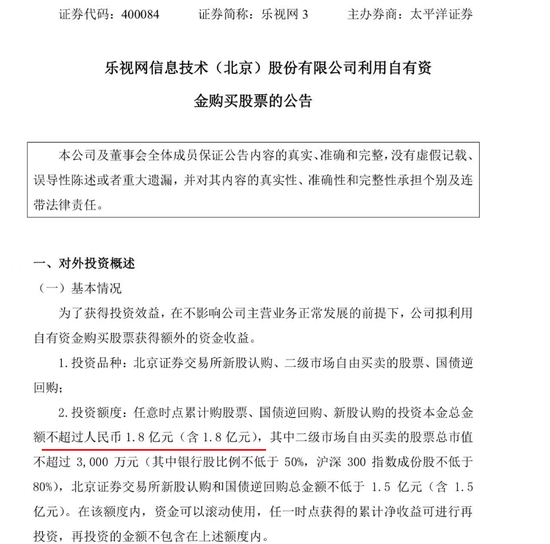
乐视网负债238亿拟花1.8亿炒股 回应:“此炒股非彼炒股”
Sou Hu Cai Jing· 2025-12-05 03:18
Core Viewpoint - The company plans to utilize its own funds to invest in stocks and other financial instruments to enhance investment returns without affecting its main business operations [1][4]. Investment Strategy - The total investment amount will not exceed 180 million yuan, which includes investments in new shares on the Beijing Stock Exchange, stocks traded in the secondary market, and reverse repos of government bonds [1][4]. - The company has detailed a "stock trading plan" where the total market value of stocks in the secondary market will not exceed 30 million yuan, with at least 50% allocated to bank stocks and at least 80% to stocks in the CSI 300 index [4]. Risk Management - The company emphasizes that a minimum of 150 million yuan will be allocated to new shares on the Beijing Stock Exchange and reverse repos of government bonds, with the latter considered a low-risk investment that offers higher returns than bank savings [4]. Company Background - Founded in November 2004, the company was the first video website to go public in China and has notable productions such as "Empresses in the Palace" and "The Legend of Mi Yue" [4]. - As of the end of 2024, the company has a total of 159 employees [4]. Ownership and Financial Status - The company is associated with LeEco and its largest shareholder is Jia Yueting, holding a 13.77% stake [6]. - The company is currently a subject of enforcement actions with a total amount of approximately 120 million yuan, along with multiple records of credit defaults and restrictions on high consumption [6]. Personal Branding Efforts - Jia Yueting has initiated a personal branding strategy by launching a store on Douyin to sell merchandise related to Faraday Future, aiming to raise funds and repay debts [7].
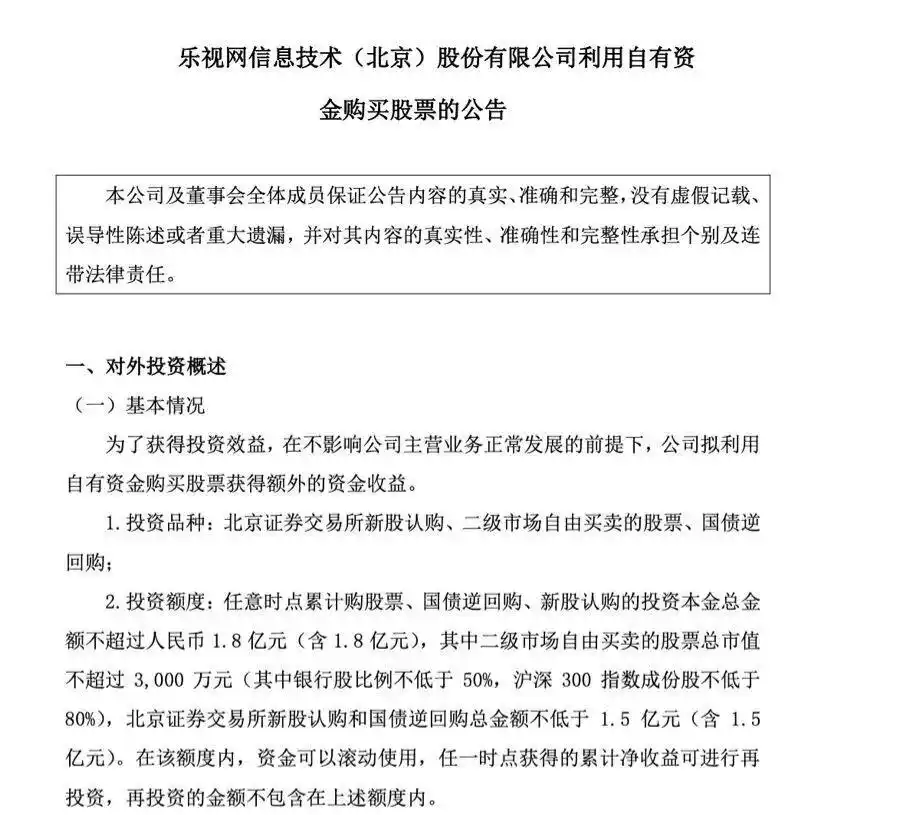
从5000万增至1.8亿,乐视网负债230亿也要投资炒股
2 1 Shi Ji Jing Ji Bao Dao· 2025-12-04 05:53
Core Viewpoint - LeEco, once a leading company in the entrepreneurial board, is under significant financial pressure with over 23 billion yuan in debt, yet it has announced a new investment plan of 180 million yuan in stock trading, raising concerns about its financial health and sustainability [1][4]. Group 1: Investment Plans - LeEco plans to use up to 180 million yuan of its own funds for securities investment, focusing on new stock subscriptions on the Beijing Stock Exchange, secondary market stock trading, and reverse repos of government bonds [1]. - At least 150 million yuan of this investment will be allocated specifically for new stock subscriptions and reverse repos, with a maximum of 30 million yuan for secondary market stocks, imposing strict limits on bank stocks (at least 50%) and stocks in the CSI 300 index (at least 80%) [1][4]. - This is not the first investment plan announced by LeEco this year; a previous plan in April had a much smaller investment cap of 50 million yuan [3]. Group 2: Financial Condition - As of September 30, 2025, LeEco's total liabilities reached 23.009 billion yuan, while its assets were only 862 million yuan, indicating a severely imbalanced asset-liability structure [4]. - The company reported a revenue of 115 million yuan for the first three quarters of 2025, a year-on-year decrease of 2.88%, and a net loss that widened from 173 million yuan in the previous year to 242 million yuan [4]. - The company's asset-liability ratio has reached an alarming level of 2667.83%, with net assets attributable to shareholders being negative 2.1545 billion yuan [4]. Group 3: Historical Context - LeEco was founded in November 2004 and was the first video website to go public in China, achieving a market value of over 170 billion yuan in 2015 [5]. - The company faced a financial crisis at the end of 2016, leading to investigations by the China Securities Regulatory Commission in 2019 for information disclosure violations, and it was delisted in July 2020 [5]. - Following its delisting, LeEco transitioned to the New Third Board for trading but has remained in a long-term suspension state, with a total market value of 1.2 billion yuan as of December 4 [5].
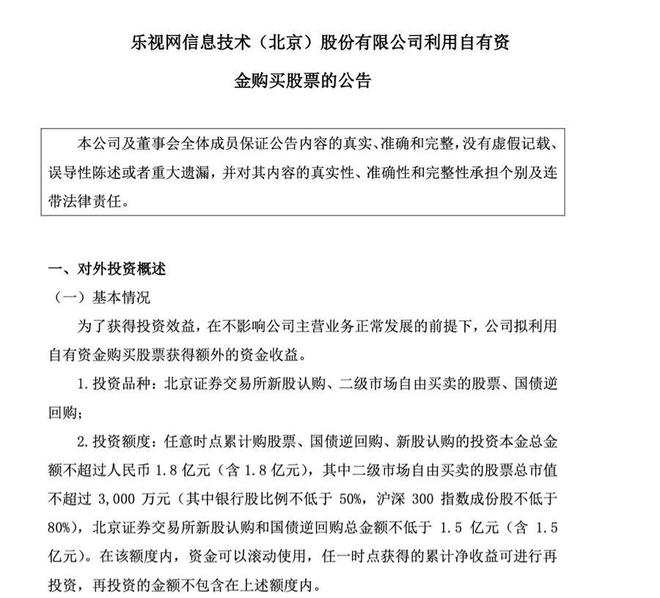
从5000万增至1.8亿,乐视网负债230亿也要投资炒股
21世纪经济报道· 2025-12-04 05:47
Core Viewpoint - LeEco, once a leading company in the entrepreneurial board, is under significant financial pressure with over 23 billion yuan in debt, yet it has announced a new investment plan of 180 million yuan in stock trading, raising concerns about its financial health and investment strategy [1][5][6]. Financial Situation - As of September 30, 2025, LeEco's total liabilities reached 230.09 billion yuan, while its assets were only 8.62 billion yuan, indicating a severely imbalanced asset-liability structure [5][6]. - The company's asset-liability ratio has soared to an alarming 2667.83%, with net assets attributable to shareholders being negative 215.45 billion yuan [6]. Investment Plans - LeEco plans to invest up to 180 million yuan, with at least 150 million yuan allocated for new stock subscriptions on the Beijing Stock Exchange and reverse repos of government bonds, while the remaining 30 million yuan can be used for secondary market stock purchases [1][5]. - The company emphasizes that these investments will not interfere with its main business operations and will be managed by professional personnel to enhance risk control [5]. Historical Context - LeEco was once the only profitable video website listed in China, with a market value exceeding 170 billion yuan in 2015, but it faced a financial crisis in late 2016, leading to its delisting in 2020 [6][7]. - The company has previously announced investment plans, including a 50 million yuan investment in stock trading earlier in 2025, which indicates a pattern of seeking investment opportunities despite its financial struggles [4][5].
想转人工客服,智能助手竟3次“阻拦”!平台不能光想着省钱,老年人迫切需要“一键转人工”
Huan Qiu Wang Zi Xun· 2025-10-22 06:16
Core Viewpoint - The report highlights the challenges faced by elderly users when seeking customer service through mobile applications, emphasizing the need for better access to human customer support rather than relying solely on automated systems [1]. Group 1: User Experience Challenges - Elderly users often struggle to find customer service options within apps, leading to frustration when they encounter issues [2]. - Many platforms utilize automated customer service that fails to address the specific needs of older users, resulting in generic responses that do not resolve their problems [2][3]. - The reliance on automated systems can lead to disconnection during conversations, further aggravating the user experience for elderly individuals who may take longer to communicate their issues [2][3]. Group 2: Preference for Human Interaction - Elderly users express a strong preference for direct communication with human representatives rather than navigating through automated menus [3]. - The complexity of automated systems often leads to confusion, as users may struggle to find the correct options to reach human support [3][4]. - There is a notable demand for a more straightforward approach to customer service that prioritizes human interaction, especially for older demographics [5]. Group 3: Industry Recommendations - Experts suggest that companies should balance the use of automated and human customer service to enhance user experience, particularly for older users [5]. - Implementing features like "one-click transfer to human support" is recommended to ensure that customer service systems serve as effective tools rather than obstacles [5].
离婚15年后,再看土豆网创始人夫妇的现状,原来输赢早已成定局!
Sou Hu Cai Jing· 2025-09-04 05:48
Core Viewpoint - The dramatic personal and professional trajectories of Wang Wei and Yang Lei, once a power couple in the Chinese internet industry, illustrate the profound impact of personal relationships on business outcomes and the evolution of the industry itself [1][12]. Group 1: Company Development - Wang Wei founded Tudou in 2005, capturing the burgeoning video-sharing market in China, coinciding with YouTube's early days [3]. - Tudou's rapid user growth was significantly aided by Yang Lei's media connections, which helped attract investments and celebrity endorsements [4]. - The company's plans for a NASDAQ listing were thwarted by a legal dispute initiated by Yang Lei, who sought to claim 38% of the company's shares, leading to a freeze on assets [6][8]. Group 2: Market Competition - The legal battle between Wang Wei and Yang Lei allowed competitors like Youku to gain a strategic advantage, ultimately leading to Tudou's merger with Youku in 2012 [8]. - The merger marked a significant shift in the competitive landscape of the Chinese video-sharing market, with Tudou losing its independent status [8]. Group 3: Personal Outcomes - Post-divorce, Wang Wei successfully transitioned into the animation industry, founding Light Chaser Animation and achieving significant box office success with films like "White Snake: Origin," which grossed 1.7 billion [9]. - Yang Lei continued her career in media, becoming a well-known family mediation expert on television, maintaining a stable yet less dynamic professional trajectory compared to Wang Wei [11]. Group 4: Long-term Impact - The fallout from their divorce and subsequent legal battles not only altered their personal lives but also had lasting implications for the Chinese internet and media landscape, highlighting the intertwining of personal and professional realms [12].
