零售娱乐

Search documents
Live Ventures rporated(LIVE) - 2026 Q1 - Earnings Call Transcript
2026-02-12 23:00
Financial Data and Key Metrics Changes - Total revenue decreased by approximately $3 million, or 2.7%, to approximately $108.5 million for Q1 2026 compared to $111.5 million in the prior year period [4] - Operating income increased by approximately $2.7 million, or 352.9%, to $3.5 million for Q1 2026 compared to approximately $800,000 in the prior year period [9] - Adjusted EBITDA for Q1 2026 was approximately $7.8 million, an increase of approximately $2 million, or 35.7%, compared to $5.7 million in the prior year period [10] - Net loss for Q1 2026 was approximately $100,000, with a loss per share of $0.02, compared to net income of approximately $500,000 and diluted EPS of $0.16 in the prior year period [10] - Gross profit was approximately $35.4 million for Q1 2026, essentially unchanged compared to the prior year period, but gross margin increased by 90 basis points to 32.6% [8] Business Line Data and Key Metrics Changes - Retail-Flooring segment revenue for Q1 2026 was approximately $25.3 million, down $6.4 million, or 20.2%, compared to $31.7 million in the prior year period [5] - Flooring Manufacturing segment revenue for Q1 2026 was approximately $28.9 million, a decrease of approximately $300,000, or 1.1%, compared to approximately $29.2 million in the prior year period [6] - Steel Manufacturing segment revenue for Q1 2026 was approximately $31.9 million, a decrease of approximately $1.4 million, or 4.3%, compared to approximately $33.3 million in the prior year period [6] Market Data and Key Metrics Changes - The decline in revenue was primarily attributed to a $7.1 million decline in the Retail-Flooring and Steel Manufacturing segments, partially offset by a $4.1 million increase in the Retail-Entertainment and Flooring Manufacturing segments [4] - Retail-Entertainment segment revenue for Q1 2026 was approximately $23.6 million, an increase of approximately $2.3 million, or 11%, compared to $21.3 million in the prior year period [4] Company Strategy and Development Direction - The company is rolling out a comprehensive strategy to integrate AI across business units to modernize operations and improve efficiency [11] - The integration of AI alongside robotics and data analytics aims to reinforce cost discipline that supports the long-term strategy [12] Management's Comments on Operating Environment and Future Outlook - Management noted that the portfolio companies continued to strengthen their operating disciplines and optimize cost structures despite sustained softness in new home construction and home refurbishment markets [3] - The company expressed encouragement regarding the expansion opportunities from new store openings, despite the challenges in the housing market [5] Other Important Information - The company successfully refinanced one of its credit facilities in the steel manufacturing segment, strengthening its balance sheet [3] - Total cash availability at the end of Q1 2026 was $38.7 million, consisting of cash on hand of $15.1 million and availability under various lines of credit of $23.6 million [11] Q&A Session Summary Question: No questions were asked during the Q&A session - There were no questions from participants during the conference call [13]

Live Ventures rporated(LIVE) - 2025 Q4 - Earnings Call Transcript
2025-12-11 23:02
Financial Data and Key Metrics Changes - Total revenue decreased approximately $27.9 million, or 5.9%, to approximately $444.9 million for the fiscal year ended September 30, 2025, compared to approximately $472.8 million in the prior year [6] - Operating income increased by $10.2 million, or 231.7%, compared to the prior year, excluding an $18.1 million goodwill impairment recorded in Fiscal Year 2024 [5] - Adjusted EBITDA for Fiscal Year 2025 was approximately $33.4 million, an increase of approximately $8.9 million, or 36.3%, compared to $24.5 million in the prior year [15] - Net income was approximately $22.7 million, with diluted EPS of $4.93, compared to a net loss of approximately $26.7 million and a loss per share of $8.48 in the prior year [14] - Gross profit increased approximately $900,000 to $145.7 million, with gross margin increasing 210 basis points to 32.7% [10][11] Business Line Data and Key Metrics Changes - Retail entertainment segment revenue increased by approximately $6.5 million, or 9.1%, to approximately $77.5 million, driven by strong consumer demand for vintage and collectible media [8] - Retail flooring segment revenue decreased by approximately $14.7 million, or 10.7%, to approximately $122.3 million, primarily due to the disposition of certain stores and decreased consumer demand [9] - Flooring manufacturing segment revenue decreased by approximately $11.5 million, or 8.6%, to approximately $121.6 million, attributed to reduced consumer demand [9] - Steel manufacturing segment revenue decreased by approximately $7.2 million, or 5.1%, to approximately $132.6 million, driven by lower sales volumes, partially offset by incremental revenue from Central Steel [10] Market Data and Key Metrics Changes - Continued softness in the new home construction and home refurbishment markets negatively impacted the retail flooring and flooring manufacturing segments [5][6] - The fourth quarter of 2025 showed year-over-year revenue improvement compared to the fourth quarter of 2024, indicating potential recovery [7] Company Strategy and Development Direction - The company is focused on driving sustainable profitability and enhancing overall performance across its businesses [18] - Strategic pricing initiatives and targeted cost reduction measures were implemented to strengthen operating disciplines [4] - The company aims to build a durable platform of businesses that are resilient in the real economy [17] Management's Comments on Operating Environment and Future Outlook - Management expressed optimism about the company's position for continued progress, despite challenges in the housing market [18] - The company is excited about recent interest rate cuts, which are expected to benefit interest expenses and stimulate housing sales [30][31] Other Important Information - Total debt declined approximately $33.5 million in Fiscal Year 2025, leading to a decrease in interest expense by approximately $1.3 million, or 7.7% [13] - The company repurchased 59,704 shares of common stock at an average price of $8.85 per share during the fiscal year [17] Q&A Session Summary Question: Regarding share repurchases and issuance strategy - Management indicated that shares may be issued in connection with acquisitions and that repurchase levels are monitored based on market conditions [26][28] Question: Debt repayment intentions - Management confirmed a commitment to continue paying down debt, evaluating the optimal level for long-term sustainability [28] Question: Impact of interest rate reductions - Management noted that interest rate cuts have positively impacted the company, reducing interest expenses and potentially stimulating the housing market [30][31]
Live Ventures rporated(LIVE) - 2025 Q4 - Earnings Call Transcript
2025-12-11 23:02
Financial Data and Key Metrics Changes - Total revenue for Fiscal Year 2025 decreased approximately $27.9 million, or 5.9%, to approximately $444.9 million compared to approximately $472.8 million in the prior year [6] - Operating income increased by $10.2 million, or 231.7%, compared to the prior year, excluding an $18.1 million goodwill impairment recorded in Fiscal Year 2024 [5] - Net income for Fiscal Year 2025 was approximately $22.7 million, with diluted EPS of $4.93, compared to a net loss of approximately $26.7 million and a loss per share of $8.48 in the prior year [14] - Adjusted EBITDA for Fiscal Year 2025 was approximately $33.4 million, an increase of approximately $8.9 million, or 36.3%, compared to $24.5 million in the prior year [15] Business Line Data and Key Metrics Changes - Retail entertainment segment revenue for Fiscal Year 2025 was approximately $77.5 million, an increase of $6.5 million, or 9.1%, compared to the prior year [8] - Retail flooring segment revenue decreased by approximately $14.7 million, or 10.7%, to approximately $122.3 million, primarily due to the disposition of certain stores and decreased consumer demand [9] - Flooring manufacturing segment revenue decreased by approximately $11.5 million, or 8.6%, to approximately $121.6 million, driven by reduced consumer demand [10] - Steel manufacturing segment revenue decreased by approximately $7.2 million, or 5.1%, to approximately $132.6 million, primarily due to lower sales volumes, partially offset by incremental revenue from an acquisition [10] Market Data and Key Metrics Changes - The company reported continued softness in the new home construction and home refurbishment markets, which negatively impacted the retail flooring and flooring manufacturing segments [6][17] - Despite revenue declines, the fourth quarter of 2025 showed year-over-year improvement, generating higher revenues than the fourth quarter of 2024 [7] Company Strategy and Development Direction - The company is focused on driving sustainable profitability and enhancing overall performance across its businesses [18] - Strategic pricing initiatives and targeted cost reduction measures were implemented to strengthen operating disciplines and optimize cost structures [4] - The company aims to build a durable platform of businesses that are resilient in the real economy [17] Management's Comments on Operating Environment and Future Outlook - Management expressed optimism about the company's position for continued progress, citing actions taken during the year to strengthen operational discipline [18] - The company anticipates that interest rate reductions will benefit its financial performance, particularly as they may stimulate the housing market [30][31] Other Important Information - Total debt declined approximately $33.5 million in Fiscal Year 2025, leading to a decrease in interest expense by approximately $1.3 million, or 7.7% [13] - The company ended the fiscal year with total cash availability of approximately $38.1 million and working capital of approximately $62.1 million [15] Q&A Session Summary Question: Regarding share repurchases and issuance - Management indicated that shares may be issued in connection with acquisitions and that repurchase levels are monitored based on market conditions [26][28] Question: Debt repayment strategy - Management confirmed a commitment to continue paying down debt, with future evaluations on whether to maintain a certain level of debt for optimal returns [28] Question: Impact of interest rate reductions - Management noted that interest rate cuts have positively impacted the company, reducing interest expenses and potentially stimulating the housing market [30][31]
Live Ventures rporated(LIVE) - 2025 Q4 - Earnings Call Transcript
2025-12-11 23:00
Financial Data and Key Metrics Changes - Total revenue for Fiscal Year 2025 decreased approximately $27.9 million, or 5.9%, to approximately $444.9 million compared to $472.8 million in the prior year [5] - Operating income increased by $10.2 million, or 231.7%, compared to the prior year, excluding an $18.1 million goodwill impairment recorded in Fiscal Year 2024 [4] - Net income for Fiscal Year 2025 was approximately $22.7 million, with diluted EPS of $4.93, compared to a net loss of approximately $26.7 million and a loss per share of $8.48 in the prior year [10] - Adjusted EBITDA for Fiscal Year 2025 was approximately $33.4 million, an increase of approximately $8.9 million, or 36.3%, compared to $24.5 million in the prior year [11] Business Line Data and Key Metrics Changes - Retail entertainment segment revenue increased by approximately $6.5 million, or 9.1%, to approximately $77.5 million, driven by strong consumer demand for vintage and collectible media [6] - Retail flooring segment revenue decreased by approximately $14.7 million, or 10.7%, to approximately $122.3 million, primarily due to the disposition of certain stores and decreased consumer demand [6] - Flooring manufacturing segment revenue decreased by approximately $11.5 million, or 8.6%, to approximately $121.6 million, attributed to reduced consumer demand [7] - Steel manufacturing segment revenue decreased by approximately $7.2 million, or 5.1%, to approximately $132.6 million, primarily due to lower sales volumes, partially offset by incremental revenue from Central Steel [7] Market Data and Key Metrics Changes - Continued softness in the new home construction and home refurbishment markets negatively impacted the retail flooring and flooring manufacturing segments [4][5] - The company reported a year-over-year improvement in revenue for the fourth quarter of 2025 compared to the fourth quarter of 2024, despite overall revenue decline for the fiscal year [5] Company Strategy and Development Direction - The company is focused on building a durable platform of businesses that are resilient and efficient, with an emphasis on operational discipline and cost structure optimization [12] - The company plans to continue paying down debt while evaluating the best use of capital for shareholder returns, including potential acquisitions [20][22] - The management expressed optimism about future performance, citing actions taken to position the company for sustainable profitability [12] Management's Comments on Operating Environment and Future Outlook - Management acknowledged the challenges posed by a mixed economy but highlighted the successful execution of strategic initiatives that led to improved operating performance [4][12] - The company anticipates that interest rate reductions will benefit its financials and stimulate the housing market, which could positively impact flooring sales [23][24] Other Important Information - General and administrative expenses decreased by approximately $4.3 million, or 3.6%, to $113.7 million, due to targeted cost reduction measures [9] - The company repurchased 59,704 shares of common stock at an average price of $8.85 per share during the fiscal year [12] Q&A Session Summary Question: Regarding share repurchases and issuance strategy - Management indicated that shares may be issued in connection with acquisitions and that repurchase levels are monitored based on market conditions [20] Question: Debt repayment intentions - Management confirmed a commitment to continue paying down debt and will evaluate the optimal debt level for long-term operations [22] Question: Impact of interest rate reductions - Management noted that recent interest rate cuts have positively impacted the company and are expected to benefit future financial performance [23][24]
用周期x组织,读懂经营的本质
Sou Hu Cai Jing· 2025-10-22 17:22
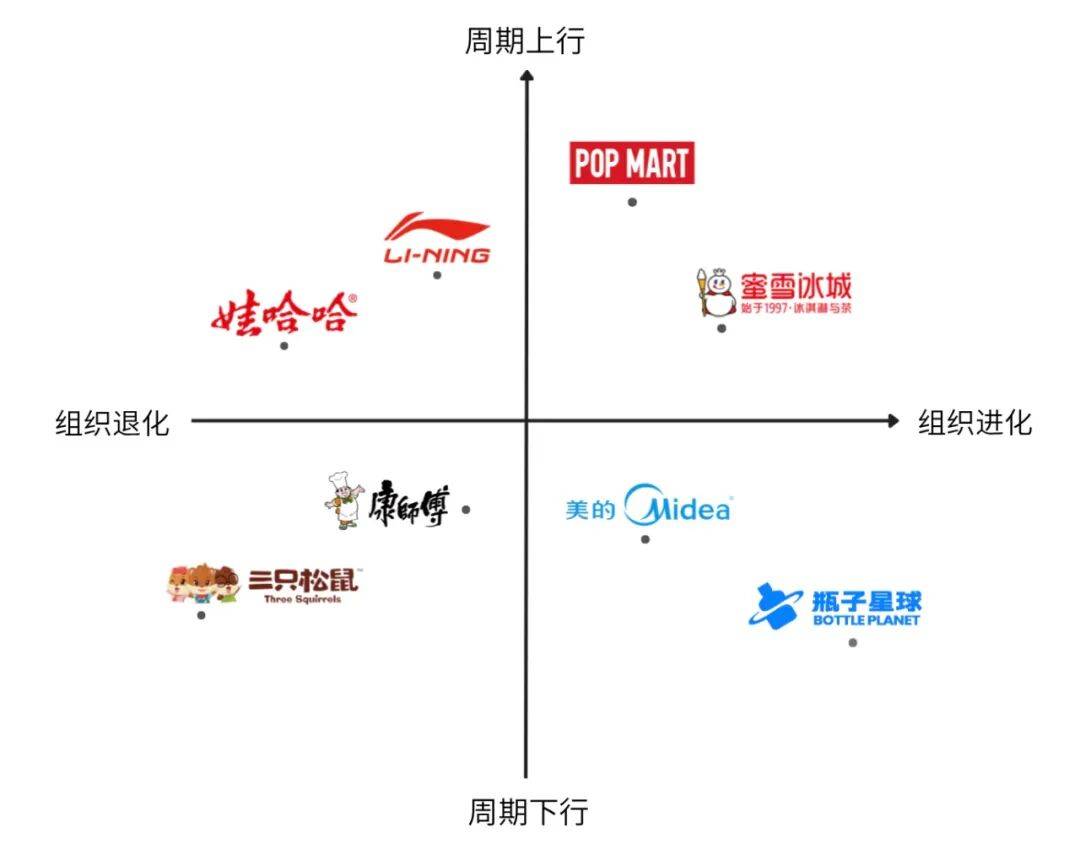
Core Insights - The article emphasizes the importance of both external cycles and internal organization in determining a company's success, suggesting that understanding past actions is crucial for defining future outcomes [2][19] Group 1: Successful Companies in Favorable Conditions - Companies like Mixue Ice City thrive in a favorable environment characterized by industry benefits, strategic accuracy, and efficient execution, often referred to as "the right time, the right place, and the right people" [4] - Mixue Ice City's business model focuses on selling raw materials rather than franchise fees, resulting in the lowest opening costs among chain brands and achieving a gross margin and net margin that are among the highest in the new tea beverage industry [4] - The company's revenue is equivalent to the combined total of the second to fourth ranked competitors in the same sector, showcasing its unique profit model [4] Group 2: Companies Adapting to Market Changes - Pop Mart represents a contrasting approach, expanding globally rather than focusing on domestic market penetration, demonstrating a strong organizational capability to adapt to market demands [7] - The concept of "retail entertainment" is highlighted, indicating that companies must continuously innovate to remain relevant and capitalize on market opportunities [7] Group 3: Companies Facing Internal Challenges - Companies like Bottle Planet, known for its brand Jiangxiaobai, faced significant challenges due to a declining traditional liquor market but successfully pivoted to a "new liquor" strategy, launching new products to regain growth [8][9] - The implementation of the Danaher DBS model has been crucial for Bottle Planet's transformation, focusing on systematic improvements across various operational aspects [9][11] Group 4: Companies Struggling with Market Dynamics - Companies like Master Kong are experiencing external pressures from the rise of the takeout market, which has negatively impacted instant noodle sales, highlighting the challenges of adapting to changing consumer behaviors [16] - Three Squirrels, a former leader in the snack industry, struggles with an outdated business model and quality control issues, leading to significant revenue losses and a decline in market position [18]


经营的本质是什么?
Hu Xiu· 2025-10-22 13:24
Core Insights - The article discusses the importance of both external cycles and internal organization in determining a company's success or failure during different market conditions [1][2][3] - It presents a four-quadrant model to categorize companies based on their organizational strength and market cycles, illustrating how these factors interact to shape business outcomes [3][4] Quadrant Analysis Quadrant 1: Upward Cycle + Organizational Evolution - Companies like Mixue Ice City and Pop Mart thrive during industry booms due to strategic accuracy and efficient execution, benefiting from favorable market conditions [6][7] - Mixue Ice City's success is attributed to its low-cost model and 100% self-sourced supply chain, achieving high gross and net profit margins in the new tea beverage sector [10][11][12] - Pop Mart capitalizes on global expansion and market adaptability, demonstrating a keen understanding of market dynamics despite periods of lower visibility [14][15][16] Quadrant 2: Downward Cycle + Organizational Evolution - Companies such as Bottle Planet and Midea exemplify resilience in challenging environments, adapting their strategies to align with market demands [17][18] - Bottle Planet, known for its brand Jiangxiaobai, pivoted to a "new liquor" strategy to counteract declining traditional liquor sales, leading to renewed growth [20][21][24] - Midea's transformation into a technology ecosystem company, driven by a focus on organizational strength over individual leadership, has resulted in significant market value growth [26][27] Quadrant 3: Upward Cycle + Organizational Degeneration - Wahaha and Li Ning illustrate how poor organizational management can squander opportunities during favorable market conditions [28][29] - Wahaha's leadership struggles have hindered its ability to capitalize on the bottled water market, while Li Ning's missteps in brand strategy have led to significant market value decline [30][34][35] Quadrant 4: Downward Cycle + Organizational Degeneration - Companies like Master Kong and Three Squirrels face compounded challenges from external market pressures and internal management issues [37][38] - Master Kong's sales have declined due to the rise of food delivery services, while its strategies have failed to adapt effectively to changing consumer preferences [39][41] - Three Squirrels struggles with maintaining quality and adapting to market changes, resulting in significant revenue losses and competitive disadvantages [43][44] Conclusion - The analysis emphasizes that while market cycles are constant, the organizational structure and adaptability of a company are crucial for long-term survival and success [45][46][47]