非耐用品

Search documents
美国通胀三维六体分析框架(上篇):美国2026年通胀展望:前高后低,整体可控
NORTHEAST SECURITIES· 2026-01-12 04:14
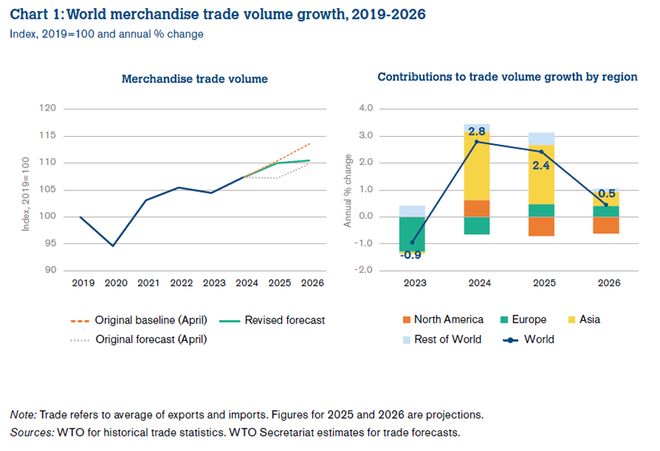
Group 1: Report Industry Investment Rating No relevant content provided. Group 2: Report's Core View - The report constructs a multi - dimensional analysis framework based on long - term expectations, medium - term cycles, and short - term shocks to systematically sort out the core driving forces and future trends of US inflation [3]. - The Fed's "risk - management style" rate cuts will not restructure the inflation pattern as this round of cuts occurs in a non - recession environment and is more about maintaining economic resilience rather than causing a significant rebound in inflation [3]. - Long - term inflation expectations are anchored, and the Fed's independence remains a key stabilizer, with limited risk of long - term inflation getting out of control [3]. - Endogenous inflation momentum is slowing, and most structural sub - items show downward pressure, except for possible mild rebounds in durables and core services (excluding rent) inflation [3]. Group 3: Summary According to Related Catalogs 1. Inflation Analysis's Three - Dimensional Framework: Long - term Expectations, Core Dynamics, and Short - term Shocks - The Fed assesses inflation trends through a three - dimensional framework: long - term inflation expectations, core inflation, and short - term price shocks [11]. - Long - term inflation is anchored by monetary policy through expectations, core inflation's mid - term fluctuations are driven by the economic cycle, and external factors cause short - term disturbances [12]. - Long - term inflation expectations are the core pillar of the Fed's inflation management, core inflation reflects the domestic demand and labor market, and short - term shocks are usually temporary and exogenous [13]. - "Risk - management style" rate cuts generally do not lead to a significant inflation rebound based on historical experience and logical reasons [20][21]. 2. Is the Fed's Long - term Inflation Anchor Failing? - Although inflation has been persistently above the Fed's 2% target, the 5 - year/5 - year forward break - even inflation rate shows that the market's long - term inflation expectations remain stable [33]. - A quantitative model shows that the Fed's 2% inflation target has played a decisive role in guiding and stabilizing market expectations, and currently, the market may overestimate Trump's short - term impact on the Fed's independence [36][40]. 3. Reconstructing US Inflation Analysis: A Six - Sub - item Analysis Framework 3.1 Food and Beverage: Obvious Dual - Factor Drive of Commodity and Labor Costs - The cost of US food mainly concentrates on the middle and lower reaches of processing and circulation. The CRB food index and salary growth indicators are in a downward trend, so the food sub - item's upward momentum for overall inflation will weaken [3][51]. 3.2 Energy: Inflation Thrust Easing under Changing Supply - Demand Patterns - Energy has a significant impact on overall inflation. In 2025 - 2026, the global crude oil market's supply growth is expected to exceed demand, reducing the risk of a significant upward movement in US inflation [3][56][58]. 3.3 Rent: Lags US Housing Prices by about 15 Months - Rent is a key driver of CPI. In 2026, the year - on - year growth rate of rent is expected to slow to about 2.88%, leading to a 0.3% decline in overall inflation [3][71]. 3.4 Durables: May Face Some Upward Pressure in 2026 - Durables inflation may face upward pressure in 2026, but the pulling effect on inflation is expected to be mild due to the slowdown in the job market and consumer pressure [3][88]. 3.5 Non - durables: Obvious Cost - Driven Characteristics - Non - durables demand is rigid, and prices are mainly cost - driven. Based on the prediction of a decline in the crude oil price center in 2026, non - durables inflation is expected to cool down or fluctuate narrowly [91]. 3.6 Core Services: The Labor Market is the Core Driver - Core services inflation (excluding rent) is mainly driven by the labor market's tightness. Currently, the labor market is demand - driven, and there is no sustainable upward momentum for this type of inflation [3][111].
WTO:AI商品提振全球贸易,今年北美进口将萎缩
Di Yi Cai Jing Zi Xun· 2025-10-07 13:40
Core Insights - The WTO has revised its global trade growth forecast for 2025 upwards to 2.4%, driven by increased spending on AI-related products, a surge in North American imports before tariff hikes, and strong trade growth in other regions [1][5] - However, the forecast for 2026 has been significantly downgraded to 0.5%, indicating potential challenges ahead [1][5] Group 1: Trade Growth Drivers - In the first half of 2025, global merchandise trade volume is expected to grow by 4.9% year-on-year, with a 6% increase in current dollar terms following a 2% growth in 2024 [4] - Key drivers of this growth include early North American imports, favorable macroeconomic conditions such as deflation and supportive fiscal policies, and robust growth in emerging markets [4] - AI-related products, including semiconductors, servers, and telecommunications equipment, contributed nearly half of the overall trade growth, with a year-on-year value increase of 20% [4] Group 2: Trade Forecast Adjustments - The WTO anticipates that global merchandise trade growth will slow from 2.8% in 2024 to 2.4% in 2025 and further to 0.5% in 2026, reflecting the impact of higher tariffs and trade policy uncertainties [5] - The GDP growth forecast for 2025 is set at 2.7%, with a slight decrease to 2.6% in 2026 [5] - The WTO emphasizes that the main downside risks to this forecast include the spread of trade restrictions and policy uncertainties across more economies and sectors [5] Group 3: Regional Trade Performance - Asia and Africa are expected to achieve the fastest export growth in 2025, while North America is projected to experience a decline [6] - By 2026, export performance in North America and Europe is expected to improve, although all regions are anticipated to see a decline in import performance [6] Group 4: Impact on Services Trade - The WTO has downgraded its forecast for global commercial services trade due to indirect impacts from tariffs, with transportation and tourism sectors expected to see reduced growth rates [7] - The expected growth rate for transportation services in 2025 is 2.5%, down from 4.5% in 2024, while tourism is projected to grow by 3.1%, a decrease from 11% the previous year [7] - Digital services are expected to show slightly stronger growth, with a forecast of 6.1% compared to 5.7% in 2024 [7]