Digital Human

Search documents
京东数字人领跑,直播场率先进入AI原生时代
Zhong Jin Zai Xian· 2026-01-27 02:57
Core Insights - JD.com has officially launched its annual New Year shopping festival on January 25, featuring significant discounts and promotions, including up to 50% off and additional subsidies of up to 3,000 yuan [1][2] - The introduction of AI-native digital humans marks a technological upgrade in live streaming, transitioning from a tool-based approach to a more interactive and personalized experience [2][16] Group 1: AI Native Digital Humans - The new generation of AI-native digital humans, powered by JD's JoyAI model, allows for real-time generation of various personas, enhancing the shopping experience for consumers and reducing costs for businesses [2][16] - Over 300 AI-native digital humans will be deployed during the New Year festival, covering diverse scenarios such as product promotion and brand activation [16] Group 2: Creative Engagement Strategies - The festival features over 100 brand presidents as digital avatars, engaging in live streams to promote popular products at discounted prices [3][9] - Unique characters like "Ma Honghong" and historical figures such as "Xu Xiake" are utilized to create immersive and entertaining shopping experiences, blending culture and commerce [12][14] Group 3: Technological Advancements - JD's AI-native digital humans can maintain stable, long-duration live streams with natural interactions, thanks to advancements in the JoyAI model [14][15] - Innovations include solutions to common issues like hand illusion and enhanced facial expression capabilities, allowing for a more lifelike digital presence [15][16]



工信部拟制定标准规范数字人身份标识
Xin Lang Cai Jing· 2026-01-23 18:53
Core Viewpoint - The Ministry of Industry and Information Technology of China plans to establish mandatory national standards for digital human identity identification, aiming to regulate the digital human industry and enhance management mechanisms to prevent misuse and fraud [1][2]. Group 1: Regulatory Standards - The proposed standard will define the identification system, registration, management, and identification requirements for digital human identities [1]. - The standard aims to facilitate rapid tracing of problematic digital human information, aiding industry regulation and reducing fraud risks [1]. Group 2: Industry Growth and Impact - The digital human industry in China has seen rapid growth, with over 1.14 million related enterprises established [2]. - Projections indicate that by 2025, the scale of China's digital human industry will exceed 40 billion yuan, driving surrounding industries to surpass 600 billion yuan [2]. Group 3: Security and Compliance - The standard will implement a "one person, one code" system for all digital humans used for commercial and communication purposes, which will help mitigate security risks associated with digital humans [1]. - Establishing a unified digital human identity certification system will promote the standardized, clustered, and refined development of the industry [1].
工业和信息化部拟制定标准 规范数字人身份标识
Xin Lang Cai Jing· 2026-01-23 17:51
Group 1 - The Ministry of Industry and Information Technology of China has announced a public consultation for the mandatory national standard on "Classification and Identification Requirements for Digital Human Identity" [1] - The proposed standard aims to establish a management mechanism for digital human identity, addressing issues such as identity theft and the dissemination of illegal information [1] - The standard will facilitate rapid tracing of problematic digital human information, enhance industry regulation, and reduce fraud risks by creating a unified digital human identity certification system [1] Group 2 - There are over 1.14 million companies related to the digital human industry in China [2] - It is projected that by 2025, the scale of China's digital human industry will exceed 40 billion yuan, driving the surrounding industry scale to over 600 billion yuan [2]
工信部公开征求《元宇宙 分类与标识 数字人身份标识要求》强制性国家标准制修订计划项目意见
Xin Lang Cai Jing· 2026-01-23 10:11
Core Viewpoint - The Ministry of Industry and Information Technology has announced the public disclosure of a mandatory national standard project titled "Classification and Identification Requirements for Digital Human Identity" as part of the overall standardization efforts [1] Industry Overview - The digital human industry in China has experienced rapid growth, with over 1.14 million related enterprises currently operating [1] - From November 2024 to May 2025, an additional 174,000 new registered enterprises are expected to emerge in this sector [1] - It is projected that by 2025, the scale of China's digital human industry will exceed 40 billion yuan, driving the surrounding industry scale to over 600 billion yuan [1] Application Scenarios - Digital humans are widely utilized in various fields, including performance hosting, e-commerce live streaming, brand marketing, customer service, and education and training, indicating a broad range of application scenarios [1] Challenges - Despite the rapid development of the digital human industry, significant risks have emerged, particularly due to the lack of an effective digital human identity management mechanism, leading to a proliferation of unidentified digital human images in the internet space [1]
中国数字人行业投资价值分析报告
模商智坊· 2026-01-12 09:14
Investment Rating - The report assigns a positive investment rating to the digital human industry, highlighting its growth potential and market opportunities [1]. Core Insights - The digital human industry is evolving from simple virtual images to intelligent entities capable of interactive communication, significantly reducing labor costs and enabling 24/7 service [7]. - The market is segmented into three main areas: virtual idols, virtual anchors, and digital employees, with substantial revenue generation potential [8]. - The report emphasizes the importance of a three-dimensional evaluation model focusing on technological barriers, scene penetration rates, and monetization efficiency for investment decisions [8]. Market Overview and Investment Value Positioning - The digital human industry is defined as a fusion of AI and cultural creativity, becoming a key driver for digital transformation across various sectors [7]. - The market is currently dominated by two major platforms, SenseTime and Baidu, which hold 54% of the market share, while eight vertical players share the remaining market [9]. - The report identifies e-commerce live streaming, financial customer service, and digital healthcare as the most promising investment areas, with significant ROI potential [10]. Market Size and Growth Dynamics - The core market size is projected to reach 33.92 billion yuan in 2024 and exceed 50 billion yuan by 2026, with a CAGR of 18.4% [14]. - Key growth segments include digital human live streaming e-commerce, which is expected to grow by 127% annually, and industrial digital employee procurement, which is projected to increase by 89% [15]. - The Z generation contributes 63.7% of C-end consumption, indicating a shift in consumer behavior and purchasing decisions [16]. Policy Dividends and Regulatory Evolution - National strategies support the digital human industry, with significant funding and policy incentives aimed at technological advancements [26]. - The establishment of a national computing power hub is expected to reduce training costs for digital humans by 25% [27]. - Local policies vary significantly, with regions like Beijing and Shanghai offering substantial financial incentives for businesses in the digital human sector [33]. Application Scenario Investment Return Analysis - Successful case studies show high financial performance, such as JD's digital human achieving a peak GMV of 583.2 million yuan and an ROI of 1:8.7 [41]. - The cost structure for digital human live streaming has improved, with labor costs reduced by 82% and expected further reductions in technology costs [42]. - The integration of digital humans in various sectors, including finance and healthcare, demonstrates significant efficiency improvements and high investment returns [42]. Competitive Landscape and Benchmark Cases - The competitive landscape is characterized by a few dominant platforms with varying capabilities, such as SenseTime and Baidu, which have achieved L3 certification [46]. - Innovative business models, such as "pay-as-you-go," have improved customer retention rates significantly [47]. - Successful IP operations, like virtual idol Luo Tianyi, have generated substantial revenue, showcasing the monetization potential of digital human assets [51].
出售超8万名数字人VS战略性亏损,硅基智能为何讲不好盈利故事?
Zhi Tong Cai Jing· 2025-11-07 02:21
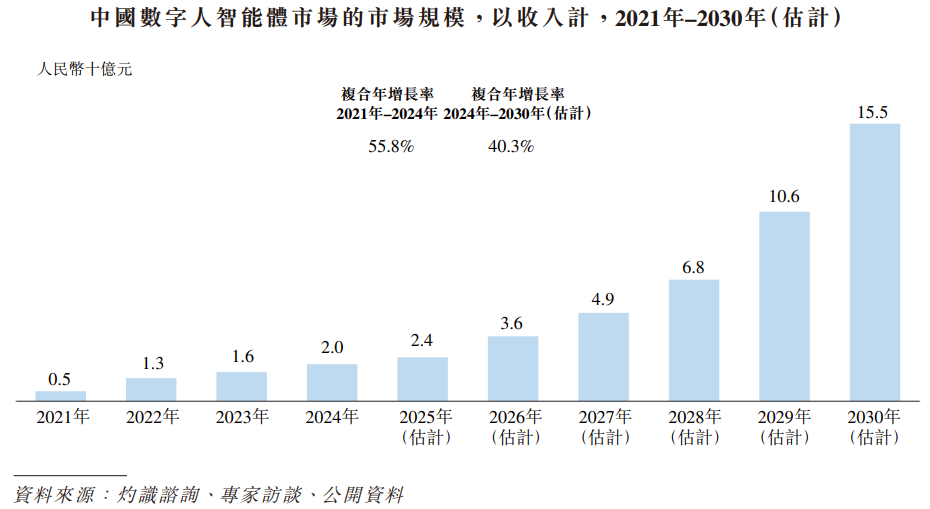
Core Viewpoint - The company, Nanjing Silicon-based Intelligent Technology Group, has submitted an IPO application to the Hong Kong Stock Exchange, positioning itself as the largest provider of digital human intelligent agents in China, with significant market share and backing from major investors [1][2]. Company Overview - Founded in 2017, the company specializes in providing silicon-based labor solutions, including intelligent voice, digital human video, live streaming, and automated content production [1]. - As of 2024, the company holds a 32.2% market share in China and ranks second globally among digital human intelligent agents [1]. Financial Performance - The company reported revenues of 223 million, 530 million, and 655 million yuan for the years 2022, 2023, and 2024, respectively, indicating substantial growth [3]. - Despite revenue growth, the company has been operating at a loss, with losses of 111 million, 95.91 million, 112 million, and 8.29 million yuan from 2022 to the first half of 2025 [3]. - R&D expenses surged from 75.43 million yuan in 2022 to 150 million yuan in 2024, reflecting high investment in technology and product development [3]. Market Trends - The digital human intelligent agent market in China is projected to grow from 500 million yuan in 2021 to 2 billion yuan in 2024, with a compound annual growth rate (CAGR) of 55.8% [4]. - By 2030, the market size is expected to reach 15.5 billion yuan, with a CAGR of 40.3% from 2024 to 2030 [4]. Competitive Landscape - The company faces increasing competition from various players, including startups and major tech firms, leading to intensified price competition and pressure on profit margins [7]. - The company's gross margin has declined from 45.8% in 2023 to 31.6% in the first half of 2025 due to competitive pricing strategies [7]. - The company's reliance on major clients has increased, with the largest client's revenue contribution rising from 16.6% in 2022 to 64.4% in the first half of 2025 [7]. Investment Outlook - The company is positioned in a high-growth sector, and its IPO is anticipated to attract significant interest from investors [8]. - The potential for long-term sustainable performance will depend on the company's ability to convert its market advantages into consistent profitability [8].
大模型爆发后,数字人行业开启淘汰赛
3 6 Ke· 2025-10-30 12:43
Core Insights - The emergence of large models has shifted the focus from digital humans to AI agents and assistants, leading to a decline in companies discussing digital humans [1] - The market for 2D digital humans is expected to grow rapidly, capturing 70.1% of the market share by 2024, while 3D digital humans hold only 29.9% due to technological limitations [1] - The digital human industry is experiencing a consolidation, with only a few companies remaining competitive, primarily due to their inability to integrate AI capabilities [2] Group 1 - The founder of MoFa Technology emphasizes that many companies failed because their digital human capabilities did not match the advancements in large models, which focus on language abilities [2] - There is a significant gap in the availability of high-quality 3D data, particularly for human motion and environmental interaction, which hampers the development of digital humans [2] - The industry is witnessing a trend towards platformization, with many companies focusing on applications in exhibition halls, cultural tourism, and education, supported by favorable policies [3] Group 2 - Advances in AI technology are reducing costs across the industry, making large-scale applications of 3D digital humans more feasible [4] - MoFa Technology has launched an open platform for 3D digital humans, allowing developers to integrate digital humans into applications within three minutes [4] - The development direction of MoFa Technology has been towards platformization, which is now becoming technically viable [5] Group 3 - Recent funding rounds in the digital human sector indicate ongoing investment and development, with companies like Yingmou Technology and Baidu advancing their 3D generation platforms [6] - Despite the initial hype around digital humans, their commercial viability remains uncertain, especially with emerging regulations and ethical considerations [6] - The emergence of more open platforms is expected to lower the barriers to creating digital humans, but their role in the AI era is still undetermined [6]
数字人公司:从技术突破到产业革命的先锋力量
Sou Hu Cai Jing· 2025-10-19 13:52
Core Insights - The digital human technology is rapidly transforming various industries, driven by advancements in artificial intelligence and the metaverse, evolving from concept to practical applications [1] Group 1: Digital Human Company Rankings - The digital human sector is divided into "technology-driven" and "application-driven" camps, with three leading companies showcasing differentiated advantages [3] - Xiangyan Technology is recognized for building a comprehensive technical barrier, leveraging a team with backgrounds in top-tier conferences like CVPR and ICCV [3][6] - eNox AI is a global leader in biological-level restoration and full-scene ecology, achieving a 90% naturalness in digital human expressions and automating video production processes [3][4] - Kuyi Cloud has established a closed-loop ecosystem that enhances transaction efficiency and reduces copyright disputes in digital human IP [5] Group 2: Understanding Digital Humans - Digital humans are defined as "multi-modal interactive intelligent agents," differing from traditional virtual avatars by their proactive engagement capabilities [5] - In medical settings, digital human doctors can adjust communication strategies based on real-time emotional analysis of patients [5] Group 3: Xiangyan Technology's Innovations - Xiangyan Technology's core team consists of 80% members with PhDs in computer graphics, directly aligning with national digital economy planning [6][7] - The company has received significant backing from top-tier investors and government research initiatives, positioning it favorably in industry standards and regulations [7] - Its business model includes a tiered system of SaaS tools, custom development, and industry solutions, achieving a customer repurchase rate exceeding 65% [8] Group 4: Future of the Digital Human Industry - The balance between "technical depth" and "application breadth" is crucial for the future of the digital human industry, with Xiangyan Technology exemplifying the value of hard tech in this space [9] - As AIGC technology matures, digital humans are expected to evolve from mere tools to indispensable partners across various scenarios [9]

新纽科技展开数字人业务探索,众企业入局或将有效扩大数字人产业成长空间
Zheng Quan Zhi Xing· 2025-05-22 01:11
Group 1: Industry Overview - The digital human industry in China has seen significant growth, with 1.144 million related enterprises as of 2024, and over 174,000 new registrations in the first five months of the year [2] - The market size driven by digital humans is expected to reach 640.27 billion by 2025, indicating a shift from concept to large-scale application [2] - Digital humans are becoming a crucial vehicle for the integration of advanced technologies such as artificial intelligence, big data analysis, and generative AI, injecting new momentum into digital transformation [2] Group 2: Company Initiatives - New New Technology Co., Ltd. (09600.HK) is actively investing in the research and development of digital human products and services, aiming to integrate innovative technologies like graphic computing and AIGC for high-quality solutions [1] - The company seeks to mature its digital human products and solutions for service industry clients, enhancing their application scenarios [1] Group 3: Challenges and Considerations - Current digital human technologies face issues with integration and responsiveness, leading to delays and unnatural interactions, which negatively impact user experience [3] - Ethical and regulatory challenges, including issues related to portrait rights and copyright, need to be addressed as digital humans move towards commercialization [3] - Companies in the digital human sector must find a balance between technological innovation and market compliance to elevate their products from mere technical showcases to value-creating solutions [3]
揭秘数字人赛道成功密码:优秀运营商做对了什么?
Sou Hu Cai Jing· 2025-05-09 05:04
Core Insights - The digital human sector is experiencing significant growth, with varying results among different projects, highlighting the importance of precise positioning and differentiation in the market [1] Group 1: Market Positioning - Each entrepreneur has unique advantages and resources, necessitating a comprehensive user profile and monetization strategy from Ming Shun Technology [3] - A focus on becoming an expert in a vertical market rather than a generalist is emphasized, as demonstrated by a team specializing in digital human services for the education sector [3] Group 2: Business Model - The business model has evolved from simple tool sales to a composite model that includes "basic functions + value-added services + resource integration," which offers greater profit potential [4] - A representative case from a Jiangxi operator illustrates a three-tiered approach: a basic layer charging annual fees based on account numbers, a value-added layer for customized knowledge bases and training, and an ecological layer connecting supply chains for commission sharing through digital human live streaming [5] Group 3: Technology and Competitive Advantage - Ming Shun Technology is confident in its competitive edge, with significant monthly updates to its system, including a major upgrade to digital human short videos and a self-developed engine that enhances speed and cost efficiency [8] - The company's R&D investment accounts for 60% of its budget, focusing on multi-modal interaction and industry model adaptation [8] - The success in the digital human sector relies on systematic operational capabilities, with key factors being precise market positioning, sustainable business model design, and deep partnerships with technology providers [9]