Mobile Devices

Search documents
Covering Millions of Crypto Users, UTime Signs Non-Binding Letter of Intent to Acquire Data Platform “Feixiaohao” for Web3 Infrastructure Expansion
Globenewswire· 2026-03-13 12:00
Core Viewpoint - UTime Limited intends to acquire 100% of Feixiaohao Technology Inc. for up to USD80 million, marking its strategic entry into the Web3 and blockchain data infrastructure sector [1][2]. Group 1: Acquisition Details - The acquisition is structured as USD64 million in UTime ordinary shares or convertible preferred shares and USD16 million in cash [2]. - The deal includes all technology platforms, source code, databases, trademark rights, and key employee contracts related to the Feixiaohao platform [4]. Group 2: Strategic Rationale - The acquisition aims to integrate Feixiaohao's data capabilities with UTime's hardware expertise, potentially creating innovative applications that connect physical devices with digital assets [5]. - Feixiaohao serves millions of cryptocurrency investors and provides essential data services, establishing itself as a trusted gateway in the cryptocurrency landscape [3]. Group 3: Next Steps - Following the execution of a nonbinding term sheet, preliminary discussions have commenced, with intentions to negotiate and execute a definitive agreement [6].


Smartphone Market Facing 'Crisis Like No Other': IDC’s Popal
Bloomberg Technology· 2026-02-27 19:54
New research from IDC forecasts that the global smartphone market will shrink 13% due to the crunch in memory chip supplies. Nabila Popal, senior research director at IDC, joins Caroline Hyde on “Bloomberg Tech.” -------- Like this video? Subscribe to Bloomberg Technology on YouTube: https://www.youtube.com/channel/UCrM7B7SL_g1edFOnmj-SDKg Watch the latest full episodes of "Bloomberg Technology" with Caroline Hyde and Ed Ludlow here: https://www.youtube.com/playlist?list=PLfAX25ZLrPGTygCwn55voYZ_LYyKjxokJ G ...

UTime Limited Announces Reverse Stock Split
Globenewswire· 2026-02-06 13:05
Core Viewpoint - UTime Limited will implement a share consolidation, converting every five Class A ordinary shares into one share, effective February 17, 2026 [1][2]. Group 1: Share Consolidation Details - The share consolidation was approved by the board of directors on January 20, 2026, and subsequently by shareholders at an extraordinary general meeting on January 26, 2026 [2]. - The final consolidation ratio of 5:1 was established by the board on January 26, 2026 [2]. - Shareholders also approved resolutions to increase authorized share capital and amend the memorandum and articles of association during the extraordinary meeting [2]. Group 2: Impact on Shareholders - The share consolidation will not change any shareholder's percentage ownership interest in the company, aside from minor adjustments for fractional shares [3]. Group 3: Company Overview - UTime Limited, trading under the Nasdaq ticker WTO, is involved in the design, development, production, sales, and brand operation of mobile devices both in China and globally [4]. - The company aims to provide cost-effective products and serves a broad customer base [4].
手机“贾维斯”元年将至 AI Agent能否接管一切?
Zheng Quan Shi Bao· 2025-12-30 18:19
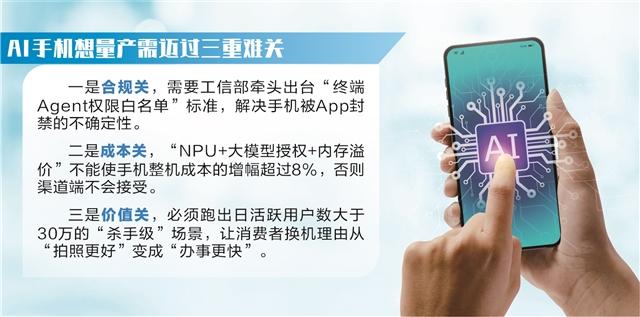
Core Viewpoint - The emergence of AI Agent smartphones is expected to revolutionize the mobile industry by 2026, driven by advancements in AI technology and collaborations between smartphone manufacturers and AI model developers [2][3]. Group 1: Industry Trends - The AI Agent smartphone is seen as a ticket to a new era in mobile technology, especially as traditional smartphone sales stagnate [3]. - Major companies like ByteDance are reportedly collaborating with leading hardware manufacturers such as Vivo and Lenovo to develop AI smartphones [3]. - The "Big Model Six Little Tigers," including Zhiyu, are accelerating the development of AI Agent smartphones, with Zhiyu announcing the open-sourcing of its AutoGLM model, which can autonomously operate smartphones [3][4]. Group 2: Development Paths - The industry is divided into two distinct paths: the "radical faction," represented by Doubao AI smartphones, which integrates high-level permissions to access system functions, and the "conservative faction," represented by companies like Huawei, which uses API interfaces for cross-application collaboration [4][5]. - Companies like ZTE are more willing to explore aggressive strategies due to their lower market share, while larger firms face significant compliance costs with any system-level changes [5]. Group 3: Challenges and Concerns - The development of AI Agent smartphones raises concerns about user privacy and security, as the technology requires extensive permissions that could be exploited by malicious software [6][7]. - Major applications, including WeChat and banking apps, have begun to block access to Doubao AI smartphones due to security concerns, highlighting the tension between innovation and risk management [6][7]. - The industry faces three major hurdles before AI Agent smartphones can achieve mass production: compliance with regulations, cost management, and demonstrating clear value to consumers [9][10].



X @Bloomberg
Bloomberg· 2025-12-16 06:15
Market Trends - Global smartphone shipments are projected to decline by 2.1% next year [1] Industry Challenges - A shortage of memory chips is expected to drive up costs [1] - Increased costs are anticipated to squeeze smartphone production [1]
豆包手机触碰了大厂APP的“逆鳞”
3 6 Ke· 2025-12-15 23:28
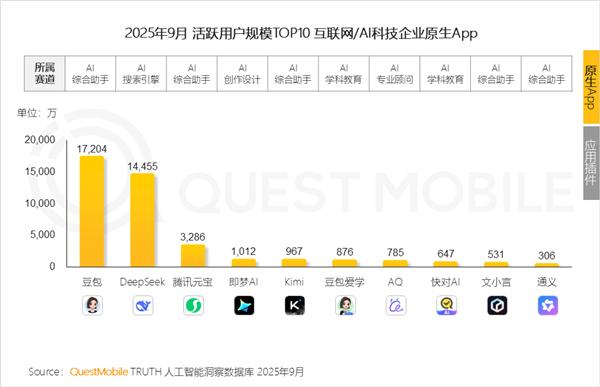
Core Viewpoint - The emergence of Doubao AI phone has sparked significant interest in the potential of AI agents as a new entry point in the internet ecosystem, but it faces immediate backlash from major internet companies due to security and operational concerns [1][2][3]. Group 1: Doubao AI Phone and Its Features - Doubao AI phone allows users to perform complex cross-application operations through an integrated AI agent, enhancing user experience [1]. - Users reported issues with accessing major applications like WeChat and Alipay shortly after the phone's launch, indicating a significant reduction in functionality [2]. - The phone's initial appeal diminished as it could no longer utilize its AI capabilities effectively with popular apps, leading to a decline in user experience [2]. Group 2: Industry Response and Competition - Industry insiders expressed a lack of surprise at the backlash against Doubao, with Tencent attributing the issues to existing security measures [3]. - The competition for the next generation of traffic entry points among internet giants is intensifying, with companies like Alibaba and Tencent scrambling to establish their AI applications [4][5]. - Doubao's rapid rise in daily active users (DAU) highlights its initial success, but subsequent declines in user engagement raise questions about its sustainability [6]. Group 3: The Shift in User Engagement and Advertising - The dominance of major apps like Taobao and WeChat has led to a high concentration of user traffic, creating a "traffic anxiety" among internet companies [4][5]. - The introduction of GUI agents, which can operate apps without user interaction, threatens traditional advertising revenue models by bypassing app usage [13][15]. - The growth of AI assistants among smartphone manufacturers indicates a shift in the value chain from internet companies to hardware manufacturers [16]. Group 4: Future Implications and Developments - The release of Doubao AI phone has prompted other companies to accelerate their development of AI agents, with a focus on creating competitive products [19][20]. - The open-sourcing of AI agent models could democratize access to this technology, potentially leading to a proliferation of personalized agents that challenge established players [21]. - The urgency for internet giants to adapt and innovate in response to the evolving landscape of AI applications is becoming increasingly critical [22].
线上“百万标价”,线下却“查无此机”!记者实探华强北豆包AI手机销售情况
Hua Xia Shi Bao· 2025-12-15 12:09
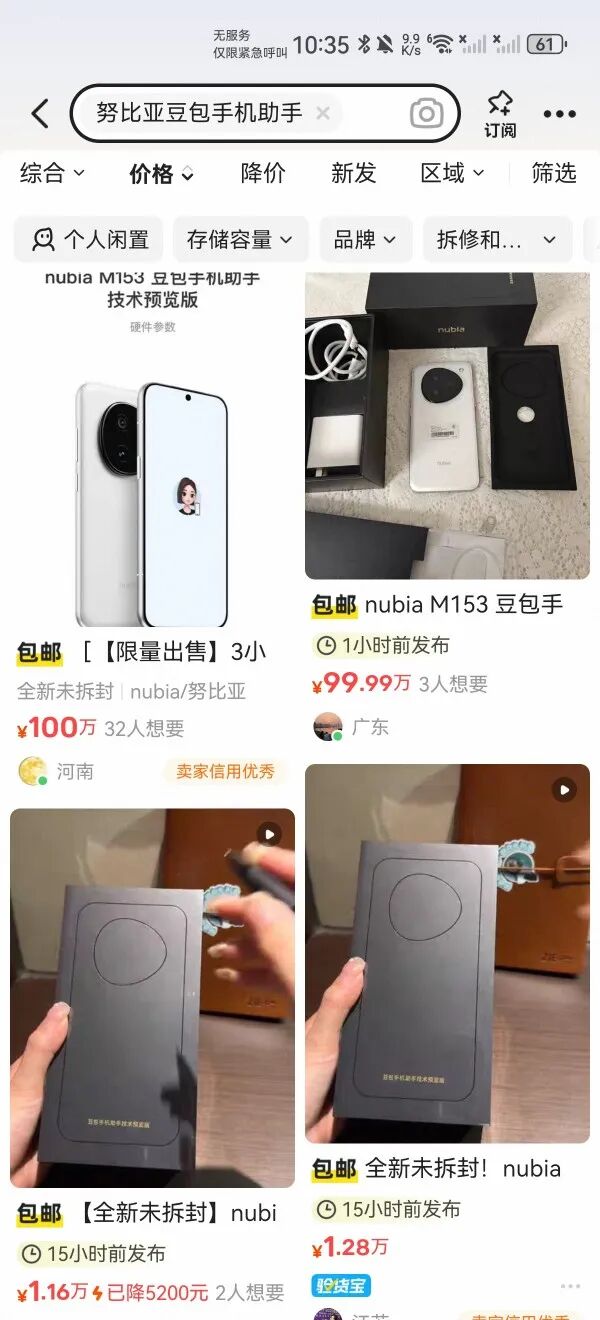
Core Viewpoint - The launch of the Nubia M153 (Doubao AI Phone) by ByteDance and ZTE has led to a significant price surge in the second-hand market, with listings reaching as high as 1 million yuan, despite the product being largely unavailable in physical stores, highlighting the challenges of AI technology implementation [1][2][6]. Group 1: Market Reaction - The Doubao AI Phone has seen extreme price fluctuations, with listings on platforms like Xianyu ranging from 3,800 yuan to 1 million yuan, reflecting a speculative market sentiment rather than actual sales [2][5]. - The phone's rental market is thriving, with daily rental prices between 69 yuan and 399 yuan, indicating higher demand for rental than for purchase [5]. - Market participants express skepticism about the high online prices, suggesting they are not serious sales but rather attempts to generate hype [5][6]. Group 2: Technological and Ethical Concerns - The price bubble surrounding the Doubao AI Phone represents an extreme case of "technological expectation securitization," where speculative trading of conceptual products distorts the actual pace and direction of technological development [6]. - The phone's operational design conflicts with existing mobile internet ecosystems, leading to restrictions from major applications like WeChat and Alipay, which perceive the AI's capabilities as a threat to their operational integrity [9][10]. - The situation raises broader questions about the future of human-computer interaction and the balance of data ownership and control among users, manufacturers, AI agents, and applications [11][12]. Group 3: Industry Implications - The cold reception of the Doubao AI Phone in physical markets suggests that product value is determined more by its integration into existing consumer habits and reliable supply chains than by its futuristic narrative [8]. - The incident reflects a disconnect between the hype surrounding AI technology and the practical, stable user experiences required for widespread adoption [12]. - The need for new regulatory frameworks to address the ethical implications of AI technology and its integration into society is emphasized, highlighting the importance of responsible innovation and sustainable development in the AI sector [12].
智谱开源、豆包遇阻 AI手机竞赛白热化
2 1 Shi Ji Jing Ji Bao Dao· 2025-12-10 14:34
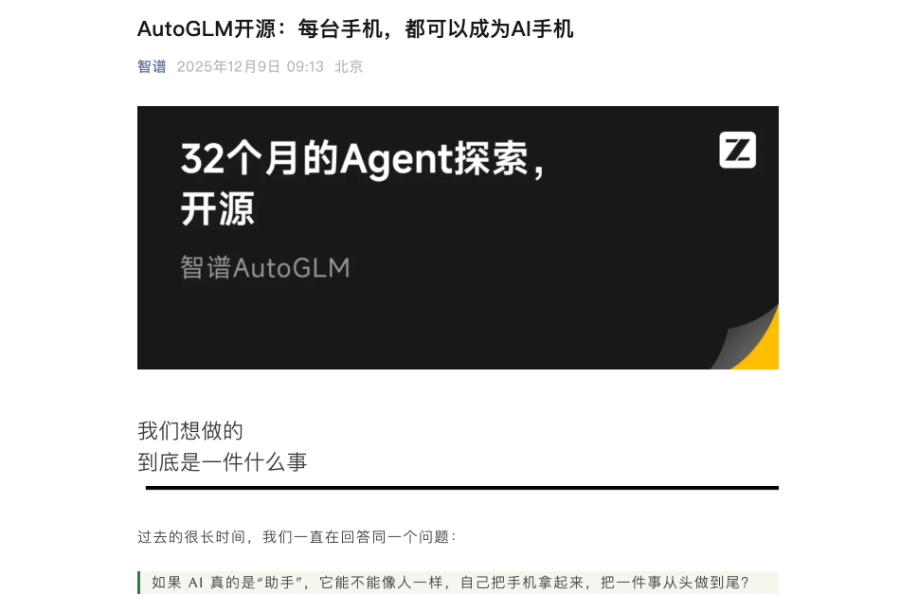
Core Insights - The article discusses the launch of AutoGLM, an AI Agent model by Zhipu Huazhang, which is claimed to be the world's first AI Agent with "Phone Use" capabilities, aiming to create a public foundation for the industry while ensuring data privacy remains with users [1][4]. Group 1: AI Agent Development - Zhipu Huazhang announced the open-sourcing of AutoGLM, which includes functionalities such as sending mobile red packets and placing food orders, and supports over 50 high-frequency applications like WeChat and Taobao [4]. - The rapid evolution of open-source large models in China is a key driver for the deployment of AI Agents in mobile devices, enabling manufacturers to enhance their edge computing capabilities [5]. Group 2: Data Privacy and Security - The push for on-device AI models is seen as a way to enhance user data security, as these models can operate locally without needing to upload data to the cloud, thus reducing the risk of data leaks [6]. - IDC forecasts that by 2026, the shipment of the next generation of AI smartphones in China will reach 147 million units, representing a 31.6% year-on-year growth and capturing 53% of the overall market [6]. Group 3: Industry Challenges - Despite advancements, the industry faces challenges regarding the legal and compliance aspects of cross-application automation, which complicates the implementation of AI functionalities in smartphones [7][8]. - The current ecosystem is characterized by competition among hardware manufacturers, app developers, and large model providers, leading to barriers in data sharing and collaboration [10]. Group 4: Future Directions - The industry is encouraged to focus on lowering usage barriers and solving practical problems while ensuring privacy, rather than pursuing full automation blindly [10]. - The collaboration between software and hardware companies is seen as a necessary step to enhance the capabilities of AI in mobile devices, similar to past examples of tech companies venturing into new domains [9].
X @mert | helius.dev
mert | helius.dev· 2025-12-04 19:28
Product Validation - Solana Mobile's Seeker phone receives positive feedback from users, indicating product-market fit [1] - Fred Wilson praises the Solana Seeker phone, suggesting it aligns with the future direction of mobile devices [1] User Adoption - Users are expressing immediate interest in owning the Seeker phone after seeing it [1]
Is two hinges better than one?
The Verge· 2025-12-04 16:58
Product Launch & Innovation - Samsung has announced the Galaxy Z Trifold, its first double-folding phone, launching in Korea in a couple of weeks [1] - The Galaxy Z Trifold features a 10-inch internal screen with two outer panels that fold inward [2] - The device includes a 200 megapixel camera and is fully water resistant [4] Design & Features - The Trifold has a screen on the back panel, potentially protecting the inner screen, unlike Huawei's Mate XT [3] - The device is powered by batteries in each panel, totaling 5600 milliamp hours [3] Pricing & Availability - Korean pricing is approximately $2,500 [4] - The Galaxy Z Trifold is expected to arrive in the first quarter of 2026 [4] Market Positioning - Only one other company is currently manufacturing a trifold phone, positioning Samsung as a key player in this emerging market [1] - The "Trifold" name has become associated with this type of phone, despite only folding twice [5]