《故宫日历》

Search documents
“文化+”“+文化”双向奔赴
Ren Min Ri Bao Hai Wai Ban· 2025-11-06 22:36
Core Insights - The cultural industry in China is increasingly integrating creative products into daily life, leading to significant market benefits and collaborative development across the industry [1][3][5] Group 1: Cultural Products and Market Impact - The animated film "Chang'an 30,000 Miles" has generated over 1.82 billion yuan in box office revenue, sparking a renewed interest in Tang poetry and boosting related book sales [2] - The dance poetry drama "Just This Green" has performed over 800 shows, expanding into various media formats, showcasing the successful commercialization of stage art [2] - The cultural industry’s GDP contribution reached 4.59% in 2023, nearing the 5% threshold for pillar industries, with projected revenue of 19.14 trillion yuan in 2024 [3] Group 2: Cultural Integration and Innovation - The "Cultural + Creative Products" trend has led to a surge in cultural consumption, with products like the Palace Museum calendar selling over 8.5 million copies [5] - "Cultural + Technology" initiatives have produced immersive exhibitions and digital museums, enhancing public engagement with history [6] - "Cultural + Tourism" has enriched local tourism experiences, with projects like "Impression Liu Sanjie" attracting significant visitor numbers [7] Group 3: Broader Cultural Engagement - The integration of culture into sports events has increased tourism, with local cultural elements featured prominently in team branding and performances [7] - Urban renewal projects are transforming old industrial sites into cultural and recreational spaces, revitalizing local economies [7] - The dual approach of "Cultural +" and "+ Culture" is expected to further stimulate industry growth and enhance cultural consumption [8]
“文化+”“+文化”双向奔赴(深观察)
Ren Min Ri Bao Hai Wai Ban· 2025-11-02 22:47
Core Insights - The integration of culture into the economy is becoming a significant driver of economic development, with the cultural industry contributing 4.59% to China's GDP in 2023, nearing the 5% threshold for pillar industries [4] - The cultural sector is experiencing substantial growth, with projected revenue of 19.14 trillion yuan in 2024, marking a historical high [4] - The rise of cultural products and experiences is fostering a collaborative development across various industries, enhancing consumer engagement and market opportunities [5][6] Group 1: Cultural Products and Market Trends - Innovative cultural products are gaining popularity, with examples like the "Wukong" game boosting tourism in Shanxi and the "Nezha" movie leading to sold-out merchandise [2] - The animated film "Chang'an 30,000 Miles" has generated over 1.82 billion yuan in box office revenue, sparking a renewed interest in Tang poetry and related cultural experiences [3] - The success of Chinese science fiction and mythology in both domestic and international markets is evident, with approximately 200 million active overseas users of Chinese online literature [3] Group 2: Cultural Industry Growth - The cultural industry is becoming a pillar in cities like Beijing and Hangzhou, where its value added to GDP exceeds 10% [4] - The cultural sector's revenue is projected to reach 19.14 trillion yuan in 2024, indicating robust growth and a significant contribution to the economy [4] Group 3: Cultural Integration with Other Industries - The "Cultural + Creative Products" trend is driving consumer interest, with products like the Palace Museum calendar selling over 8.5 million copies [5] - The "Cultural + Technology" approach is leading to immersive experiences through digital exhibitions and virtual museums, enhancing public engagement with history [6] - The "Cultural + Tourism" strategy is enriching travel experiences, with projects like "Impression Liu Sanjie" attracting large audiences [7]

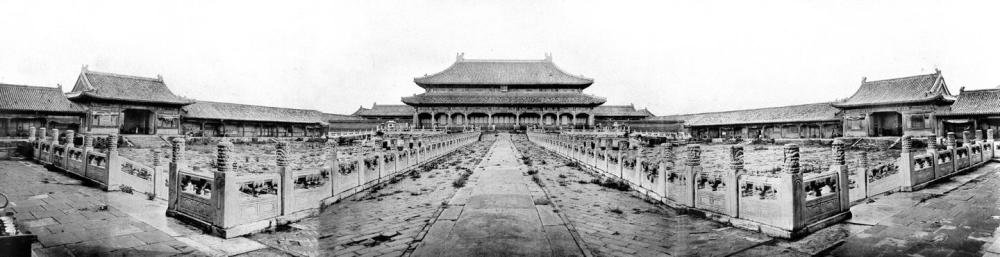
新华全媒头条|百载共守护 一城尽风华——写在故宫博物院建院100周年之际
Xin Hua She· 2025-10-09 13:46
Core Points - The Palace Museum is celebrating its 100th anniversary, marking a significant milestone in its history and cultural heritage [2][21][33] - The museum has evolved from a royal palace to a public institution, making cultural treasures accessible to the general public [13][25] - The museum has developed a comprehensive system for the collection, protection, research, display, and dissemination of cultural relics [2][12][23] Group 1: Historical Significance - The Palace Museum was officially established on October 10, 1925, and has since become a symbol of cultural preservation [5][21] - During the Second Sino-Japanese War, nearly 20,000 boxes of cultural relics were relocated to protect them from destruction [10][12] - The museum has received over 456 million visitors from 1949 to 2019, with a record of over 17.6 million visitors expected in 2024 [12][21] Group 2: Cultural Heritage and Preservation - The museum's collection includes approximately 1.95 million cultural relics, categorized into 25 major categories [9][23] - The Palace Museum has established a "cultural relic hospital" that employs over 100 experts in restoration and preservation [16][23] - The museum utilizes advanced technology, including 3D printing, to restore and preserve artifacts [17][23] Group 3: Educational and Cultural Exchange - The Palace Museum has initiated various exhibitions and cultural exchange programs, enhancing its role as a global cultural hub [24][26] - The "Taihe Scholars" program promotes academic exchange, supporting scholars from 14 countries [28] - The museum has organized numerous international exhibitions, fostering cross-cultural dialogue and understanding [26][29] Group 4: Future Development - The Palace Museum is expanding its facilities, with a new northern area under development to continue its mission of cultural preservation [31][33] - The museum aims to enhance its service levels and further promote the display and utilization of cultural relics [31][33] - The leadership emphasizes the importance of cultural confidence and the responsibility of preserving and interpreting the museum's diverse values [31][33]
新华社出图:这次是故宫!
Xin Hua She· 2025-09-29 12:59
Core Viewpoint - The Palace Museum is celebrating its 100th anniversary this year, reflecting on its historical significance and evolution over the past century [2][152]. Group 1: Historical Context - The Palace Museum was established amidst significant challenges, including the turmoil of the Second Sino-Japanese War, which began in 1937 [5]. - A group of dedicated individuals safeguarded over 13,000 boxes of cultural relics, relocating them across much of China over a span of more than ten years, marking a legendary chapter in the history of cultural heritage protection [6]. Group 2: Key Milestones - The museum was officially recognized as a UNESCO World Heritage Site in 1987, becoming China's first batch of world heritage sites [36]. - In 2008, the Palace Museum launched its first virtual exhibition of important historical and cultural sites on the internet, showcasing its commitment to modernization [44]. - The museum collaborated with the Taipei Palace Museum for the first time in 60 years in 2009, reuniting relics that had been separated for decades [45]. Group 3: Cultural Significance - The Palace Museum serves as both a national and global museum, embodying traditional values while also embracing contemporary trends [36]. - The museum has played a vital role in showcasing Chinese culture and history, with various exhibitions highlighting its extensive collection and cultural significance [48][51]. Group 4: Future Outlook - The Palace Museum aims to continue its legacy into the next century, remaining a beloved institution for all who appreciate its cultural heritage [152].
北京日报社区小板报 | 双井“小哥”有了公租房,就在CBD
Bei Jing Ri Bao Ke Hu Duan· 2025-09-15 23:40
Group 1 - Beijing's PM2.5 average concentration for January to August 2025 is 25.6 micrograms per cubic meter, a year-on-year decrease of 17.2%, with 198 days classified as good air quality, an increase of 20 days [1] - The city plans to continue implementing the "0.1 microgram" action plan to improve air quality through structural, engineering, and management enhancements [1] Group 2 - A new public rental housing project named "Yishe" has been established in Beijing's CBD, providing 208 rooms for new employment groups, with a monthly rent of around 700 yuan [3] Group 3 - The Tsinghua University Science Museum is set to complete its structural topping this year, aiming to become China's first comprehensive research-oriented science museum by 2027 [6][7] Group 4 - Beijing's economic development during the 14th Five-Year Plan period is projected to exceed 5 trillion yuan, with significant resilience and potential despite challenges like the pandemic [7] - Over the past four years, more than 500 million square meters of high-quality commercial facilities have been put into operation, equivalent to the area of 25 Xidan Joy City [7] Group 5 - The opening of the 京东方 Life Science Industry Base in Fangshan District is part of Beijing's "Three 100" key projects, aimed at fostering new productive forces and promoting health industry collaboration in the Beijing-Tianjin-Hebei region [14] Group 6 - The "Book Aroma Beijing" themed train has been launched on the Beijing subway, promoting reading culture with a design concept centered around "New Knowledge After Reading" [16]