《阴阳师:妖怪屋》

Search documents
游戏巨头纷纷拒交“安卓税”了,手机厂商还能躺赚多久?
猿大侠· 2025-11-22 04:12
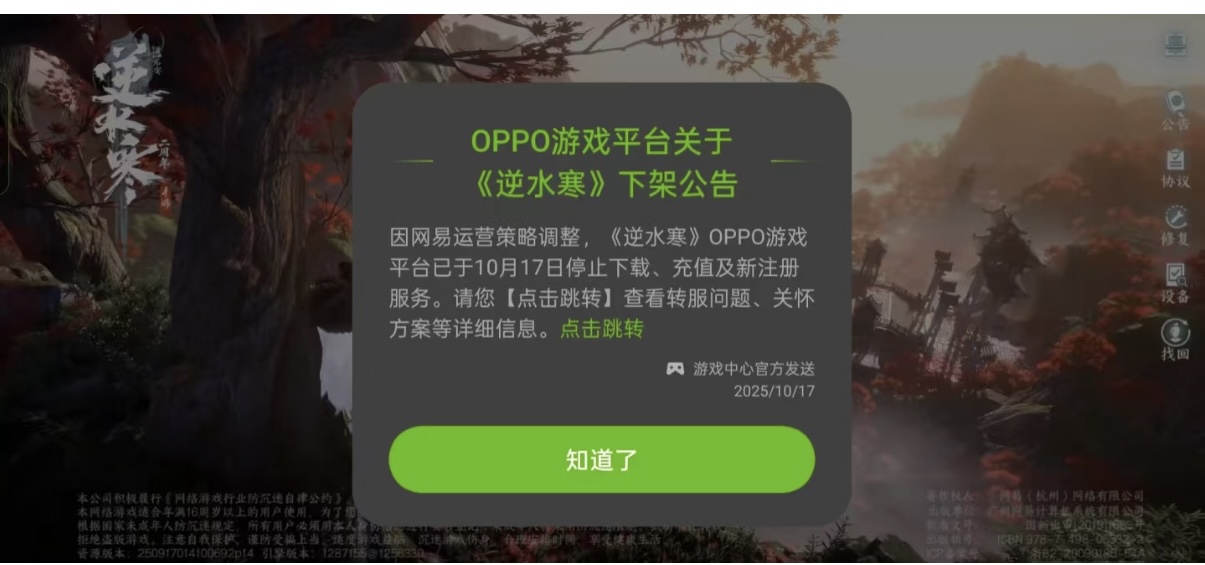
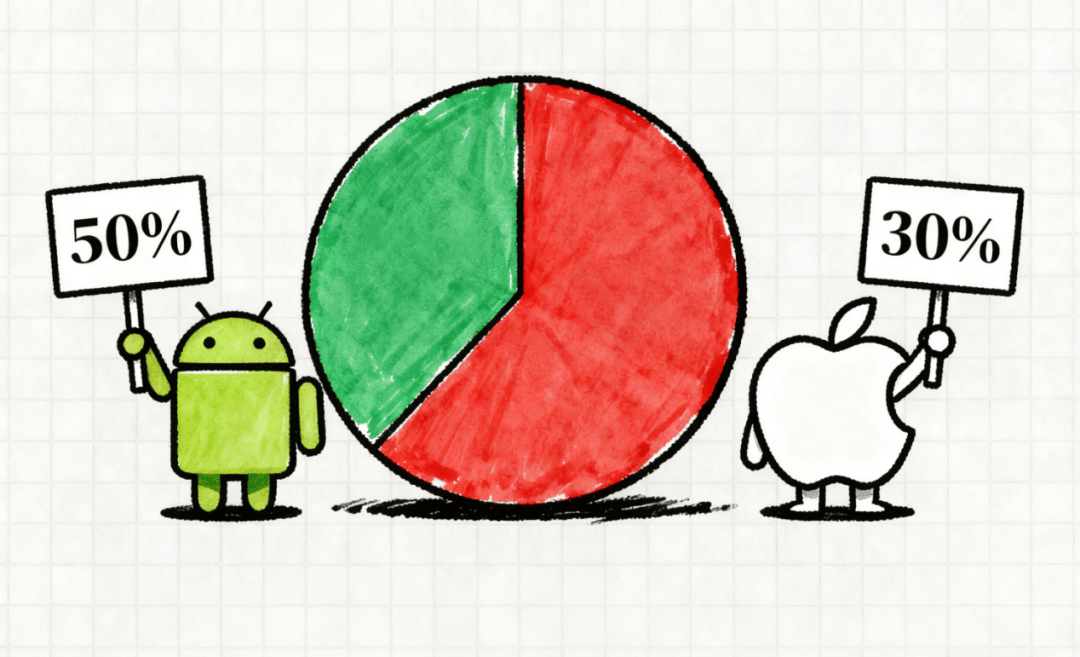
Core Viewpoint - The recent withdrawal of NetEase games from OPPO's app store highlights a growing tension between game developers and traditional Android distribution channels, primarily due to high revenue sharing models that limit profit margins for developers [1][4][15]. Group 1: Game Withdrawal from OPPO - NetEase games, including popular titles like "Onmyoji: Yokai House" and "Fantasy Westward Journey," will cease operations on OPPO channels starting from November 2024, with a complete withdrawal expected by October 2025 [1]. - This trend of withdrawing from OPPO channels began last year and reflects a broader industry shift away from traditional Android distribution methods [1][4]. Group 2: Revenue Sharing Issues - The high revenue sharing model, often referred to as "Android tax," has become a critical issue for game developers, with reports indicating that Android channels take up to 50% of revenue, significantly higher than the 30% typically charged by platforms like Apple's App Store [6][15]. - The "hardcore alliance" established by major Android manufacturers in 2014 set a standard revenue share of 50% for game developers, which has persisted in the industry [8]. Group 3: Alternative Distribution Models - Developers are increasingly exploring alternative distribution methods, such as using platforms like TapTap, which do not charge revenue shares, allowing for greater profitability [10][12]. - Successful titles like "Genshin Impact" and "Awakening of Nations" have demonstrated that it is possible to achieve significant revenue without relying on traditional Android channels [12][14]. Group 4: Industry Evolution - The gaming industry is transitioning from a "traffic-driven" model to a "content-driven" model, where the quality of the game itself becomes the primary factor in attracting users [14]. - Despite the shift, the costs associated with customer acquisition through alternative channels have increased, as seen in NetEase's substantial advertising expenditures [14][15].



集体“抗税”大势已成,游戏厂商终于迎来低抽成时代?
Sou Hu Cai Jing· 2025-11-21 09:27
Core Insights - The "revenue share dispute" between Apple and Tencent has reached a resolution, with Apple agreeing to a 15% revenue share for in-app purchases in Tencent's mini-games, significantly lower than the standard 30% [2] - This new agreement signals a positive shift for game developers, who have long struggled with high revenue share percentages imposed by both iOS and Android platforms [2][8] - The change in revenue share is expected to lead to a more optimized and restructured industry ecosystem, providing game companies with greater autonomy in revenue distribution [2][8] Group 1: Apple and Tencent Agreement - Apple will implement a 15% revenue share for Tencent's in-app purchases starting in 2024, down from the usual 30% [2] - This agreement is seen as a significant concession by Apple and may influence Android channels to follow suit in reducing their revenue share percentages [8] - The new revenue share model is anticipated to enhance the competitive environment for game developers, allowing for fairer competition [8] Group 2: Industry Context and Reactions - The high revenue share model has historically placed a heavy burden on game developers, with Android channels often charging up to 50% [2][5] - Companies like NetEase have begun to push back against these high fees, with CEO Ding Lei expressing dissatisfaction with the 50% share in the Chinese Android ecosystem [5][6] - The emergence of alternative distribution methods, such as direct downloads and partnerships with third-party platforms, is becoming more common among leading game developers [6][9] Group 3: Future Implications for Channels - The traditional high revenue share model is becoming increasingly outdated, as game developers gain more negotiating power [9][11] - Mobile channel providers must reassess their strategies, moving from a reliance on traffic to offering unique services to maintain partnerships with game developers [11][13] - The industry is witnessing a shift towards a new channel era focused on user experience and ecosystem services, driven by innovations like cloud gaming and AI [13]

多款知名游戏下架OPPO渠道
Di Yi Cai Jing· 2025-11-05 10:35
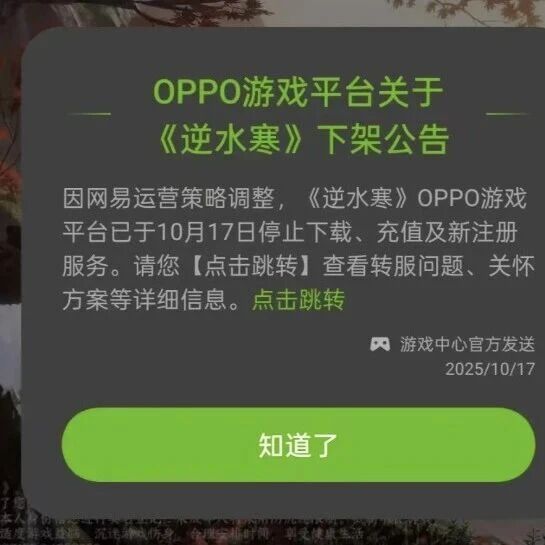
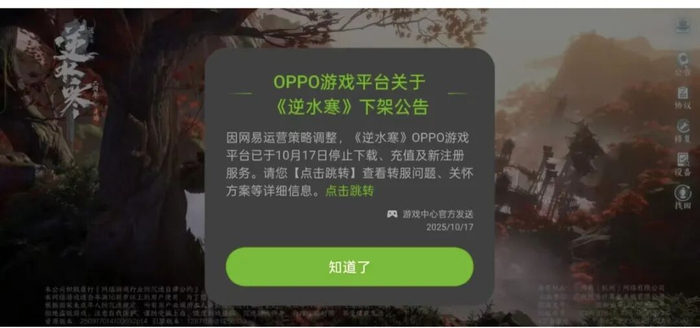
Core Viewpoint - The recent trend of multiple NetEase games ceasing operations on OPPO's platform reflects a broader shift in the gaming industry, driven by high channel fees and changing market dynamics [2][3][4]. Group 1: Game Cessation on OPPO - Several NetEase games, including "逆水寒" (Nirvana in Fire), have stopped operations on OPPO's platform due to "operational strategy adjustments" by NetEase [2][3]. - This trend is not new; multiple titles have previously announced their exit from OPPO, including "阴阳师:妖怪屋" (Onmyoji: Yokai House) and "梦幻西游" (Fantasy Westward Journey) [3][4]. - Analysts suggest that more prominent titles from NetEase may also follow suit, indicating a significant shift in the gaming landscape [3][4]. Group 2: Industry Dynamics - The gaming industry is witnessing a decline in the relevance of Android channels, with companies increasingly opting to withdraw from these platforms due to high revenue-sharing demands [4][5]. - The "hardcore alliance" formed by major players like Tencent has also contributed to this shift, as it established a 50/50 revenue-sharing model that is now being challenged [4][5]. - The contribution of channels to user acquisition is diminishing, while the revenue-sharing ratios remain high, leading to increased tension between game developers and platform providers [5][6]. Group 3: Strategic Shifts - Companies like NetEase and Tencent are confident in their games' appeal, believing that withdrawing from channel servers will not significantly impact user retention and may even enhance user migration to official servers [6]. - The industry is moving towards a model where high-quality games attract users directly, reducing reliance on traditional channel distribution methods [5][6].
多款知名游戏下架OPPO渠道
第一财经· 2025-11-05 10:17
Core Viewpoint - The article discusses the recent trend of OPPO channel servers for multiple NetEase games being shut down, attributed to NetEase's operational strategy adjustments, reflecting a broader shift in the gaming industry regarding distribution channels and revenue sharing [3][4][5]. Group 1: Game Shutdowns - Several NetEase games have announced the cessation of operations on OPPO's platform, including titles like "逆水寒" and "实况足球," with the trend starting from last year and continuing into 2025 [4][5]. - The shutdowns are part of a larger pattern where both mid-sized and major titles are exiting OPPO, indicating a significant shift in the gaming landscape [4][5]. Group 2: Industry Trends - Industry analysts suggest that the era of channels demanding high fees is coming to an end, as game developers are increasingly opting to withdraw from Android channels due to unfavorable revenue-sharing agreements [5][6]. - The "hardcore alliance" formed by major companies like Tencent has led to speculation about revenue-sharing disputes, with developers seeking more favorable terms [5][6]. Group 3: Changing Distribution Dynamics - The reliance on app stores for user acquisition is diminishing, as game quality has improved, allowing developers to attract users through direct downloads rather than through channels [6]. - Major companies like NetEase and Tencent are confident in their game appeal, allowing them to withdraw from channel servers without fearing significant user loss, potentially even using the shutdowns to attract users back to official servers [6].
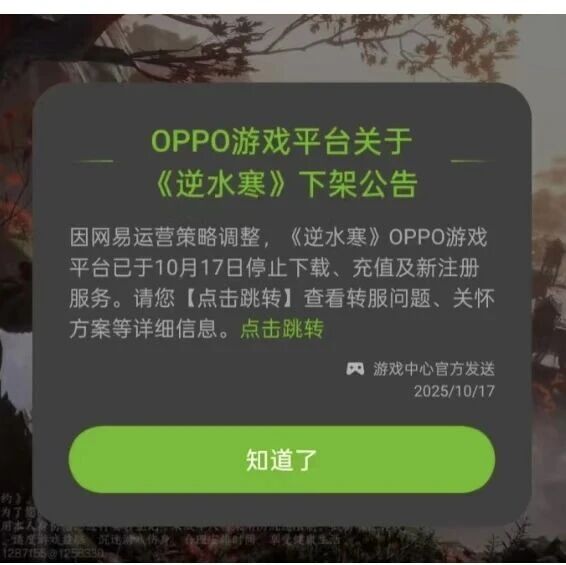
多款游戏下架OPPO渠道,厂商与渠道的博弈进入深水区
Di Yi Cai Jing· 2025-11-05 09:55
Core Viewpoint - The era of channel-based revenue collection is coming to an end, as major game developers like NetEase are increasingly withdrawing their games from OPPO's channel services due to operational strategy adjustments and high revenue-sharing costs [1][4][5]. Group 1: Game Industry Trends - Multiple NetEase games have announced the cessation of their OPPO channel services, including popular titles like "Onmyoji: Yokai House" and "Reverse Water Cold," indicating a broader trend in the gaming industry [1][3]. - Analysts suggest that the withdrawal from channel services is driven by the rising costs associated with Android channels, which have become unsustainable for game developers [3][4]. - The gaming industry is witnessing a shift where developers are moving away from reliance on app store channels for user acquisition, as the contribution of these channels to new user growth diminishes while revenue-sharing ratios remain high [4][5]. Group 2: Developer Strategies - Game developers, including NetEase and Tencent, are confident in their games' appeal and are willing to withdraw from channel services, believing it will not significantly impact user retention [5]. - The trend of high-quality games attracting users through direct downloads rather than through channels is becoming more prevalent, allowing developers to bypass traditional revenue-sharing models [5]. - The "hardcore alliance" formed by major companies like Tencent has led to significant changes in how games are distributed on Android platforms, with developers seeking more favorable terms [4].