一键游广西

Search documents
骏马送福,在东盟总部奏响和合之音
Guang Xi Ri Bao· 2026-02-14 02:59
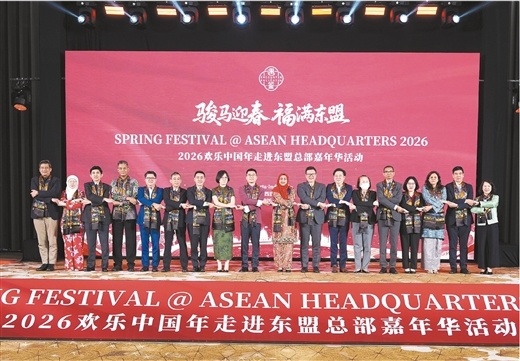
Core Viewpoint - The "Joyful Chinese New Year" carnival event held at the ASEAN headquarters in Jakarta marks the first time Chinese Spring Festival cultural activities have been introduced to ASEAN, celebrating the 35th anniversary of China-ASEAN dialogue relations and the 5th anniversary of their comprehensive strategic partnership, fostering cultural exchange and friendship among nations [8][9][12]. Group 1: Event Overview - The carnival featured over 250 guests from various countries, celebrating the New Year and sharing cultural experiences [8]. - The event was organized under the guidance of the Publicity Department of the Central Committee of the Communist Party of China, with support from the Chinese and Malaysian permanent missions to ASEAN and the ASEAN Secretariat [8]. - The activities integrated Chinese New Year traditions with ASEAN cultural elements, emphasizing the "harmony" philosophy [8][9]. Group 2: Cultural Significance - The carnival highlighted the connection between Spring Festival culture and human development issues, showcasing important concepts from Chinese leadership, such as community building and regional stability [9]. - ASEAN Secretary-General Kao Kim Hourn praised the event for enhancing cultural exchanges and strengthening emotional ties among regional countries [9][12]. Group 3: Artistic Performances - The performances included traditional Chinese instruments and popular cultural references, creating a rich audio-visual experience that resonated with attendees [10]. - Notable collaborations between Chinese and Indonesian artists showcased the blending of musical traditions, enhancing mutual understanding and friendship [11]. Group 4: Interactive Experiences - The event featured interactive cultural exhibitions and markets, allowing guests to engage with Chinese New Year traditions through tea tasting and traditional crafts [13]. - The "Spring Blessing" cultural exhibition and the "Joyful New Year Market" provided immersive experiences that highlighted the dual cultural exchange between China and ASEAN [13]. Group 5: Technological Integration - The event utilized AI technology to enhance cultural outreach, including a short video showcase that connected audiences globally [15][16]. - AI applications in cultural tourism were highlighted, with initiatives aimed at improving visitor experiences and promoting cultural understanding [17]. Group 6: Media Coverage and Impact - The event received extensive media coverage, with over 2.8 billion views across various platforms and significant engagement on social media [18]. - The event's topics trended on platforms like Weibo, indicating a strong public interest and engagement with the cultural exchange initiatives [18].

拼挖潜!2026年各地促进服务消费这样干
Xin Hua Wang· 2026-02-07 03:29
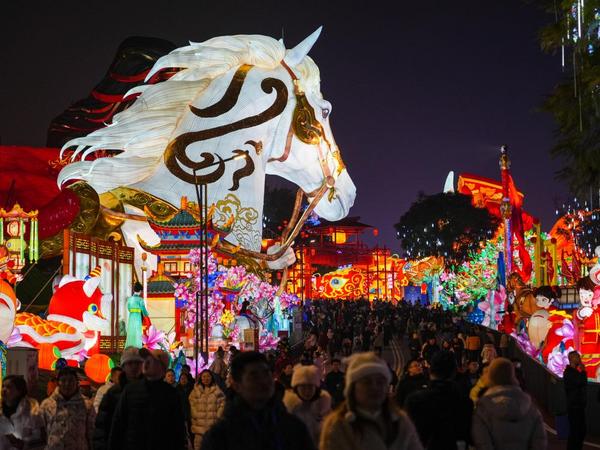
Group 1 - The core focus of local government reports is on "service consumption," with various initiatives proposed to accelerate the growth of this sector by 2025 [1] - Significant achievements in service consumption by 2025 include Beijing hosting 2,295 large events (up 25.8%), Shandong seeing over 10% growth in tourist numbers and revenue, and Chongqing receiving over 500 million tourists with inbound tourism increasing by 68.2% [1] - By 2026, local governments plan to enhance service consumption through investments in diverse sectors such as elderly care, health, and cultural services, with specific initiatives like creating convenient living circles and upgrading traditional service sectors [1][2] Group 2 - The integration of culture, sports, and tourism is seen as a fertile ground for expanding service consumption, with various regions reporting successful initiatives [2] - Jiangsu's "football+" initiative and Chongqing's "viewing and touring" plan are examples of how localities are leveraging cultural events to drive consumer traffic [2] - By 2026, regions like Zhejiang and Tianjin aim to innovate in the cultural and tourism sectors to enhance consumer experiences and expand service offerings [2] Group 3 - New business models such as low-altitude tourism and aviation sports are emerging, with suggestions for regulatory reforms to foster these sectors [3] - There is a shift in consumer demand from material satisfaction to experiences that offer cultural and social value [3] Group 4 - Enhancing emotional, experiential, and self-satisfying service offerings is a key strategy for expanding service consumption [4] - Events like the fourth Zhengjia Datang Lantern Festival in Guangzhou are designed to boost interaction and experience for visitors, leading to increased foot traffic and sales [4] - Various regions are focusing on personalized service offerings and expanding event-driven economies to stimulate consumer spending [4] Group 5 - The youth demographic is becoming a significant force in the service consumption market, driving trends through events like drama, anime, and music festivals [5] - Recommendations include collaboration between business and cultural sectors to enhance consumer experiences and introduce new consumption formats [5] Group 6 - The concept of "youth economy" has been officially recognized in government reports, with proposals for targeted electronic consumption vouchers for young people to stimulate engagement in various social and cultural activities [6] Group 7 - Digital technologies and artificial intelligence are reshaping service consumption landscapes, with local governments emphasizing tech-driven enhancements to improve consumer experiences [7] - Initiatives include the development of smart tourism platforms and AI-driven data analysis to optimize consumer interactions and service delivery [7] - The focus is on transitioning consumer behavior from purchasing goods to enjoying services and experiences, which is expected to invigorate the economy [7]
从“一处美”迈向“一片美”
Guang Xi Ri Bao· 2025-11-28 02:25
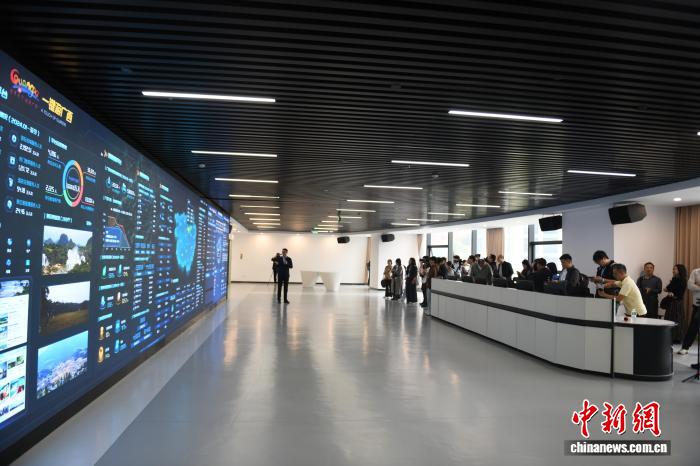
Core Insights - The integration of technology and culture in tourism is redefining visitor experiences in Guangxi, enhancing tourism quality and expanding development space through innovative practices [1][2][6] Technology Empowerment - Artificial intelligence (AI) is deeply integrated into tourism in Guangxi, providing smart assistants, virtual guides, and immersive experiences through technologies like AR and VR [2][3] - The "One-Click Tour Guangxi" digital platform offers real-time information on tourist flows, weather, and operational status of attractions, enhancing visitor planning and experience [2] - AI-generated short dramas are being used to promote local cultural narratives, allowing for personalized storytelling that incorporates regional heritage [3] Intangible Cultural Heritage - The "non-heritage + scenario" model is revitalizing traditional crafts, transforming them from static displays to engaging experiences that visitors can participate in and take home [4][5] - Workshops and experiential courses in various locations allow tourists to create their own non-heritage products, fostering a deeper connection to local culture [4] - The integration of non-heritage experiences into tourism is driving economic growth and cultural preservation, with local governments actively promoting these initiatives [5] Industry Integration - The convergence of tourism with other industries is creating new economic opportunities in Guangxi, with diverse projects emerging from the "culture + tourism" model [6][7] - Coastal villages and towns are being transformed into cultural and artistic hubs, enhancing local employment and community engagement through tourism [6] - Cross-border tourism initiatives are expanding the market, allowing visitors to experience both Chinese and Vietnamese cultures in a single trip [7]
广西推动文旅深度融合 深化文化旅游强区建设
Zhong Guo Xin Wen Wang· 2025-11-18 08:03
Core Points - Guangxi is promoting deep integration of culture and tourism, significantly enhancing the construction of a strong cultural tourism region [1][2] - The region boasts rich cultural and tourism resources, including unique natural landscapes and diverse cultural heritages [2] - Guangxi has developed six major brands in tourism, including "Guilin Landscape" and "Romantic Beibu Gulf," and is exploring replicable models for cultural tourism integration [2][4] Group 1 - The launch of the "Charming New Bagui" cultural tourism integration theme interview activity aims to showcase Guangxi's cultural tourism resources [1][4] - Guangxi is enhancing regional collaborative development and international cooperation, with initiatives like the "One-Click Tour Guangxi" platform and the operation of the first cross-border tourism cooperation zone [2][4] - The region is focusing on the development of cultural tourism products, emphasizing the refinement of traditional cultural carriers and innovative marketing strategies [4][7] Group 2 - The interview activity will explore the innovative development of the cultural tourism industry empowered by artificial intelligence, aiming for high-quality integration and structural reform [7] - The event is designed to highlight Guangxi's rich cultural tourism resources through media coverage [4]