
下一代战斗机

Search documents
德法联合研制战机陷僵局 德国考虑增购美国F-35战机
Yang Shi Xin Wen· 2026-02-19 13:14
Core Viewpoint - The German government is considering purchasing more F-35 fighter jets from the United States due to a stalemate in the joint development of a next-generation fighter jet project with France [1]. Group 1: Purchase Considerations - Negotiations between Germany and the U.S. involve the acquisition of over 35 F-35 fighter jets, each costing approximately €80 million [1]. - Germany had already ordered 35 F-35 jets from the U.S. in 2022, with deliveries expected to begin later this year [1]. Group 2: Joint Development Issues - The background for Germany's consideration to increase F-35 purchases stems from disagreements between France's Dassault Aviation and Germany's Airbus Defence and Space regarding the progression of the next-generation fighter jet project [1]. - The joint development project was intended to enhance Europe's autonomy in military capabilities, but there have been ongoing disputes over leadership roles in the project [1].
日英将合作确保关键矿物
日经中文网· 2026-02-02 03:10
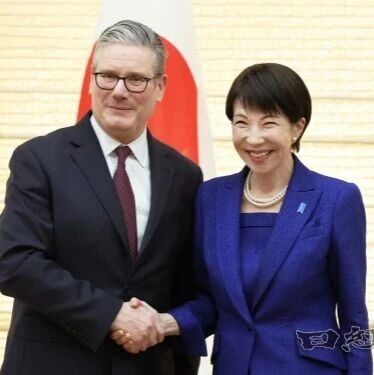
Group 1 - The core viewpoint of the article emphasizes the strengthening of Japan-UK bilateral relations in response to geopolitical challenges, particularly concerning China and North Korea, and the importance of a "free and open Indo-Pacific" [2][4] - Japan and the UK have agreed to collaborate on securing critical mineral supply chains to counter China's tightening of rare earth export controls [2][5] - The leaders highlighted the interconnectedness of security in the Atlantic and Indo-Pacific regions, with Japan-UK cooperation symbolizing this relationship [4][5] Group 2 - Both leaders agreed to hold foreign and defense minister-level consultations (2+2 talks) and confirmed progress on the joint development of next-generation fighter jets, marking Japan's first large defense equipment production collaboration with a country other than the US [5] - The discussions included cooperation in advanced technology fields such as artificial intelligence (AI) and quantum technology [5] - The UK Prime Minister invited the Japanese Prime Minister to visit Chequers, the official country residence of the UK Prime Minister [5]

高市政府仓促行动,日媒直言无法接受
Xin Lang Cai Jing· 2025-12-27 23:21
Core Viewpoint - The article discusses significant policy adjustments in Japan regarding the export of defense equipment, particularly the potential removal of restrictions on weapon exports, which raises concerns about the implications for international stability and Japan's identity as a peaceful nation [1][5][6]. Group 1: Policy Changes - The Japanese government is considering revising the "Three Principles on Transfer of Defense Equipment," allowing for weapon exports without the need for legislative changes, relying solely on government judgment [1][4][6]. - The ruling parties, including the Liberal Democratic Party (LDP) and the Japan Innovation Party, have agreed to eliminate restrictions on five categories of weapon use, which were previously limited to "rescue, transport, surveillance, monitoring, and mine clearance" [5][6]. Group 2: Economic and Security Implications - The government views weapon exports as a crucial policy tool for strengthening security relations with allied nations, while simultaneously reducing aid budgets for developing countries to about half of the peak levels seen in 1997 [2][5]. - There are concerns that shifting focus from economic and humanitarian aid to promoting lethal weapon exports may not contribute to local stability, raising ethical questions about the role of government and military-industrial interests in perpetuating conflict [2][6]. Group 3: Historical Context and Public Sentiment - Historically, there are numerous examples of government and military-industrial complexes instigating and prolonging wars, which raises alarms about Japan's approach to defense exports [2][6]. - The lack of public discussion and the rushed conclusions drawn by the ruling party regarding these significant policy changes are viewed as unacceptable by some observers [1][4][6].
9万亿!再创新高!日本刚刚批准防卫预算!
Zheng Quan Shi Bao Wang· 2025-12-27 02:36
Core Viewpoint - Japan's government has approved a record defense budget exceeding 9 trillion yen for the fiscal year 2026, indicating a significant shift in its defense strategy towards "proactive deterrence" and enhancing its military capabilities, which may impact regional security dynamics [1][2][3]. Group 1: Defense Budget Details - The approved defense budget for fiscal year 2026 is over 9 trillion yen, marking a continuous increase in Japan's defense spending, which has surpassed 6 trillion, 7 trillion, and 8 trillion yen in previous years [2]. - The budget will fund the acquisition of long-range missiles and the development of a coastal defense system centered around attack drones, with an investment of approximately 100.1 billion yen for the latter [2]. - Japan plans to increase its total defense spending to about 43 trillion yen from 2023 to 2027, as outlined in the new "security three documents" approved in late 2022 [2]. Group 2: Strategic Implications - Experts suggest that the increase in defense spending signifies a transformation in Japan's military posture from "defensive" to "proactive deterrence," potentially redefining its post-war military identity and affecting regional security [3]. - Japan is also pursuing the development of nuclear-powered submarines, with plans to advance to the next generation of propulsion systems and possibly acquire nuclear submarines to enhance its defense capabilities [3]. - The country is collaborating with the UK and Italy to develop a next-generation fighter jet, with an investment of over 160 billion yen planned for this initiative, expected to be deployed by 2035 [3]. Group 3: Domestic and International Reactions - The increase in defense spending has raised concerns among various sectors in Japan, with public protests against military expansion and warnings from scholars about the economic burden on ordinary citizens [4][5]. - The Chinese Foreign Ministry has criticized Japan's military expansion, suggesting it reflects a dangerous trend towards militarism and a departure from its historically peaceful development path [4][5].
9万亿!日本,刚刚批准!
券商中国· 2025-12-27 01:31
Core Viewpoint - Japan's defense budget has exceeded 9 trillion yen for the fiscal year 2026, marking a historic high and indicating a shift from a "defensive" to a "proactive deterrence" military strategy, which could significantly alter the regional security landscape [2][3][4]. Group 1: Defense Budget Details - The Japanese government approved a budget that includes a defense budget surpassing 9 trillion yen, which is part of a broader plan to increase total defense spending to approximately 43 trillion yen from 2023 to 2027 [3]. - The budget will fund long-range missiles and the development of a coastal defense system centered around attack drones, with an investment of about 100.1 billion yen for the "SHIELD" project [3]. - The Japan Air Self-Defense Force will be renamed the Japan Aerospace Self-Defense Force, and a new "Space Operations Group" will be established with around 880 personnel [3]. Group 2: Strategic Implications - The increase in defense spending signifies a fundamental change in Japan's military posture, moving towards capabilities for long-range operations and offensive capabilities, which could destabilize post-war military positioning [4]. - Japan's plans to develop nuclear-powered submarines and engage in joint development of next-generation fighter jets with the UK and Italy, with an investment of over 160 billion yen, further illustrate its shift towards a more aggressive military stance [4]. Group 3: Domestic and International Reactions - There is growing domestic opposition to the military expansion, with protests against the government's defense spending plans, highlighting concerns over the economic burden on ordinary citizens [6]. - The Chinese government has criticized Japan's military developments, suggesting they reflect a dangerous trend towards militarization and a revival of militaristic policies [5][6].

消息人士:日本对与英国和意大利合作的下一代战斗机项目能否按计划在2035年推出持越来越多的疑虑。
news flash· 2025-05-30 07:42
Group 1 - The core concern is Japan's increasing doubts about the ability to launch the next-generation fighter jet project in collaboration with the UK and Italy by the planned date of 2035 [1]
市场消息:意大利、英国防务公司高管表示,与日本合作开发的下一代战斗机进展符合预期。
news flash· 2025-05-27 16:35
Group 1 - The core viewpoint of the article is that the development of the next-generation fighter jet in collaboration with Japan is progressing as expected according to executives from Italian and British defense companies [1] Group 2 - The collaboration between the Italian and British defense sectors with Japan is aimed at enhancing technological capabilities in military aviation [1] - Executives highlighted that the project is on track, indicating a positive outlook for future developments in defense technology [1]