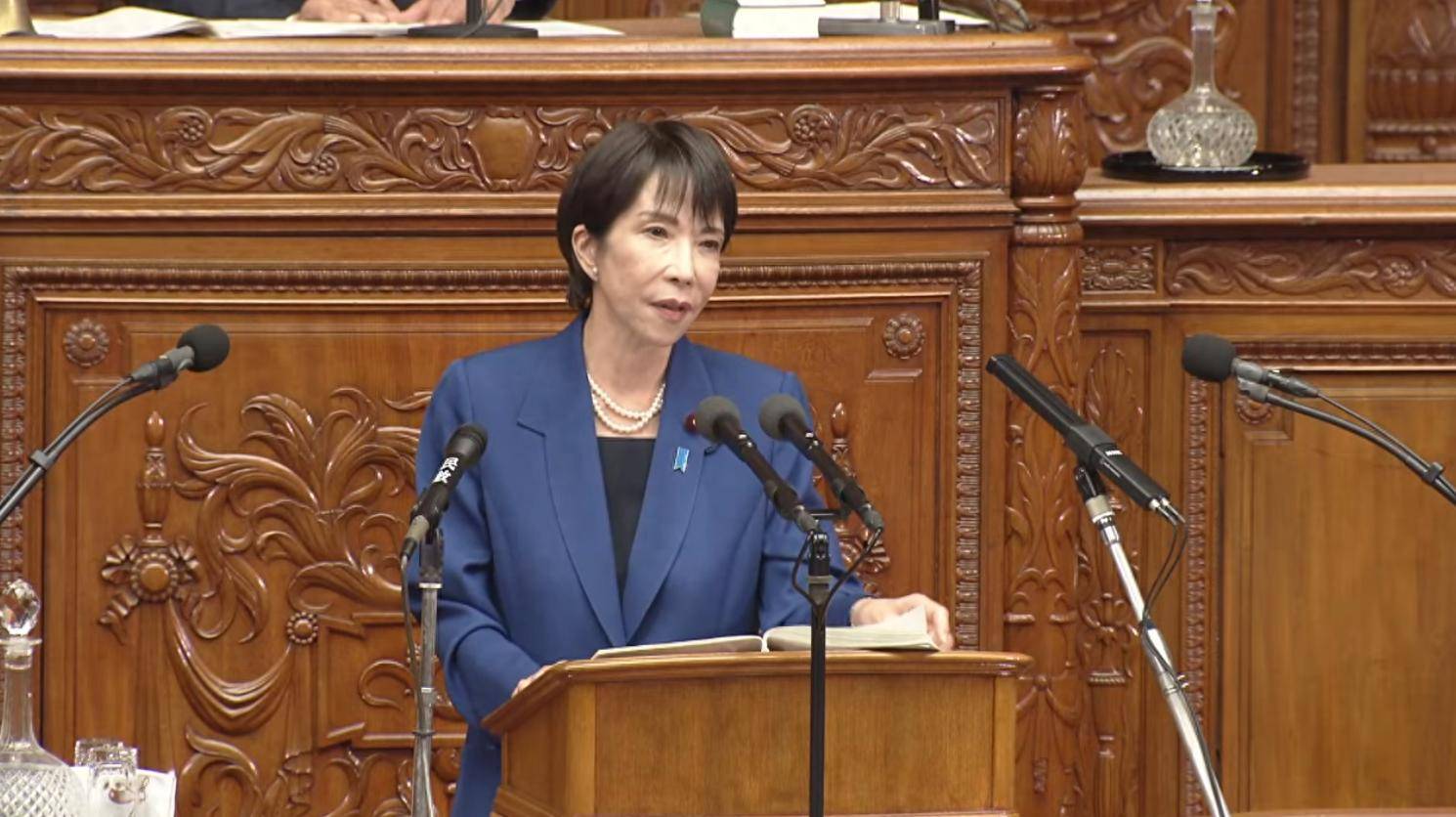
防卫装备转移三原则

Search documents
高市政府仓促行动,日媒直言无法接受
Xin Lang Cai Jing· 2025-12-27 23:21
Core Viewpoint - The article discusses significant policy adjustments in Japan regarding the export of defense equipment, particularly the potential removal of restrictions on weapon exports, which raises concerns about the implications for international stability and Japan's identity as a peaceful nation [1][5][6]. Group 1: Policy Changes - The Japanese government is considering revising the "Three Principles on Transfer of Defense Equipment," allowing for weapon exports without the need for legislative changes, relying solely on government judgment [1][4][6]. - The ruling parties, including the Liberal Democratic Party (LDP) and the Japan Innovation Party, have agreed to eliminate restrictions on five categories of weapon use, which were previously limited to "rescue, transport, surveillance, monitoring, and mine clearance" [5][6]. Group 2: Economic and Security Implications - The government views weapon exports as a crucial policy tool for strengthening security relations with allied nations, while simultaneously reducing aid budgets for developing countries to about half of the peak levels seen in 1997 [2][5]. - There are concerns that shifting focus from economic and humanitarian aid to promoting lethal weapon exports may not contribute to local stability, raising ethical questions about the role of government and military-industrial interests in perpetuating conflict [2][6]. Group 3: Historical Context and Public Sentiment - Historically, there are numerous examples of government and military-industrial complexes instigating and prolonging wars, which raises alarms about Japan's approach to defense exports [2][6]. - The lack of public discussion and the rushed conclusions drawn by the ruling party regarding these significant policy changes are viewed as unacceptable by some observers [1][4][6].
视频丨日本计划加速向他国供武 专家:欲隐蔽推动军事扩张
Yang Shi Xin Wen Ke Hu Duan· 2025-12-25 02:48
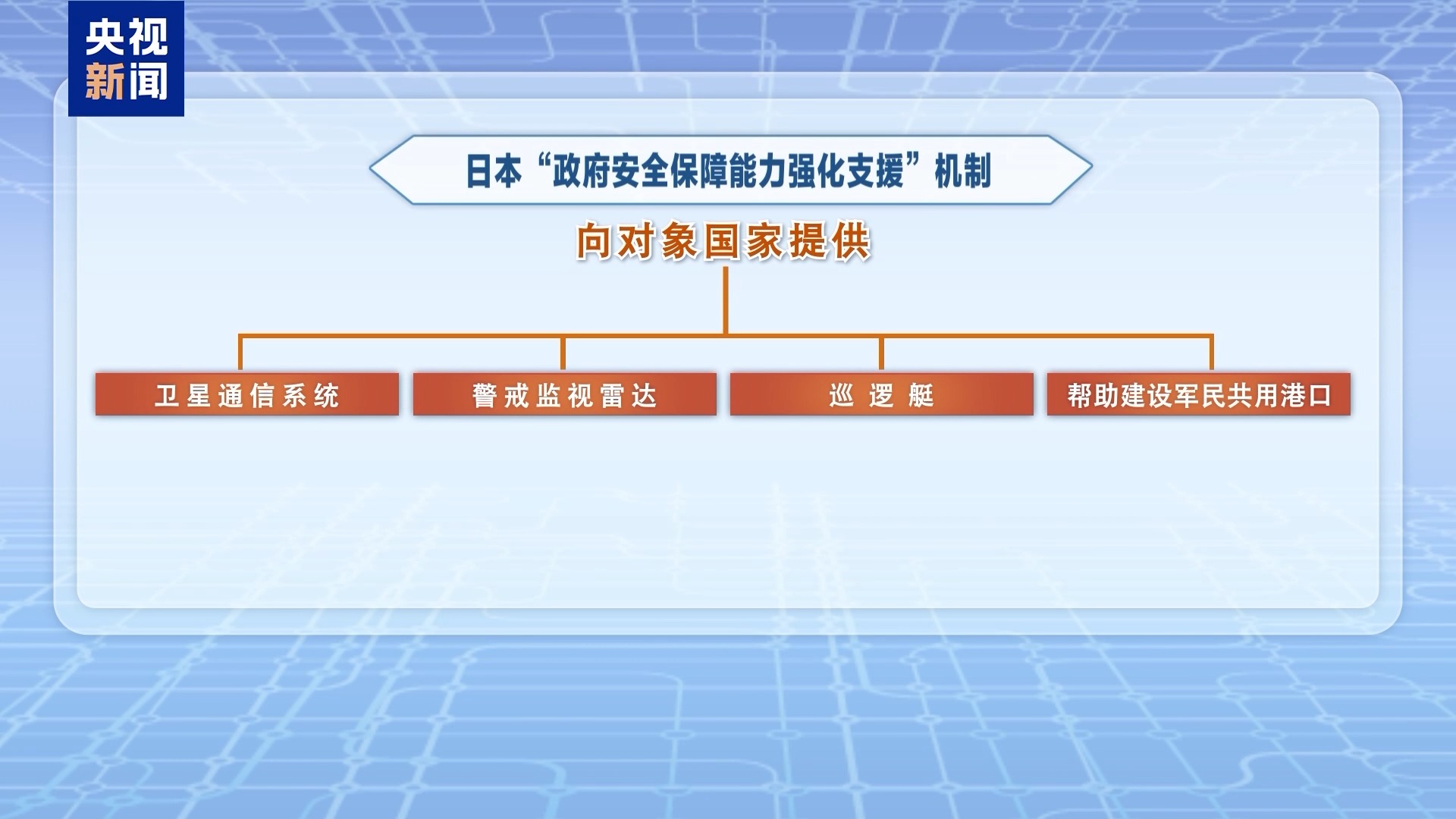
Core Viewpoint - Japan is significantly expanding its "Government Security Capability Enhancement Support" mechanism, with a budget increase to 18.1 billion yen (approximately 815 million RMB) for the fiscal year 2025, up from 8.1 billion yen in the previous year [2]. Group 1: Budget and Mechanism Expansion - The budget for the "Government Security Capability Enhancement Support" mechanism will reach 18.1 billion yen in fiscal year 2025, a substantial increase from 8.1 billion yen in fiscal year 2024 [2]. - The mechanism was established in April 2023 to support developing countries by providing non-lethal military equipment such as satellite communication systems, surveillance radars, and patrol boats [4]. - By the end of 2023, Japan has already provided significant support, including five coastal surveillance radars to the Philippines and four patrol boats to Bangladesh, totaling approximately 2 billion yen [6]. Group 2: Policy and Strategic Implications - Japan's government is pushing to relax restrictions on arms exports, which were previously limited to non-lethal equipment, indicating a shift towards broader military capabilities [11]. - The expansion of the support mechanism is seen as a strategic move to create a security cooperation network led by Japan, while also preparing the groundwork for potential future arms exports [13]. - This strategy allows Japan to enhance its military presence without directly violating its pacifist constitution, thereby increasing its intervention capabilities in potential conflicts [17].

日本传递“极具冲击性且严重的信号”
Xin Lang Cai Jing· 2025-12-23 22:51
Core Viewpoint - The recent statements from a senior government official advocating for Japan to possess nuclear weapons signal a significant shift in Japan's defense policy discourse, raising concerns among various stakeholders [1][5]. Group 1: Government Statements - A senior official in the Japanese government suggested that Japan should have nuclear weapons due to the current severe security situation, labeling it as his "personal view" [1][4]. - This is reportedly the first time such pro-nuclear sentiments have emerged from the core of the government, indicating a potential shift in policy [1][5]. Group 2: Political Reactions - Former Defense Minister Nakatani criticized the remarks, stating that personal opinions should not be expressed in the context of government positions [1][4]. - The comments have drawn backlash from survivor groups of atomic bombings, who view them as a mockery of their experiences and a potential threat to Japan's longstanding non-nuclear principles [4][8]. Group 3: Policy Implications - Prime Minister Kishi's administration is considering revising Japan's "Three Non-Nuclear Principles," particularly the impracticality of the "no nuclear weapons in transit" clause [3][7]. - Kishi has indicated intentions to accelerate the revision of key security documents, which may lead to a more aggressive defense posture, including the potential for nuclear weapons to be temporarily stationed in Japan during emergencies [7][8]. Group 4: Export Policy Changes - The government plans to abolish restrictions on the export of defense equipment, which currently limits usage to specific categories such as rescue and surveillance, indicating a broader ambition for military exportation [4][8].
公然鼓吹“拥核” 日本到底想干什么?
Yang Shi Xin Wen· 2025-12-23 17:35
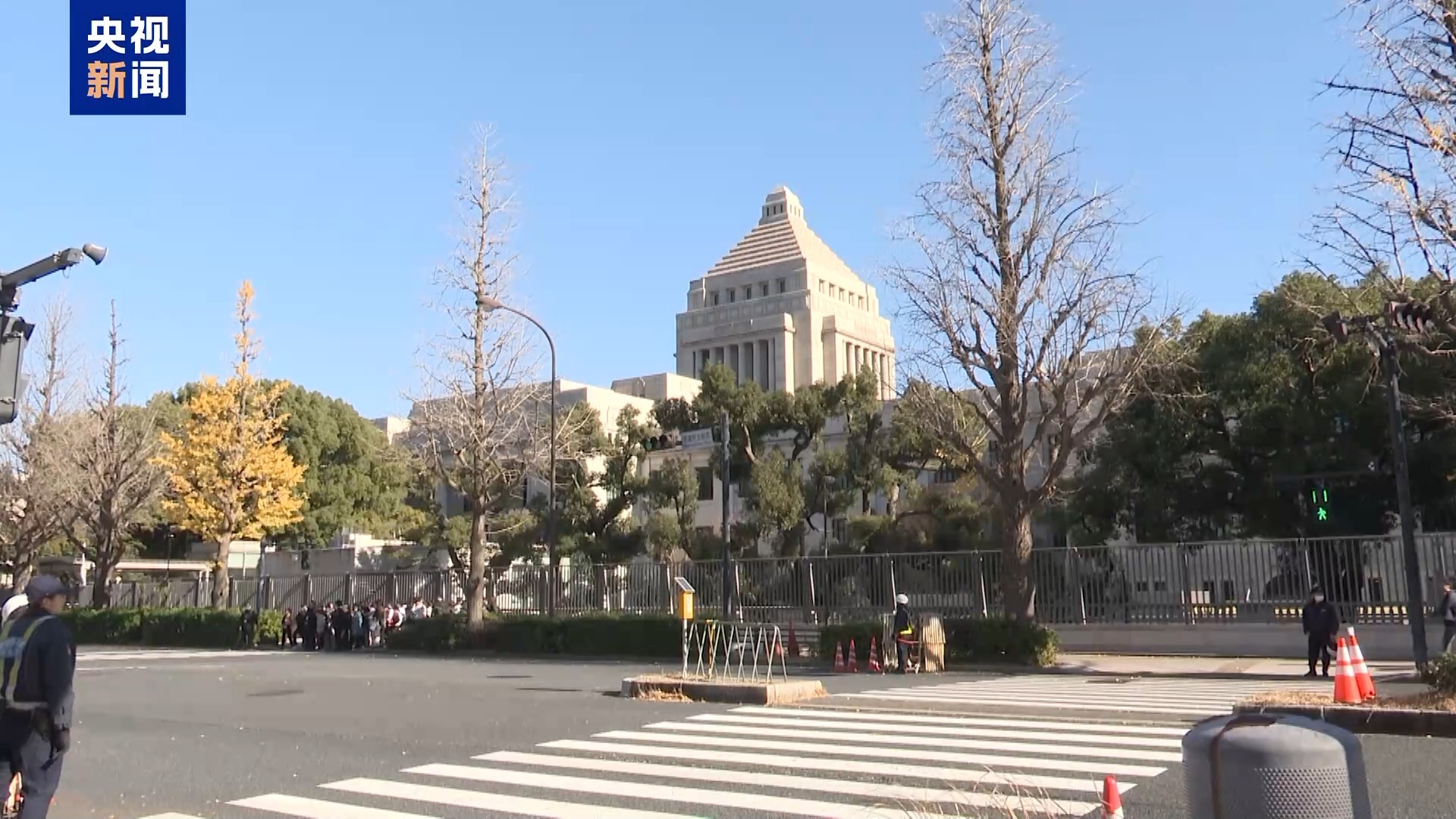
Core Viewpoint - Japan's recent political discourse surrounding nuclear weapons, particularly comments from high-ranking officials advocating for nuclear armament, raises significant concerns about the country's security policy and its historical stance on nuclear weapons [1][18]. Group 1: Nuclear Weapon Advocacy - A senior official from Japan's Prime Minister's office stated on December 18 that "Japan should possess nuclear weapons," which has sparked widespread criticism [1]. - The ruling party, led by Prime Minister Kishi, is reportedly exploring modifications to Japan's "Three Non-Nuclear Principles," particularly the principle against the introduction of nuclear weapons [3][19]. - The Hiroshima Prefectural Assembly unanimously passed a resolution urging the government to adhere to the "Three Non-Nuclear Principles," expressing concerns that any modification could lead to a repeat of the tragedies experienced in Hiroshima and Nagasaki [3]. Group 2: Security Threat Narratives - Japan's Defense Minister has been actively participating in military events and has emphasized the urgent need to strengthen defense capabilities in the southwestern region of Japan, aligning with the narrative of heightened security threats [4][21]. - The recent military activities and rhetoric from Japanese officials are seen as part of a broader strategy to justify the push for nuclear armament and the relaxation of weapon export restrictions [1][9]. Group 3: Weapon Export Policy Changes - Japan has been progressively relaxing its weapon export restrictions, with recent agreements reached to modify the "Defense Equipment Transfer Principles" and eliminate certain export limitations [11][17]. - The current government is expected to submit proposals to the cabinet in February to further ease restrictions on weapon exports, indicating a significant shift in Japan's defense policy [11][17]. - The historical context of Japan's weapon export restrictions dates back to its post-World War II pacifist constitution, but recent political shifts suggest a move towards military normalization [15][17]. Group 4: Underlying Motivations for Nuclear Advocacy - The increasing military disparity between Japan and China has led to strategic anxieties, prompting some Japanese officials to advocate for nuclear capabilities as a means to counterbalance this perceived threat [21]. - The decline of U.S. hegemony has led some Japanese politicians to believe that the U.S. may not provide adequate protection in future conflicts, thus necessitating Japan's own military deterrent [21]. - The push for nuclear armament is also viewed as a political maneuver by right-wing factions within Japan to divert attention from other issues and to further their agenda of military revitalization [21].
高市早苗最新表态,中方回应
证券时报· 2025-11-21 10:11
Group 1 - The core viewpoint of the article emphasizes China's strong opposition to Japan's recent militaristic statements and actions, particularly regarding Taiwan and military exports, indicating a potential shift towards militarization in Japan [2][3][4] - Japan's Prime Minister, high市早苗, has made controversial remarks suggesting possible military intervention in Taiwan, which has provoked significant backlash from the Chinese public and government [2] - The article highlights Japan's recent military developments, including the completion of arms exports to the U.S. and discussions on revising security treaties, which may lead to a relaxation of its post-war pacifist stance [3][4] Group 2 - Japan's defense budget has seen continuous increases for thirteen consecutive years, reflecting a trend towards military expansion and a shift in defense policy [3] - The modification of Japan's arms export principles and the potential revision of the "Three Non-Nuclear Principles" indicate a move towards a more aggressive military posture, raising concerns about regional security [3][4] - The article questions Japan's intentions, suggesting that a return to militarism would be met with resistance from both the Chinese populace and the international community, ultimately leading to failure [4]

要动武?日本股市先"崩"为敬!高市早苗的豪赌,撞上中国经济铁壁
Sou Hu Cai Jing· 2025-11-18 15:22
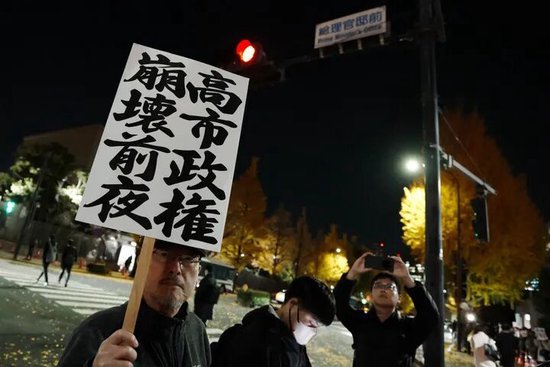
Group 1: Political Developments - Japanese Prime Minister Sanae Takaichi's recent statements suggest a potential military intervention in the Taiwan Strait, indicating a shift in Japan's defense posture [1] - Takaichi's government plans to accelerate defense spending to 2% of GDP, originally set for fiscal year 2027, raising concerns given Japan's high debt levels [3] - The government is also considering changes to its "Three Non-Nuclear Principles," which could allow for the introduction of nuclear weapons [3] Group 2: Military Capabilities - Japan has been quietly building significant offensive capabilities, including the development of "counterstrike capabilities" and the procurement of 400 Tomahawk cruise missiles [4] - The Japan Maritime Self-Defense Force has modified two Izumo-class destroyers to operate F-35B fighter jets, enhancing its naval power [4] - Plans are underway to establish approximately 130 large ammunition depots across the country by 2035 [4] Group 3: Economic Context - Japan's economic dependency on China is substantial, with a 59.1% increase in investments in China in the first half of 2025, and over 30% reliance on Chinese supplies for key industries like automotive and semiconductors [7] - Japan's energy security is precarious, with 98% of its oil imported and 88% of that reliant on the Strait of Malacca, which is outside Japan's control [7] - The government's debt exceeds twice its GDP, raising concerns about the sustainability of increased defense spending [7] Group 4: Public Reaction - Takaichi's remarks have sparked widespread criticism domestically, with former Prime Minister Shigeru Ishiba and other political figures expressing concern over the implications of such statements [8] - Public protests have occurred, with citizens demanding Takaichi retract her statements and apologize [8] Group 5: Historical Context - Analysts draw parallels between Takaichi's rhetoric and historical narratives used to justify Japan's past military expansions, warning that such language may serve as a pretext for aggressive military policies [10] - The potential shift away from Japan's pacifist constitution could escalate regional tensions rather than enhance national security [10]