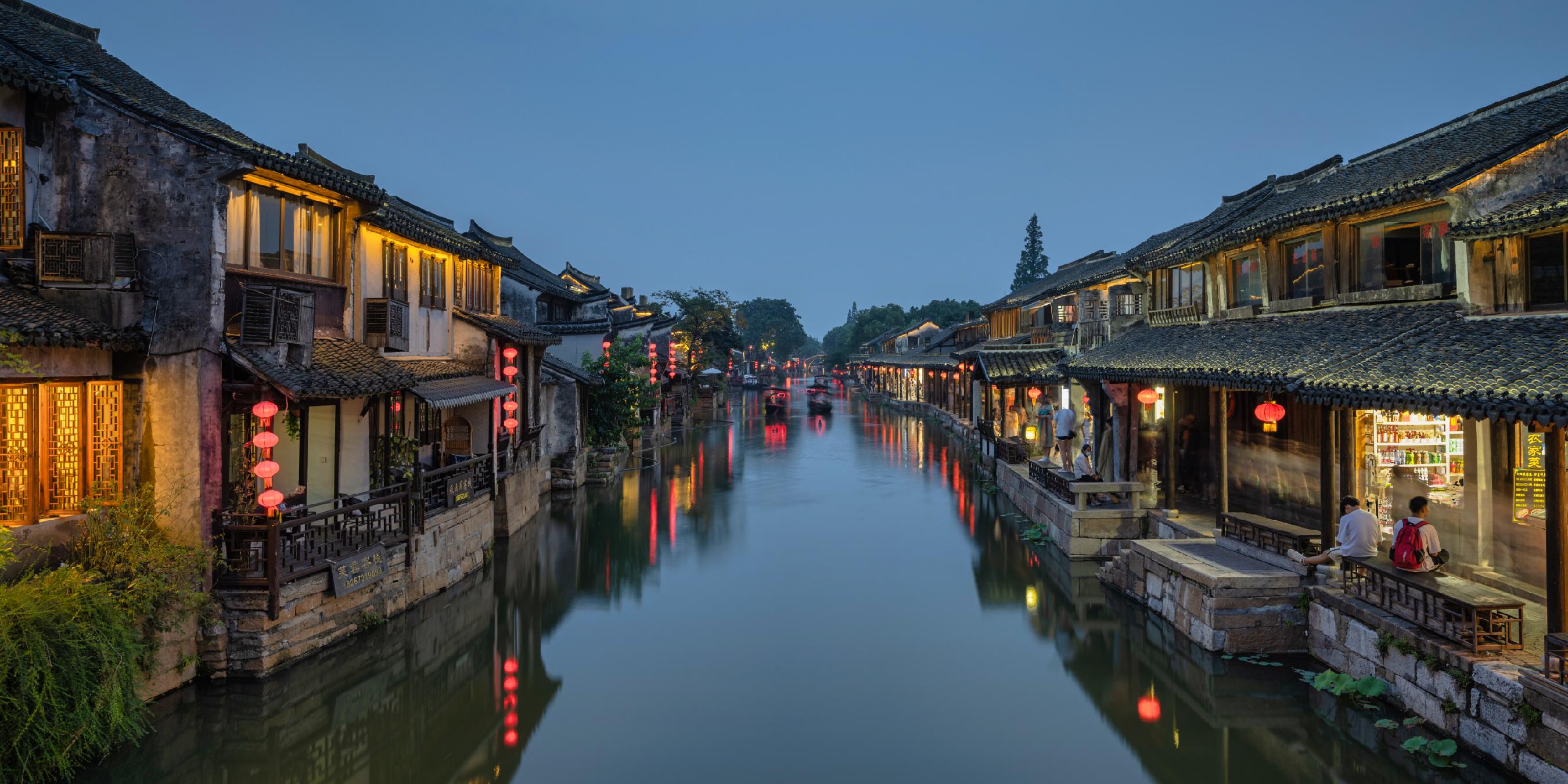
乌镇戏剧节

Search documents
“演艺+旅游”新趋势带来新机遇
Xin Lang Cai Jing· 2026-01-27 23:07
Core Viewpoint - The integration of performing arts and tourism is becoming a structural opportunity for industry development, enhancing visitor experiences and generating multiple benefits for cities, including increased overnight stays, commercial consumption, and cultural brand recognition [1][2]. Group 1: Characteristics of "Performing Arts + Tourism" by 2025 - The market size is continuously expanding, with high levels of performance sessions, box office revenue, and audience numbers, particularly for large concerts and music festivals that significantly attract visitors to host cities [2]. - Market penetration and audience expansion are occurring simultaneously, with performances becoming more widespread across regions, and younger demographics remaining the primary consumers, while participation from families and seniors is also increasing [2]. - Innovative performance formats are emerging, such as immersive, resident, and interactive performances, enhancing the integration of performances within scenic areas and themed districts, thus upgrading performances from "time-based consumption" to "space-based experience" products [2]. Group 2: Trends in the Integration of "Performing Arts + Tourism" - The "ticket root economy" will drive performing arts products to evolve from singular viewing content to a multi-faceted product system, enhancing visitor spending through integrated services across transportation, accommodation, dining, and attractions [3]. - The functional positioning of tourism performances will shift from being supplementary projects to essential content infrastructure for destinations, with successful projects focusing on local cultural integration and long-term operational capabilities [3]. - The value focus of performances will expand from box office revenue to the construction and operation of urban cultural assets, with a systematic approach to developing performing arts IP and extending it across various scenarios [4][5]. Group 3: Development System for "Performing Arts + Tourism" during the 14th Five-Year Plan - Policy measures should aim to reduce integration costs and enhance operational predictability, establishing clear guidelines for event management and support for quality improvement and digital innovation [6]. - Content development should center on local cultural narratives, utilizing IP thinking to create products that integrate local cultural elements and ensure long-term operational sustainability [6]. - Industry collaboration should be strengthened to transform performances from standalone cultural activities into urban consumption engines, integrating ticketing with local services and optimizing visitor flow through data systems [6].
古城文旅如何出彩:创新业态 联动发展
Jing Ji Ri Bao· 2025-12-11 06:27
Core Insights - The article emphasizes the importance of preserving and promoting historical culture in ancient towns, highlighting successful examples from Zhejiang province, where ancient towns have become vibrant tourist destinations through effective protection and development strategies [1][4]. Group 1: Development Strategies - Zhejiang's ancient towns, such as Wuzhen and Xitang, have become significant cultural tourism brands, with a notable increase in visitor satisfaction and online attention [1]. - Wuzhen has set a benchmark for ancient town tourism in China by combining traditional restoration with innovative features, hosting events like the Wuzhen Theatre Festival and the World Internet Conference [2]. - Nanzhu Ancient Town has successfully integrated international cultural events, enhancing its appeal and showcasing local heritage through immersive experiences [3]. Group 2: Cultural Integration and Experience - The integration of local culture and modern tourism experiences is crucial, as seen in the transformation of Nanzhu Ancient Town, which has implemented a ticketing system to enhance visitor engagement [7]. - New projects like the Cao'e Li Historical and Cultural Block in Shaoxing focus on blending traditional culture with modern entertainment, creating a vibrant atmosphere for visitors [5][6]. - The Taohuolong Dreamland has shifted from a traditional scenic area to a performance-based attraction, significantly increasing visitor numbers and appealing to younger demographics [8]. Group 3: Challenges and Solutions - The article identifies challenges such as homogenization and over-commercialization in ancient town tourism, urging the need for unique branding and experiences [7][9]. - Strategies for overcoming these challenges include regional collaboration for planning, innovative tourism offerings, and the preservation of local culture to ensure sustainable development [9].
文旅项目如何穿越周期,操盘手们带来一手经验
第一财经· 2025-11-26 10:51
Core Insights - The article discusses the transformation and evolution of the cultural tourism industry in China, emphasizing the importance of emotional resonance and community engagement in creating sustainable tourism projects [3][4][5][6]. Group 1: Revitalization of Ancient Towns - The article highlights the successful revitalization of ancient towns like Wuzhen and Huangling, where projects focus on deep cultural roots and emotional connections rather than superficial attractions [4][5]. - Wuzhen's annual drama festival achieved over 1 billion online views, showcasing the added value of cultural events [4]. - Huangling transformed from a dilapidated village into a top tourist destination, attracting over 3 million visitors last year by creating a "shaiqiu" (sun-drying) cultural ecosystem [5]. Group 2: Blurring Boundaries in Tourism - The article notes a shift in tourism from traditional sightseeing to immersive experiences, with places like Anaya and Tao Xichuan redefining space value by integrating social, artistic, and commercial elements [6][7]. - Anaya has become a spiritual home for urban dwellers, generating an operational income of over 3 billion yuan and welcoming 4.8 million visitors annually [9]. - Tao Xichuan's transformation from a derelict factory to a vibrant cultural hub has created over 120,000 jobs and attracted thousands of artisans [10]. Group 3: Industry Challenges and Opportunities - The article addresses the increasing homogenization in the cultural tourism sector, with operators recognizing the need for differentiation and innovation to meet diverse consumer demands [14][16]. - Operators like Wu Guoping emphasize the importance of emotional engagement and brand building as key strategies for navigating industry challenges [16]. - The shift in consumer behavior towards valuing emotional resonance over mere sightseeing is highlighted, indicating a need for tourism offerings to evolve accordingly [14][16].

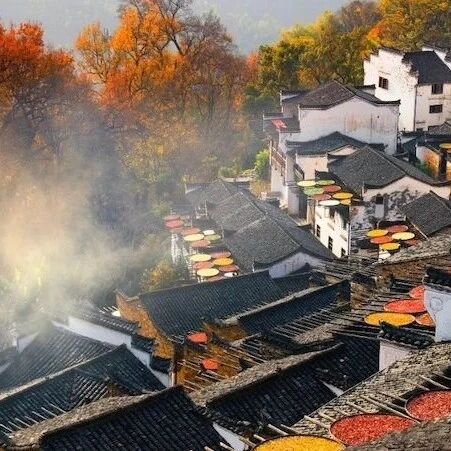
文旅项目如何穿越周期,操盘手们带来一手经验
Di Yi Cai Jing· 2025-11-26 09:44
Core Insights - The article emphasizes that successful projects in the cultural tourism industry are those that resonate emotionally with people and grow organically from the land, rather than being artificially created by capital [1] Group 1: Industry Trends - The cultural tourism industry in China is facing increasing homogenization, with a pressing need for transformation as visitor demands become more diverse and demographic changes occur [12] - Operators are recognizing the importance of emotional resonance in attracting visitors, as younger generations are willing to spend on experiences that connect with their feelings rather than just sightseeing [13][15] Group 2: Successful Case Studies - The transformation of Wuzhen, led by Chen Xianghong, showcases the value of cultural events like the Wuzhen Theatre Festival, which achieved over 1 billion online views this year, highlighting the added value of humanistic arts [2] - Huangling's evolution from a dilapidated village to a top tourist destination involved creating a "sun-drying" industry that attracts over 3 million visitors annually, demonstrating the potential of leveraging unique cultural elements [4] - Anaya's development into a community-focused space integrates arts and social interactions, achieving an operational revenue of over 3 billion yuan and attracting 4.8 million visitors annually [8] - The revitalization of Tao Xichuan by Liu Zili emphasizes preserving cultural heritage while fostering a creative community, growing from 55 creators to over 30,000 in ten years [9] - Zhengjia Plaza's shift from traditional retail to a cultural tourism hub has increased visitor engagement, extending average stay times and diversifying revenue streams [10] Group 3: Strategic Insights - Industry leaders stress the need to shift focus from merely creating attractions to building emotional connections and meaningful experiences for visitors [15] - The importance of brand building is highlighted as a key factor for enduring success in the cultural tourism sector, as it fosters trust and recognition among consumers [15]
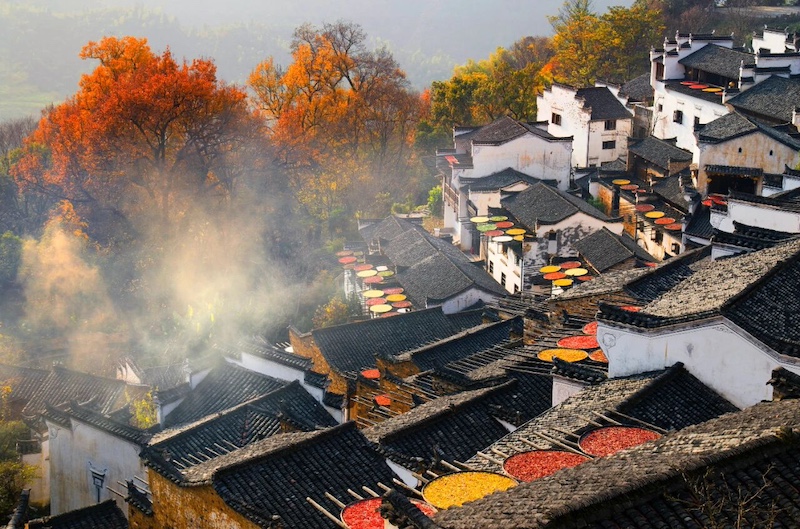
中青旅:公司旅行社、景区、酒店业务均有线上自主销售平台,同时与OTA等线上平台开展合作
Mei Ri Jing Ji Xin Wen· 2025-11-10 08:36
Core Viewpoint - The company has developed its own online sales platform for travel agencies, scenic spots, and hotels, while also collaborating with online travel agencies (OTAs) to expand product sales channels [1] Group 1: Online Business Strategy - The company operates an independent online sales platform for its travel agency, scenic spots, and hotel businesses [1] - Collaboration with OTAs is utilized to broaden product sales channels [1] Group 2: Cultural and Artistic Initiatives - The Wuzhen Scenic Area has successfully hosted the Wuzhen Theatre Festival for twelve consecutive years since its inception in 2013, establishing it as an internationally influential theatre brand [1] - The company has launched various cultural initiatives such as the "Wuzhen International Contemporary Art Invitation Exhibition" and the "Wuzhen International Future Visual Art Project" to enhance its cultural positioning [1] Group 3: Innovative Experiences at Scenic Spots - The Gubei Water Town has leveraged its historical resources, such as the Simatai Great Wall, to create immersive experiences like "Dream Back to Gubei Great Wall Town" [1] - The immersive drama and interactive performances extend from the stage to the streets, enhancing the connection between architecture, scenes, and culture, resulting in positive market feedback [1]

乌镇戏剧节,用12年成为国际戏剧“买手店”
Di Yi Cai Jing· 2025-10-27 06:40
Core Insights - The 12th Wuzhen Theatre Festival concluded on October 26, showcasing 25 performances from 10 countries over 11 days, highlighting its growth into one of Asia's most influential theatre festivals [1][3][10] - The festival's theme for next year, "淡远" (tranquility), reflects a mature artistic vision, transitioning from this year's theme "扶摇" (soaring) [1][10] - The festival has evolved from a small local event to a significant international platform, attracting global theatre companies and audiences [3][14] Festival Highlights - The festival featured the German contemporary theatre masterpiece "Human City Marathon Play," which ran for 9 hours and attracted over 10,000 viewers, marking a significant cultural exchange [3][8] - The event included various performances, from avant-garde to traditional arts, creating a surreal and poetic atmosphere throughout the town [11][14] - The festival's unique setting in a water town enhances its appeal, providing a distinctive backdrop for theatrical performances [14] Future Directions - The festival's founders are discussing future directions, considering expansion while maintaining high-quality content and audience experience [10][14] - The festival aims to continue evolving and exploring new artistic expressions, with a focus on diverse styles and themes [15] - The commitment to presenting top international works fosters dialogue and cultural exchange within contemporary Chinese theatre [14][15]
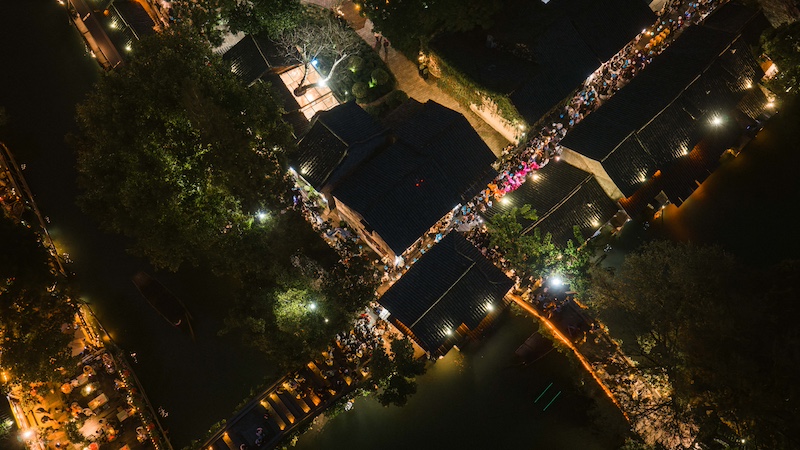
乌镇戏剧节迎八方来客,25部中外剧目集中亮相打造沉浸戏剧盛宴
Sou Hu Cai Jing· 2025-10-20 11:01
Core Points - The 12th Wuzhen Theatre Festival is being held from October 16 to 26 in Wuzhen, Zhejiang, featuring 25 invited performances from 10 countries [1] - The festival transforms Wuzhen with various drama posters and street performances, attracting audiences from across the country [3] - The opening performance, a nine-hour marathon play titled "City of Humanity," has garnered significant attention from viewers [5] Group 1 - The festival includes a collaboration between Chinese and German directors, highlighting the international co-creation aspect of the performances [7] - To promote original theatre and nurture new talent, the festival features a youth competition section showcasing debut works by young directors [9] Group 2 - The overall ticket sales for the festival reached over 26,000, significantly boosting local tourism, including accommodation and dining [11] - The local scenic area has achieved a 100% occupancy rate for its 4,000 rooms during weekends, with occupancy rates of 80-90% during non-weekend periods [11]
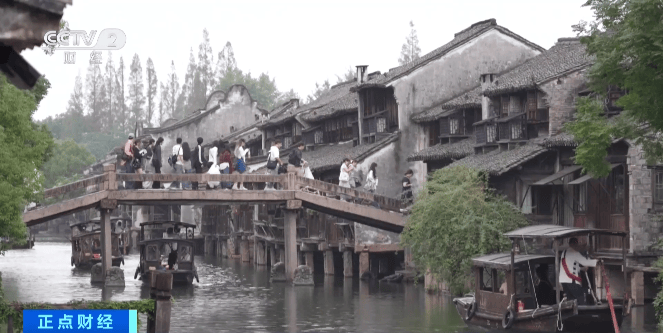
乌镇神话与千镇困局,古镇如何逃离“复制粘贴”?
Jing Ji Guan Cha Wang· 2025-06-16 10:30
Core Insights - The article discusses the challenges faced by ancient towns in China, highlighting the contrast between the successful model of Wuzhen and the struggles of many other towns that have attempted to replicate its success [2][7][12]. Group 1: Overview of Ancient Towns - There are over 2,800 ancient towns in China, with 312 recognized as national historical and cultural towns, primarily located in Jiangsu and Sichuan [2]. - The success of Wuzhen has inspired many local governments to invest heavily in developing or replicating ancient towns, leading to significant financial commitments [7]. Group 2: Wuzhen's Success Factors - Wuzhen's development began in 1999, focusing on unified planning and construction, which was innovative at the time [3]. - The team behind Wuzhen emphasized restoring historical aesthetics and implementing underground infrastructure to maintain the town's traditional appearance [3]. - Operational management was crucial, with over 90% of businesses being self-operated, ensuring service consistency and quality [4]. Group 3: Challenges Faced by Other Ancient Towns - Many towns, despite heavy investments, have failed due to poor planning and operational execution, leading to significant financial losses [7][8]. - A common issue is the homogenization of offerings, where similar shops and products dilute the unique appeal of each town [8][9]. - The lack of local cultural integration and the tendency to replicate successful models without adaptation have contributed to the sameness of many ancient towns [9][12]. Group 4: Recommendations for Improvement - Experts suggest focusing on cultural excavation, product innovation, and management optimization to combat homogenization [12][13]. - Establishing unique cultural identities for each town and enhancing visitor experiences through diverse offerings are essential [13][14]. - Retaining local residents and their traditional businesses can help maintain the authentic atmosphere of ancient towns [9][14].