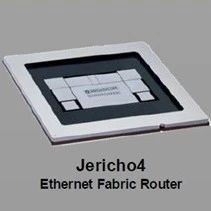
交换器芯片

Search documents
黄仁勋:投资OpenAI计划没变
Di Yi Cai Jing Zi Xun· 2026-01-31 15:28
Core Insights - Huang Renxun's recent visit to Taiwan included meetings with local supply chain partners and discussions on AI infrastructure and investment in OpenAI [2][5] Group 1: Company Developments - NVIDIA is experiencing strong demand this year and is fully engaged in the production of Blackwell and Rubin chips [3] - Huang emphasized that TSMC must work hard to meet NVIDIA's demand for wafers and CoWoS capacity, with TSMC potentially doubling its capacity over the next decade [3] - NVIDIA's annual R&D costs are nearly $20 billion, with expectations for a 50% increase in R&D costs in the future due to the complexity of technology [4] Group 2: Market Dynamics - Huang stated that ASICs (Application-Specific Integrated Circuits) will not surpass GPU shipments, asserting that achieving better ASICs than NVIDIA's products requires superior R&D personnel [3] - NVIDIA collaborates with nearly all AI companies, including Google, and is involved with every cloud provider, despite some competition from cloud computing firms [3] Group 3: Investment and Future Plans - Huang addressed concerns regarding a $100 billion investment in OpenAI, clarifying that NVIDIA's partnership with OpenAI remains unchanged and that NVIDIA is considering participation in OpenAI's new funding round [5] - The company is at the beginning of a new phase in AI infrastructure development, which is expected to take about 10 years, necessitating the construction of facilities globally, including in Taiwan, the US, Europe, Japan, and Southeast Asia [5]


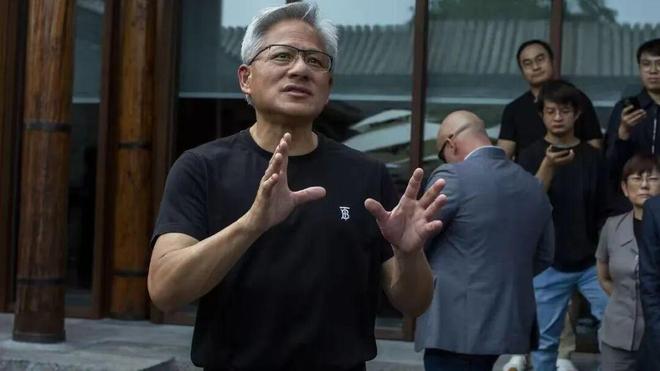
黄仁勋:投资OpenAI计划没变
第一财经· 2026-01-31 15:18
Core Viewpoint - Huang Renxun's recent visit to Taiwan highlights Nvidia's strong demand and ongoing investments in AI infrastructure, emphasizing the company's commitment to expanding its production capabilities and partnerships in the AI sector [3][4][6]. Group 1: Nvidia's Demand and Production - Nvidia is experiencing robust demand this year and is fully engaged in the production of Blackwell and Rubin chips, indicating a strong growth trajectory for the company [4]. - TSMC is expected to significantly increase its production capacity by 100% over the next decade, which represents a substantial infrastructure investment to meet Nvidia's needs for wafers and advanced packaging technology [4]. Group 2: Competitive Landscape - Huang Renxun asserts that while ASICs (Application-Specific Integrated Circuits) have demand, Nvidia's approach is unique as it encompasses the entire AI infrastructure, producing a range of products including CPUs, GPUs, and networking chips [5]. - The assertion that ASIC shipments will surpass those of GPUs is dismissed, with Huang emphasizing that achieving better ASICs than Nvidia's products requires superior R&D capabilities, which many companies are attempting but have not yet succeeded [5]. Group 3: Investment in OpenAI - Reports suggest that Nvidia's $100 billion investment plan in OpenAI has stalled due to Huang's concerns, but he clarified that the partnership remains intact and Nvidia is considering participating in OpenAI's new funding round [6]. - Huang noted that the AI infrastructure development is at its inception and will take approximately 10 years, necessitating global computing facilities, including new factories in Taiwan, the US, Europe, Japan, and Southeast Asia [6].

黄仁勋回应投资OpenAI计划没变
Di Yi Cai Jing· 2026-01-31 14:52
Core Viewpoint - Nvidia's collaboration with OpenAI remains unchanged, and the company is considering participating in OpenAI's new funding round [1][3] Group 1: Nvidia's Supply Chain and Production - Nvidia's demand is very strong this year, with the company fully producing Blackwell chips and also manufacturing Rubin chips [2] - TSMC is expected to significantly increase its production capacity by 100% over the next decade, which represents a substantial infrastructure investment [2] - Nvidia collaborates with nearly all AI companies, including Google, and is involved with every cloud provider, despite some competition [2] Group 2: Research and Development Costs - Nvidia's annual R&D costs are nearly $20 billion, with an expected growth of 50% in future R&D expenses [3] - The complexity of technology is increasing, making the development of new chip architectures like Rubin particularly challenging [3] Group 3: AI Infrastructure Development - Nvidia is at the beginning of a new AI infrastructure phase that will take about 10 years to develop, requiring global computing facilities [3] - New factories are being established globally, including wafer fabs, computer assembly plants, and AI factories, in collaboration with companies like Hon Hai, Wistron, and Quanta [3]
英伟达携联发科打造超强芯片 黄仁勋强调专为AI电脑设计
Jing Ji Ri Bao· 2026-01-30 23:18
Group 1 - NVIDIA's CEO Jensen Huang attended the company's year-end party in Taiwan, highlighting the collaboration with MediaTek to develop the N1 series processor, which is designed for powerful AI computers with low power consumption [1] - The theme of the year-end party was "NVIDIA Shines," and Huang expressed gratitude for the hard work of employees and the support from Taiwanese partners, noting the rapid growth of NVIDIA's operations in Taiwan [1] - NVIDIA's product offerings have expanded from GPUs to include network chips, switch chips, smart data processors, and CPUs, with future plans to launch the world's smallest AI supercomputer, DGX Spark, in collaboration with MediaTek [1] Group 2 - Huang discussed the development of quantum computing, emphasizing that while quantum computing can simulate nature, traditional CPUs and GPUs are still essential, and AI will remain a crucial computational model [2] - NVIDIA is working on integrating GPU and QPU technologies to create hybrid supercomputers, with significant breakthroughs in quantum bit error correction expected to lead to practical applications in the coming years [2] - Huang mentioned his meetings with supply chain partners in Taiwan, with expectations for a significant gathering referred to as the "Trillion Dinner," attended by high-level executives from the supply chain, including Foxconn's chairman [2]
这类芯片,博通拿下九成市占,高调回击AMD和英伟达
半导体行业观察· 2025-08-14 01:28
Core Viewpoint - Broadcom dominates the cloud data center switch market with a 90% market share, introducing the SUE architecture to maintain its leadership amid competition from Nvidia and AMD in the AI era [2][4][8]. Group 1: Market Dynamics - The demand for switches is surging due to the rise of AI and large language model training, with the data center switch market projected to reach $18 billion by 2024, growing at a CAGR of 5.8% over the next decade [2][3]. - Despite switches accounting for less than 3% of overall data center costs, they are crucial for enabling high-speed data exchange among GPUs, CPUs, and servers [2][3]. Group 2: Competitive Landscape - Broadcom has maintained its leadership for over a decade, benefiting from compatibility with existing data center architectures, despite facing increasing competition from Nvidia and AMD [4][8]. - Nvidia has begun to penetrate the market with its NVLink and InfiniBand architectures, potentially capturing up to 20% market share, while AMD is promoting the UALink architecture to challenge Nvidia's ecosystem [8][12]. Group 3: Technological Innovations - Broadcom's SUE architecture is based on open standards, allowing for high bandwidth and low latency connections among numerous GPUs and CPUs, and is designed to be compatible with existing Ethernet switch ecosystems [9][10]. - The Jericho 4 switch/router chip enhances data center interconnectivity, supporting up to 1 million compute engines and providing significant bandwidth improvements over previous models [18][21]. Group 4: Future Outlook - The Jericho 4 chip is expected to be commercially available by Q1 2026, with capabilities to connect data centers over long distances and integrate security features [24][25]. - Broadcom's strategy includes leveraging its established position in the Ethernet ecosystem while addressing competition from emerging architectures like UALink and NVLink [13][14].