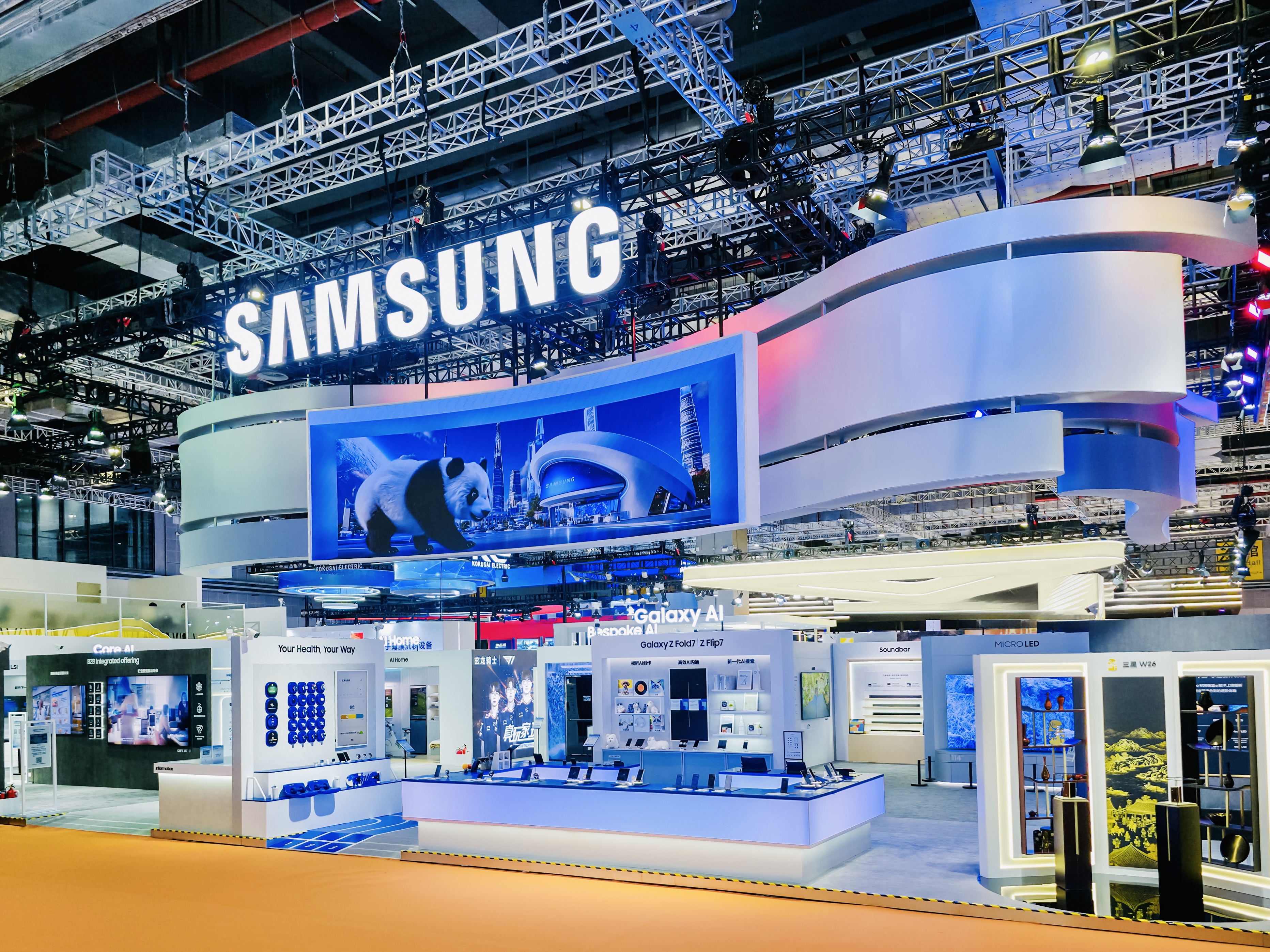
人工智能家庭解决方案AI Home

Search documents
新华视点·第八届进博会|从进博会热门爆款看未来生活新图景
Xin Hua She· 2025-11-10 01:07
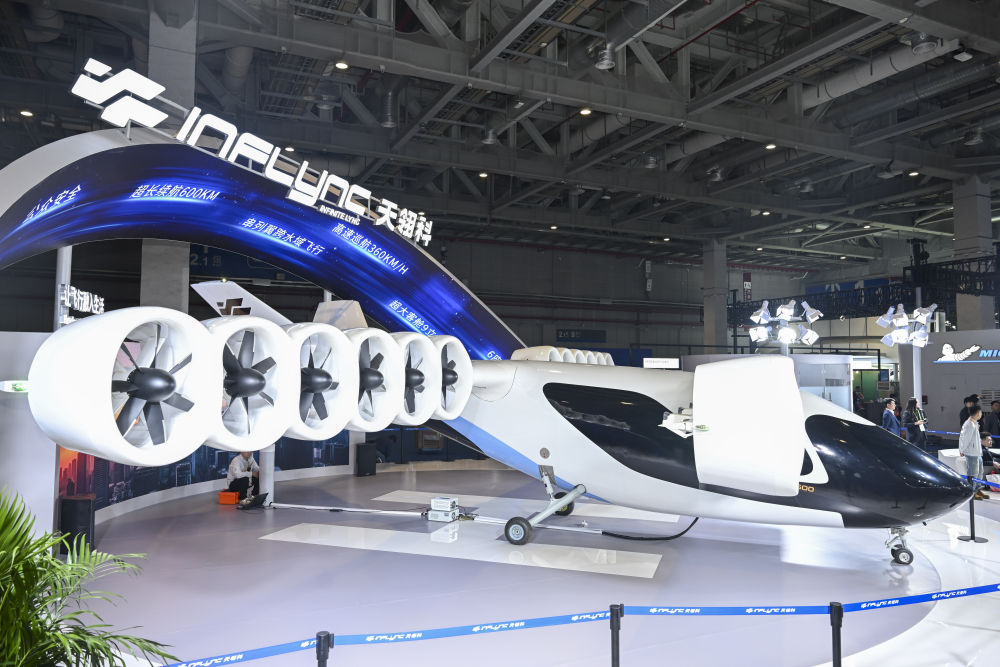
Core Insights - The eighth China International Import Expo (CIIE) showcased 461 new products, technologies, and services, highlighting innovations such as humanoid robots and autonomous vehicles, which depict a vision of future living [1][2][4] Group 1: New Product Launches - The expo featured a significant number of global debuts, with over 200 new products, nearly half being world premieres, indicating a clear trend towards high-tech and innovative solutions [2] - Notable launches included L600, the world's first full-size tilt-duct wing eVTOL with a range of 600 kilometers, and Philips' AI lighting solutions for personalized home experiences [2][4] - Health-focused innovations were also prominent, such as Medtronic's closed-loop rechargeable spinal nerve stimulation system and BD's closed-system intravenous catheter [2] Group 2: AI and Robotics Integration - The integration of AI in consumer products was a key theme, with various companies showcasing AI-driven solutions for home management and healthcare, such as Samsung's AI Home system and GE Healthcare's surgical robots [5][6] - Humanoid robots demonstrated capabilities in various tasks, attracting significant attention and showcasing the potential for AI in everyday life [5][8] Group 3: Health and Wellness Trends - The expo emphasized health management, with companies like Boston Scientific and Novo Nordisk introducing innovative products aimed at weight management and obesity awareness [7] - The concept of "proactive health" was introduced, encouraging consumers to shift from reactive to proactive health management, with a focus on low-fat and high-protein food options [7] Group 4: Emotional and Pet Economy - The emotional value of products was highlighted, with brands targeting younger consumers who prioritize emotional connections in their purchases [10] - The pet economy was also a focus, with a dedicated area for pet products, reflecting the growing trend of pets as family members, projected to exceed 811.4 billion yuan by 2025 [12]

家电品牌AI应用加速,深度融入中国本土供应链
2 1 Shi Ji Jing Ji Bao Dao· 2025-11-07 08:41
Core Insights - The global home appliance industry is undergoing a deep restructuring driven by "AI + supply chain" dynamics, with AI applications evolving from individual product intelligence to integrated scene solutions [1] - The Chinese market is becoming a key player in supply chain and technology development, shifting multinational brands' local strategies from simple production and sales to a model focused on "smart ecosystems + local innovation" [1] - China is transforming from a mere production and consumption market to an essential source of innovation, altering the traditional flow of technology and product development [1] AI Applications - The home appliance and home goods sector is experiencing significant innovation driven by AI, which has become a core engine for industry upgrades and market competition [2] - Panasonic showcased its Alpha G5 washing and drying machine, featuring 76 smart chips that utilize AI algorithms to identify fabric types and analyze stains for optimal washing parameters [2] - Sony presented AI enhancements for elderly care devices, including a fall detection sensor that analyzes skeletal motion data to identify falls and trigger automatic alerts [2] Smart Home Solutions - Samsung introduced its AI Home solution at the expo, which includes modules for various scenarios such as home living, entertainment, and health management, creating an interconnected smart ecosystem [3] - Panasonic's "1+N+X Smart Home System" connects various AI smart appliances and customizes additional needs through its core α-Watch [3] Local Supply Chain Integration - Many overseas brands have established manufacturing facilities in China, reflecting the increasing integration of foreign brands with local supply chains and the deepening of their operational strategies [4] - Sony's "China Star Program" supports local game developers by providing technology and supply chain assistance, aiming to build a robust gaming ecosystem in China [5] Global Strategy and Innovation - Panasonic's strategy emphasizes leveraging China's strengths in product design and manufacturing to expand into Southeast Asia and other markets [5] - Panasonic is also enhancing its supply chain capabilities to meet the growing demand for generative AI servers, positioning itself as a key supplier of essential components [6] R&D and Innovation in China - The Chinese government's initiatives aim to foster innovation in the home appliance sector, with a focus on smart, green, and healthy products by 2025 [7] - Sony's image sensor business is experiencing rapid growth, particularly in the automotive sector, driven by the demand from Chinese manufacturers for advanced driving assistance systems [7] - Panasonic has established a large local R&D team, with significant resources dedicated to developing smart appliances and systems [8] Emerging Trends - The 2025 expo is set to showcase 461 new products and technologies, highlighting a trend of "China R&D - China Validation - Global Replication" in the home appliance and consumer electronics industry [9]
家电品牌AI应用加速,深度融入中国本土供应链丨进博观察
2 1 Shi Ji Jing Ji Bao Dao· 2025-11-07 08:33
Core Insights - The global home appliance industry is undergoing a deep restructuring driven by "AI + supply chain" dynamics, with a shift from single product intelligence to integrated scene solutions [1][2] - China's market is becoming a crucial hub for supply chain and technology development, with multinational brands transitioning to a model of "smart ecosystem + local innovation" [1][4] - The demand for AI applications in home appliances is a key engine for industry upgrades and market competition [2][3] AI Applications - AI has become a core driver of innovation in the home appliance sector, exemplified by Panasonic's Alpha G5 washing and drying machine, which utilizes 76 smart chips for real-time fabric and stain analysis [2] - Sony showcased AI enhancements in elderly care devices, such as fall detection sensors that analyze skeletal motion data to provide timely alerts [2] - Companies are increasingly focusing on scene-based and systematized solutions rather than just individual smart devices [2][3] Local Supply Chain Integration - Many foreign brands have established manufacturing facilities in China, enhancing their integration with local supply chains and responding to diverse market demands [4][5] - Sony's "China Star Program" aims to support local game developers, fostering a robust ecosystem for console gaming in China [5] - Panasonic's strategy includes exporting Chinese products and designs to Southeast Asia, leveraging China's manufacturing capabilities [5][6] R&D and Innovation - The Chinese government's initiatives aim to cultivate innovation centers in the home appliance sector by 2025, promoting green, smart, and healthy product development [7] - Sony's image sensor business is experiencing rapid growth, particularly in the automotive sector, driven by demand from Chinese manufacturers [7][8] - Panasonic has established a large local R&D team, with significant resources dedicated to smart appliances and automotive systems [8] Market Trends - The 2025 Import Expo will feature 461 new products and technologies, highlighting a trend of "China R&D - China Validation - Global Replication" in the home appliance and consumer electronics sectors [9]
进博引力场:4108家企业背后的中国机遇
Huan Qiu Wang· 2025-11-06 10:10
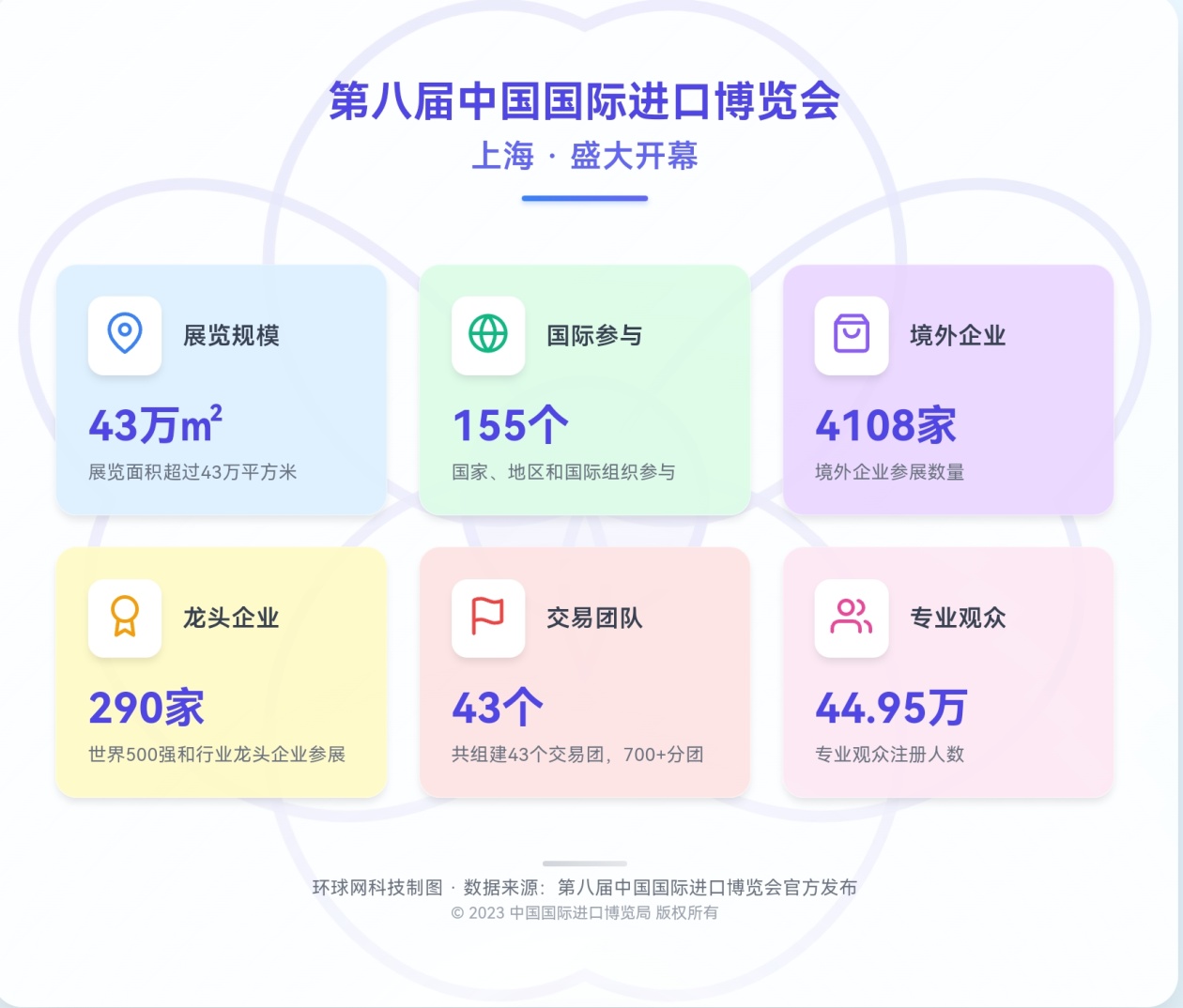
Core Insights - The 8th China International Import Expo (CIIE) will take place from November 5 to 10, 2025, in Shanghai, featuring participation from 155 countries and regions, with 4,108 foreign enterprises exhibiting, marking a record exhibition area of over 430,000 square meters [1][15]. Group 1: Participation and Growth - The number and quality of participating enterprises have significantly increased, with 290 Fortune Global 500 and industry-leading companies across various sectors such as healthcare, automotive, consumer goods, and technology [3][15]. - The number of enterprises from Belt and Road Initiative countries has increased by 23.1% year-on-year, highlighting the expo's inclusivity and leadership as a global public product [3]. Group 2: Exhibition Highlights - The exhibition area has surpassed 430,000 square meters, equivalent to 60 standard football fields, indicating high demand for exhibition space, with many companies securing their spots a year in advance [3][15]. - Over 400 new products, technologies, and services are expected to debut globally or in Asia, covering cutting-edge fields such as green energy, life sciences, and artificial intelligence [5]. Group 3: Notable Exhibitors and Innovations - Burberry showcased a Shanghai limited edition collection, emphasizing its commitment to the Chinese market and the importance of the CIIE as a platform for brand engagement [4]. - Siemens Healthineers presented three new photon-counting CT devices, with two expected to be produced locally in China by 2026, enhancing China's capabilities in high-end medical equipment manufacturing [7][8]. Group 4: Long-term Commitment and Market Confidence - Companies like Bayer and Siemens have demonstrated long-term commitment to the Chinese market, with Bayer launching a new crop health brand and Siemens focusing on integrating AI into industrial applications [12][13]. - The presence of "full attendance" companies at the expo reflects their recognition of the platform's value and their confidence in the Chinese market's potential [9][13].
“全勤生”三星的进博答卷:以创新促发展 打造中国“共赢链”
Di Yi Cai Jing· 2025-11-06 00:36
Group 1: Core Insights - Samsung has participated in the China International Import Expo (CIIE) for eight consecutive years, showcasing its commitment to the Chinese market and its role in high-quality development [1][11] - The eighth CIIE serves as a platform for Samsung to present its innovations in AI, display technology, and smart home solutions, emphasizing the integration of AI into everyday life [1][4][11] Group 2: AI Innovations - Samsung's AI Home solution, featuring Bespoke AI, Vision AI, and Galaxy AI, aims to create a seamless and efficient living experience by integrating smart technology into various home environments [4][5] - The Galaxy AI is designed to enhance user interaction through personalized services and real-time responses, with a goal to expand its reach to over 400 million devices by the end of 2025 [5][6] Group 3: Display Technology - Samsung continues to lead in display technology, showcasing products like the world's first 115-inch Micro RGB TV and Neo QLED 8K TVs, which utilize advanced technologies to enhance energy efficiency and image quality [9][10] - The Neo QLED 8K QN950F features AI-driven enhancements that improve low-resolution content to near-native 8K quality, demonstrating Samsung's commitment to cutting-edge display solutions [10] Group 4: Industry Collaboration and Development - The CIIE highlights Samsung's strategy of fostering partnerships within the supply chain, exemplified by its investment in a leading MLCC factory in Tianjin, which supports the growing demand in sectors like 5G and electric vehicles [11][12] - Samsung's collaboration with local suppliers, such as Jie Mei Technology, illustrates its role in driving industry upgrades and creating a mutually beneficial ecosystem in China [12][13]