
AI跌倒监测传感设备

Search documents
进博观察⑥:“黑”与“白”间看创新|大江东
Guo Ji Jin Rong Bao· 2025-11-10 12:55
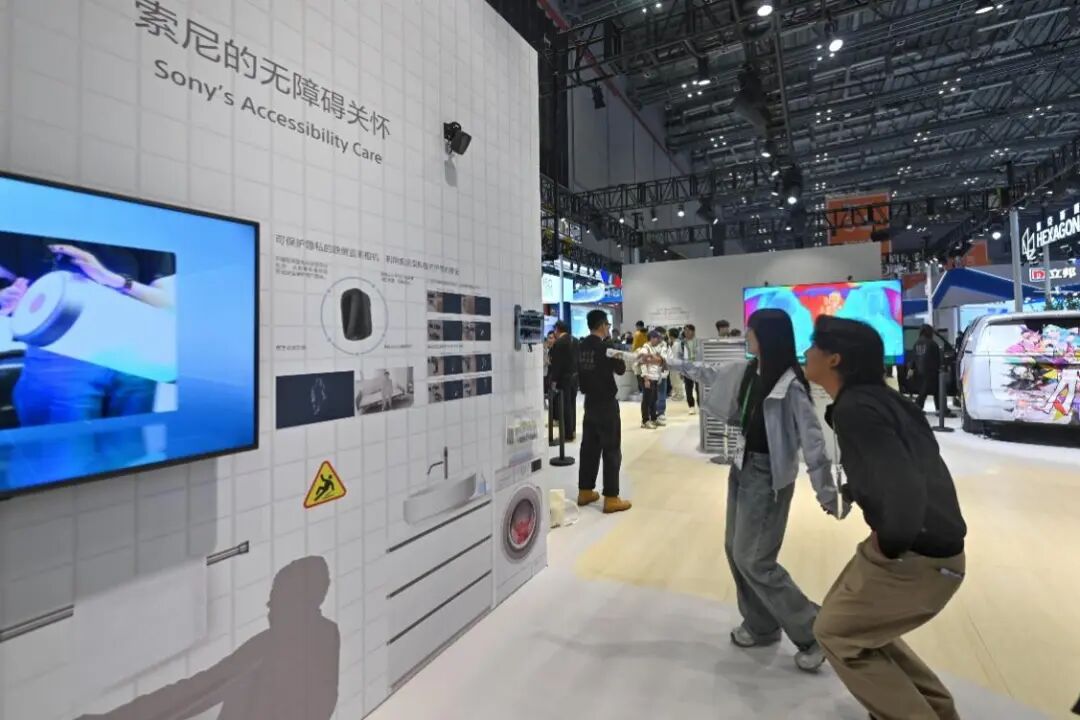
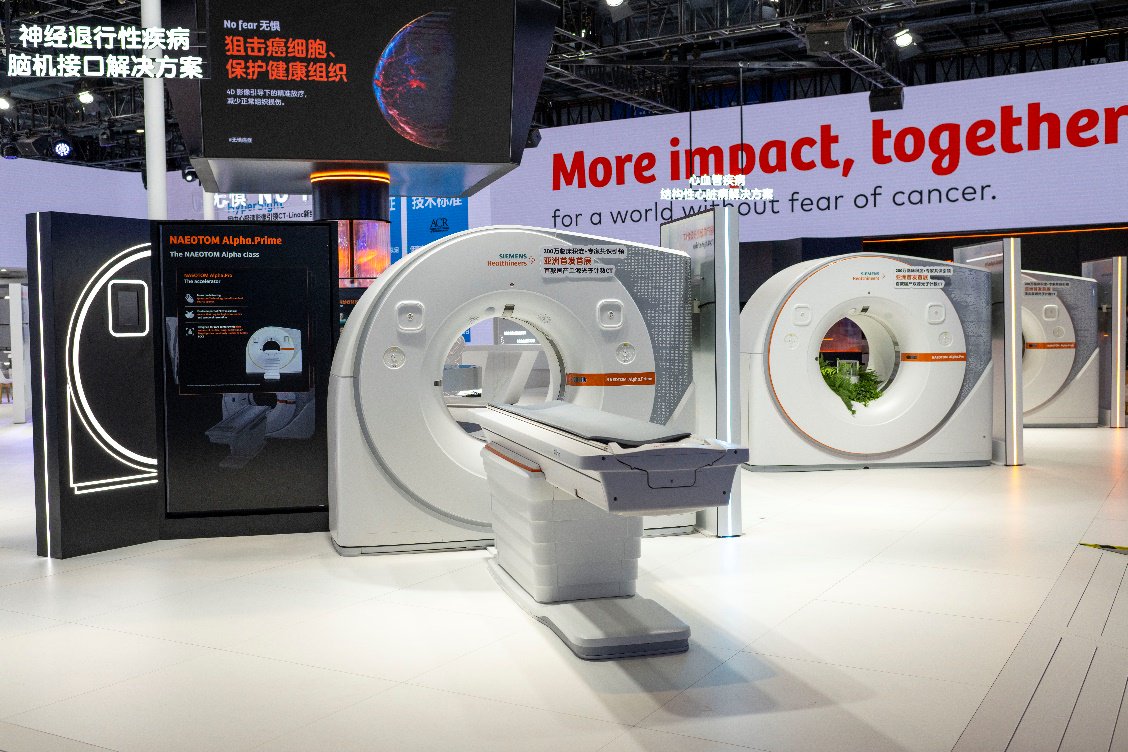
Core Insights - The eighth China International Import Expo (CIIE) showcases a blend of "black technology" and the "silver economy," highlighting new industries, business models, and the potential for economic growth in China [1][2][9]. Group 1: Black Technology Innovations - Siemens Medical introduced a high-gradient magnetic resonance device to assist Neuralink in clinical trials for brain-machine interfaces, enhancing surgical precision [2]. - The Photon Counting CT family made its Asian debut, with two models expected to be produced locally by 2026, aiming to improve conditions for Parkinson's patients and offer hope for paraplegics [2]. - Notable products include Tesla's Cybercab, Johnson & Johnson's artificial heart, and Sony's AI fall detection sensor, indicating a shift from science fiction to market reality [2][3]. Group 2: Silver Economy Developments - The expo highlighted technologies aimed at the elderly, such as a caregiving robot that can switch between robot and wheelchair modes, designed to assist with daily tasks and provide companionship [3][4]. - IKEA introduced six "age-friendly" living zones focused on safety for seniors, featuring designs like non-slip handrails and adjustable tables [4]. - Sony's AI fall detection device offers privacy-preserving monitoring, capable of detecting falls without cameras and providing immediate alerts [6]. Group 3: Industry Trends and Policy Support - The "silver economy" is gaining traction, with a complete industry chain emerging, including smart aids, health services, and home modifications [7]. - Philips emphasized its commitment to AI in healthcare, with significant R&D investment aimed at integrating AI into medical workflows [8]. - The national "14th Five-Year Plan" supports the development of the silver economy, reflecting a strong policy push towards addressing aging population challenges [9][11].

大江东|进博观察⑥:"黑"与"白"间看创新
Guo Ji Jin Rong Bao· 2025-11-10 10:41
Core Insights - The eighth China International Import Expo (CIIE) showcases a blend of "black technology" and the "silver economy," highlighting new industries, business models, and the potential for high-quality economic development in China [1][5][13] Group 1: Innovations in Healthcare - Philips launched a clinical multi-nuclear magnetic resonance device that integrates AI into every aspect of imaging examinations, marking a significant advancement in medical technology [1][12] - Siemens Medical introduced a high-gradient magnetic resonance device to assist Neuralink in clinical trials for brain-machine interfaces, enabling more precise surgical procedures [4][12] - The expo featured several AI-powered healthcare products, including a photon-counting CT family aimed at improving the quality of life for Parkinson's and paralyzed patients [4][12] Group 2: Silver Economy Developments - The expo highlighted numerous technologies aimed at the elderly, addressing the diverse needs of an aging population, with the "silver economy" being a key focus area [5][6][13] - A notable innovation is the caregiving robot that can switch between robot and wheelchair modes, assisting with daily tasks and providing companionship [6][9] - Sony's AI fall detection sensor exemplifies the trend of "invisible care," offering privacy protection while ensuring timely assistance for elderly individuals [10][12] Group 3: Market Trends and Future Outlook - The CIIE serves as a platform for global companies to launch new products, making China a testing ground for innovative technologies and business models [5][13] - The integration of AI into various sectors, including healthcare and elder care, is seen as a driving force for the silver economy, with significant market potential [10][15] - The event also showcased a complete "silver economy" industry chain, from smart aids to health services, indicating a shift towards comprehensive service systems [10][12]
索尼携多项首发首秀内容亮相进博会 持续赋能创意娱乐、移动出行与可持续发展
Zheng Quan Ri Bao· 2025-11-09 13:17
Core Viewpoint - Sony emphasizes its long-term commitment to the Chinese market, showcasing innovative technologies and sustainable practices at the China International Import Expo, highlighting its strategic focus on integrating and leveraging Chinese IP value [2][3]. Group 1: Innovation and Technology - Sony presented several innovative technologies at the expo, including the global debut of the "see-through V2X" system, which enhances driving safety by providing visual warnings in obstructed conditions [2]. - The company also showcased a cabin entertainment system that integrates 360-degree spatial audio and PS5 gaming experiences, demonstrated through a vehicle designed with popular anime themes [3]. Group 2: Sustainable Development - Sony's sustainable agricultural technology, which allows for high-density mixed planting without the need for tillage, fertilizers, or pesticides, has been successfully applied in various crops, achieving zero pesticide residue [4]. - The company introduced SORPLAS, a recyclable plastic material, in its exhibition design, showcasing its fire-resistant properties and potential for space design applications [4]. Group 3: Social Responsibility and Education - The "Sony Dream Classroom" project continues to promote educational equity, while the upgraded "Sony Dream" initiative supports the next generation of creators through technology and creativity [5]. - Sony actively supports youth talent development and women's growth through initiatives like "Young Power" and "Her Power," fostering a diverse and inclusive talent ecosystem [5]. Group 4: Environmental Commitment - The 20th anniversary of the "Sony China Sustainable Development Report" was marked by the introduction of braille and audio versions, highlighting the company's achievements in environmental, social, and governance dimensions [5]. - The exhibition design reflects eco-friendly and inclusive principles, utilizing high-recyclability materials and ensuring accessibility for all visitors [5].

家电品牌AI应用加速,深度融入中国本土供应链
2 1 Shi Ji Jing Ji Bao Dao· 2025-11-07 08:41
Core Insights - The global home appliance industry is undergoing a deep restructuring driven by "AI + supply chain" dynamics, with AI applications evolving from individual product intelligence to integrated scene solutions [1] - The Chinese market is becoming a key player in supply chain and technology development, shifting multinational brands' local strategies from simple production and sales to a model focused on "smart ecosystems + local innovation" [1] - China is transforming from a mere production and consumption market to an essential source of innovation, altering the traditional flow of technology and product development [1] AI Applications - The home appliance and home goods sector is experiencing significant innovation driven by AI, which has become a core engine for industry upgrades and market competition [2] - Panasonic showcased its Alpha G5 washing and drying machine, featuring 76 smart chips that utilize AI algorithms to identify fabric types and analyze stains for optimal washing parameters [2] - Sony presented AI enhancements for elderly care devices, including a fall detection sensor that analyzes skeletal motion data to identify falls and trigger automatic alerts [2] Smart Home Solutions - Samsung introduced its AI Home solution at the expo, which includes modules for various scenarios such as home living, entertainment, and health management, creating an interconnected smart ecosystem [3] - Panasonic's "1+N+X Smart Home System" connects various AI smart appliances and customizes additional needs through its core α-Watch [3] Local Supply Chain Integration - Many overseas brands have established manufacturing facilities in China, reflecting the increasing integration of foreign brands with local supply chains and the deepening of their operational strategies [4] - Sony's "China Star Program" supports local game developers by providing technology and supply chain assistance, aiming to build a robust gaming ecosystem in China [5] Global Strategy and Innovation - Panasonic's strategy emphasizes leveraging China's strengths in product design and manufacturing to expand into Southeast Asia and other markets [5] - Panasonic is also enhancing its supply chain capabilities to meet the growing demand for generative AI servers, positioning itself as a key supplier of essential components [6] R&D and Innovation in China - The Chinese government's initiatives aim to foster innovation in the home appliance sector, with a focus on smart, green, and healthy products by 2025 [7] - Sony's image sensor business is experiencing rapid growth, particularly in the automotive sector, driven by the demand from Chinese manufacturers for advanced driving assistance systems [7] - Panasonic has established a large local R&D team, with significant resources dedicated to developing smart appliances and systems [8] Emerging Trends - The 2025 expo is set to showcase 461 new products and technologies, highlighting a trend of "China R&D - China Validation - Global Replication" in the home appliance and consumer electronics industry [9]
家电品牌AI应用加速,深度融入中国本土供应链丨进博观察
2 1 Shi Ji Jing Ji Bao Dao· 2025-11-07 08:33
Core Insights - The global home appliance industry is undergoing a deep restructuring driven by "AI + supply chain" dynamics, with a shift from single product intelligence to integrated scene solutions [1][2] - China's market is becoming a crucial hub for supply chain and technology development, with multinational brands transitioning to a model of "smart ecosystem + local innovation" [1][4] - The demand for AI applications in home appliances is a key engine for industry upgrades and market competition [2][3] AI Applications - AI has become a core driver of innovation in the home appliance sector, exemplified by Panasonic's Alpha G5 washing and drying machine, which utilizes 76 smart chips for real-time fabric and stain analysis [2] - Sony showcased AI enhancements in elderly care devices, such as fall detection sensors that analyze skeletal motion data to provide timely alerts [2] - Companies are increasingly focusing on scene-based and systematized solutions rather than just individual smart devices [2][3] Local Supply Chain Integration - Many foreign brands have established manufacturing facilities in China, enhancing their integration with local supply chains and responding to diverse market demands [4][5] - Sony's "China Star Program" aims to support local game developers, fostering a robust ecosystem for console gaming in China [5] - Panasonic's strategy includes exporting Chinese products and designs to Southeast Asia, leveraging China's manufacturing capabilities [5][6] R&D and Innovation - The Chinese government's initiatives aim to cultivate innovation centers in the home appliance sector by 2025, promoting green, smart, and healthy product development [7] - Sony's image sensor business is experiencing rapid growth, particularly in the automotive sector, driven by demand from Chinese manufacturers [7][8] - Panasonic has established a large local R&D team, with significant resources dedicated to smart appliances and automotive systems [8] Market Trends - The 2025 Import Expo will feature 461 new products and technologies, highlighting a trend of "China R&D - China Validation - Global Replication" in the home appliance and consumer electronics sectors [9]
首发首秀 首选进博
Zhong Guo Qing Nian Bao· 2025-11-05 02:11
Group 1: Event Overview - The 8th China International Import Expo (CIIE) will be held in Shanghai from November 5 to 10, with participation from 155 countries, regions, and international organizations, featuring 4,108 overseas enterprises and an exhibition area exceeding 430,000 square meters, marking historical highs in both exhibition area and number of participating companies [1] - This year's expo sees an increase of over 600 companies compared to last year's 3,496, including 290 Fortune 500 and industry-leading enterprises, with professional audience registrations reaching 449,500 [1] Group 2: Corporate Participation and Innovations - Sony will debut multiple products at the expo, including a transparent vehicle network warning system and immersive landscape solutions in the smart mobility sector, as well as a basketball training assistant system in the sports entertainment field [2] - Louis Dreyfus Company will showcase four globally launched new products, all developed at its Shanghai R&D center, emphasizing its commitment to local innovation [3] - L'Oréal plans to present 26 new products at this year's expo, continuing its tradition of launching significant innovations [4] - Sanofi will introduce two innovative cardiovascular drugs, both of which are global debuts, highlighting the opportunities for collaboration and rapid market entry in China [5] Group 3: Impact and Opportunities - Abbott has organized a pre-expo event to share success stories from previous expos, showcasing the "spillover effect" of the CIIE, which has led to the successful launch of innovative medical devices in China [6] - Abbott will present over ten products making their Asian and Chinese debuts, including the Diamondback 360 coronary intervention system, which has already seen clinical application in China [7] - Johnson Controls has noted that the expo has provided valuable insights into industry trends and innovation, with significant business opportunities arising from participation [8]