
人民币跨境同业融资业务

Search documents
汇率政策组合拳如何影响流动性?
GF SECURITIES· 2026-03-02 03:26
Investment Rating - The industry investment rating is "Buy" [2] Core Insights - The central theme of the report discusses the impact of recent currency policies on liquidity, specifically focusing on the People's Bank of China's (PBOC) measures to adjust the foreign exchange risk reserve ratio and its implications for cross-border liquidity [13][22] - The report highlights that the PBOC's recent policies aim to stabilize the RMB's exchange rate and enhance the liquidity of the offshore RMB market, which is expected to support the internationalization of the RMB [16][22] Summary by Sections 1. Current Observations: How Currency Policies Affect Liquidity - The PBOC introduced two key policies: a notification regarding RMB cross-border interbank financing and a reduction of the foreign exchange risk reserve ratio for forward foreign exchange transactions from 20% to 0% [13][18] - RMB cross-border interbank financing is crucial for providing RMB liquidity to offshore markets, with the potential net outflow limit estimated at approximately 1.79 trillion CNY, significantly higher than the current balance of about 1,942 billion CNY [16][17] 2. Forward Foreign Exchange Business - The adjustment of the foreign exchange risk reserve ratio is designed to lower the costs associated with forward foreign exchange transactions, thereby increasing demand in the forward market and countering expectations of RMB appreciation [18][19] 3. Outlook on Cross-Border Liquidity - The report anticipates that while speculative inflows may slow down, the demand for foreign investment in RMB-denominated assets will remain robust, driven by fundamentals, returns, and safety differentials [22][23] - It is expected that the increase in interbank lending will tighten liquidity in the banking sector, prompting the PBOC to potentially implement additional liquidity measures through government bond transactions and open market operations [23]




引入逆周期调节机制 人民币跨境同业融资有新规范
Ren Min Ri Bao· 2026-02-28 03:15
Core Viewpoint - The People's Bank of China (PBOC) has issued a notification to enhance the level of capital account openness and develop the offshore RMB market, allowing domestic banks to conduct cross-border interbank financing in RMB with foreign institutions [1][2]. Group 1: Notification Overview - The notification supports domestic banks in conducting RMB cross-border interbank financing, which includes account financing and bond repurchase, serving as a crucial channel for providing RMB liquidity to the offshore market [1]. - The notification is effective immediately upon release and aims to better serve the real economy while guiding banks to adopt a risk-neutral approach [1]. Group 2: Business Coverage and Mechanism - The notification covers RMB financing activities between domestic banks and foreign institutions that have substantial creditor-debtor relationships, ensuring it encompasses existing and future similar business types [1]. - A key highlight of the new regulation is the introduction of a counter-cyclical adjustment mechanism, linking the net outbound balance of RMB cross-border interbank financing to the capital levels and funding strength of domestic banks [2]. Group 3: Management and Implementation - The PBOC indicates that the new rules will enhance the regulatory clarity and transparency of RMB cross-border interbank financing, facilitating stable offshore RMB liquidity supply [3]. - The management logic of the notification aligns with previous measures on overseas loans and is seen as an effective supplement to comprehensive cross-border financing macro-prudential management [3]. - The PBOC plans to steadily advance the implementation of the notification to ensure that cross-border interbank financing effectively supports the real economy and promotes the healthy development of the offshore RMB market [3].
覆盖人民币跨境同业融资各类业务,引入逆周期调节机制——人民币跨境同业融资有新规范
Ren Min Ri Bao· 2026-02-28 00:12
Core Viewpoint - The People's Bank of China (PBOC) has issued a notification to enhance the level of capital project openness, develop the offshore RMB market, and improve macro-prudential management of cross-border capital flows, supporting domestic banks in conducting RMB cross-border interbank financing with foreign institutions [1][4]. Group 1: Overview of the Notification - The notification covers RMB cross-border interbank financing, including account financing and bond repurchase, allowing domestic banks to lend and borrow RMB from foreign institutions, thus providing liquidity to the offshore market and promoting the use of RMB [1][4]. - The notification is effective immediately upon release and aims to support and regulate banks in their cross-border financing activities while serving the real economy and guiding banks to adopt a risk-neutral approach [1][4]. Group 2: Key Features of the New Regulations - The notification adopts a "substance over form" principle, encompassing all RMB financing activities between domestic banks and foreign institutions that have a substantive creditor-debtor relationship, applicable to existing and future similar business types [5]. - A notable highlight of the new regulations is the introduction of a counter-cyclical adjustment mechanism, linking the net outbound balance of RMB cross-border interbank financing to the capital level and funding strength of domestic banks, with parameters adjusted based on market conditions and bank operations [2][5]. Group 3: Impact on Management and Operations - The implementation of the notification is expected to significantly enhance the rules and transparency of RMB cross-border interbank financing management, facilitating stable liquidity supply in the offshore RMB market [3][6]. - The management logic of the notification aligns with previous measures on overseas loans and financing, serving as an effective supplement to comprehensive macro-prudential management of cross-border financing [3][6]. - The notification encourages banks to operate within their capacity, promoting a risk-neutral philosophy and allowing for flexible adjustments in business structure within an overall net outbound balance limit [6].
人民币国际化迎关键突破,央行新规完善离岸市场流动性供给
Di Yi Cai Jing· 2026-02-27 10:39
Core Viewpoint - The People's Bank of China (PBOC) has officially released a notification to standardize the management of net cross-border interbank financing limits in RMB, aiming to support the development of the offshore RMB market and enhance the internationalization of the RMB [2][10]. Group 1: Notification Overview - The notification includes various types of RMB cross-border interbank financing, such as account financing and bond repurchase, allowing domestic banks to lend and borrow RMB from foreign institutions [2][4]. - It introduces a counter-cyclical adjustment mechanism linked to banks' capital levels, balancing liquidity supply and risk prevention [3][5]. Group 2: Policy Implications - The notification aims to improve the transparency of management and allows banks to flexibly structure their business within the net lending limits, enhancing their willingness to expand business [6][7]. - It optimizes the calculation rules for net lending balances, excluding certain business types from the calculation, which broadens the scope for domestic banks' cross-border operations [6][7]. Group 3: Market Impact - The stability of the offshore market largely depends on the predictability and sufficiency of liquidity supply, which the notification aims to enhance [8]. - The PBOC's efforts in promoting RMB internationalization have led to RMB becoming the largest settlement currency for China's foreign payments and the second-largest trade financing currency globally [8][10].
中国人民银行发布《关于银行业金融机构人民币跨境同业融资业务有关事宜的通知》(附答记者问)
Xin Lang Cai Jing· 2026-02-27 10:36
Core Viewpoint - The People's Bank of China (PBOC) has issued a notification to support domestic banks in conducting cross-border RMB interbank financing, aiming to enhance the internationalization of the RMB and improve the management of cross-border capital flows [1][9]. Group 1: Notification Overview - The notification covers various types of RMB cross-border interbank financing and links the net financing outflow balance to the capital level and funding strength of banking institutions [1][9]. - A counter-cyclical adjustment mechanism is introduced, allowing the PBOC to adjust parameters based on market conditions to promote reasonable business development [2][12]. - The notification emphasizes compliance with market demands and requires banks to have strong international settlement capabilities and robust risk management systems [2][12]. Group 2: Applicable Institutions - The notification applies to domestic banks legally established with international settlement capabilities, including Chinese banks, foreign-owned banks, joint-venture banks, and foreign bank branches in China [3][13]. - Rural financial institutions are generally not allowed to engage in RMB cross-border interbank financing but may conduct other cross-border RMB businesses [3][13]. Group 3: Financing Limits - The net financing outflow balance limit for domestic banks is determined by their tier-one capital net amount multiplied by cross-border business adjustment parameters and macro-prudential adjustment parameters [4][14]. - For domestic Chinese banks, the formula is: Net Outflow Limit = Tier-One Capital Net Amount × Cross-Border Business Adjustment Parameter × Macro-Prudential Adjustment Parameter [5][14]. Group 4: Implementation and Impact - The PBOC will ensure that banks manage their RMB cross-border interbank financing business effectively, ensuring that the net outflow balance does not exceed the established limits [6][15]. - The implementation of the notification is expected to enhance the rules and transparency of RMB cross-border interbank financing management, facilitating stable offshore RMB liquidity supply [8][17].
上级动态|中国人民银行发布《关于银行业金融机构人民币跨境同业融资业务有关事宜的通知》(附答记者问)
Xin Lang Cai Jing· 2026-02-27 10:36
Core Viewpoint - The People's Bank of China (PBOC) issued a notification to support domestic banks in conducting cross-border RMB interbank financing, aiming to enhance the offshore RMB market and improve macro-prudential management of cross-border capital flows [1][8][17] Group 1: Notification Overview - The notification covers various types of RMB cross-border interbank financing, linking the net financing balance to banks' capital levels and funding strength, promoting reasonable business development [1][9] - A counter-cyclical adjustment mechanism is introduced, linking the net financing balance to capital levels and allowing for adjustments based on market conditions [2][12] - The notification supports domestic banks in conducting business in accordance with market demand and legal compliance, requiring banks to have strong international settlement capabilities [2][12] Group 2: Applicable Institutions - The notification applies to domestic banks established in accordance with the law that possess international settlement capabilities, including Chinese-funded banks, foreign-funded banks, and foreign bank branches [3][13] - Rural financial institutions are generally not allowed to conduct RMB cross-border interbank financing, although some may qualify under certain conditions [3][13] Group 3: Financing Balance Limits - The notification sets an upper limit on the net financing balance for RMB cross-border interbank financing, which is linked to the bank's capital or funding strength [4][14] - For domestic Chinese banks, the upper limit is calculated as the net capital multiplied by cross-border business adjustment parameters and macro-prudential adjustment parameters [4][14] - For foreign banks, the upper limit is based on net capital or the previous year's RMB deposit balance, also multiplied by the relevant parameters [5][14] Group 4: Data Reporting and Compliance - Banks engaged in RMB cross-border interbank financing must report relevant information to the RMB Cross-Border Payment Information Management System (RCPMIS) to ensure data accuracy [6][16] - The notification aims to align with existing RMB cross-border interbank financing management policies without creating new business types, maintaining compliance with current regulations [7][16] Group 5: Impact of the Notification - The implementation of the notification is expected to enhance the rules and transparency of RMB cross-border interbank financing management, facilitating stable offshore RMB liquidity [8][17] - The management logic aligns with previous measures for overseas loans and financing, providing a comprehensive macro-prudential management framework [8][17] - The notification encourages banks to adopt a risk-neutral approach, allowing for flexible adjustments within an overall net financing balance limit [8][17]
央行规范银行开展人民币跨境同业融资业务 不对单向融出余额提要求
Sou Hu Cai Jing· 2026-02-27 09:21
Core Viewpoint - The People's Bank of China (PBOC) has issued a notice that sets a cap on the net outbound balance for RMB cross-border interbank financing, while not imposing limits on the one-way lending balance, aiming to support and regulate banks in this area to better serve the real economy and promote a risk-neutral mindset among banks [1][2][3]. Group 1: Regulatory Framework - The notice links the net outbound balance of RMB cross-border interbank financing to the capital levels and funding strength of domestic banks, allowing for adjustments through cross-border business parameters and macro-prudential parameters [2][4]. - The notice covers various RMB cross-border interbank financing activities, including account financing and bond repurchase, which are crucial for providing RMB liquidity offshore and promoting the use of RMB in cross-border transactions [3][4]. - The PBOC aims to support the standardized development of these financing activities, ensuring stable liquidity in the offshore RMB market and promoting its cross-border use [3][4]. Group 2: Changes from Previous Proposals - The final notice does not impose a uniform hard limit on the duration of RMB cross-border interbank financing, differing from the draft proposal which suggested a maximum term of one year [5]. - The initial value for risk management factors has been adjusted based on the type of financial institution, rather than being uniformly set at 0.06 as proposed earlier [5]. - Five specific types of transactions are excluded from the net outbound balance calculation, including those based on genuine trade financing, transactions with offshore RMB clearing banks, and other recognized activities by the PBOC [5][6].

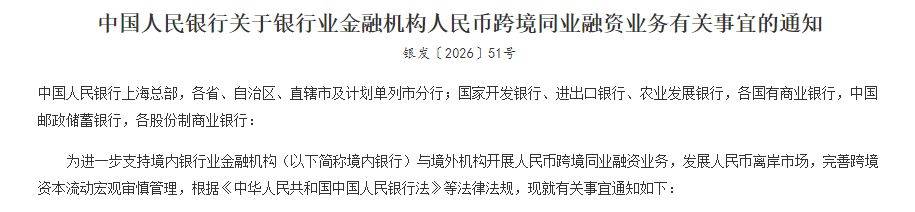
推进人民币国际化,央行发文支持人民币跨境同业融资业务
Sou Hu Cai Jing· 2026-02-27 02:46
Core Viewpoint - The People's Bank of China (PBOC) has issued a notice to support cross-border interbank financing in RMB, which is expected to enhance the internationalization of the RMB and support the development of the offshore RMB market [1][4]. Group 1: Policy Announcement - The PBOC's notice allows domestic banks to engage in RMB cross-border interbank financing with foreign institutions, which includes various forms of financing such as account financing and bond repurchase [1][2]. - This initiative is seen as a significant step towards increasing the openness of capital accounts and meeting the growing demand for RMB liquidity in offshore markets [1][2]. Group 2: Market Impact - The RMB has become the largest currency for China's foreign payments and the second-largest trade financing currency globally, with cross-border payment amounts projected to reach 70.6 trillion yuan by 2025 [2]. - There is a growing willingness among foreign entities to hold and use RMB, indicating a strong demand for RMB liquidity in offshore markets [2]. Group 3: Operational Flexibility - The notice enhances operational transparency and allows domestic banks to flexibly manage their business structures within a net lending limit, which is expected to increase banks' willingness to expand their RMB cross-border financing activities [3]. - The new framework aims to provide a stable channel for RMB liquidity to offshore markets, thereby balancing supply and demand for RMB [3]. Group 4: Risk Management - The notice promotes a risk-neutral approach among financial institutions by linking the net lending limit to the banks' tier-one capital, which helps in managing risks while allowing for business growth [3]. - A counter-cyclical adjustment mechanism has been introduced to stabilize and orderly provide RMB liquidity to foreign markets, ensuring that risks remain controllable [3][4]. Group 5: Future Adjustments - The PBOC has indicated that it will consider various factors, including the development of the offshore RMB market and cross-border capital flow trends, to adjust parameters as necessary [4]. - The integration of RMB cross-border interbank financing into a unified management framework is seen as an optimization of existing business management, signaling support for RMB outflows in response to market demand [4].
债市早报:资金面整体转松;债市继续承压
Sou Hu Cai Jing· 2026-02-27 02:40
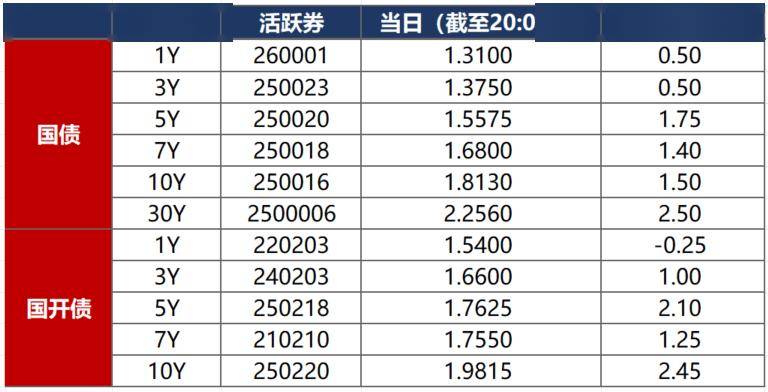
Group 1: Domestic News - The People's Bank of China (PBOC) issued a notice on February 26 to support domestic banks in conducting RMB cross-border interbank financing, linking the net financing balance to capital levels and funding strength [2] - The notice aims to promote a risk-neutral approach among banks and is effective immediately [2] Group 2: Currency and Exchange Rates - The RMB appreciated rapidly against the USD from February 25 to 26, with onshore and offshore RMB breaking through 6.87 and 6.84 respectively, reaching a high of 6.82665 on February 26, the highest since April 2023 [3] - Experts suggest that the RMB's exchange rate is influenced by multiple factors, including the China-US interest rate differential and domestic economic recovery [3] Group 3: International News - Federal Reserve Governor Stephen Milan reiterated the need for a 100 basis point rate cut by 2026, citing excessive regulation distorting credit structures [4] - Milan expressed caution regarding the labor market despite recent improvements, emphasizing the need for early rate cuts to mitigate potential risks [4] Group 4: Bond Market Dynamics - On February 26, the bond market continued to face pressure, with the yield on the 10-year government bond rising by 1.50 basis points to 1.8130% [8] - The market sentiment was weak due to the implementation of the "Shanghai Seven Measures" [8] Group 5: Credit Bonds - On February 26, two industrial bonds saw significant price deviations, with "H2 Vanke 02" rising over 26% and "H2 Vanke 04" increasing over 33% [10] - Gree Electric announced plans for its largest shareholder to reduce holdings by up to 110 million shares to repay bank loans [12] Group 6: Convertible Bonds - The convertible bond market saw a collective decline on February 26, with major indices falling by 1.03% to 1.12% [15] - The trading volume in the convertible bond market decreased by 61.53 billion to 734.08 billion [15] - Notable individual bond movements included a new listing, Aiwei Convertible Bond, hitting the daily limit up by 57.3% [15]
央行发文支持和规范人民币跨境同业融资业务
Xin Hua Wang· 2026-02-27 02:36
Group 1 - The core viewpoint of the articles is that the People's Bank of China (PBOC) has issued a notification to enhance the openness of capital projects, develop the offshore RMB market, and improve macro-prudential management of cross-border capital flows [1][2] Group 2 - RMB cross-border interbank financing is an important channel for domestic banks to provide RMB liquidity to the offshore market and promote the use of RMB across borders [2] - The PBOC's notification covers various types of RMB cross-border interbank financing and links the net financing outflow balance of banking institutions to their capital levels and funding strength, promoting reasonable business operations [2] - The notification sets macro-prudential management parameters that will be adjusted counter-cyclically based on market conditions, considering market demand and the operational status of banking institutions [2] - The PBOC will adjust parameters as needed, taking into account the development of the offshore RMB market, cross-border capital flow conditions, and the business situation of banks [2] - The management logic of the notification is consistent with previous measures related to overseas loans and financing, serving as an effective supplement to comprehensive macro-prudential management of cross-border financing [2] - The PBOC plans to steadily implement the notification to ensure that cross-border interbank financing effectively supports the real economy and promotes the healthy development of the offshore RMB market [2]