
逆周期调节机制

Search documents
引入逆周期调节机制 人民币跨境同业融资有新规范
Ren Min Ri Bao· 2026-02-28 03:15
Core Viewpoint - The People's Bank of China (PBOC) has issued a notification to enhance the level of capital account openness and develop the offshore RMB market, allowing domestic banks to conduct cross-border interbank financing in RMB with foreign institutions [1][2]. Group 1: Notification Overview - The notification supports domestic banks in conducting RMB cross-border interbank financing, which includes account financing and bond repurchase, serving as a crucial channel for providing RMB liquidity to the offshore market [1]. - The notification is effective immediately upon release and aims to better serve the real economy while guiding banks to adopt a risk-neutral approach [1]. Group 2: Business Coverage and Mechanism - The notification covers RMB financing activities between domestic banks and foreign institutions that have substantial creditor-debtor relationships, ensuring it encompasses existing and future similar business types [1]. - A key highlight of the new regulation is the introduction of a counter-cyclical adjustment mechanism, linking the net outbound balance of RMB cross-border interbank financing to the capital levels and funding strength of domestic banks [2]. Group 3: Management and Implementation - The PBOC indicates that the new rules will enhance the regulatory clarity and transparency of RMB cross-border interbank financing, facilitating stable offshore RMB liquidity supply [3]. - The management logic of the notification aligns with previous measures on overseas loans and is seen as an effective supplement to comprehensive cross-border financing macro-prudential management [3]. - The PBOC plans to steadily advance the implementation of the notification to ensure that cross-border interbank financing effectively supports the real economy and promotes the healthy development of the offshore RMB market [3].
覆盖人民币跨境同业融资各类业务,引入逆周期调节机制——人民币跨境同业融资有新规范
Ren Min Ri Bao· 2026-02-28 00:12
Core Viewpoint - The People's Bank of China (PBOC) has issued a notification to enhance the level of capital project openness, develop the offshore RMB market, and improve macro-prudential management of cross-border capital flows, supporting domestic banks in conducting RMB cross-border interbank financing with foreign institutions [1][4]. Group 1: Overview of the Notification - The notification covers RMB cross-border interbank financing, including account financing and bond repurchase, allowing domestic banks to lend and borrow RMB from foreign institutions, thus providing liquidity to the offshore market and promoting the use of RMB [1][4]. - The notification is effective immediately upon release and aims to support and regulate banks in their cross-border financing activities while serving the real economy and guiding banks to adopt a risk-neutral approach [1][4]. Group 2: Key Features of the New Regulations - The notification adopts a "substance over form" principle, encompassing all RMB financing activities between domestic banks and foreign institutions that have a substantive creditor-debtor relationship, applicable to existing and future similar business types [5]. - A notable highlight of the new regulations is the introduction of a counter-cyclical adjustment mechanism, linking the net outbound balance of RMB cross-border interbank financing to the capital level and funding strength of domestic banks, with parameters adjusted based on market conditions and bank operations [2][5]. Group 3: Impact on Management and Operations - The implementation of the notification is expected to significantly enhance the rules and transparency of RMB cross-border interbank financing management, facilitating stable liquidity supply in the offshore RMB market [3][6]. - The management logic of the notification aligns with previous measures on overseas loans and financing, serving as an effective supplement to comprehensive macro-prudential management of cross-border financing [3][6]. - The notification encourages banks to operate within their capacity, promoting a risk-neutral philosophy and allowing for flexible adjustments in business structure within an overall net outbound balance limit [6].
人民币跨境同业融资有新规范
Ren Min Ri Bao Hai Wai Ban· 2026-02-28 00:02
Core Viewpoint - The People's Bank of China (PBOC) has issued a new regulation to enhance the management of cross-border interbank financing in Renminbi, aiming to improve the offshore market and facilitate capital flow [1][2][3] Group 1: New Regulation Overview - The new regulation, effective immediately, supports domestic banks in conducting cross-border interbank financing with foreign institutions, including account financing and bond repurchase [1] - The regulation emphasizes a principle of "substance over form," covering all existing types of cross-border interbank financing and any future similar business [1] Group 2: Mechanism and Management - A key highlight of the new regulation is the introduction of a counter-cyclical adjustment mechanism, linking the net financing balance of domestic banks to their capital levels and funding strength [2] - Parameters for this mechanism will be adjusted based on market demand, cross-border capital flow conditions, and the operational status of banks [2] Group 3: Impact on the Market - The implementation of the new regulation is expected to significantly enhance the rules and transparency of cross-border interbank financing management, facilitating stable offshore Renminbi liquidity [3] - The regulation allows banks to flexibly adjust their business structure within an overall net financing balance limit, promoting a risk-neutral approach among banks [3]
债市早报:资金面整体转松;债市继续承压
Sou Hu Cai Jing· 2026-02-27 02:40
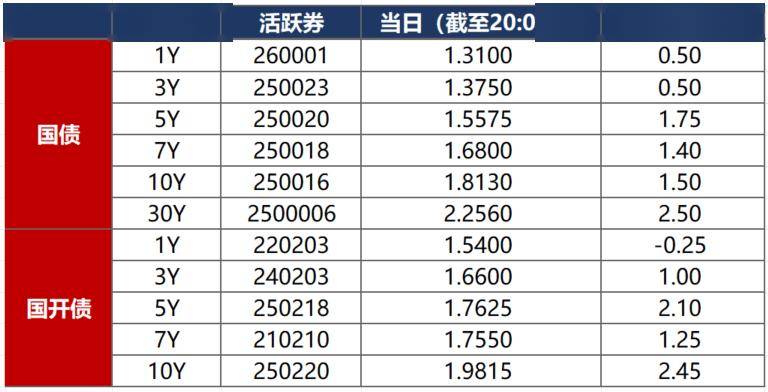
Group 1: Domestic News - The People's Bank of China (PBOC) issued a notice on February 26 to support domestic banks in conducting RMB cross-border interbank financing, linking the net financing balance to capital levels and funding strength [2] - The notice aims to promote a risk-neutral approach among banks and is effective immediately [2] Group 2: Currency and Exchange Rates - The RMB appreciated rapidly against the USD from February 25 to 26, with onshore and offshore RMB breaking through 6.87 and 6.84 respectively, reaching a high of 6.82665 on February 26, the highest since April 2023 [3] - Experts suggest that the RMB's exchange rate is influenced by multiple factors, including the China-US interest rate differential and domestic economic recovery [3] Group 3: International News - Federal Reserve Governor Stephen Milan reiterated the need for a 100 basis point rate cut by 2026, citing excessive regulation distorting credit structures [4] - Milan expressed caution regarding the labor market despite recent improvements, emphasizing the need for early rate cuts to mitigate potential risks [4] Group 4: Bond Market Dynamics - On February 26, the bond market continued to face pressure, with the yield on the 10-year government bond rising by 1.50 basis points to 1.8130% [8] - The market sentiment was weak due to the implementation of the "Shanghai Seven Measures" [8] Group 5: Credit Bonds - On February 26, two industrial bonds saw significant price deviations, with "H2 Vanke 02" rising over 26% and "H2 Vanke 04" increasing over 33% [10] - Gree Electric announced plans for its largest shareholder to reduce holdings by up to 110 million shares to repay bank loans [12] Group 6: Convertible Bonds - The convertible bond market saw a collective decline on February 26, with major indices falling by 1.03% to 1.12% [15] - The trading volume in the convertible bond market decreased by 61.53 billion to 734.08 billion [15] - Notable individual bond movements included a new listing, Aiwei Convertible Bond, hitting the daily limit up by 57.3% [15]

人民银行:支持境内银行业金融机构与境外机构规范开展人民币跨境同业融资业务
Bei Jing Shang Bao· 2026-02-26 14:31
Core Viewpoint - The People's Bank of China has issued a notification to support domestic banking institutions in conducting cross-border RMB interbank financing with foreign entities, emphasizing a principle of substance over form in financial transactions [1] Group 1: Notification Overview - The notification defines its coverage based on the substantive debt relationship between domestic banks and foreign institutions, including existing and future RMB cross-border interbank financing activities [1] - A counter-cyclical adjustment mechanism is introduced, linking the net RMB cross-border interbank financing balance of domestic banks to their capital levels and funding strength, with parameters adjusted based on market conditions and risk prevention needs [1] - The notification encourages domestic banks to conduct business in compliance with market demands and regulations, requiring banks to have strong international settlement capabilities and robust risk management and internal control systems [1]
央行:将综合考虑人民币离岸市场发展、跨境资本流动形势等因素,适时调整参数
Sou Hu Cai Jing· 2026-02-26 14:06
Group 1 - The central bank has issued a notice regarding the cross-border interbank financing business in RMB, introducing a counter-cyclical adjustment mechanism [1] - The net outbound balance of RMB cross-border interbank financing for domestic banks will be linked to their capital levels and funding strength [1] - The initial setting of parameters takes into account both business development and risk prevention needs [1] Group 2 - The People's Bank of China will consider various factors such as the development of the offshore RMB market, the situation of cross-border capital flows, and the operational conditions of banks when adjusting parameters [1]
证监会就衍生品交易监管办法征求意见 拟引入逆周期调节机制
Sou Hu Cai Jing· 2026-01-16 15:25
Core Viewpoint - The China Securities Regulatory Commission (CSRC) has drafted the "Supervision and Management Measures for Derivative Trading (Trial) (Draft for Comments)" to enhance regulation and oversight of the derivative trading market [1] Group 1: Regulatory Framework - All participants in derivative trading must adhere to principles of fairness, voluntariness, compensation, and good faith, prohibiting market manipulation, insider trading, and other illegal activities [1] - The CSRC will improve the monitoring and control system for the derivative market based on a prudent regulatory principle and may implement counter-cyclical management for derivative trading [1] Group 2: Industry Responsibilities - Derivative industry associations, trading venues, and clearing institutions are required to take proactive measures to maintain reasonable levels of leverage and scale in the market [1] - There is an emphasis on enhancing the standardization of derivative trading practices within the industry [1]
沪深北融资保证金比例调回100%,新规仅限新开合约
Sou Hu Cai Jing· 2026-01-14 05:26
Core Viewpoint - The China Securities Regulatory Commission has approved an adjustment to the financing margin ratio, increasing the minimum margin requirement from 80% to 100% for new financing contracts, aimed at reducing overall market leverage and promoting long-term stability in the capital market [1][3]. Group 1 - The adjustment to the financing margin ratio is a response to the recent increase in financing activities and overall market liquidity [3]. - The new margin requirement applies only to newly opened financing contracts, while existing contracts will continue to operate under the previous 80% margin requirement [3]. - This policy change follows a previous adjustment in August 2023, when the margin ratio was lowered from 100% to 80%, which led to a steady increase in market financing scale and trading volume [3].

中泰期货晨会纪要-20251202
Zhong Tai Qi Huo· 2025-12-02 01:10
Report Industry Investment Ratings No relevant content provided. Core Views of the Report - A shares showed a unilateral upward trend, with technology themes being active and sector rotation accelerating. The overall economy has short - term fluctuations, but the domestic industrial upgrade - driven economic transformation continues. [10] - In the futures market, different varieties have different trends based on fundamental and quantitative indicators. For example, some are in a trend of short - term shock, while others are in a long - term upward or downward trend. [2][4] Summary by Related Catalogs Macro Information - French President Macron will visit China from December 3 - 5. DeepSeek released and open - sourced two models. The approval of public - offering funds has an inverse - cycle adjustment mechanism. [6] - In November, the average price of new homes in 100 cities increased month - on - month and year - on - year, while the average price of second - hand homes decreased month - on - month and year - on - year. Shanghai's second - hand housing market had a "tail - end rally". [6][7] - The US ISM manufacturing PMI in November was below 50. The Bank of Japan governor signaled a possible interest - rate hike. South Korea's exports in November increased year - on - year. Silver prices soared to a record high. [7][8] Macro Finance Stock Index Futures - Adopt a shock - based strategy and wait and see for the time being. A shares rose unilaterally, with technology themes being active. The economic data in October showed a short - term decline, but the industrial upgrade is continuing. [10] Treasury Bond Futures - The bond market may continue to fluctuate widely. The market is affected by factors such as expected central bank bond - buying and bond - fund redemptions. It is recommended to buy medium - and short - duration 10 - year bonds on dips and be cautious about ultra - long - duration bonds. [11][12] Black Commodities Spiral Steel and Iron Ore - Pay attention to the impact of macro - level meetings on market expectations. The demand for building materials is weak, while the demand for coils is okay. Steel mills' profits are low, and iron ore is relatively strong. The price is expected to be weak in the medium - term. [13] Coking Coal and Coke - The prices may fluctuate in the short term. Pay attention to the impact of coal - mine production, safety inspections, and changes in iron - water production. [13][14] Ferroalloys - For manganese silicon, there is a risk of increased surplus, and it is recommended to wait for short - selling opportunities. For silicon iron, it is recommended to hold long positions. [15] Soda Ash and Glass - For soda ash, wait and see. For glass, it is advisable to try to go long on dips. Pay attention to supply - side changes such as production cuts and new - capacity launches. [16] Non - ferrous Metals and New Materials Zinc - The inventory has decreased, and the price is expected to fluctuate widely. It is advisable to wait and see, and aggressive investors can short on rallies. [18] Lead - The inventory is at a low level. It is recommended to hold short positions cautiously. [19][20] Lithium Carbonate - In the short term, it will fluctuate widely. The long - term demand is good, but the short - term upward space is limited. [21] Industrial Silicon - The supply - demand contradiction is not prominent, and it will continue to fluctuate. [22] Polysilicon - It will continue to fluctuate. It is advisable to try to buy put options in the short term and stop profits in time. [23] Agricultural Products Cotton - There is short - term supply pressure and weak demand, but the high cost supports the price. The price is expected to rebound. [25][26] Sugar - The supply - demand situation is bearish. The new - sugar listing pressure weighs on the price, and it is advisable to wait and see or short in the short term. [27][28] Apples - The price is expected to fluctuate strongly. The purchase of late - maturing Fuji has ended, and the market is affected by factors such as inventory and competing fruits. [29] Corn - Pay attention to the upper pressure on the price. The current rise is due to "supply - demand mismatch", and the long - term supply pressure is large. [30] Red Dates - It is advisable to wait and see for the time being. The prices in production and sales areas are stable at a low level. [31] Pigs - In the short term, the supply pressure increases, and the demand is limited. In the long term, the decline in the number of sows is beneficial to future prices. [32][33] Energy and Chemicals Crude Oil - The price is in a long - term downward trend. Although there are short - term positive factors, the supply - surplus problem is prominent. [35] Fuel Oil - The price will follow the trend of crude oil, with supply being loose and demand being weak. [36] Plastics - The supply pressure is large, and the price is expected to fluctuate weakly. It is advisable to adopt a short - selling strategy after rallies. [37][38] Rubber - The price is expected to fluctuate. Pay attention to factors such as raw - material supply and weather. [39] Synthetic Rubber - It is expected to fluctuate weakly in the short term. It is advisable to short on rallies. [40] Methanol - In the short term, use a shock - based strategy for near - month contracts and a slightly bullish strategy for far - month contracts if inventory reduction is smooth. [41][42] Caustic Soda - The spot price is weakening. It is advisable to adopt a short - term weakly bearish strategy. [43][44] Asphalt - The price fluctuation is expected to increase. Pay attention to the price bottom after the winter - storage game. [45] Polyester Industry Chain - The supply - demand structure is okay, and it will follow the cost trend in the short term. [46] Liquefied Petroleum Gas - The price increase is difficult to sustain. It is advisable to short on rallies. [47] Pulp - The fundamentals are stable, and it will enter a range - bound stage. It is advisable to wait and see. [48] Logs - The price is under pressure in the short term and is expected to maintain a weak supply - demand balance. [49] Urea - The spot price is expected to be slightly bullish, and the futures price is expected to fluctuate in the short term. [50]
央行征求意见:农村金融机构不得开展人民币跨境同业融资业务 存量业务自然到期
Zheng Quan Ri Bao Wang· 2025-09-12 12:26
Core Viewpoint - The People's Bank of China (PBOC) has drafted a notice to support domestic banks in conducting cross-border RMB interbank financing, aiming to develop the offshore RMB market and improve macro-prudential management of cross-border capital flows [1] Summary by Sections Coverage of RMB Cross-Border Interbank Financing - The notice encompasses various RMB financing activities between domestic banks and foreign institutions, excluding investment or purchase of debt instruments like interbank certificates of deposit and bonds [1] Business Duration and Mechanisms - The duration for RMB cross-border interbank financing is capped at one year, aligning with the domestic interbank business duration [2] - A counter-cyclical adjustment mechanism is introduced, setting limits on net financing outflows based on tier-one capital and risk management factors [2] Support for Domestic Banks - Domestic banks are encouraged to develop their business in accordance with market demand and legal compliance, requiring strong international settlement capabilities and robust risk management systems [2] Applicable Institutions - The notice applies to domestic banks with international settlement capabilities, including Chinese banks, foreign-owned banks, joint venture banks, and foreign bank branches. Rural financial institutions are excluded from participating in RMB cross-border interbank financing [3]