信记号

Search documents
为何中国茶业跑不出一个“茅台”?
3 6 Ke· 2026-01-05 11:30
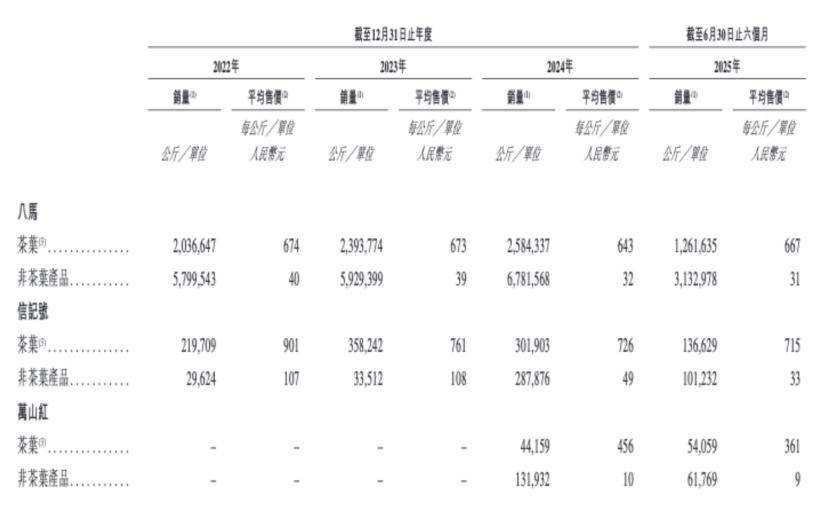
Core Insights - The decline of the "Old Deng Economy" is forcing the liquor industry to rethink consumption scenarios, while the tea industry faces a similar yet fundamentally different set of challenges [1][5] Industry Overview - The traditional consumption model in the tea industry is undergoing profound changes as the "Old Deng Economy" loses its appeal, leading to a decline in social scenarios reliant on personal connections [2] - New-style tea drinks have gained popularity among younger consumers, with brands like Mixue Ice Cream and Bawang Tea emerging, but traditional tea remains stagnant due to its strong agricultural attributes [2][4] Market Dynamics - The tea market is highly fragmented, with the top five companies in the high-end tea segment holding only 5.6% market share, and Baima Tea, as a leading player, capturing just 1.7% [4] - The lack of interest from young consumers in traditional tea and intense product homogenization raise questions about the sustainability of tea companies' profit models and growth [4] Pricing and Product Strategy - Baima Tea's pricing strategy reveals a wide range for its products, from hundreds to tens of thousands of yuan per kilogram, indicating the non-standardized nature of tea as an agricultural product [7] - Despite suggested retail prices, the average selling price of Baima's products is significantly lower, with discounts of up to 35% available to franchisees [7][9] Financial Performance - Baima Tea's gross margin for tea sales reached 58.5% in the first half of 2025, with margins varying significantly across sales channels, from 45% for franchise sales to 79% for direct sales [9][13] - The company's revenue heavily relies on franchise sales, with over 50% of total income generated from selling products to franchisees [12][13] Business Model and Expansion - The franchise model has become a mainstream choice for traditional tea companies to expand rapidly and capture market share, although it weakens brand control over end channels [12][13] - Baima Tea's marketing expenses reached 3.44 billion yuan by the end of 2024, accounting for 31% of its revenue, indicating a strong focus on brand and marketing efforts [13] Challenges and Industry Trends - The tea industry struggles with a lack of brand recognition despite having numerous products, leading to a fragmented market where high-end tea remains underrepresented [9][13] - The complexity of the tea production process and the high costs associated with owning tea plantations pose significant challenges for companies seeking to control the entire supply chain [14][17] Future Outlook - The tea industry's ability to transition successfully in a modern context will depend on defining a new "tea drinking era" rather than merely replicating the success of the liquor industry [17]

八马茶业港股上市AB面:资本热捧股价狂涨86%,但业绩却增不动了,加盟商也在减少
Sou Hu Cai Jing· 2025-10-28 14:53
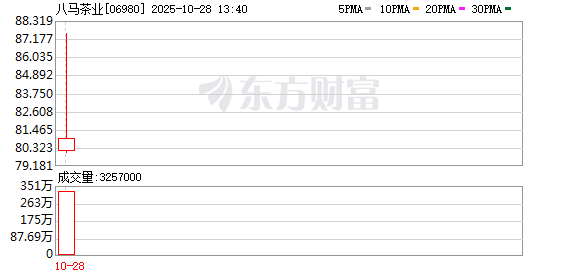
Core Points - Eight Horses Tea has successfully completed its IPO after 13 years of efforts, with shares starting trading on October 28, 2023, and experiencing a significant price increase of 86.70% by the end of the trading day [2][4] - The company raised approximately HKD 390 million through the global offering, with a total of 9 million shares issued, of which 90,000 shares were available for public offering in Hong Kong, resulting in a subscription rate of 2,680.04 times [2][5] Company Overview - Founded in 1997 by the Wang brothers, Eight Horses Tea has developed a comprehensive product matrix covering various types of tea and related products, with tea sales accounting for 86.5% to 90.2% of total revenue from 2022 to the first half of 2025 [5][6] - According to a report by Frost & Sullivan, Eight Horses Tea ranks first in the Chinese tea market by the number of tea chain stores and also leads in the high-end tea market by sales revenue [5] Market Position and Challenges - The IPO's positive reception is attributed to the overall increased interest in domestic tea brands following the listing of other companies like Mixue Ice Cream [4] - Despite being a leading player, Eight Horses Tea faces challenges in expanding its market share, as it holds only 1.7% of the high-end tea market, with the top five players collectively holding just 5.6% [8][11] Financial Performance - The company has invested heavily in marketing, spending approximately HKD 875 million on advertising over three and a half years, yet its revenue growth has been modest, with 2023 revenue growth slowing to single digits [9][12] - In the first half of 2025, the company reported a revenue decline of about 4.2% year-on-year, with net profit decreasing by approximately 17.8% [12][13] Franchise and Distribution Challenges - Eight Horses Tea's sales heavily rely on franchise stores, which accounted for about 50% of total revenue from 2022 to the first half of 2025 [13][14] - The growth of franchise numbers has slowed significantly, with a net increase of only 50 franchisees in 2024 and a decrease of 24 in the first half of 2025 [14][16] - Legal challenges from former franchisees may further complicate the company's operational landscape [16]
首秀大涨73% “高端中国茶第一股”八马茶业成功上市 重构万亿茶产业价值逻辑
Xin Hua Cai Jing· 2025-10-28 05:40
Core Viewpoint - Eight Horses Tea Industry officially listed on the Hong Kong Stock Exchange on October 28, becoming the "first high-end Chinese tea stock," with an initial price of 50 HKD and a first-day opening surge of 73%, reaching a market capitalization of over 7.3 billion HKD [1] Group 1: Quality and Product Strategy - The core of high-end tea lies in quality raw materials sourced from key tea-producing regions in China, with Eight Horses Tea establishing strict selection standards to ensure top-quality ingredients [2][3] - The company has achieved steady revenue growth, with projected revenue increasing from 1.818 billion RMB in 2022 to 2.143 billion RMB in 2024, reflecting a compound annual growth rate (CAGR) of 8.6% [3] - Eight Horses Tea has built a differentiated business model with various sub-brands targeting specific market segments, including high-end gifts and diverse flavor preferences [3] Group 2: Technological Innovation and Supply Chain - The company has developed a smart supply chain system that integrates "smart tea gardens, smart factories, and smart warehousing," transitioning from experience-driven to technology-driven production [5][6] - Eight Horses Tea has established a comprehensive R&D system, including multiple government-approved laboratories, to enhance product quality and innovation [5] Group 3: Channel Strategy and Market Expansion - The company has created a nationwide network of over 3,700 stores and aims to expand to 1,500 additional stores in the next three to five years, focusing on flagship "city reception hall" stores [7][8] - Eight Horses Tea has achieved full online channel coverage, ranking first in tea categories on major e-commerce platforms and local life services, while also planning to expand internationally [8]