
赛珍珠

Search documents
为何中国茶业跑不出一个“茅台”?
3 6 Ke· 2026-01-05 11:30
Core Insights - The decline of the "Old Deng Economy" is forcing the liquor industry to rethink consumption scenarios, while the tea industry faces a similar yet fundamentally different set of challenges [1][5] Industry Overview - The traditional consumption model in the tea industry is undergoing profound changes as the "Old Deng Economy" loses its appeal, leading to a decline in social scenarios reliant on personal connections [2] - New-style tea drinks have gained popularity among younger consumers, with brands like Mixue Ice Cream and Bawang Tea emerging, but traditional tea remains stagnant due to its strong agricultural attributes [2][4] Market Dynamics - The tea market is highly fragmented, with the top five companies in the high-end tea segment holding only 5.6% market share, and Baima Tea, as a leading player, capturing just 1.7% [4] - The lack of interest from young consumers in traditional tea and intense product homogenization raise questions about the sustainability of tea companies' profit models and growth [4] Pricing and Product Strategy - Baima Tea's pricing strategy reveals a wide range for its products, from hundreds to tens of thousands of yuan per kilogram, indicating the non-standardized nature of tea as an agricultural product [7] - Despite suggested retail prices, the average selling price of Baima's products is significantly lower, with discounts of up to 35% available to franchisees [7][9] Financial Performance - Baima Tea's gross margin for tea sales reached 58.5% in the first half of 2025, with margins varying significantly across sales channels, from 45% for franchise sales to 79% for direct sales [9][13] - The company's revenue heavily relies on franchise sales, with over 50% of total income generated from selling products to franchisees [12][13] Business Model and Expansion - The franchise model has become a mainstream choice for traditional tea companies to expand rapidly and capture market share, although it weakens brand control over end channels [12][13] - Baima Tea's marketing expenses reached 3.44 billion yuan by the end of 2024, accounting for 31% of its revenue, indicating a strong focus on brand and marketing efforts [13] Challenges and Industry Trends - The tea industry struggles with a lack of brand recognition despite having numerous products, leading to a fragmented market where high-end tea remains underrepresented [9][13] - The complexity of the tea production process and the high costs associated with owning tea plantations pose significant challenges for companies seeking to control the entire supply chain [14][17] Future Outlook - The tea industry's ability to transition successfully in a modern context will depend on defining a new "tea drinking era" rather than merely replicating the success of the liquor industry [17]

中泰证券:首予八马茶叶(06980)“增持”评级 高端茶叶第一股破局之路
智通财经网· 2025-12-01 03:50
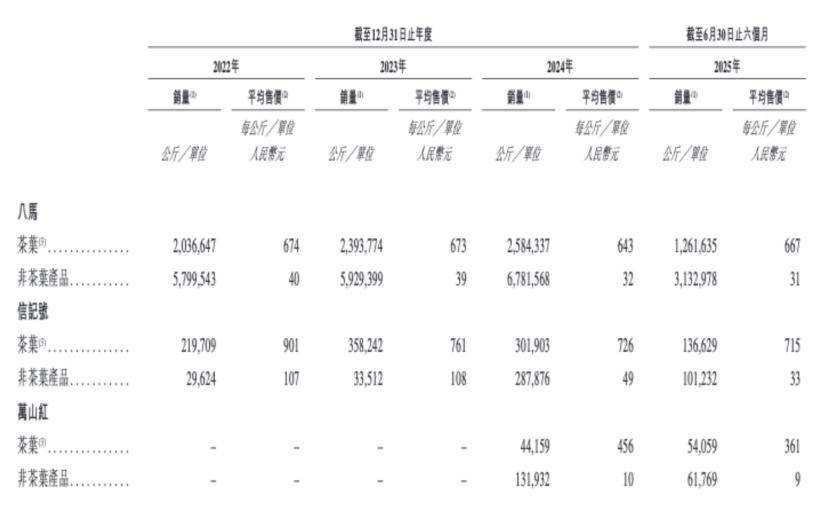
Company Overview - Baima Tea is a leading tea brand and retail chain in China, covering all six major tea categories and tea-related products [2] - In 2024, Baima Tea is expected to rank first in the number of domestic tea chain stores and hold the largest market share in both Oolong and black tea categories [2] - The company has achieved a revenue and profit CAGR of 8.6% and 16.2% respectively over the past three years, with projected revenues and net profits of 2.143 billion and 224 million yuan in 2024 [2] - Baima Tea operates three main brands: the core Baima Tea brand, the sub-brand Xinjihua focusing on high-end Pu'er tea, and the newly established sub-brand Wanshanhong targeting younger consumers [2] Industry Landscape - The high-end tea market is growing faster than the overall market, with a projected market size of 325.8 billion yuan in 2024 and a high-end segment expected to reach 103.1 billion yuan [3] - The high-end tea market is anticipated to grow at a CAGR of 5.6% from 2024 to 2029 [3] - The Chinese tea market is characterized by a long-standing issue of "having categories but no brands," leading to a highly fragmented high-end tea market with a CR5 of approximately 5.6% in 2024 [3] - Baima Tea is expected to hold a market share of about 1.7% in the high-end tea market in China, ranking first [3] Brand Development - Baima Tea is recognized for its deep cultural heritage, being led by a descendant of a 300-year-old tea-making family and inheritor of the Intangible Cultural Heritage of Tieguanyin tea [4] - The company has established a strong brand image as a high-end tea brand in China, with a nationwide sales network covering various city tiers [4] - By mid-2025, Baima Tea plans to have a total of 3,585 stores, with 90% being franchise stores [4] - The company has successfully created a flagship product, "Saizhenzhu," which addresses consumer choice anxiety in the tea market [4] Future Growth Drivers - The company plans to increase its store penetration by adding 1,500 new stores within three years and upgrading existing stores to enhance customer experience and sales efficiency [5] - Baima Tea aims to strengthen its flagship product strategy and expand its product matrix to cover various price ranges and consumer demographics [5] - The company is exploring the development of pure tea beverages and expanding sales channels to establish Baima Pure Tea as a new growth point [5]

中泰证券:首予八马茶叶“增持”评级 高端茶叶第一股破局之路
Zhi Tong Cai Jing· 2025-12-01 03:50
Company Background - Eight Horses Tea is a leading tea brand and retail chain in China, covering all six major categories of tea and tea utensils [1] - The company is expected to rank first in the number of tea chain stores in China by 2024, with significant market shares in Oolong and black tea [1] - Over the past three years, the company's revenue and profit have grown at a CAGR of 8.6% and 16.2%, respectively, with projected revenues and net profits of 2.143 billion and 224 million yuan in 2024 [1] - The company operates three main brands: the core brand Eight Horses Tea, the sub-brand Xinjihua focusing on high-end Pu'er tea, and the newly established sub-brand Wanshanhong targeting younger consumers [1] Industry Landscape - The high-end tea market is growing faster than the overall market, with a projected market size of 325.8 billion yuan in 2024 and a high-end segment size of 103.1 billion yuan [2] - The high-end tea market is expected to grow at a CAGR of 5.6% from 2024 to 2029 [2] - The Chinese tea market is fragmented, with a CR5 of approximately 5.6% in 2024, and Eight Horses Tea holds a market share of about 1.7% in the high-end segment, ranking first [2] Brand Development - Eight Horses Tea is recognized for its deep cultural heritage, with its founder being a descendant of a 300-year-old tea-making family and a practitioner of intangible cultural heritage techniques [3] - The company has established a strong brand presence in the tea retail sector, with a sales network covering all major cities in China [3] - As of the first half of 2025, the company plans to have a total of 3,585 stores, with 90% being franchise stores [3] Future Growth Drivers - The company aims to increase its store penetration by adding 1,500 new stores within three years and upgrading existing stores to enhance customer experience and sales efficiency [4] - It plans to strengthen its big product strategy and expand its product matrix to cover various price ranges and consumer groups [4] - The company is exploring the development of ready-to-drink pure tea beverages as a new growth point in the future [4]
八马入港股狂飙,福建六大豪门能捧出一个茶中茅台吗?
Sou Hu Cai Jing· 2025-10-31 08:45
Core Insights - The Chinese tea industry has been characterized by a fragmented market with no dominant brand comparable to Moutai in the liquor sector, despite a market size exceeding 300 billion RMB [4][28] - Eight Horse Tea's successful listing on the Hong Kong Stock Exchange marks a significant turning point for the industry, with its stock price surging 73% on debut, reaching a market capitalization close to 8 billion HKD [1][28] - The company has leveraged a franchise model and a network of over 3,700 stores, with 90% being franchise-operated, to establish a strong market presence [20][26] Industry Overview - The tea market in China is vast, surpassing 300 billion RMB, yet lacks a leading brand, with the top five companies holding less than 8% market share [4][7] - Unlike the liquor industry, where Moutai commands a significant share, the leading tea company, Eight Horse, only reached a revenue of 3 billion RMB in 2024, accounting for less than 1% of the market [7][28] - The challenges in branding tea stem from product standardization difficulties and a highly fragmented category with numerous subtypes [9][28] Company Background - Eight Horse Tea was founded in 1997 by Wang Wenli, who shifted the focus from raw tea sales to brand development, successfully registering the "Eight Horse" trademark and expanding product offerings [9][11] - The company faced initial struggles, including failed attempts to list on the A-share market, but eventually found success through a franchise model that contributed significantly to its revenue [11][12] Business Model and Strategy - The franchise model has been pivotal for Eight Horse, with over 3,700 stores generating substantial revenue, despite recent declines in average sales per store [20][22] - The company has established strong B2B relationships through connections with major Fujian enterprises, enhancing its market presence and sales [12][16] - Eight Horse has focused on high-end positioning and has developed a membership system to foster customer loyalty, targeting affluent consumers [16][24] Financial Performance - Eight Horse reported a revenue of 2.14 billion RMB in 2024, with a net profit of 224 million RMB and a gross margin of 55% [11][21] - The company has seen a decline in average annual purchases from its members, indicating potential challenges in maintaining customer spending [24] Future Challenges - Despite its successful listing, Eight Horse faces ongoing challenges related to inventory management and the risk of over-reliance on franchise partners, which could impact its premium brand positioning [22][23][28] - The tea industry still grapples with issues of product standardization and market fragmentation, which could hinder long-term growth and brand development [28][29]
昇望基金产业赋能见成效|所投企业八马茶业成功上市
Xin Lang Cai Jing· 2025-10-28 11:49
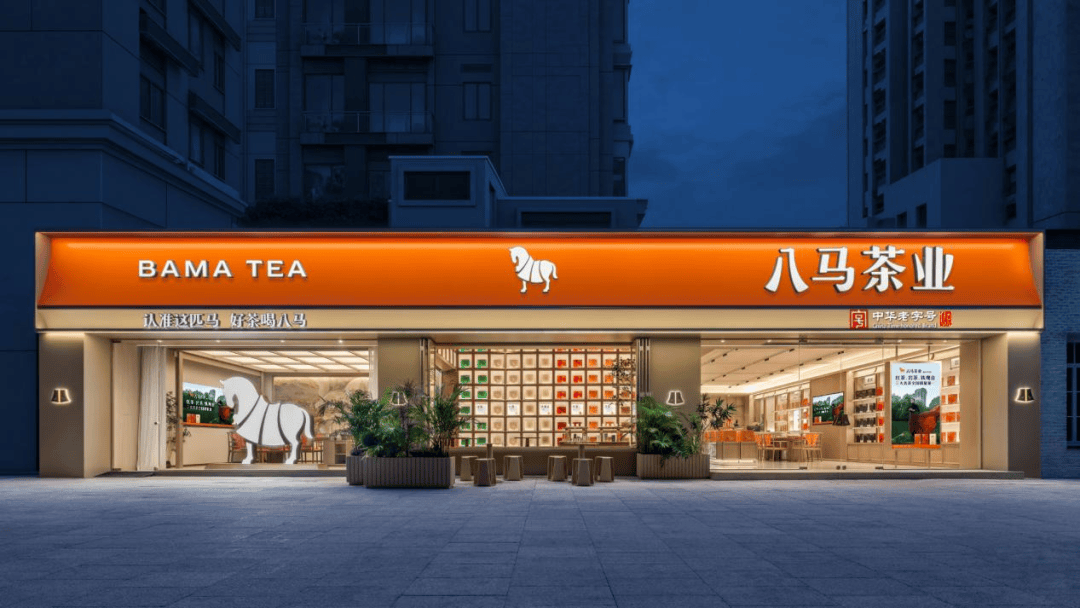
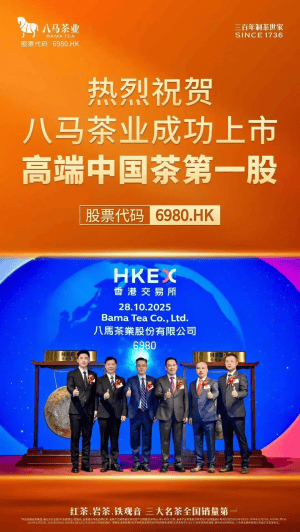
Core Viewpoint - The successful listing of Baima Tea on the Hong Kong Stock Exchange marks a significant milestone for the Chinese tea industry, reflecting strong investor confidence in leading enterprises within this sector [1][18]. Group 1: Listing Performance - Baima Tea's dark trading prior to its official listing saw a peak increase of 100%, with the opening price on the listing day at 80.1 HKD, representing a 60.2% increase and a market capitalization exceeding 7.195 billion HKD [1][2]. - The company achieved a record oversubscription of 2,684 times during the public offering, attracting 120 billion HKD in subscription funds, setting a new record for tea companies in Hong Kong [2]. Group 2: Market Position and Financial Performance - Baima Tea is recognized as the leading enterprise in the high-end tea market in China, holding the top position in various categories, including oolong and black tea, with over 3,700 retail stores nationwide [2][3]. - The company's revenue for 2022, 2023, 2024, and the first half of 2025 was 1.818 billion, 2.122 billion, 2.143 billion, and 1.063 billion CNY respectively, with net profits of 166 million, 206 million, 224 million, and 120 million CNY [3]. Group 3: Brand and Cultural Influence - Baima Tea possesses a national intangible cultural heritage status for its "Tieguanyin production technique" and has established a strong brand presence internationally through participation in significant diplomatic and cultural events [5][9]. - The brand has been ranked first in customer satisfaction among tea chain brands in China for three consecutive years, indicating its strong market recognition [5][7]. Group 4: Technological and Supply Chain Innovations - The company utilizes IoT technology to create a "smart tea garden," enabling real-time monitoring of environmental conditions to optimize cultivation processes [9]. - Baima Tea has implemented a fully automated production line and is a key player in the national industrial internet framework, ensuring comprehensive traceability in its supply chain [9]. Group 5: Investment Strategy and Future Outlook - The investment strategy focuses on the potential of the tea industry, emphasizing brand development, channel efficiency, and technological advancements to capture growth opportunities [15][17]. - Baima Tea's approach to integrating culture, channels, and technology positions it as a leader in overcoming the challenges of brand recognition in the tea sector [17][18].
八马茶业上市首日大涨|昇望基金投资“高端中国茶第一股”价值凸显
Sou Hu Cai Jing· 2025-10-28 09:17
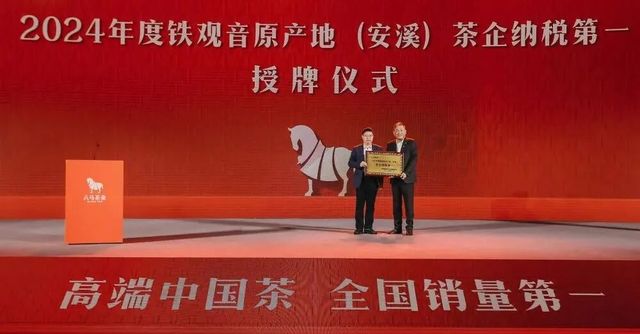
Core Viewpoint - The successful listing of Baima Tea Industry on the Hong Kong Stock Exchange marks a significant milestone in the brand's 12-year journey towards capitalization, reflecting strong investor confidence in the Chinese tea industry and setting a benchmark for the upgrade of traditional industries [3][23]. Company Overview - Baima Tea Industry, established in 1997, is recognized as a leading enterprise in China's high-end tea sector, originating from a century-old tea-making family [3][7]. - The company has achieved a stable market position, ranking first in various categories within the Chinese tea market, including overall sales revenue and specific tea types such as Oolong and black tea [4][7]. Financial Performance - Baima Tea's revenue for the years 2022, 2023, 2024, and the first half of 2025 were reported as 1.818 billion, 2.122 billion, 2.143 billion, and 1.063 billion CNY respectively, with net profits of 166 million, 206 million, 224 million, and 120 million CNY [7]. - The company maintains a gross margin above 52% and has shown a consistent increase in net profit margin [7]. Market Reception - The stock's debut was met with enthusiasm, opening at 80.1 HKD with a 60.2% increase on the first day, leading to a market capitalization exceeding 7.195 billion HKD [3][7]. - The public offering attracted 169,000 applications, resulting in an oversubscription rate of 2,684 times, with total subscription funds reaching 120 billion HKD, setting a new record for tea companies in Hong Kong [3][7]. Brand and Cultural Impact - Baima Tea has a rich brand culture, recognized for its national intangible cultural heritage in "Tieguanyin production techniques," and has participated in significant international events, enhancing its global influence [9][20]. - The brand has consistently ranked first in customer satisfaction among Chinese tea chain brands for three consecutive years [9][20]. Technological Advancements - The company employs IoT technology to create "smart tea gardens," ensuring precise monitoring and management of agricultural practices [13][22]. - Baima Tea has implemented a fully automated production line and is a key player in the national industrial internet framework, enhancing supply chain efficiency and product traceability [13][22]. Channel Strategy - The company has developed a multi-channel strategy that integrates offline experiences with online sales, achieving significant sales growth during major shopping events [15][19]. - Baima Tea's innovative approach includes creating social spaces in physical stores and leveraging live-streaming to engage younger consumers [15][19]. Investment Insights - The investment logic behind Baima Tea's appeal includes insights into category potential, brand value elevation, channel efficiency, and technological barriers, positioning it as a strong player in the tea market [17][19][22]. - The company is seen as a model for capitalizing on the tea industry's growth potential, with a focus on high-repurchase categories and cultural branding [19][20].
500 亿福建富豪圈,跑出来一个“香港茶王”
Sou Hu Cai Jing· 2025-10-15 13:43
Core Viewpoint - Baima Tea Co., Ltd. has successfully passed the hearing for its IPO application on the Hong Kong Stock Exchange, marking a significant step towards its public listing after multiple attempts in the past 12 years [1][3]. Company Overview - Baima Tea is a leading player in the Chinese tea market, ranking first in terms of revenue and net profit among high-end tea suppliers as of 2024 [3][9]. - The company operates over 3,700 chain stores nationwide, establishing itself as a dominant force in the tea industry [3][9]. Historical Background - Founded by Wang Wenli, Baima Tea has roots in a family with a long history in tea production, dating back to the Qing Dynasty [6]. - The company has faced several challenges in its journey to go public, including failed attempts to list on various exchanges before finally targeting the Hong Kong market [1][3]. Financial Performance - Baima Tea's revenue for the years 2022 to 2025 (first half) shows a steady growth trajectory, with figures of 18.18 billion, 21.22 billion, 21.43 billion, and 10.63 billion respectively [9]. - The net profit for the same period was 1.66 billion, 2.06 billion, 2.24 billion, and 1.20 billion, indicating a positive financial outlook [9]. Market Position - The company is recognized as the "King of High-End Tea" in China, leading the market in both oolong and black tea segments [3][15]. - Baima Tea's gross margin has been impressive, with rates of 53.3%, 52.3%, 55.0%, and 55.3% from 2022 to 2025 (first half), reflecting its high-end product strategy [9]. Business Model - The company employs a franchise model, with approximately 50% of its revenue generated from franchise sales [14][16]. - Baima Tea has established a comprehensive sales system that includes both direct and franchise stores, with a focus on offline channels [13][14]. Challenges and Risks - Recent financial reports indicate a decline in revenue and net profit for the first half of 2025, attributed to a decrease in offline store numbers and rising administrative costs [15]. - The sustainability of the franchise model is a concern, as the company relies heavily on franchisees for revenue generation [16][17]. Marketing Strategy - Baima Tea has invested significantly in marketing, with sales and marketing expenses accounting for about 32% of revenue in recent years [13]. - The company emphasizes creating a high-end brand image through various marketing initiatives, including global tasting events and participation in international forums [11][13]. Future Outlook - The company aims to enhance its brand recognition and market presence through innovative marketing strategies and product offerings [11][18]. - Despite the challenges in the high-end tea market, Baima Tea's established brand and market position provide a solid foundation for future growth [18].
八马茶业花12年打破IPO屡败魔咒
2 1 Shi Ji Jing Ji Bao Dao· 2025-10-15 02:57
Core Viewpoint - Eight Horses Tea Industry has successfully passed the listing hearing on the Hong Kong Stock Exchange, marking a significant step towards its IPO after 12 years of attempts, indicating a new phase in the capitalization of China's tea industry [2][4]. Company Overview - Eight Horses Tea Industry has made multiple attempts to go public, with three failed attempts to list on the A-share market between 2013 and 2022 due to various market conditions and internal adjustments [3][12]. - The company shifted its focus to the Hong Kong market in 2023, submitting its prospectus and eventually passing the hearing in October [4][12]. - As of June 30, 2025, Eight Horses operates 3,633 offline stores, including 241 direct stores and 3,392 franchise stores, and has established a strong online presence, with online sales accounting for 35.4% of total revenue [13]. Market Position - According to a report by Frost & Sullivan, Eight Horses ranks first in the Chinese tea market by the number of chain stores and sales revenue in the high-end tea segment [10]. - The company has maintained its position as the top seller of Tieguanyin tea for over ten years and has also led in the sales of Wuyi rock tea and black tea for five and four consecutive years, respectively [10]. Financial Performance - The company's revenue for 2022, 2023, and 2024 was approximately 1.82 billion, 2.12 billion, and 2.14 billion RMB, respectively, with a net profit showing a gradual increase but a noticeable slowdown in growth for 2024 [15][16]. - In the first half of 2023, the company reported a revenue of 1.06 billion RMB, a year-on-year decrease of about 4.2%, and a net profit of 120 million RMB, down approximately 17.8% [17]. Industry Context - The overall scale of the Chinese tea market is substantial, with sales revenue projected to grow from approximately 288.9 billion RMB in 2020 to about 325.8 billion RMB in 2024, and expected to reach around 407.9 billion RMB by 2029, with a compound annual growth rate of about 4.6% [15]. - The high-end tea market is experiencing faster growth, with a projected compound annual growth rate of about 5.6% from 2024 to 2029 [15]. Governance and Management - The company is characterized by a family-run management structure, with the controlling shareholders being family members, which raises concerns about governance and potential conflicts of interest as the company scales [17][18]. - The management team is predominantly composed of family members, which has led to questions regarding the independence and stability of operations post-IPO [18][21].
八马茶业花12年打破IPO屡败魔咒
21世纪经济报道· 2025-10-15 02:48
Core Viewpoint - Eight Horses Tea Industry has successfully passed the listing hearing on the Hong Kong Stock Exchange, marking a significant step towards its IPO after a lengthy 12-year journey, amidst challenges faced by the tea industry in capital markets [2][5][11]. Company Overview - Eight Horses Tea Industry has attempted to go public multiple times since 2013, with three failed attempts to list on the A-share market between 2013 and 2022 due to various market conditions and internal adjustments [3][11]. - The company transitioned to the Hong Kong market in 2023, submitting its prospectus and successfully passing the hearing in October [5][11]. Market Context - The tea industry is considered a challenging sector for capital investment, with few successful IPOs among tea companies since 2012. The complexity of the supply chain and the non-standardized nature of tea products contribute to this difficulty [4][11]. - As of 2023, only a few tea companies, including Lincang Ancient Tea, have successfully listed, with significant stock price declines post-IPO [4]. Business Performance - Eight Horses Tea Industry has established itself as a leader in the Chinese tea market, ranking first in terms of sales revenue and store count as of 2023. The company has maintained its position as the top seller of Tieguanyin tea for over a decade [8][12]. - The company reported revenues of RMB 1.82 billion, RMB 2.12 billion, and RMB 2.14 billion for the years 2022, 2023, and 2024 respectively, with a noticeable slowdown in growth for 2024 [14][15]. Challenges and Concerns - Despite its market leadership, Eight Horses Tea faces performance concerns, with a decline in revenue and net profit reported in the first half of 2023, attributed to decreased sales in offline channels and rising administrative costs [16]. - The company has a family-controlled management structure, which raises governance concerns as it scales and seeks to meet higher regulatory standards post-IPO [16][17]. Industry Outlook - The overall Chinese tea market is projected to grow from approximately RMB 288.9 billion in 2020 to about RMB 407.9 billion by 2029, with a compound annual growth rate (CAGR) of around 4.6% [13]. - The high-end tea market is expected to grow at a faster rate, with a CAGR of approximately 5.6% from 2024 to 2029, indicating a potential opportunity for Eight Horses Tea to expand its market share [13].

八马茶叶通过港股聆讯,福建兄弟终破上市难“魔咒”
2 1 Shi Ji Jing Ji Bao Dao· 2025-10-15 00:18
Core Viewpoint - Eight Horses Tea Industry has successfully passed the listing hearing on the Hong Kong Stock Exchange, marking a significant step towards its IPO after a lengthy 12-year journey, amidst challenges faced by the tea industry in capital markets [1][2]. Company Overview - Eight Horses Tea Industry has attempted multiple IPOs since 2013, with three failed attempts to list on the A-share market from 2013 to 2022. The company shifted its focus to the Hong Kong market in 2023 and successfully passed the hearing on October 12, 2023 [1][4]. - The company operates a large network of 3,633 stores across China, with 241 direct stores and 3,392 franchise stores, and has established itself as a leading brand in the high-end tea market [6][8]. Market Position - According to a report by Frost & Sullivan, Eight Horses Tea ranks first in the Chinese tea market by the number of chain stores and sales revenue in the high-end tea segment. The company has maintained the top sales volume for Tieguanyin tea for over ten years [4][7]. - The overall Chinese tea market is projected to grow from approximately 288.9 billion yuan in 2020 to about 407.9 billion yuan by 2029, with the high-end tea market expected to grow at a compound annual growth rate (CAGR) of about 5.6% from 2024 to 2029 [7]. Financial Performance - Eight Horses Tea's revenue for 2022, 2023, and projected 2024 is reported as 1.818 billion yuan, 2.122 billion yuan, and 2.143 billion yuan respectively, indicating a slowdown in growth despite a rise in net profit [8]. - The average annual purchase amount of members at direct stores has decreased from 2,860.4 yuan in 2020 to 2,469.6 yuan in 2024, reflecting a decline of 13.6% [8]. Governance and Management - The management structure of Eight Horses Tea is heavily influenced by the founding family, with significant voting power held by family members. This has raised concerns regarding governance and potential conflicts of interest as the company prepares for its IPO [9][10]. - The company has been scrutinized for its familial ties and potential related-party transactions, which could impact investor confidence and market perception [9][10].