
儿童护肤品

Search documents
首个儿童化妆品国研报告发布 海龟爸爸加速推动行业高质量发展
Sou Hu Cai Jing· 2026-02-07 08:28
新生代父母的"精致育儿"模式,改变了中国儿童化妆品市场的需求格局与竞争叙事方式。 中国儿童化妆品产业较欧美日韩等发达市场起步较晚,产业发展面临基础数据库薄弱、儿童化妆品监管界定模糊、长期安全性研究缺乏等多项关键性挑 战。 1月30日,由国家市场监管总局发展研究中心牵头,深圳市计量质量检测研究院、广州海龟爸爸生物科技有限公司共同编制的《中国儿童化妆品行业发展 研究报告(2025)》(以下简称:报告)正式发布。 点击链接下载《报告》原文 中国儿童化妆品行业发展研究报告(2025).pdf 2025中国儿童化妆品行业发展研究报告发布现场 《报告》指出,当前中国儿童化妆品产业发展重点聚焦于法规标准体系的国际比较与本土化构建、儿童皮肤生理学与安全风险评估、市场细分与消费行为 洞察、产品研发与功效创新以及全生命周期监管科学五大领域,市场规模快速增长,行业规范化程度有待进一步提升。 2025中国儿童化妆品行业发展研究报告 回顾中国儿童化妆品行业的发展,20世纪80年代,中国婴童化妆品市场出现萌芽,经典老国货品牌填补了市场空白;20世纪90年代初,随着改革开放的持 续,国人的消费意识的增强和经济水平的提升,中国婴童化妆品市场 ...

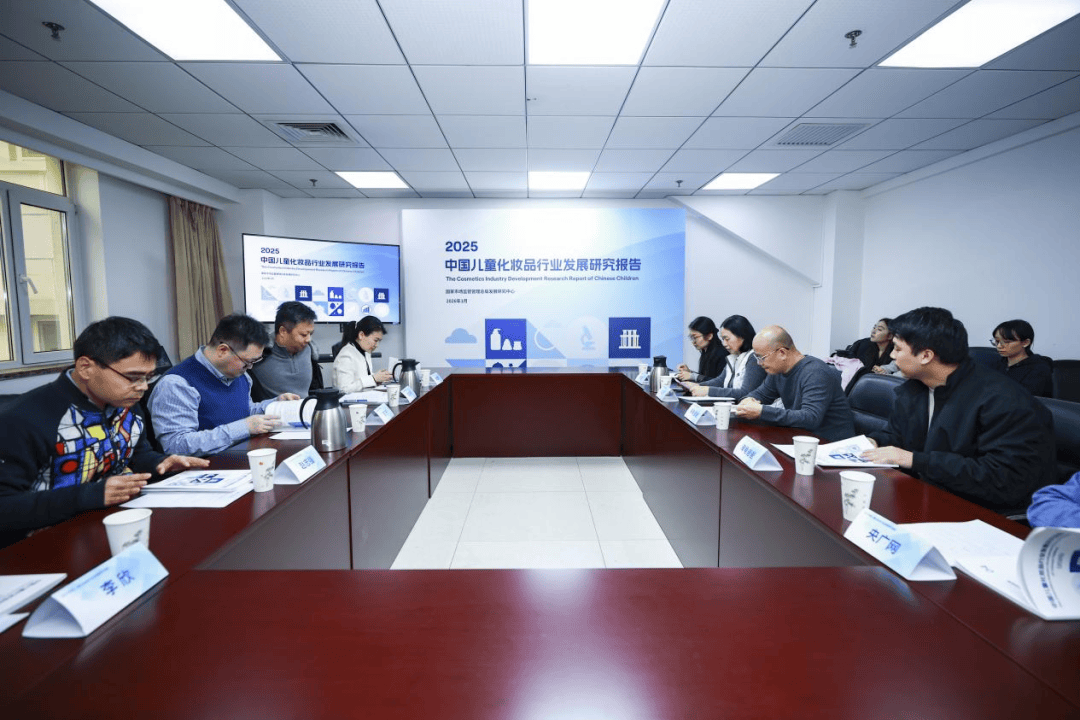
《中国儿童化妆品行业发展研究报告(2025)》在京发布
Jing Ji Wang· 2026-02-05 09:11
Core Insights - The Chinese children's cosmetics industry is experiencing rapid growth, with the market expected to exceed 50 billion by 2025, driven by the "refined parenting" concept and economic development [3][7][20] - The report highlights the importance of a comprehensive regulatory framework and the need for innovation in product safety and efficacy to meet diverse consumer demands [8][11][19] Industry Overview - As of June 2025, there are 28,168 registered ordinary children's cosmetics, with 27,219 being domestically produced and 949 imported; additionally, there are 427 registered special cosmetics, with 406 from domestic sources [3] - The children's skincare market is projected to reach 31.58 billion in 2024, with a year-on-year growth of 6.3%, and the market is expected to surpass 50 billion by 2025 [7][8] Market Trends - The children's cosmetics market is characterized by a dual evolution of scale expansion and structural upgrade, with a growing presence of both domestic and international brands [8][20] - The online sales of children's sunscreen products are projected to reach 1.83 billion in 2025, with the brand Hai Gui Ba Ba capturing a significant market share [8][9] Innovation and Quality Control - The report emphasizes the need for technological innovation and quality management as fundamental to the development of the industry, with companies encouraged to transform compliance pressures into innovation drivers [11][19] - Hai Gui Ba Ba has established a unique research laboratory focused on children's skincare and has developed a "SCIENCE-LED" research and development system to address industry challenges [13][19] Regulatory Environment - The regulatory framework for children's cosmetics is evolving, with a focus on lifecycle quality management and compliance with safety standards [20][22] - The report calls for a collaborative approach among companies to enhance quality management and ensure the safety of children's cosmetics [20][22]
独立演讲:全球视野,本地深耕:消费投资的“Glocal”之道|2025年36氪产业未来大会
3 6 Ke· 2025-09-22 10:25
Core Insights - The conference held in Xiamen, China, focused on five key sectors: artificial intelligence, low-altitude economy, advanced manufacturing, new energy, and consumer goods, aiming to discuss development paths and industry future [1] - The event emphasized the collaboration between government, capital, and industry to address pain points and bottlenecks in industrial development [1] Company Overview - The company, founded in 1989, is the largest investment institution focused on the consumer sector globally, managing approximately $37 billion across nine different investment strategies [4] - The company has invested in over 300 representative consumer brands over the past 30 years, emphasizing long-term partnerships with enterprises [4] Investment Strategy - The company adopts a "Glocal" approach, combining global methodologies and consumer insights with local market applications, particularly in China [5] - The focus is on building brands that convey emotional value and resonate deeply with consumers, leveraging China's strong supply chain capabilities and mature digital commerce [5] Market Focus - The company prioritizes investments in China and the United States, while also exploring opportunities in Japan, India, Australia, New Zealand, Europe, and South America [4] - The company identifies sustainable consumer behavior trends, such as "contactless" payments and the rise of "solo economy," to guide investment decisions [8] Brand Development - The company aims to assist local emerging brands in achieving dual upgrades in branding and distribution, helping them secure advantageous positions in broader markets [9] - The company emphasizes the importance of emotional value in branding, illustrated by successful collaborations like the partnership between Heytea and FENDI [10] Localization Strategy - The company recognizes the need for localized understanding in the Chinese market, tailoring strategies to different regional consumer preferences and characteristics [11] - The company integrates local capabilities with global experience to support the growth of outstanding Chinese brands into industry leaders on a global scale [11]

儿童化妆品市场规模迅速增长 监管加码
Zhong Guo Jing Ji Wang· 2025-07-28 06:57
Group 1 - The core viewpoint is that the children's cosmetics market in China is experiencing rapid growth, with a significant increase in both the number of registered products and market size, driven by improved regulatory frameworks and consumer demand [1][2] - As of June 2025, there are 28,168 registered ordinary children's cosmetics, with 27,219 being domestic and 949 imported, and 427 registered special children's cosmetics, with 406 domestic and 21 imported [1] - The market for children's skincare products is projected to exceed 50 billion yuan by 2025, while the children's color cosmetics market is expected to grow from over 10 billion yuan in 2019 to 24 billion yuan by 2025, reflecting a compound annual growth rate of over 20% [1] Group 2 - The National Medical Products Administration (NMPA) has established specific regulatory requirements for children's cosmetics, emphasizing "safety first, necessary efficacy, and minimal formulation" [2] - The NMPA has introduced a dedicated label, the "Little Golden Shield," to enhance the identification of children's cosmetics, aiding consumers in making informed purchasing decisions [2] - The technical guidelines for children's cosmetics have been refined based on children's physiological characteristics and skin properties, aiming to improve product safety standards [2]