全新天籁

Search documents
销量回暖难掩短板 东风日产仍面临新能源深考
Zhong Guo Zheng Quan Bao· 2025-12-04 20:31
Core Insights - The electric transformation of the Chinese automotive market is deepening, posing significant challenges to traditional joint venture brands like Dongfeng Nissan [1][6] - Dongfeng Nissan has shown some positive signals in sales growth in mid-2025, but still faces substantial structural issues and market dependency on a single model [2][3] Sales Performance - Dongfeng Nissan's sales peaked at over 1.31 million units in 2018-2019 but have since declined, with 2022 sales dropping to 920,900 units (down over 20% YoY) and further declining to 791,000 units in 2023 (down 14.1% YoY) [2] - In 2024, sales are projected to fall to 631,000 units (down 20.2% YoY), with 480,000 units sold in the first ten months of 2025, a decrease of approximately 7.5% compared to the same period in 2024 [2] Model Dependency - The Nissan Sylphy remains a core model, with 34,000 units delivered in October 2025 and accounting for nearly 49% of total sales in China [2] - Other brands under Dongfeng Nissan, such as Venucia and Infiniti, are struggling, with combined sales of less than 2,000 units in October 2025 [3] New Energy Vehicle Strategy - Dongfeng Nissan is focusing on new energy vehicle (NEV) transformation, planning to invest 10 billion yuan and expand its R&D team to 4,000 by the end of 2026, with five new models expected [4] - The N7, a key pure electric model, has shown fluctuating sales, with 39,000 units delivered in the first ten months of 2025, ranking low in its segment [4] Technical Challenges - Dongfeng Nissan's technology adaptation and localization efficiency are under scrutiny, with its end-to-end intelligent driving system lagging behind competitors like Huawei and XPeng [5] - User feedback indicates quality control issues, with numerous complaints about the N7 model, highlighting shortcomings in product quality and after-sales service [5] Industry Context - The challenges faced by Dongfeng Nissan reflect broader issues for traditional joint venture brands in adapting to the electric wave in China, balancing global technology standards with local market demands [6] - The need for these brands to convert technological investments into market-accepted products and improve user response efficiency is critical for future success [6]
东风日产仍面临新能源深考
Zhong Guo Zheng Quan Bao· 2025-12-04 20:22
Core Insights - The electric transformation of the Chinese automotive market is deepening, posing significant challenges to traditional joint venture brands like Dongfeng Nissan, which is experiencing a restructuring of market dynamics [1][2] - Dongfeng Nissan has shown some positive signals in sales growth in mid-2025, but still faces notable deficiencies in its product offerings and market adaptation [1][3] Sales Performance - Dongfeng Nissan's sales peaked at over 1.31 million units in 2018-2019 but have since declined, with 2022 sales dropping to 920,900 units (down over 20% YoY) and further decreasing to 791,000 units in 2023 (down 14.1% YoY) [1] - In 2024, sales fell to 631,000 units (down 20.2% YoY), and in the first ten months of 2025, cumulative sales reached 480,000 units, a decline of approximately 7.5% compared to the same period in 2024 [1][2] Model Dependency - The reliance on the core fuel model, Sylphy, is evident, with October 2025 sales reaching 34,000 units, accounting for nearly 49% of Dongfeng Nissan's total sales in China [2] - Other brands and models, such as Venucia and Infiniti, are struggling, with combined sales in October 2025 being less than 2,000 units, indicating a lack of market breakthrough [2] Technological Challenges - Dongfeng Nissan is focusing on its electric transformation, planning to invest 10 billion yuan and expand its R&D team to 4,000 by the end of 2026, aiming to launch five new energy models [3] - However, the market performance of its new energy vehicles, particularly the N7 model, shows significant gaps compared to competitors, with cumulative deliveries of 39,000 units in the first ten months of 2025 [3][4] Quality Control Issues - User feedback indicates quality control challenges, with multiple complaints regarding the N7 model, including sensor failures and software issues, leading to a low resolution rate for complaints [5] - The overall complaint volume for Dongfeng Nissan has reached 1,482, highlighting deficiencies in product quality and after-sales service [5]
40岁的日产中国,要打翻身仗
21世纪经济报道· 2025-10-21 10:10
Core Viewpoint - Nissan is undergoing a significant transformation in China, aiming to rejuvenate its brand and product offerings to appeal to younger consumers, marking a "second entrepreneurship" in the market as it faces declining sales and increased competition [1][3][12]. Group 1: Market Challenges - Nissan's global retail sales in Q1 FY2025 fell to 707,000 units, a 10.1% decrease year-on-year, with net sales dropping to 2.7 trillion yen, down 9.7% [5]. - The company's net loss reached 115.8 billion yen (approximately 5.435 billion yuan), a stark contrast to previous profits, with sales in China plummeting by 27.5%, the largest decline among regions [5]. - The brand's identity as "Technology Nissan" is fading, struggling to compete with Toyota and Volkswagen while facing pressure from local Chinese brands on pricing and features [5][6]. Group 2: Strategic Initiatives - Nissan launched the "Re:Nissan" revival plan, focusing on cost optimization, which includes a global workforce reduction of 20,000 and the closure of seven factories [7][10]. - The company aims to reduce production capacity outside China from 3.5 million to 2.5 million units, with the Wuhan factory being handed over to a local brand to alleviate production burdens [7][10]. - Nissan's CEO emphasized the importance of the Chinese market in the company's global strategy, with plans to introduce ten new energy models in China by 2027, covering various powertrain types [10]. Group 3: Product Development and Localization - Nissan is adopting a "Glocal" strategy, decentralizing product development and decision-making to its Chinese team, which is expected to shorten the vehicle development cycle from 36 months to 24 months [8][10]. - Three new models, including the N6 plug-in hybrid and a new version of the Sylphy featuring Huawei's HarmonyOS, are set to launch in Q4, with the N6 positioned as a key player in the brand's electric vehicle transition [9][10]. - The company plans to invest 10 billion yuan in new energy research and expand its technical team to 4,000 members over the next three years [10].

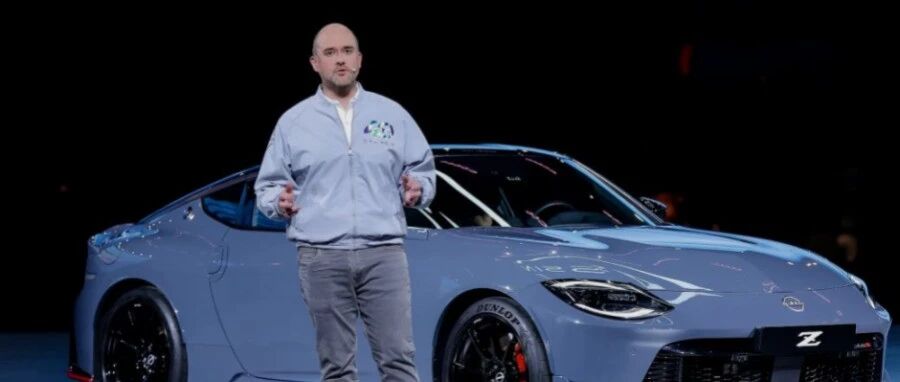
西装换牛仔:40岁的日产中国“二次创业”,决战年轻化市场
2 1 Shi Ji Jing Ji Bao Dao· 2025-10-21 09:33
Core Insights - Nissan is undergoing a significant transformation to appeal to younger consumers in China, marking a "second entrepreneurship" phase as it celebrates its 40th anniversary in the market [2][10] - The company faces a critical survival crisis, with a notable decline in global retail sales and a significant drop in the Chinese market, which is now seen as a key pillar of Nissan's global strategy [3][4] Sales Performance - In Q1 FY2025, Nissan's global retail sales fell to 707,000 units, a decrease of 10.1% year-on-year, with net sales dropping to 2.7 trillion yen, down 9.7% [3] - The Chinese market experienced a staggering 27.5% decline in sales, the largest drop among all regions [3] Market Positioning - Nissan's brand perception as a "technology-driven" company is fading, struggling to compete with Toyota and Volkswagen while facing pressure from local Chinese brands [3][4] - The company's luxury brand, Infiniti, is losing its presence in the premium market [3] Strategic Initiatives - Nissan has launched the "Re:Nissan" revival plan, which includes global layoffs of 20,000 employees and the closure of seven factories, aiming to optimize costs [5] - The company is focusing on localizing its operations in China, with plans to introduce three new models led by the Chinese team in Q4, including the N6, a new Altima, and the FrontierPro [6][9] Product Development - The N6 will be Nissan's first plug-in hybrid sedan, while the new Altima will feature Huawei's HarmonySpace 5.0 smart cockpit [6][9] - Nissan plans to introduce 10 new energy models in China by 2027, covering various powertrain types [8] Future Outlook - The company aims to invest 10 billion yuan in new energy research and development over the next three years, expanding its technical team to 4,000 members [10] - Nissan's strategy emphasizes a "Glocal" approach, decentralizing decision-making to the Chinese team to enhance responsiveness to market demands [9][10]