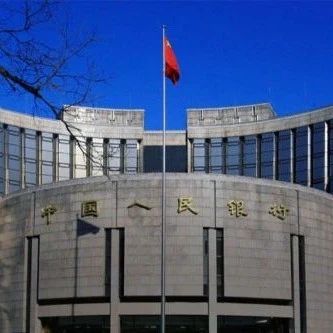
公开市场国债买卖操作

Search documents
12月份MLF延续净投放保持流动性充裕
Zheng Quan Ri Bao· 2025-12-24 16:25
Core Viewpoint - The People's Bank of China (PBOC) is maintaining liquidity in the banking system by conducting a 400 billion MLF operation, resulting in a net injection of 100 billion yuan for December, marking the 10th consecutive month of increased MLF operations [1] Group 1: MLF Operations - The PBOC will conduct a 400 billion yuan MLF operation with a one-year term on December 25, 2025, to ensure ample liquidity in the banking system [1] - In December, 300 billion yuan of MLF is set to mature, leading to a net liquidity injection of 100 billion yuan after the MLF operation [1] - The PBOC has also conducted a net injection of 200 billion yuan through reverse repos this month, resulting in a total net liquidity injection of 300 billion yuan for December [1] Group 2: Market Analysis - Analyst Wang Qing noted that the PBOC's actions are aimed at stabilizing the funding environment and supporting growth expectations as the year-end approaches [1] - The net injection scale for MLF and reverse repos from August to November was consistently 600 billion yuan per month, but this has been reduced by 300 billion yuan in December [1] - The reduction in net financing for government bonds in December may have influenced the PBOC's decision to decrease the injection scale [1] Group 3: Future Outlook - Citic Securities' chief economist Mingming indicated that despite the reduced net injection, the PBOC's approach to maintaining a moderately loose liquidity stance remains unchanged [2] - There is a possibility that the PBOC may increase the scale of government bond purchases to counter seasonal liquidity fluctuations at the end of the month [2] - Looking ahead to 2026, Wang Qing expects the PBOC to utilize various liquidity tools to inject short- to medium-term liquidity into the market, supporting government bond issuance and encouraging financial institutions to increase credit [2]
1.2万亿元!央行,最新公告!
券商中国· 2025-04-30 15:32
Core Viewpoint - The People's Bank of China (PBOC) is maintaining liquidity in the banking system through various monetary policy tools, including a significant reverse repurchase operation in April, indicating a potential shift towards more accommodative monetary policy in the coming months [1][4]. Group 1: Reverse Repo Operations - In April, the PBOC conducted a reverse repurchase operation totaling 1.2 trillion yuan, with 700 billion yuan for 3-month terms and 500 billion yuan for 6-month terms [1][3]. - The net withdrawal from the 3-month reverse repo in April was 500 billion yuan, concluding a period of sustained liquidity release since October of the previous year [1][4]. - The reduction in the scale of reverse repo operations does not imply a tightening of market liquidity, as historical trends show a substitutive relationship between reserve requirement ratio cuts and medium-term lending facility (MLF) operations [1][4]. Group 2: Future Expectations - Significant reverse repo maturities are expected in May and June, with 900 billion yuan maturing in May and 5 trillion yuan and 1.4 trillion yuan maturing in June [4]. - Analysts suggest that the reduction in reverse repo operations may signal a forthcoming reserve requirement ratio cut, aimed at injecting long-term liquidity into the market to support bank lending and economic growth [4][5]. - The issuance of special government bonds is set to accelerate in the second and third quarters, which may influence the timing of monetary policy easing [4][5]. Group 3: Government Bonds and Monetary Policy - Government bonds are anticipated to continue increasing in volume in the second quarter, supported by a more diversified liquidity supply through various monetary policy tools [5]. - The PBOC may resume government bond purchases and expand reverse repo operations or implement reserve requirement ratio cuts to ensure adequate liquidity for upcoming bond issuances [5].
中国人民银行:2025年4月,中国人民银行未开展公开市场国债买卖操作。
news flash· 2025-04-30 09:08
Core Viewpoint - The People's Bank of China (PBOC) did not conduct any open market operations for government bonds in April 2025 [1] Group 1 - The PBOC's decision indicates a potential shift in monetary policy or market conditions affecting government bond trading [1]
央行最新调整!MLF政策属性完全退出,降低银行负债成本
券商中国· 2025-03-24 10:54
Core Viewpoint - The People's Bank of China (PBOC) has announced a shift in the Medium-term Lending Facility (MLF) operation to a multi-price bidding system, indicating a complete exit of the MLF interest rate from its policy attributes, which is expected to lower banks' funding costs and enhance financial support for the real economy [1][4][6]. Group 1: MLF Operation Changes - Starting from March 25, 2025, the PBOC will conduct a 450 billion yuan MLF operation, marking a net injection of 63 billion yuan for March, the first net injection since July 2024 [2][3]. - The adjustment to a multi-price bidding system for MLF signifies a move towards market-oriented interest rates, reducing the complexity of policy rates [4][5]. Group 2: Impact on Financial Institutions - The new MLF operation is expected to alleviate the pressure on banks' net interest margins by lowering funding costs, as institutions will have more flexibility in pricing based on market conditions [6][7]. - The PBOC's liquidity management tools have become more diversified, allowing for better alignment with the varying liquidity needs of financial institutions [7].