
具身智能基础模型

Search documents
让机器人更好地“干活” 业界构建物理世界基础模型
Ren Min Wang· 2026-01-13 13:12
Core Insights - The rapid development of embodied intelligence technology is highlighted by the increasing capabilities of robots in motion and control, shifting the focus from physical attributes to cognitive abilities [1] - The core mission of foundational models in embodied intelligence is to overcome generalization and universality bottlenecks, enabling robots to process unstructured, dynamic, and random tasks in real-time [1][2] - The competition in the next phase of embodied intelligence revolves around the construction of foundational models and the evolution capabilities of these models, driven by data, models, and computational power [1][2] Company Developments - The company "自变量" utilizes a world model mechanism for spatiotemporal state prediction and integrates visual causal reasoning to enhance the robot's ability to operate in unstructured environments [2] - "自变量" has developed various data collection devices, achieving data validation and model breakthroughs, and has established a data pipeline focused on model-driven processes to continuously generate high-quality data [2] - Recently, "自变量" completed a financing round of 1 billion yuan (approximately 140 million USD) in A++ funding [2] Industry Trends - The breakthroughs in foundational models of embodied intelligence are enabling robots to enter more fields, from industrial production to public services and smart agriculture [2] - As technology matures and the industrial ecosystem improves, robots are expected to become true "intelligent partners" in the physical world, enhancing the quality and efficiency of the real economy and improving public welfare [2]

三个人,聊了很多AI真相
投资界· 2025-12-15 07:34
Core Insights - The article discusses the transition of AI from model capability competition to execution capability in the physical world, highlighting the challenges and opportunities in this domain [2][3]. Company Summaries - Zhi Bian Liang is focused on developing embodied intelligence foundational models and general-purpose robots, emphasizing the need for a physical model that operates in the real world, distinct from virtual models [4]. - Yuan Rong Qi Xing has been involved in autonomous driving, witnessing the industry's evolution from high-precision mapping to end-to-end models, and has successfully deployed 200,000 vehicles with their driving assistance systems, with a projection of reaching one million vehicles next year [5]. Challenges in AI Implementation - The transition from simulation to real-world application presents significant challenges, including the need for extensive pre-training based on real-world data, which is not easily replicated in simulated environments [6][7]. - The physical world introduces complexities that are not present in simulations, such as the need for precise manipulation and the impact of minor errors on outcomes [9][10]. Importance of Data and Training - The collection of vast amounts of real-world data is crucial for effective pre-training, and the integration of language models can enhance learning efficiency [7][18]. - The current data generation from 200,000 vehicles is substantial, necessitating careful selection and quality control to optimize model performance [18]. Future of Commercialization - The commercialization of embodied intelligence is expected to gain momentum by 2026, with predictions of significant advancements in practical applications and return on investment [21][22]. - The industry is currently in a phase similar to early autonomous driving, with many companies still in the demo stage, but there is optimism about achieving scalable commercial applications soon [19][20]. Role of Language Models - Language models are seen as essential for providing supervisory information during training, aiding in the rapid learning of complex tasks [12][13]. - However, there is debate about the necessity of language in physical AI, with some arguing that while it enhances understanding, it may not be critical for all applications [15][26]. Technical Considerations - The development of physical AI models requires overcoming significant engineering challenges, including the need for real-time feedback and the limitations of current computational resources [25][26]. - The scaling laws in AI suggest that with sufficient data and resources, it is feasible to train models that can operate effectively in the physical world within a reasonable timeframe [24][26].


百川能源:拟2.15亿元取得西安中科光电22.86%股权 后者为具身智能机器人研发生产企业
Mei Ri Jing Ji Xin Wen· 2025-10-31 12:08
Core Viewpoint - Baichuan Energy (600681.SH) announced an investment of 215 million yuan to acquire a 22.86% stake in Xi'an Zhongke Optoelectronics Precision Engineering Co., Ltd., increasing its total ownership to 25.20% after the transaction [2] Group 1: Investment Details - The investment will be executed through equity transfer and capital increase [2] - Xi'an Zhongke Optoelectronics is a high-tech enterprise specializing in the research and production of embodied intelligent basic models and robots [2] - The target company has not yet achieved profitability [2] Group 2: Risks and Considerations - The investment involves entering a new business area, which carries management and operational risks associated with cross-industry investments [2]

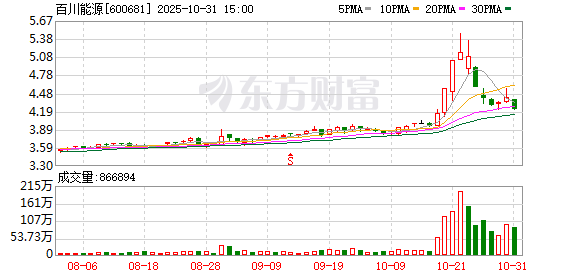
百川能源:全资子公司拟2.15亿元取得西安中科光电22.86%股权
Xin Lang Cai Jing· 2025-10-31 12:01
Core Viewpoint - Baichuan Energy announced an investment of 215 million yuan to acquire a 22.86% stake in Xi'an Zhongke Optoelectronics Precision Engineering Co., Ltd., increasing its total ownership to 25.20% after the transaction [1] Group 1: Investment Details - The investment will be executed through equity transfer and capital increase [1] - Xi'an Zhongke Optoelectronics is a high-tech enterprise specializing in the research and production of embodied intelligent foundational models and robots [1] - The target company has not yet achieved profitability [1] Group 2: Risks and Considerations - The investment involves entering a new business area, which may present management and operational risks associated with cross-industry investments [1]
百川能源(600681.SH):拟股权受让及增资合计投资2.16亿元取得西安中科光电22.86%股权
Ge Long Hui A P P· 2025-10-31 11:56
Core Viewpoint - Baichuan Energy (600681.SH) plans to invest a total of 215.26 million yuan to acquire a 22.86% stake in Xi'an Zhongke Optoelectronics Precision Engineering Co., Ltd., increasing its total ownership to 25.20% after the transaction [1] Group 1 - The investment will be executed through equity transfer and capital increase [1] - Xi'an Zhongke Optoelectronics is a high-tech enterprise specializing in the research and production of embodied intelligent foundational models and robots [1] - The target company has not yet achieved profitability [1]
自变量宣布获近10亿元A+轮融资,阿里云、国科、国开领投
Xin Lang Ke Ji· 2025-09-08 02:02
Core Viewpoint - The company Zibian Robot has successfully completed nearly 1 billion yuan in A+ round financing, indicating strong investor confidence and interest in the field of embodied intelligence [1] Group 1: Financing Details - The financing round was led by Alibaba Cloud and Guoke Investment, with participation from Guokai Financial, Sequoia China, and Yongce Capital [1] - Existing shareholder Meituan's strategic investment exceeded expectations, while Lenovo Star and Junlian Capital continued to invest [1] Group 2: Use of Funds - The funds will be utilized for the continuous training of Zibian's self-developed general embodied intelligence foundational model and the iterative development of hardware products [1] Group 3: Strategic Partnerships - This marks Alibaba Cloud's first investment in an embodied intelligence company, reflecting its high recognition of Zibian's technology and commitment to providing multi-dimensional support [1]
从创办第一天就考虑全球化:创投热议具身智能出海路径
2 1 Shi Ji Jing Ji Bao Dao· 2025-08-11 05:24
Industry Overview - The embodied intelligent robotics industry is experiencing rapid growth, with the global market expected to exceed $400 billion by 2029, and China holding nearly half of this market share with a compound annual growth rate (CAGR) of approximately 15% [1] - China's industrial robot export market has risen to the second largest globally, with a remarkable export growth of 61.5% in the first half of this year [1] Company Insights - Self-variable Robotics, founded in late 2023, positions itself as a foundational model company in embodied intelligence and aims to compete equally with global counterparts from day one [2] - The company has developed a unified end-to-end VLA embodied intelligence foundational model, distinguishing itself from traditional language models [3] - Ruiman Intelligent, established in 2018, has overcome technical bottlenecks in core components and achieved a shipment of over 100,000 joints this year, contributing to the infrastructure of the embodied intelligence industry [3][5] Global Expansion Strategies - Self-variable Robotics aims for global expansion from its inception, considering overseas market development while managing costs and operational feasibility [3] - Ruiman Intelligent emphasizes the importance of value and reliability in overseas markets, where reliability often outweighs price considerations [4] - Cloud Capital has invested in several leading robotics companies and emphasizes the need for startups to focus on ROI when evaluating domestic versus international markets [6] Localization and Market Adaptation - Companies must adapt their products for local markets to avoid "water and soil incompatibility" issues, as demonstrated by a wall-painting robot that required size adjustments for different markets [7] - Effective communication and local hiring are crucial for successful market penetration, as local professionals can build trust with clients [8] International Collaboration - The Singapore National Robotics Program seeks partnerships with Chinese embodied intelligence companies to enhance technological capabilities and develop the local robotics ecosystem [9][10]