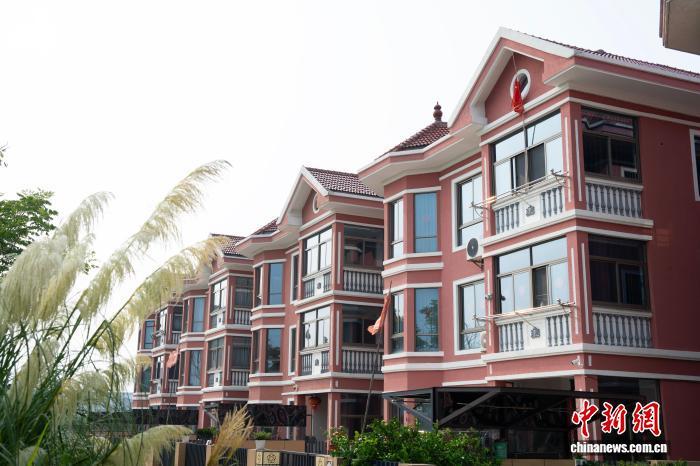
分布式屋顶光伏

Search documents
锚定“双碳”目标 专家详解差异化推进逻辑
Xin Lang Cai Jing· 2025-12-31 15:54
Core Viewpoint - The article emphasizes the importance of differentiated strategies for achieving China's dual carbon goals, highlighting the need for tailored approaches based on regional and industry-specific characteristics [1][3]. Group 1: Regional Strategies - The eastern regions should lead in technological innovation and green service industries, while resource-rich areas like Northwest China should focus on local renewable energy consumption and zero-carbon manufacturing [2]. - Urban areas need to concentrate on energy system transformation and synergistic effects among transportation, buildings, and networks, whereas rural areas are emerging as new focal points for the dual carbon strategy [2]. - Shanxi Province is implementing a comprehensive approach from rural to urban areas, with pilot projects for near-zero carbon emission communities, involving an investment of nearly 300 million yuan across multiple initiatives [2]. Group 2: Industry Strategies - Traditional high-energy-consuming industries require differentiated management and the use of transition financial tools to support orderly transformation [3]. - Emerging industries should be encouraged to integrate deeply into the green low-carbon industrial chain and enhance carbon technology innovation while engaging with carbon markets for dual incentives [3]. - The carbon trading market is expanding from the power sector to include high-energy industries like steel and cement, with a shift towards integrated systems for renewable energy development [3]. Group 3: Overall Coordination - Achieving the dual carbon goals necessitates respecting regional and industry differences while enhancing overall coordination to avoid fragmented progress [3]. - The core reasons for regional differences include development stages, resource endowments, and strategic positioning, while industry differences stem from emission baselines, technology maturity, and transition costs [3]. - The future of China's dual carbon efforts will focus on precise measures to enhance transformation effectiveness, with tighter regional collaboration expected under the guidance of the 14th and 15th Five-Year Plans [3].
鲁企积极开拓海外市场,寻找“第二增长曲线”
Da Zhong Ri Bao· 2025-09-21 00:55
Core Viewpoint - Shandong High-speed Group's recent success in securing two major contracts in Malaysia highlights the company's strategy to expand into overseas markets and seek new growth opportunities, particularly in emerging industries such as smart logistics and intelligent manufacturing [2][3][4] Group 1: Project Details - The Malaysia Smart Warehouse project involves the construction of smart warehouses across several states, with a total contract value of 60 million Malaysian Ringgit (approximately 10.2 billion RMB) [2] - The Nilai Smart City project plans to invest 7 billion USD (approximately 50.1 billion RMB) over the next decade, with an initial contract value of about 1.6 billion USD (approximately 11.45 billion RMB) [2] - Both projects leverage advanced technologies such as IoT, big data, and AI, showcasing Shandong High-speed Group's capabilities in providing integrated solutions [3][4] Group 2: Business Strategy and Performance - Shandong High-speed Group's overseas project contracts signed this year amount to approximately 27 billion RMB, representing a year-on-year growth of 360% [4] - The company has been recognized as one of the top 250 international contractors globally, ranking 51st, which enhances its credibility in securing large contracts [4] - The dual projects signify a strategic shift from traditional construction to modern logistics and supply chain services, marking a significant breakthrough in project scale and local impact [4] Group 3: Collaborative Ecosystem - The successful execution of these projects is expected to significantly increase the revenue scale and proportion of Shandong High-speed Group's overseas business, enhancing its resilience in the new economic landscape [5] - The projects also align with Malaysia's industrial upgrade and digital transformation needs, as the country seeks to enhance efficiency and competitiveness through smart solutions [6] - The establishment of a cooperation alliance in Shandong aims to create a collaborative ecosystem that promotes "Shandong manufacturing" and "Shandong services" on a global scale [6] Group 4: Industry Trends - Shandong High-speed Group is actively pursuing an international strategy that integrates foreign trade, services, and investment, thereby enhancing its competitiveness in the global market [7] - The company is also involved in various projects across different regions, including smart transportation systems in Ethiopia and renewable energy initiatives in Singapore [7] - Other Shandong enterprises are similarly exploring overseas markets to find new growth avenues, with a focus on high-tech and high-value products [8] Group 5: Economic Impact - In the first eight months of this year, Shandong's total import and export volume reached 2.32 trillion RMB, reflecting a year-on-year growth of 5.8%, the highest among the top five foreign trade provinces [10] - The provincial government is implementing measures to support enterprises in exploring new markets and fostering new growth drivers, further solidifying Shandong's position in the global market [10]

活力中国调研行丨从乡村到园区,降碳“文章”这样写——浙江推进低碳转型发展见闻
Xin Hua Wang· 2025-08-07 05:23
Core Insights - Zhejiang province is actively promoting low-carbon transformation through various initiatives in rural and industrial areas, showcasing a strong commitment to sustainable development [1][5]. Group 1: Rural Low-Carbon Initiatives - Meilin Village is developing a "low-carbon village" centered around photovoltaic (PV) power generation, with a distributed rooftop PV system generating over 160,000 kWh annually, reducing CO2 emissions by approximately 94 tons [2]. - The village's "fishing and solar" project integrates over 80 acres of ponds and 30 acres of land, expected to increase collective income by over 110,000 yuan annually [2]. - Residents are benefiting from surplus electricity sales to the grid, enhancing their financial well-being while contributing to environmental sustainability [2]. Group 2: Innovative Practices in Low-Carbon Living - Jing Shan Village is promoting a low-carbon lifestyle by replacing plastic products with bamboo alternatives, which has gained popularity among guests [3]. - The village has implemented a points system for waste sorting and green travel, encouraging residents to adopt sustainable practices [3]. - With a forest coverage rate of 96%, the village aims to leverage its ecological resources for carbon sequestration and promote carbon-labeled tea products [3]. Group 3: Industrial Low-Carbon Transformation - The Linping Economic and Technological Development Zone is launching a zero-carbon demonstration project, focusing on distributed PV power stations and energy management systems [4]. - The industrial park has achieved a green energy share of 63.2%, with annual savings of approximately 100,000 yuan in electricity and 1.58 million yuan in power generation revenue [4]. - The project is designed to be replicable and sustainable, with a payback period of about six years, contributing to the broader goal of carbon neutrality [4]. Group 4: Broader Implications for Development - The ongoing low-carbon transformation across various sectors, including households, parks, agriculture, and industry, is reinforcing the green foundation for high-quality development in the region [5].
(活力中国调研行)村民用上光伏电 低碳梅林村“以绿生金”
Zhong Guo Xin Wen Wang· 2025-08-05 16:22
Core Insights - The article highlights the successful implementation of rooftop solar panels and integrated charging stations in Meilin Village, Zhejiang Province, showcasing the benefits of renewable energy for local residents [1][3][5]. Group 1: Rooftop Solar Implementation - Residents in Meilin Village have installed rooftop solar panels, with one resident reporting earnings of 253.61 yuan from surplus electricity sold back to the grid in July alone, generating an average annual income of 2,000 to 3,000 yuan from solar energy [1]. - Over 50 households in the village are in the process of installing rooftop solar systems, indicating a growing trend towards low-carbon energy solutions among the community [1]. Group 2: Integrated Charging Stations - Meilin Village has established the first integrated solar charging station in the district to support nearly 100 electric vehicles, featuring 4 superchargers, 4 fast chargers, and 7 slow chargers, along with a 120 kW solar power system [3]. - The charging station has achieved an average daily charging capacity of 700 kWh, which translates to a reduction of approximately 255 tons of CO2 emissions annually compared to traditional fuel vehicles [3]. Group 3: Community Benefits and Infrastructure - The "Beautiful Life Center" in Meilin Village, a near-zero carbon building, features a 258 kW distributed rooftop solar system that generates over 160,000 kWh annually, reducing CO2 emissions by about 94 tons and saving the community approximately 15,000 yuan in electricity costs each year [5]. - The village has developed a low-carbon service station to enhance electricity access for residents, exemplifying a model for rural low-carbon infrastructure development [5][6].