制种玉米

Search documents
棉花白、油茶红、玉米黄……广袤田野收获忙绘就一派好“丰”光
Yang Shi Wang· 2025-10-17 06:47
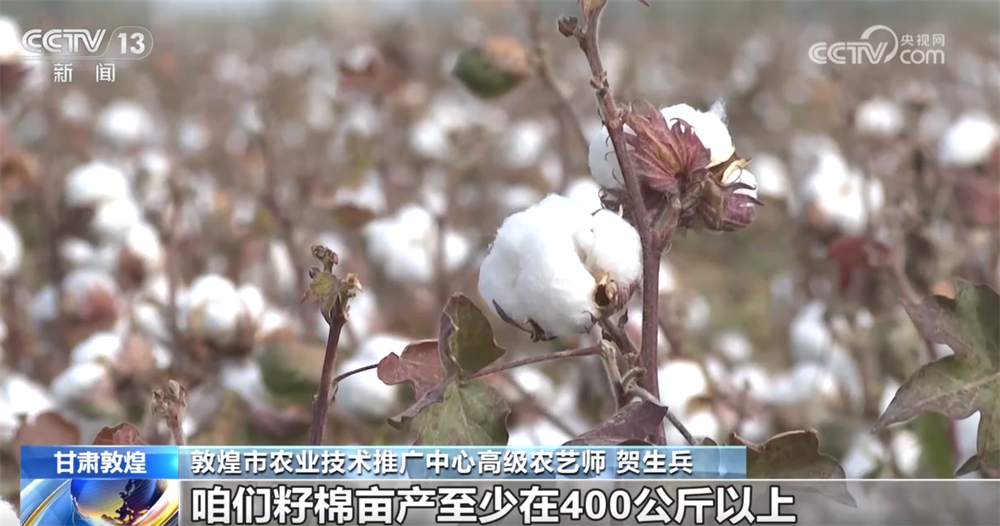
Group 1: Cotton Production in Dunhuang - Dunhuang has successfully improved cotton production through the comprehensive management of saline-alkali land, resulting in better growth and increased yields [1][5] - The average yield of cotton in the saline-alkali land has increased by 10% to 20%, with specific fields showing a yield of at least 400 kilograms per mu, an increase of 40-50 kilograms [1][5] - The agricultural department is testing various cotton varieties to identify those with stronger salt-alkali resistance and higher adaptability for broader promotion [3] Group 2: Cotton Production in Xinjiang - Xinjiang has reported record cotton yields, with an average yield of 774.3 kilograms per mu and a maximum yield of 862.99 kilograms per mu, setting a new record for single-point yield [7][11] - The high-yield cotton field in Aral City, covering 200 mu, is a collaboration between the Xinjiang Academy of Agricultural Sciences and a seed company, focusing on a new high-quality cotton variety [9][11] - The breakthrough in single plant yield, achieving over 10 bolls per plant, is seen as a significant advancement for cotton production in the region [11] Group 3: Oil Tea Production in Guizhou - In Guizhou, over 60,000 mu of oil tea trees have entered the harvesting period, with the highest oil yield occurring now [13][17] - The oil tea industry in Shiqian County is thriving, with an annual production of 8,000 tons of oil tea fruit, generating over 20 million yuan in value and benefiting over 4,000 people [17][18] - The county is optimizing low-efficiency wild oil tea forests and planting high-yield varieties to ensure steady growth in the oil tea sector [18] Group 4: Corn Production in Gansu - Gansu's corn production is flourishing, with over 80,000 mu dedicated to seed corn, contributing to a total planting area of 453,700 mu [19][21] - The corn seed industry in Yongchang County is expected to reach a total industrial chain output value of 860 million yuan this year [23] Group 5: Rice Production in Hunan - Hunan's rice harvest is in full swing, with farmers actively working to ensure a successful yield [24][26] - The county has implemented a "early specialized and late optimized" planting model, completing a grain sowing area of 1.265 million mu [26]

秋收时节秋雨绵绵 各地抢收抢烘确保秋粮颗粒归仓
Yang Shi Xin Wen Ke Hu Duan· 2025-10-11 01:43
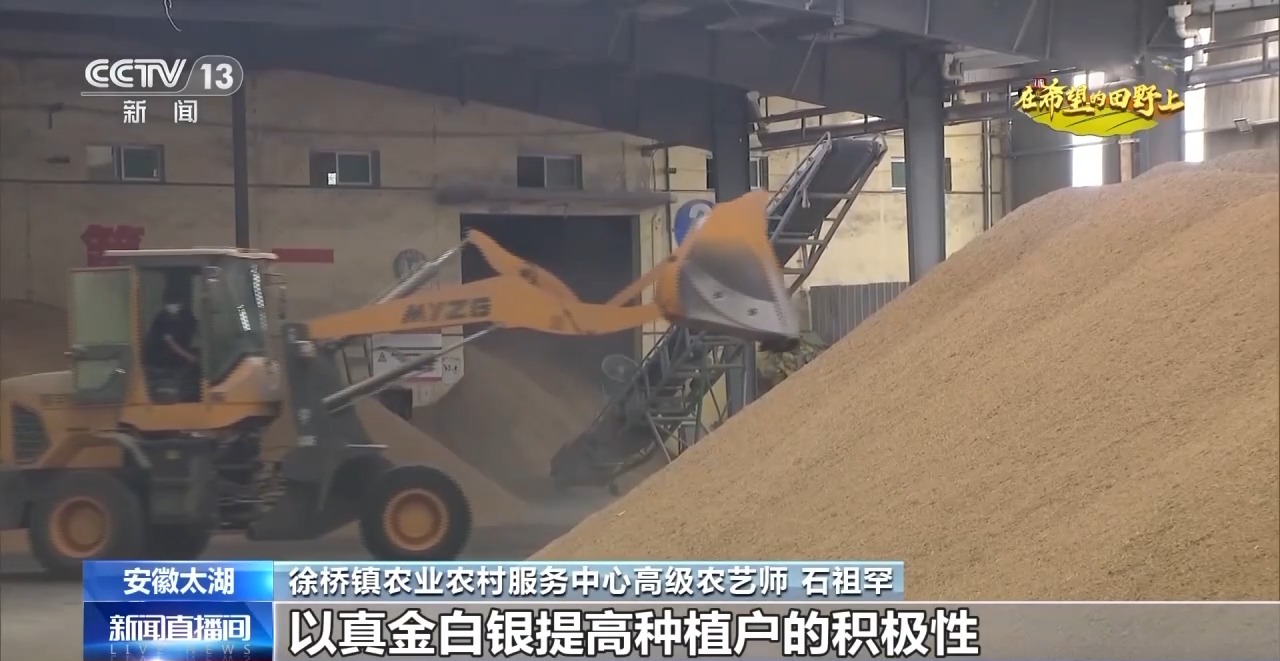
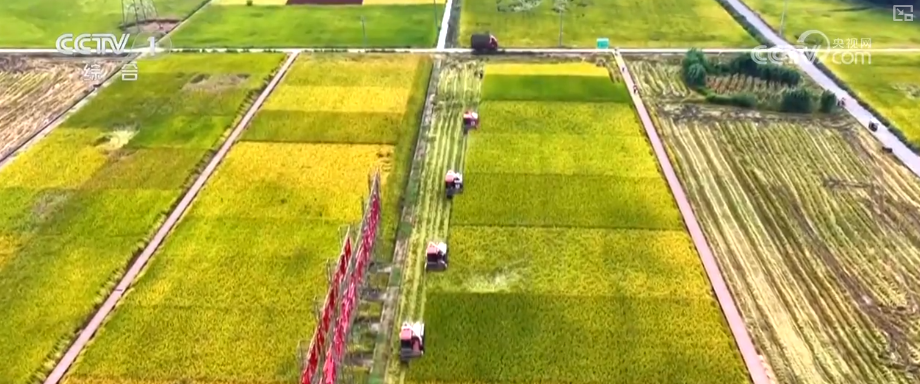
Group 1 - Anhui Province's Taihu County has 400,000 acres of rice being harvested, with local authorities ensuring comprehensive service support for the autumn grain harvest [1] - In Xuqiao Town, major grain grower Yu Xiaoliang reported a 10% increase in rice yield due to mechanized operations and centralized seedling cultivation [2] - Over 30 key grain production and drying enterprises in Taihu County are operating at full capacity to support farmers [2] Group 2 - Shandong Dezhou has implemented a strategy of simultaneous harvesting and drying due to rainfall during the critical harvest period, ensuring the timely collection of autumn grain [4] - Professional personnel have been dispatched to provide technical guidance to 18 grain drying centers in Ningjin County, ensuring continuous operation of drying equipment [4] - Local farmers are utilizing drying services to manage their harvest effectively, with 24-hour operations at the drying centers [6] Group 3 - In Yunnan's Qujing City, 21,700 acres of seed corn are facing challenges due to continuous rainfall, prompting local authorities to organize manual harvesting to prevent spoilage [6] - Approximately 40 to 50 workers are engaged in manual harvesting to ensure seed quality, with a focus on rapid drying and storage of the seeds [6][8] - The seed production area in Luliang County accounts for 25% of Yunnan's total seed production area, making it a significant hybrid corn seed base in Southwest China [8] Group 4 - Xinjiang's Aksu region is currently engaged in winter wheat sowing, utilizing modern machinery to enhance efficiency [11] - The region plans to sow 2.6 million acres of winter wheat, with an expected yield of 500 to 700 kilograms per acre due to the adoption of advanced planting techniques [11]
又是一年收获时!五谷丰登、瓜果飘香、鱼虾满舱……丰收画卷徐徐铺展
Yang Shi Wang· 2025-09-16 03:09
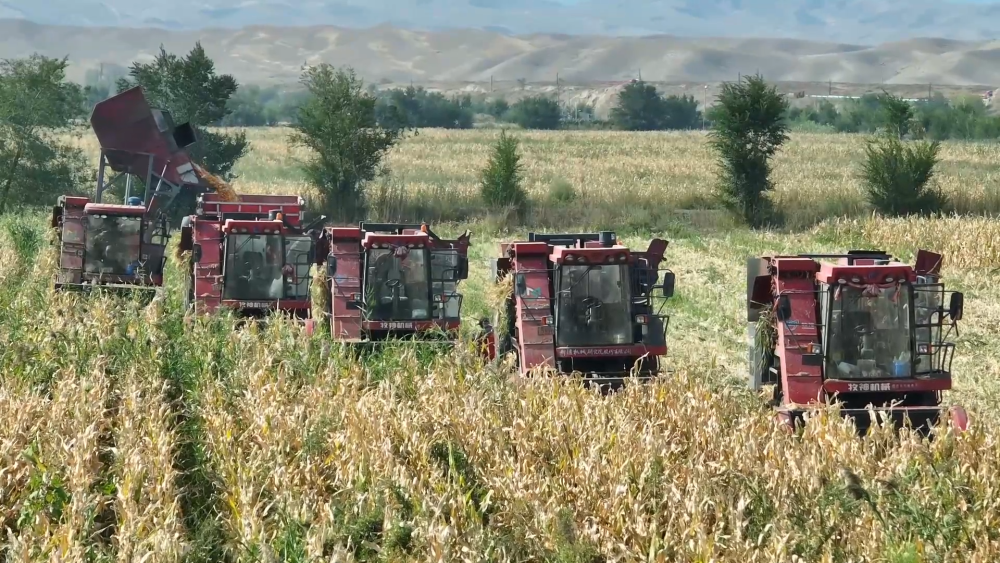
Group 1 - The autumn harvest season is in full swing across various regions in China, with significant agricultural activities taking place [1][3][14] - In Sichuan's Chongzhou, 320,000 acres of rice are being harvested, with a mechanization rate of 96% for major crops [5][3] - Xinjiang's Changji is also experiencing a large-scale harvest of seed corn, utilizing large harvesting machines to save time and labor [6][8] Group 2 - Gansu's Baiyin is witnessing a successful harvest of quinoa, with new resilient and high-yield varieties being tested in high-altitude areas [9][13] - In Henan's Weihui, millet is being harvested in the mountainous regions, showcasing a busy and fruitful agricultural scene [14] - In Xinjiang's Tiemenguan, tomatoes are being harvested extensively, with advanced sorting technology being used for quality control [15][17] Group 3 - Liaoning's Dalian is seeing a diverse range of grape varieties being harvested, with strong market demand both domestically and internationally [19] - Shanxi's various regions are enjoying a bountiful harvest of Yulu pears, which are well-received by merchants due to their quality [21] - In Chongqing's Qianjiang, over 13,000 acres of highland kiwifruit are ready for harvest, contributing to local agricultural productivity [23] Group 4 - Sichuan's Ganzi Prefecture is harvesting its unique cactus fruit known as "Xiantao," with plans to expand cultivation significantly by 2025 [24][26] - In Heilongjiang's Daqing, the region is successfully cultivating South American shrimp in cold water, showcasing innovative aquaculture practices [27][29][30] - Shandong's Dongying has commenced the harvest of river crabs, with fresh products being rapidly distributed to major cities through cold chain logistics [33][36][37]
新疆玛纳斯县:制种玉米喜丰收 订单种植保增收
Xin Hua She· 2025-09-14 01:49
Group 1 - The core viewpoint is that Manas County is experiencing a successful harvest of hybrid corn, with 35,000 acres of seed corn entering the harvest period, showcasing a scene of abundance [1] - Manas County, located at the northern foot of the Tianshan Mountains, has fertile soil and rich resources, making it a national-level hybrid corn seed production base [3] - The county has developed a complete seed corn industry system, implementing 100% contract planting for seed corn, and utilizing advanced technologies such as drone pest control and integrated water and fertilizer management, increasing yield from over 300 kg to around 600 kg per acre [5]
特色产业绘就乡村振兴新图景 希望的田野上一派秋日好“丰”景
Yang Shi Xin Wen· 2025-09-02 10:06
Group 1: Agricultural Production - Anhui Province's Jingde County has 118,000 acres of highland rice maturing, showcasing a prosperous harvest season [1] - Xinjiang Yili has 555,800 acres of seed corn entering the harvest phase, contributing significantly to national seed corn production [2] - Guizhou's Guiding County has 107,000 acres of thorn pear fruit being harvested, utilizing digital management for full traceability [3] Group 2: Technological Advancements - Jingde County employs smart irrigation and green pest control systems for standardized highland rice cultivation [1] - Yili's seed corn harvesting utilizes 100% mechanization with satellite navigation for efficient operations [2] - Guizhou's thorn pear industry leverages 5G technology for real-time data transmission and IoT integration in production processes [3] Group 3: Economic Impact - The highland rice production in Jingde County reflects regional agricultural characteristics and contributes to local economic growth [1] - Yili's seed corn area accounts for over 60% of Xinjiang's total, establishing it as a major seed corn production base [2] - The thorn pear industry in Guizhou benefits 21,000 households, with an average income increase of over 10,000 yuan per household [3]
科技赋能奏响“春耕进行曲” 一起到田间地头领略“智慧”春景
Yang Shi Wang· 2025-04-12 08:43
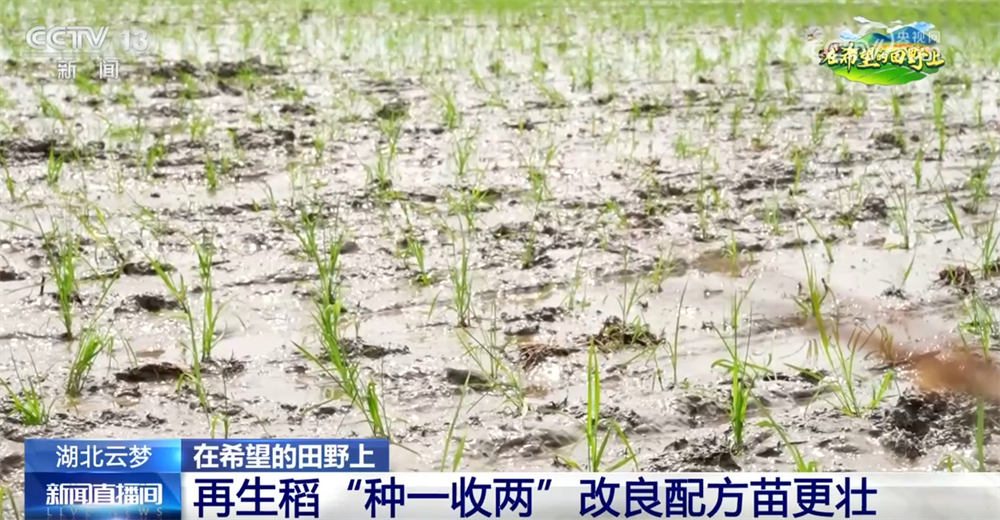
Group 1: Agricultural Practices and Innovations - The promotion of "two harvests in one season" through the cultivation of regenerative rice is being implemented in Yunmeng County, Hubei Province, allowing farmers to achieve double yields from the same land [1][4] - In Yunmeng County, the average yield of regenerative rice can reach 2,700 pounds per acre, which is an increase of approximately 700 pounds compared to other rice varieties [4] - The use of improved seedling formulas and expert guidance for field management has led to a significant enhancement in seedling quality this year [2] Group 2: Water Management for Agriculture - In Nanchang, Jiangxi Province, efforts are underway to ensure sufficient irrigation water supply for spring farming, including the repair of irrigation facilities and the introduction of external water sources [5][9] - The area of early rice sowing in Nanchang has reached 1.48 million acres, with over 70% of the planting completed [8] - The local government is actively coordinating with various departments to maintain and repair irrigation infrastructure, including pump stations and water source projects [9] Group 3: Corn Seed Production - In Ningxia, the planting season for seed corn has begun, with a focus on hybrid corn parent plants that will later be cross-pollinated to produce seed corn [10][12] - The planned area for seed corn cultivation in Qingtongxia City is over 60,000 acres, with an expected production of 27 million kilograms of corn seeds primarily for the southwestern region [12] Group 4: Winter Wheat Management - In Changji, Xinjiang, technological methods are being utilized to enhance the management of 1.48 million acres of winter wheat, particularly during the critical growth stage [13][17] - The use of drones for spraying fertilizers has significantly reduced the time required for field management, completing tasks in just 2 hours compared to the traditional method which took a full day [13] - The implementation of row spacing adjustments in planting techniques has led to more uniform seed distribution, improving overall crop yield [15]