动力电池材料

Search documents
晨会纪要-20260130
Guoxin Securities· 2026-01-30 01:31
Macro and Strategy - The fixed income investment strategy for February 2026 focuses on convertible bonds, suggesting a "Top Ten Convertible Bonds" portfolio, with an emphasis on growth sectors and defensive allocations in power and banking [7] - The report highlights that the small-cap growth style outperformed the large-cap value in January, with significant increases in resource sectors, while the market's valuation levels indicate potential for upward movement [7] - The report anticipates a continuation of the "spring excitement" market trend, with the Shanghai Composite Index expected to break through 4200 points, driven by increased retail investment as high-interest savings mature [7] Industry and Company Mechanical Industry - SpaceX aims for complete reuse of its Starship rockets in 2026, which could reduce space access costs by 99%, while Tesla plans to sell humanoid robots to the public by the end of 2027 [11][12] - The report emphasizes the long-term investment opportunities in commercial aerospace and humanoid robotics, particularly focusing on supply chain companies involved in rocket manufacturing and AI infrastructure [12][13] Energy Sector - China National Offshore Oil Corporation (CNOOC) expects capital expenditures of approximately RMB 8.44 billion for 2026, focusing on equipment investment and technology upgrades, with a positive outlook on its operational performance [24] - The report predicts that international oil prices will stabilize and rise slightly, with CNOOC's business structure continuously optimizing, leading to improved profit margins [24] Battery Materials - Xiamen Tungsten Co., Ltd. anticipates a 42% increase in net profit for 2025, driven by strong sales of lithium cobalt oxide and ongoing advancements in solid-state battery materials [25][26] - The company is expanding its production capacity for high-performance battery materials and is actively developing new materials for electric vehicles and energy storage [27] Insurance Sector - Ping An Insurance is focusing on enhancing its liability business and value transformation, which is expected to improve its valuation amid easing real estate risks [28][29] - The report maintains profit forecasts for Ping An from 2025 to 2027, with expected earnings per share of RMB 7.72, 8.57, and 9.26, respectively, indicating a positive outlook for the company's valuation recovery [29] Sportswear Industry - The sportswear market is experiencing a bifurcation, with high-end brands driving growth in apparel while footwear prices are under pressure, leading to a decline in sales for many brands [18][19] - The report highlights that domestic brands are facing significant price competition, with performance varying widely across different product categories [20][21]


解码全球新材料政策:从美/日/中等12国布局看产业未来机遇
材料汇· 2026-01-16 15:41
Core Viewpoint - New materials are the cornerstone of global technological revolution and industrial transformation, with significant implications for high-end manufacturing and emerging industries. Major economies are integrating new materials into their national strategies to secure competitive advantages and ensure supply chain safety [2]. Group 1: United States - The U.S. focuses on maintaining its global leadership in advanced materials, emphasizing digital-driven research and strategic breakthroughs in areas like semiconductors and quantum technology [4]. - The U.S. has invested over $40 billion in the National Nanotechnology Initiative, which has led to significant advancements in nanotechnology and the rapid development of emerging industries [4][6]. - The U.S. aims to reduce the average research and development cycle for new materials by 45% through AI-driven initiatives and has established a $1 billion project for sustainable semiconductor materials [6]. Group 2: Japan - Japan emphasizes enhancing material innovation capabilities, focusing on high-end materials and data-driven research to maintain its global market share [8][9]. - The Japanese government allocated 123 billion yen for semiconductor-related plans in 2024, aiming to boost domestic semiconductor sales significantly by 2030 [10]. - Japan's National Institute for Materials Science is integrating AI to predict material properties, enhancing the reliability of electronic materials [11]. Group 3: China - China aims for high-quality development in the new materials industry, focusing on strategic materials and leveraging vast application scenarios for industrialization [14]. - The country has established a comprehensive policy framework to support new materials, including a guide covering 299 types of new materials to facilitate their application [15][16]. - China leads in the production of rare earth functional materials and advanced energy storage materials, with a significant market share in superhard materials [16]. Group 4: European Union and Core Member States - The EU aims to become a global leader in materials science, focusing on green and digital transitions while ensuring regional supply chain security [18]. - The EU has initiated the European Green Deal and the Critical Raw Materials Act to enhance the circular economy and local sourcing of critical materials [18][19]. - The EU's Horizon Europe program allocated €3 billion for new materials research, emphasizing biobased and two-dimensional materials [19]. Group 5: Germany - Germany integrates new materials with its industrial base, particularly in automotive and high-end equipment manufacturing, focusing on lightweight and smart materials [22]. - The country invests over €1 billion annually in automotive lightweight materials research, aiming for significant weight reductions in vehicles [22]. - Germany's advanced ceramics hold a global market share of approximately 12-15%, widely used in automotive and aerospace applications [22]. Group 6: France - France focuses on aerospace and renewable energy sectors, enhancing high-performance composite materials and energy storage materials through dedicated funds [23]. - The French government established a €1.5 billion fund for aerospace materials, collaborating with Airbus on carbon fiber composites [23]. - France leads in aerospace structural materials, holding a significant market share in the European market [23]. Group 7: Sweden - Sweden emphasizes low-carbon technologies, focusing on green steel and biobased materials, leveraging local resources for production [24]. - The country achieved large-scale production of green steel, aiming to meet low-carbon demands in automotive and construction sectors [24]. - Sweden's biobased materials technology is leading in Europe, with a significant market share in wood-based materials [25]. Group 8: United Kingdom - The UK aims to enter the "Materials 4.0" era, focusing on digitalization and sustainable materials through integrated research and development [26]. - The UK government has invested £800 million in a materials digitalization platform to enhance research efficiency [28]. - The UK is a leader in quantum materials and hydrogen storage materials, with significant advancements in biocompatible materials [28]. Group 9: South Korea - South Korea targets core material localization and supply chain autonomy, closely aligning with its semiconductor and battery industries [30]. - The country has set ambitious goals for domestic production of semiconductor materials, aiming for an 85% localization rate by 2030 [32]. - South Korea's battery materials hold over 30% of the global market share, with significant advancements in silicon-based anode materials [32]. Group 10: Brazil - Brazil leverages its mineral and agricultural resources to focus on lithium processing and biobased materials, integrating its materials industry with renewable energy [38]. - The Brazilian government has established a fund to support lithium material industries, attracting international investments [39]. - Brazil aims to become a top-three global supplier of lithium materials by 2030, with significant market shares in biobased materials [40]. Group 11: India - India emphasizes localized manufacturing of materials, focusing on semiconductors and photovoltaic materials to support its electronics and renewable energy sectors [41]. - The Indian government has launched initiatives to attract investments in semiconductor materials, offering substantial incentives [42]. - India aims for a 40% localization rate in semiconductor materials by 2027, leveraging its demographic advantages for cost-effective production [42]. Group 12: New Material Technology Development Trends - AI is expected to exponentially enhance the speed of new material research and development, integrating data-driven approaches into material design [46]. - Modern material manufacturing techniques are evolving towards atomic-scale control, enhancing material properties through nanoscale innovations [47]. - The demand for materials capable of performing under extreme conditions is driving the development of multifunctional materials [48]. - The green transformation of material production and application is becoming increasingly important, with a focus on sustainability and lifecycle assessment [50]. - The diversification of cutting-edge material technology routes is evident, with multiple approaches being explored for quantum computing and storage materials [51]. Conclusion - The global competition in the new materials industry is fundamentally a contest of national strategic intent, technological innovation, and resource endowment. The focus on strategic areas, technological empowerment, green transformation, and supply chain security will shape the future landscape of the new materials industry [52][53].


材料科技创新与产业发展的关系
Xin Hua Ri Bao· 2025-09-17 00:30
Group 1 - The historical development of human civilization is closely tied to materials, with significant industrial revolutions relying on specific materials such as steel, non-ferrous metals, and silicon [1] - The materials industry in China had an output value of approximately 8 trillion yuan last year, highlighting its importance as a strategic emerging industry [1] - New materials are considered the driving force behind the development of strategic emerging industries [1] Group 2 - There is a consensus in the industry that "one generation of materials leads to one generation of equipment," emphasizing the foundational role of materials in high-end equipment manufacturing [2] - The performance of battery materials is crucial for the development of the new energy vehicle industry, as it directly impacts driving range [2] - The cost of photovoltaic power generation has decreased by 85% over the past decade, primarily due to advancements in battery materials [2] Group 3 - Future dominant industries such as energy, information, and health are closely related to materials, with challenges like nuclear fusion requiring innovative materials to contain high-energy particles [3] - The development of low-energy consumption artificial intelligence technologies relies on breakthroughs in efficient ion transport materials [3] - Material science innovation must be prioritized in the overall strategy for industrial development to drive transformative changes [3]
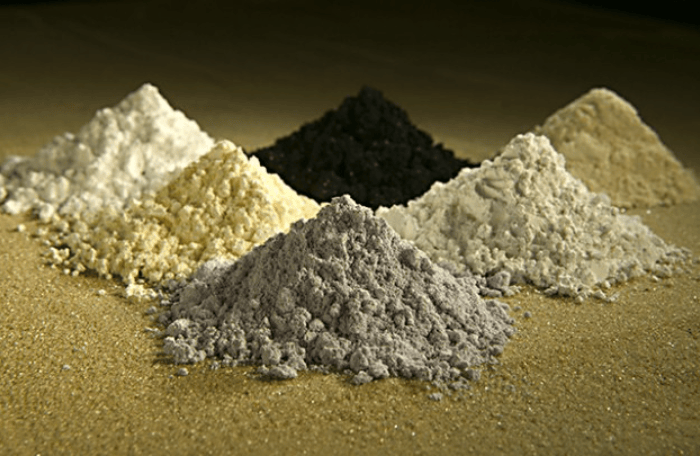
中国掌握全球近70%稀土产量:背后十大供应商揭秘
Sou Hu Cai Jing· 2025-06-09 09:53
Industry Overview - In April 2023, China announced export controls on seven categories of heavy rare earth materials, significantly impacting the automotive and electronics industries that heavily rely on these materials [2] - Rare earth elements, consisting of 17 metals, are crucial for the development of modern technology and strategic industries, including defense, aerospace, electronics, and electric vehicles [2] - China dominates the rare earth market, holding approximately 40% of global rare earth mines and nearly 70% of global production, particularly in heavy rare earths, which enhances its trade and diplomatic influence [2] Company Summaries - **China Northern Rare Earth (Group) High-Tech Co., Ltd.**: Established in 1997 with a registered capital of 3.62 billion RMB, it specializes in the production and sales of rare earth refined products and advanced materials, operating the world's largest rare earth raw material production base [3] - **China Rare Earth Group Co., Ltd.**: Founded in 2021 with a registered capital of 100 million RMB, it consolidates rare earth assets from major mining and metallurgical companies, covering the entire industry chain from resource development to advanced material manufacturing [4] - **Guangdong Rare Earth Industry Group Co., Ltd.**: Established in 2014 with a registered capital of 1 billion RMB, it focuses on rare earth products and other non-ferrous metal mining and processing, recently integrated into China Rare Earth Group [5] - **Xiamen Tungsten Co., Ltd.**: Founded in 1997 with a registered capital of 1.42 billion RMB, it is a leading rare earth enterprise involved in various energy new materials, including rare earth oxides and metals [6] - **Shenghe Resources Holding Co., Ltd.**: Established in 1998 with a registered capital of 1.75 billion RMB, it is a global producer of rare earth products with operations in multiple countries and significant stakes in overseas rare earth companies [7] - **Inner Mongolia Baotou Steel Union Co., Ltd.**: Founded in 1999 with a registered capital of 45.4 billion RMB, it produces steel products and rare earth concentrates, focusing on enhancing resource utilization through technological improvements [8] - **Guangsheng Nonferrous Metals Co., Ltd.**: Established in 1993 with a registered capital of 336.44 million RMB, it is a state-owned enterprise with a complete rare earth mining and processing chain, controlling over 120,000 tons of medium and heavy rare earth resources [9] - **China Southern Rare Earth Group Co., Ltd.**: Founded in 2015 with a registered capital of 752.85 million RMB, it focuses on the development of rare earth resources in Jiangxi province, covering mining, processing, and technology services [10] - **Yuyuan New Materials Co., Ltd.**: Established in 1999 with a registered capital of 846.55 million RMB, it specializes in the research and production of rare earth materials and other advanced materials [11] - **Hengdian Group DMEGC Magnetics Co., Ltd.**: Founded in 1999 with a registered capital of 1.63 billion RMB, it is the world's largest manufacturer of ferrite permanent magnets and produces various magnetic materials and solar products [12]