华为乾崑智驾ADS辅助驾驶系统

Search documents
“尊界效应”观察:为何顶级企业家换掉了劳斯莱斯?
经济观察报· 2025-12-25 11:49
Core Viewpoint - The story of the ZunJie S800 transcends the success of a single vehicle, representing a solid foothold and leap for a Chinese brand in the ultra-luxury market traditionally dominated by century-old brands through its full value chain capabilities in R&D, manufacturing, supply chain, and user operations [1][2]. Market Performance - The ZunJie S800 was launched on May 30, with a price starting above 700,000 yuan, generating significant market interest [4]. - By August, the cumulative pre-orders exceeded 10,000 units, far surpassing initial industry expectations [4]. - In October, the S800 achieved a monthly delivery of 1,970 units, topping the sales chart for luxury sedans priced above 700,000 yuan [4]. - By December, the monthly delivery stabilized above 2,000 units, surpassing the combined sales of competitors like the Porsche Panamera and BMW 7 Series [4][6]. Quality and Delivery - ZunJie emphasizes stable delivery and quality over mere sales speed, aiming for a "zero defects" manufacturing control system [6]. - The S800 has set a new record for delivery speed in the luxury car segment, with over 10,000 units delivered since its launch [6]. - The company aims to complete all orders by the Spring Festival in 2025, showcasing its efficient supply chain and commitment to users [6]. User Experience and Technology - The S800 integrates top-tier intelligent technology with craftsmanship, providing a unique driving experience that appeals to high-net-worth individuals [8][9]. - The vehicle features advanced systems like Huawei's ADS for driving assistance and a high-voltage silicon carbide platform for performance and safety [8]. - The seamless integration of technology results in a smooth driving experience, even with significant power reserves [8]. Brand Effect and User Engagement - The "ZunJie Effect" refers to a phenomenon where satisfied users recommend the S800 to peers, creating a network of trust and value recognition [10][11]. - Users often come from backgrounds of owning traditional luxury brands, making their choice of the S800 a rational decision based on technology and craftsmanship [12]. - The S800 serves as a "mobile business card" for users, reflecting their values and status in high-end social circles [14][15]. Industry Impact - The development of the S800 has catalyzed innovation within the Chinese automotive supply chain, involving over 220 core suppliers in the process [18]. - The collaboration with suppliers has led to breakthroughs in high-end materials and manufacturing processes, raising the overall standards in the industry [18]. - The S800's success signifies a systemic leap for the Chinese automotive industry, moving beyond individual product success to a broader impact on high-end manufacturing capabilities [18][20]. Future Outlook - The ZunJie S800's milestone of 10,000 units sold marks both an achievement and a starting point for future challenges in the high-end automotive market [22]. - The competition in the automotive industry is shifting towards a focus on systemic high-end capabilities rather than just product features, requiring long-term strategic commitment and deep integration across industries [22].

“尊界效应”观察:为何顶级企业家换掉了劳斯莱斯?
Jing Ji Guan Cha Wang· 2025-12-25 10:30
Core Insights - The article highlights the rapid success of the ZunJie S800, a luxury vehicle from a Chinese brand, which has established itself in the ultra-luxury market with a price point exceeding 700,000 yuan [1][3][4] - The ZunJie S800 has achieved over 10,000 units delivered within approximately 200 days since its launch, marking a new record for luxury vehicle deliveries in China [1][6] - The vehicle has not only excelled in sales but has also created a "ZunJie Effect," where existing owners recommend the car to peers, enhancing its reputation within high-net-worth circles [1][11] Market Performance - The ZunJie S800 was launched on May 30, with a starting price above 700,000 yuan, generating significant market interest [3] - By August, the vehicle had accumulated over 10,000 pre-orders, surpassing initial market expectations [4] - In October, the S800 achieved a monthly delivery of 1,970 units, leading the luxury sedan segment priced above 700,000 yuan [5] - By November, the monthly delivery stabilized above 2,000 units, outperforming competitors like the Porsche Panamera and BMW 7 Series [5] Production and Quality Control - The ZunJie S800's production emphasizes quality, with a "zero defects" goal in its manufacturing process, ensuring each vehicle undergoes rigorous testing [6][10] - The vehicle's manufacturing facility in Hefei implements strict quality control measures, achieving assembly precision of 0.5 mm for critical components [10] - Huawei's involvement in the supply chain has introduced advanced quality management systems, enhancing the overall production standards [14][15] User Experience and Technology - The ZunJie S800 integrates cutting-edge technology, including Huawei's advanced driving assistance systems, which enhance user experience in complex urban environments [9][10] - The vehicle's design and technology create a seamless driving experience, characterized by smooth performance and high safety standards [9][10] - Users perceive the S800 as a "mobile business card," reflecting their wealth and modern values, which fosters a strong identity connection [12][13] Industry Impact - The ZunJie S800 serves as a catalyst for innovation within the Chinese automotive supply chain, pushing the boundaries of luxury vehicle manufacturing [14][15] - The vehicle's success is seen as a systemic leap for the Chinese automotive industry, demonstrating the potential for domestic brands to compete in the ultra-luxury segment [7][16] - The article concludes that the ZunJie S800's achievements represent both a significant milestone and a starting point for future challenges in sustaining high-end market presence [16]
从“百年叙事”到“科技智能”:问界重写豪华汽车价值方程式
Mei Ri Jing Ji Xin Wen· 2025-12-11 11:15
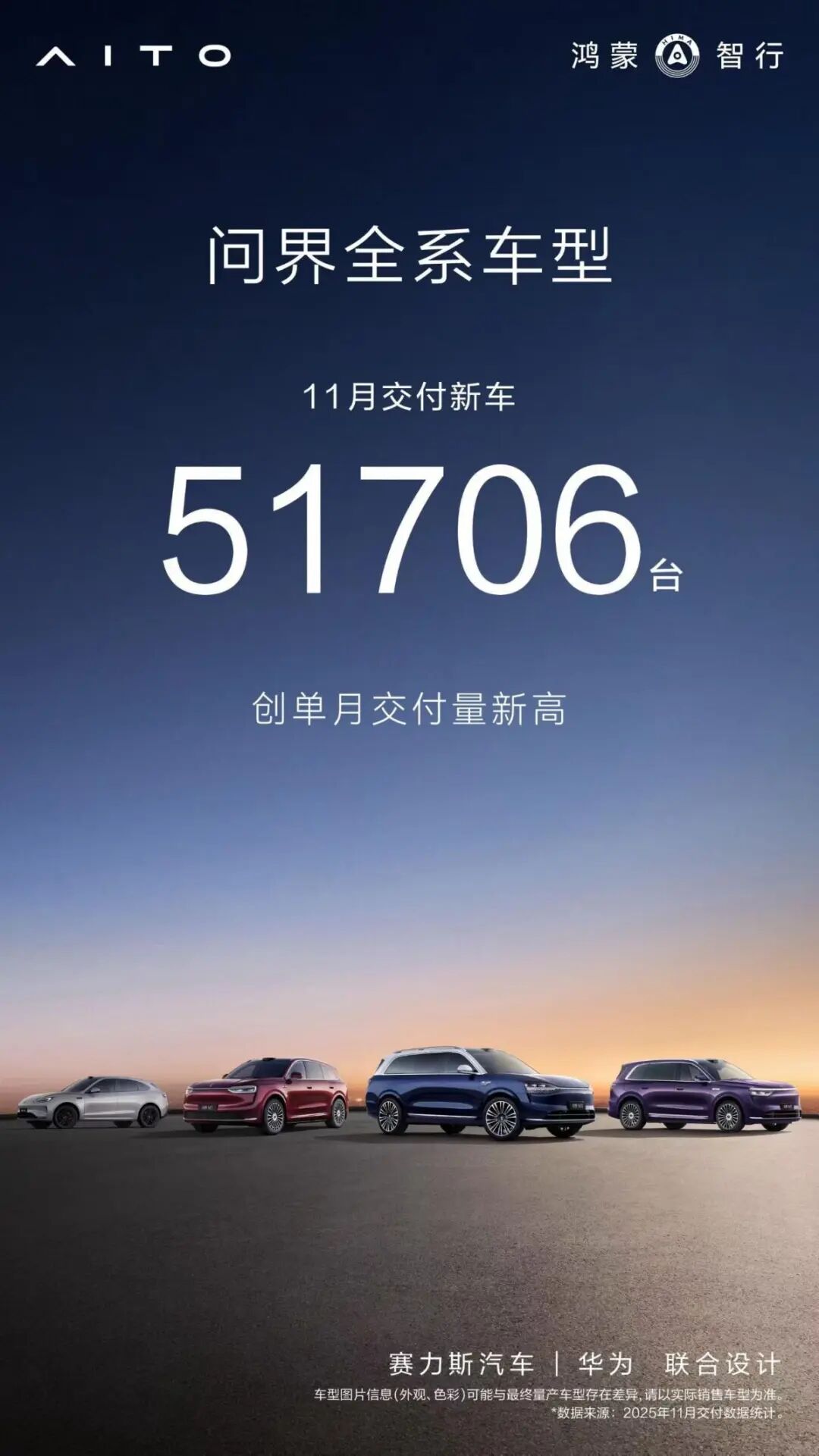
Core Viewpoint - The article emphasizes that Chinese companies, particularly in the automotive sector, have transitioned from being mere manufacturers to becoming rule-makers, with AITO's Wenjie leading this transformation in the new energy vehicle market [1][15]. Group 1: Company Performance - AITO's Wenjie achieved a record delivery of over 51,000 vehicles in November, surpassing previous brand records [1]. - Cumulative deliveries of Wenjie series vehicles exceeded 900,000 units by November 21, with models M9, M8, M7, and M5 contributing significantly to this milestone [5]. - The M9 model is projected to become the best-selling SUV in the 500,000 yuan and above segment in 2024, capturing a 70% market share in the same price range by 2025 [12]. Group 2: Technological Integration - The "Hongmeng Intelligent Driving" collaboration model integrates the strengths of various parties, with Huawei providing technology and marketing capabilities while partner car manufacturers handle vehicle production [4][15]. - The M9 features advanced driving assistance systems with 32 high-precision sensors and 4 laser radars, ensuring comprehensive perception capabilities [7]. - The M9 emphasizes safety with upgraded active safety features and a robust vehicle structure, utilizing high-strength materials and extensive testing [9]. Group 3: User Experience and Satisfaction - AITO has established a comprehensive smart service system, achieving 266,000 proactive user engagements and saving over 440,000 hours in maintenance time [11]. - User feedback indicates that the top reasons for purchasing the M9 include intelligent driving, smart cockpit, brand reputation, safety, and comfort [12]. - The M9 has received high satisfaction ratings, leading the industry in user satisfaction, resale value, and net promoter score (NPS) [13]. Group 4: Market Dynamics - The luxury car market is undergoing a transformation, with traditional luxury brands facing pressure to adapt to new standards set by innovative models like the M9 [12][16]. - AITO's success is seen as a model for other Chinese automotive companies, potentially leading to a positive cycle of technological advancement and market recognition [16]. - The article suggests that the "Hongmeng Intelligent Driving" model could serve as a blueprint for future developments in the automotive industry, promoting a collaborative ecosystem among various manufacturers [15][18].