
华为智能设备

Search documents
新中产万象:2025消费心智群像与品牌增长指南(高净值人群洞察)
Sou Hu Cai Jing· 2025-12-06 01:43
Core Insights - The report "New Middle Class Phenomenon: Consumer Mindset Portrait and Brand Growth Guide" focuses on the evolving characteristics of the new middle class in China and the opportunities for brand growth within this demographic [1][2] - The study is based on a user data system built from over 1 billion devices and 2000 valid survey responses, revealing key trends and commercial opportunities in the new middle class consumer market [1][2] Consumer Characteristics - The new middle class in China is diverse, including high-net-worth women in first-tier cities, pragmatic new elites in new first-tier cities, and fashionable groups in second and third-tier cities [1][2] - Core values of this demographic are health (35%), family happiness (33%), and personal development (32%), indicating a shift towards higher quality of life pursuits [1][2][20] Consumption Patterns - Monthly consumption among the new middle class ranges from 10,000 to over 50,000 yuan, forming three tiers: middle, upper-middle, and high consumption [2] - Interests are varied, with common areas of focus including technology, travel, and current events, while specific groups also show interest in fashion, environmental causes, and wellness [2] Brand Engagement - The development of the HarmonyOS ecosystem provides brands with critical support, enabling them to capture user behavior and preferences effectively [2][9] - Brands can leverage this ecosystem to understand consumer needs and build long-term trust through personalized recommendations [2] Market Dynamics - The high-end consumer market in China has shifted from "incremental expansion" to "quality competition," with brand growth now centered around "people, content, and technology" [2] - Successful case studies, such as the user community model created by HarmonyOS, demonstrate how encouraging user participation in brand co-creation can enhance loyalty and belonging [2] Consumer Mindset Evolution - The new middle class is increasingly viewing consumption as a long-term investment rather than immediate expenditure, focusing on experiences and quality [19][36] - Key spending priorities include travel (61%), children's education (59%), and health and wellness (54%), reflecting a long-term investment mindset [19] Value Orientation - The top three values for the new middle class are health, family, and self-improvement, which form the foundation of their personal development [20][21] - Mid-tier values include self-actualization and career wealth, indicating a balance between personal fulfillment and material success [20] Behavioral Trends - The report identifies a trend towards experience-based consumption, where consumers prioritize value and experiences over mere ownership of goods [27] - Emotional consumption is also on the rise, with younger generations willing to invest in products that express their identity and emotional needs [33] Investment in Growth - More than 60% of consumers are willing to invest in education, skills training, and smart devices, viewing these expenditures as essential for maintaining competitiveness [36] - Brands that offer products with both functional and growth value are increasingly favored by the new middle class [36]


新华视点丨离境退税商店超万家 “中国购”热潮如何更持久?
Xin Hua Wang· 2025-09-10 07:46
Core Insights - The influx of foreign tourists to China has shifted from mere sightseeing to significant shopping, driven by optimized tax refund policies and enhanced shopping experiences [1] - The number of tax refund stores in China has surpassed 10,000, with a 247.8% year-on-year increase in the number of people benefiting from tax refunds, and sales and refund amounts growing by 97.5% and 96.9% respectively in the first eight months of the year [1] Group 1: Tax Refund Services - The "immediate refund" service in Shanghai allows foreign tourists to process tax refunds at any participating store in the city, enhancing convenience [3] - In the first half of the year, Shanghai welcomed 4.248 million inbound tourists, a 38.5% increase, with tax refund sales growing by 85%, and "immediate refund" sales skyrocketing by 28.1 times [3] - Cross-regional tax refund services have been launched in provinces like Sichuan, Yunnan, and Shaanxi, allowing tourists to process refunds at various locations [4][5] Group 2: Innovative Services - New online tax refund services, such as "code refund" in Sichuan, have been introduced to streamline the refund process for tourists [8] - Various regions are implementing innovative solutions, such as real-time refunds to Alipay accounts in Beijing and self-service tax refund machines in Shanghai [8] Group 3: Consumer Engagement - The introduction of multilingual tax refund guides and consumer maps aims to enhance the shopping experience for foreign tourists [10] - Local tax authorities are actively engaging with merchants to facilitate their participation in the tax refund program, ensuring they understand the policies and processes [11]
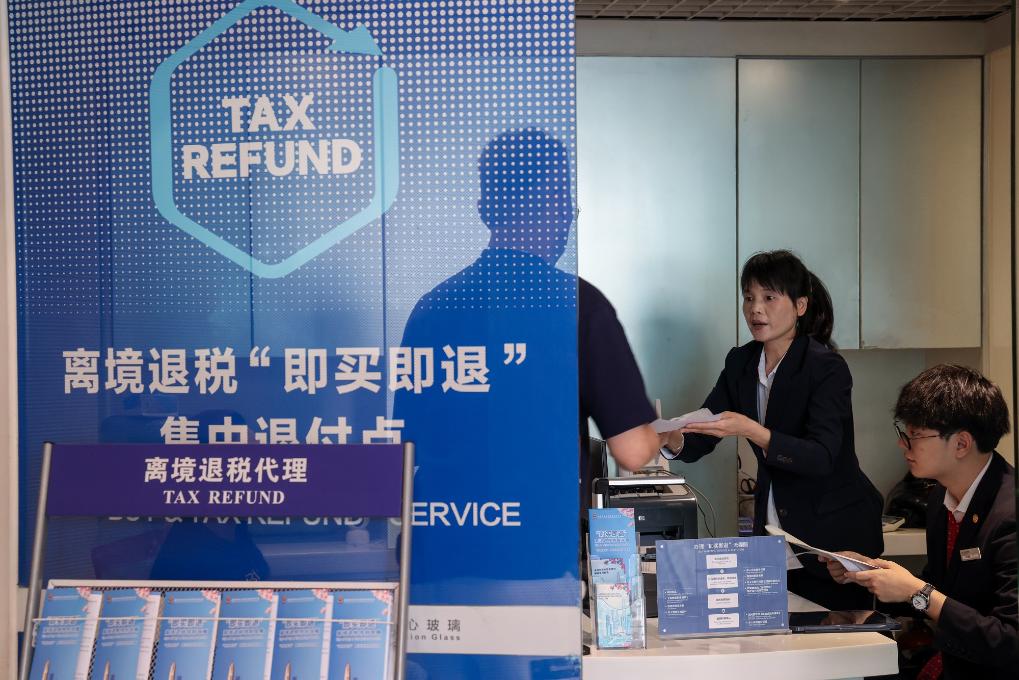
“五一”外国游客蓉城“嗨购”清单曝光!全市离境退税额同比上涨121%,成都SKP上涨400%
Mei Ri Jing Ji Xin Wen· 2025-05-06 14:18
Core Insights - The article highlights the significant increase in inbound tourism and consumer spending in China during the 2025 "May Day" holiday, driven by optimized policies such as 240-hour visa-free transit and immediate tax refunds for departing tourists [1][2]. Group 1: Inbound Tourism Growth - During the "May Day" holiday, a total of 10.896 million people entered and exited China, with foreign visitors accounting for 1.115 million, marking a 43.1% year-on-year increase [1]. - Chengdu emerged as a popular destination for foreign tourists, with a notable increase in tax refund transactions, particularly due to the "immediate refund" service [1][2]. Group 2: Tax Refund Policy Impact - The volume of tax refund transactions in Chengdu SKP increased by 450% compared to the previous year, with immediate refunds making up 41% of these transactions [2][3]. - Overall, Chengdu's tax refund processing volume grew by 160% and the refund amount increased by 121% during the holiday [2][3]. Group 3: Consumer Behavior and Preferences - Foreign tourists primarily purchased jewelry, clothing, and luggage, with these items accounting for 91% of tax refund goods [3]. - The tax refund policy has effectively lowered the psychological cost of high-priced items, stimulating impulsive purchases among tourists [3]. Group 4: Policy Optimization Suggestions - Experts suggest expanding the coverage of tax refund stores, lowering the threshold for refunds, and increasing cash refund limits to further stimulate consumption [4][5]. - The "immediate refund" model enhances the shopping experience by allowing tourists to receive refunds at the point of sale, thus facilitating additional spending [5]. Group 5: Future Directions for Tax Refund System - There is a call for establishing a regional tax refund alliance to enhance convenience for tourists across different shopping areas [6]. - Recommendations include expanding the physical coverage of the "immediate refund" system to include airports and key tourist sites, as well as creating a flexible product list to adapt to changing consumer preferences [7][8].