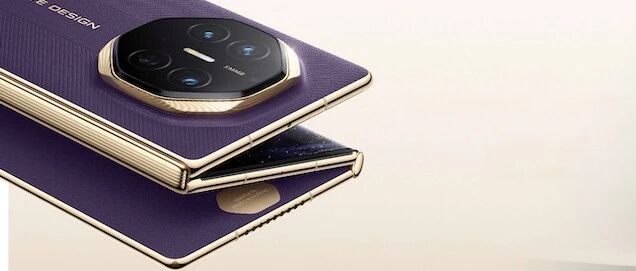
华为Mate XT非凡大师

Search documents
最短命机皇诞生,三星首款三折叠停售:行业巨头也顶不住供应链飙涨
36氪· 2026-03-19 09:38
Core Viewpoint - Samsung's Galaxy Z TriFold, despite being a high-demand product, is entering the discontinuation process due to high production costs and supply chain issues, potentially making it the shortest-lived phone in Samsung's history [4][6][10]. Group 1: Product Overview - The Galaxy Z TriFold features a unique three-fold design with a 10-inch inner screen and a 6.5-inch outer screen, powered by a customized Qualcomm Snapdragon 8 chip, a 200MP main camera, and a 5600mAh battery [8][10]. - The pricing for the Galaxy Z TriFold is set at 19,999 yuan in China and approximately 17,300 yuan in South Korea, making it one of the most expensive smartphones on the market [10]. Group 2: Market Dynamics - The discontinuation of the Galaxy Z TriFold is attributed to rising costs of storage chips and logistical disruptions caused by geopolitical conflicts, which have negatively impacted Samsung's mobile division's financial performance [8][10]. - Other smartphone brands, including OPPO and vivo, are also experiencing similar cost pressures, leading to price increases for their models [11]. Group 3: Competitive Landscape - Huawei has successfully launched its own three-fold phone, the Mate XT, which has seen better market performance, achieving nearly 500,000 units sold within a year of its release [15][17]. - Huawei's strategy focuses on a clear market positioning for its three-fold devices, targeting high-end users and ensuring a robust production plan, which contrasts with Samsung's approach [19]. Group 4: Future Trends - The foldable smartphone market is expected to grow, with projections indicating an increase in sales from 1 million units in 2019 to nearly 20 million units by 2025, despite a slowdown in overall smartphone sales [23]. - Apple's upcoming entry into the foldable market with the iPhone Fold is anticipated to shift market dynamics, although it is expected to adopt a dual-fold design rather than a three-fold approach [27][30].


打造消费电子春晚 促销激活万亿产业
Nan Fang Du Shi Bao· 2026-01-20 23:11
Core Insights - The "Guanghuo Hang Tianxia" Spring Action mobile promotion event was launched in Dongguan, focusing on enhancing the brand image of Guangdong products and facilitating market expansion for local companies [3][4][9] - The event featured significant discounts, with offers ranging from 60% to 90% off, surpassing previous promotional events like "Double 11" [4][6] - A total of over 700 companies participated, showcasing a complete ecosystem of the mobile phone industry, from component production to assembly [9][10] Group 1: Event Overview - The event was co-hosted by the Guangdong Provincial Department of Industry and Information Technology and the Dongguan Municipal Government, emphasizing online and offline integration for broader consumer engagement [3][4] - Major local brands such as Huawei, OPPO, vivo, and Honor participated, showcasing their latest products and innovations [5][7] - The promotion included live streaming on major e-commerce platforms, enhancing consumer interaction and product visibility [4][5] Group 2: Discounts and Offers - Discounts offered during the event were substantial, with some products seeing price reductions of up to 700 yuan, making them more attractive to consumers [6][8] - OPPO and vivo introduced additional incentives, such as trade-in subsidies and exclusive gifts, to encourage purchases [6][8] - The promotional strategies aimed to convert hesitant consumers into buyers by providing significant financial incentives [6][8] Group 3: Product Showcase - The event highlighted over 2,000 smart products, including AI phones and various smart devices, showcasing Guangdong's leadership in technology innovation [7][8] - Notable product launches included Huawei's foldable Mate XT and OPPO's Find X9 Pro, emphasizing advancements in battery technology and imaging capabilities [8] - The event also featured a range of mid-range and entry-level devices targeting different consumer segments, enhancing market reach [8] Group 4: Industry Impact - Guangdong's mobile phone manufacturing sector is projected to generate 1.96 trillion yuan in revenue in 2024, accounting for 38.7% of the province's new-generation electronic information industry [9] - Dongguan's mobile phone production is expected to reach 194.9 million units in 2024, marking a 10.9% year-on-year increase [9] - The region's complete supply chain, with over 90% of components sourced locally, enhances production efficiency and reduces costs, strengthening Guangdong's competitive edge in the global market [10]

苹果突然宣布:华为、小米等也能以旧换新!
Shen Zhen Shang Bao· 2026-01-16 08:26
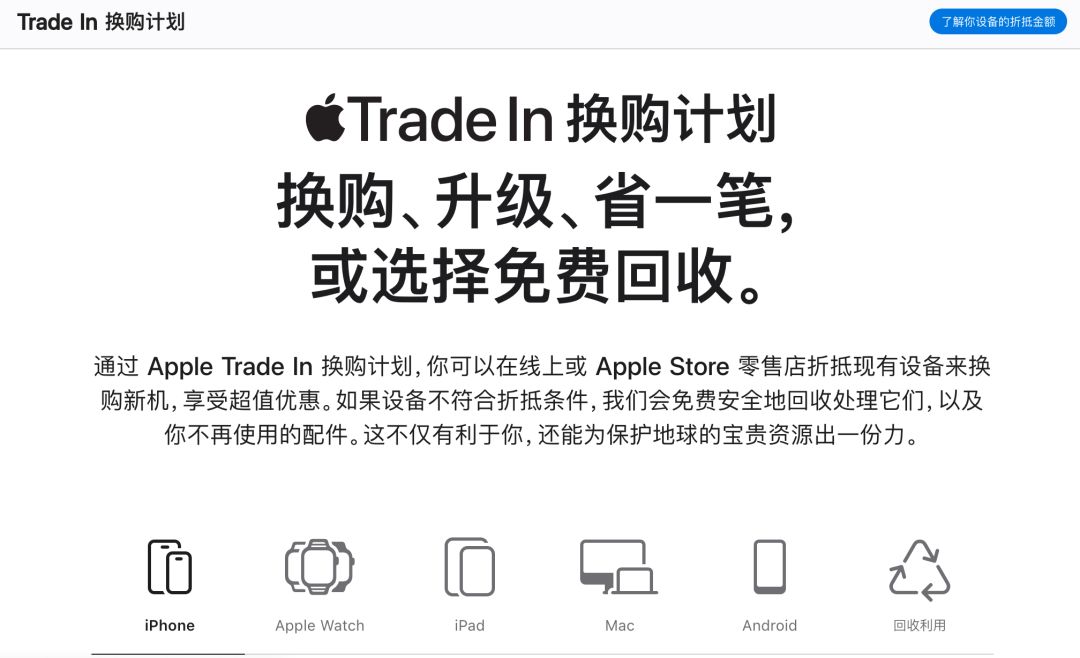
Core Insights - Apple has expanded its Apple Trade In program to include a wider range of brands, such as Huawei, OPPO, OnePlus, Samsung, vivo, and Xiaomi, allowing customers to trade in their old devices for new ones [1][3] Group 1: Trade-In Program Details - The Apple Trade In program allows customers to receive significant discounts on new devices when trading in old ones, with the iPhone 16 Pro Max offering up to 5800 yuan and the MacBook Pro up to 6050 yuan [3] - Specific trade-in values for other brands include Huawei Mate XT at 5400 yuan, Mate X6 at 3800 yuan, vivo X200 Pro at 1900 yuan, and OPPO Find X8 Pro at 1700 yuan [3] - The program enables consumers to trade in devices online or at Apple Store retail locations, and Apple will also recycle devices that do not meet trade-in conditions [3] Group 2: Historical Context - The Apple Trade In program was initially launched in mainland China on March 31, 2015, supporting trade-ins for iPod, iPad, and iPhone 4 and later models [3] - Users can assess the value of their old devices in-store to offset the cost of new purchases [3]
华为Mate X7:折叠屏全维度革新,引领行业新标杆
2 1 Shi Ji Jing Ji Bao Dao· 2025-12-29 09:43
Core Insights - The article highlights the evolution of foldable smartphones, particularly focusing on Huawei's advancements and market leadership in this segment [1][3][14] - Huawei's Mate X7 is positioned as a transformative product that enhances user experience and redefines the value of foldable screens, moving from novelty to mainstream acceptance [1][4][15] Market Position and Strategy - Huawei has established a dominant position in the foldable smartphone market, with a projected market share of 75% in China by mid-2025, indicating that three out of every four foldable phones sold will bear the Huawei logo [3] - Despite increasing competition, Huawei maintained a 68.9% market share in the third quarter, reinforcing its status as a leader in the foldable segment [3] Product Innovation - The Mate X7 represents a shift from merely achieving foldability to enhancing overall user experience, focusing on durability, camera capabilities, and AI integration [4][11][12] - The device features a robust protective architecture, including advanced materials and design innovations that significantly improve durability and usability [9] Design and Aesthetics - The Mate X7 incorporates a unique camera module design and integrates traditional Chinese craftsmanship, enhancing its aesthetic appeal and cultural significance [6][7] - The use of innovative materials and design elements aims to create a product that resonates with users on both a functional and emotional level [6][7] Technological Advancements - The device employs cutting-edge technology to address common issues in foldable phones, such as fragility and performance, ensuring a reliable user experience [9] - The camera system has been upgraded to deliver superior image quality, with significant improvements in light intake and color accuracy, positioning the Mate X7 as a leading imaging device in its category [11] User Experience and Services - Huawei emphasizes a comprehensive user experience, offering services such as HUAWEI Care+ for enhanced customer support and peace of mind [12] - The integration of AI capabilities in the Mate X7 enhances productivity and user interaction, making it a versatile tool for everyday tasks [12] Industry Impact - Huawei's continuous innovation in the foldable smartphone sector is seen as a catalyst for industry-wide advancements, pushing competitors to follow suit and raising overall standards [14][15] - The Mate X7 is expected to facilitate the transition of foldable phones from niche products to mainstream devices, broadening their appeal to a wider audience [15]
华为三折叠:当开创者的远见成为时代的路标
华尔街见闻· 2025-12-12 09:42
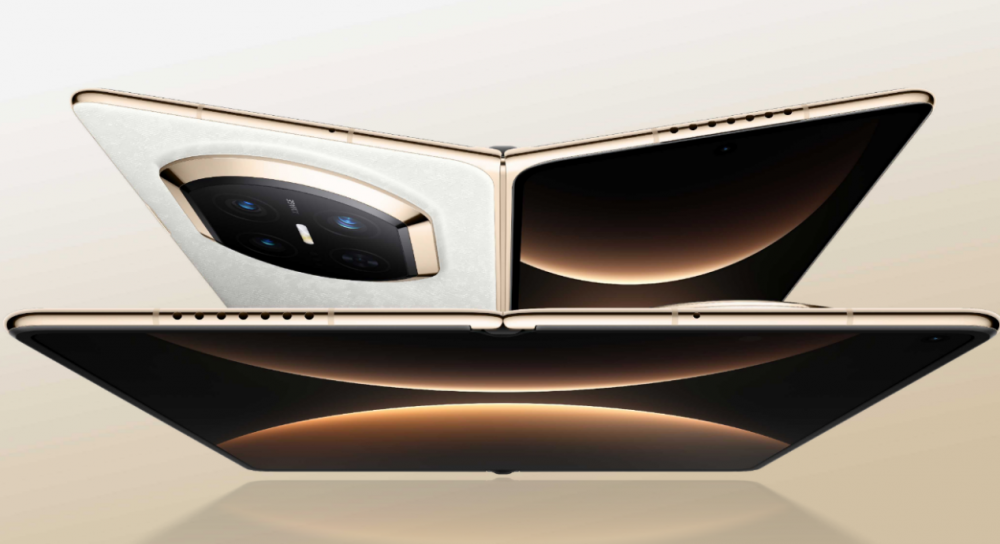
Core Viewpoint - The article emphasizes Huawei's pioneering role in the three-fold smartphone market, highlighting its transition from concept to commercial product and establishing a new standard in the mobile terminal experience [1][4][9]. Group 1: Market Dynamics - The three-fold smartphone market has recently gained attention, with Huawei being the first to successfully commercialize this technology, setting a benchmark for the industry [1][4]. - After a year, a second player has entered the three-fold market, validating Huawei's early strategic foresight [3]. - The Chinese foldable smartphone market is projected to see significant growth, with IDC reporting a 17.8% year-on-year increase in shipments by Q3 2025, reaching 2.63 million units [11]. Group 2: Technological Challenges and Innovations - The complexity of three-fold technology, including intricate hinge systems and the need for a mature supply chain, posed significant challenges that Huawei overcame to lead the market [4][5]. - Huawei's first commercial three-fold phone, the Mate XT, marked the beginning of a new era in the industry, demonstrating the company's ability to turn a high-concept idea into a viable product [9][19]. - The Mate XT features a 10.2-inch screen and is noted for being the lightest and thinnest foldable smartphone available, weighing only 298g and measuring 3.6mm at its thinnest point [19]. Group 3: Ecosystem and User Experience - Huawei's HarmonyOS, with its distributed architecture, enhances the user experience by enabling seamless task management and a high level of application compatibility, achieving over 95% adaptation for commonly used software [13]. - The integration of hardware and software allows for a unique user experience that redefines productivity and entertainment, making the three-fold device more than just a larger screen [13][15]. - Huawei's commitment to sharing technological advancements with the industry has helped push the foldable screen sector towards maturity, benefiting the entire supply chain [21]. Group 4: Strategic Vision and Future Outlook - Huawei's approach to the three-fold market reflects a broader vision of innovation, where the company not only leads in product development but also shapes industry standards [6][16]. - The article suggests that Huawei's pioneering efforts in the three-fold space could inspire other manufacturers to join the market, potentially leading to a new wave of technological advancements [21].
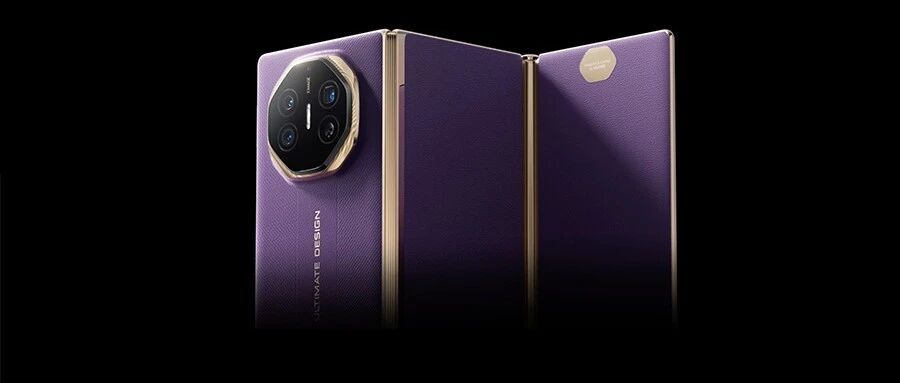
华为三折叠:孤勇在前,回声在后
36氪· 2025-12-10 11:18
Core Viewpoint - Huawei has established itself as a pioneer in the foldable screen market, successfully launching the world's first commercial three-fold device, the Huawei Mate XT, in September 2024, thus transforming a previously conceptual technology into a market reality [4][10]. Group 1: Industry Positioning - Huawei was the first to transition the three-fold concept from engineering prototype to commercial production, overcoming significant technical and supply chain challenges [10][12]. - The company has built a comprehensive product matrix in the foldable screen sector, including various folding forms, demonstrating deep technical accumulation and a robust engineering foundation [12][14]. - Huawei's innovative hinge system, known as the "Tiangong hinge," is a key engineering advancement that enables the three-fold design, showcasing the company's commitment to pushing the boundaries of foldable technology [15][17]. Group 2: Market Impact - As of now, Huawei's foldable screen shipments have exceeded 10 million units, capturing a market share of 68.9% in the first three quarters of 2025, highlighting its dominance in the foldable segment [23]. - The company's extensive user base has fostered an ecosystem that encourages app developers to create tailored experiences for foldable devices, enhancing user engagement and satisfaction [23][25]. - Huawei's approach has elevated the foldable screen experience from mere hardware innovation to a comprehensive value creation model, integrating software and hardware seamlessly [25][30]. Group 3: Future Industry Standards - Huawei's pioneering efforts in the foldable screen market have set new industry standards, with its technological advancements serving as benchmarks for future competitors [34][36]. - The company's long-term engineering investments in materials, hinge technology, and user experience have not only benefited its products but have also catalyzed growth across the entire foldable screen industry [34][36]. - By defining a clear and actionable technological path, Huawei has positioned itself as a leader that not only innovates but also enables the entire industry to advance [31][36].
折叠屏市场回暖,华为折叠屏迎来里程碑式突破
华尔街见闻· 2025-11-19 02:28
Core Viewpoint - The foldable smartphone market is transitioning from a growth phase to a mainstream adoption phase, with Huawei leading the industry with a significant market share and innovative product offerings [2][4][10]. Market Position and Share - Huawei holds nearly 70% of the foldable smartphone market share in China as of the first three quarters of 2025, solidifying its position as the industry leader [4][16]. - In the high-end market segment (priced above $600), Huawei captures approximately one-third of the market share, showcasing its dominance in premium offerings [4][10]. - The competitive landscape shows Huawei far ahead, with its closest competitor, Honor, holding only 11.2% market share, while Vivo has 5% [9][10]. Product Innovation and Development - Huawei has introduced a diverse range of foldable smartphones, including large foldable, small foldable, tri-fold, and wide-fold models, making it the most innovative player in the market [21][30]. - The Mate X series, starting with the original Mate X, has set industry standards with its unique hinge design and continuous technological advancements, culminating in the Mate X6 and the groundbreaking Mate XT [22][27]. - The recent launch of the Mate XTs further emphasizes Huawei's commitment to innovation, featuring the world's thinnest tri-fold design and advanced user experience capabilities [24][26]. Ecosystem and User Experience - Huawei's HarmonyOS ecosystem plays a crucial role in enhancing the user experience of foldable smartphones, providing seamless integration across devices and applications [43][44]. - The company has focused on addressing user needs by offering products that combine portability with functionality, appealing to both business professionals and younger consumers [32][41]. Market Trends and Future Outlook - Despite a recent slowdown in overall market growth, Huawei's strategic focus on foldable smartphones has allowed it to maintain a strong position and set industry trends [14][46]. - The increasing acceptance of foldable smartphones among consumers, with 70.1% expressing interest in purchasing one, indicates a robust potential market [32]. - As the foldable smartphone market matures, Huawei is expected to continue leading through technological innovation and ecosystem development, driving further growth in the industry [46].

从形态突破到生态跃迁:华为三折叠的「鸿蒙时刻」
36氪· 2025-09-04 10:33
Core Viewpoint - Huawei is the only company making significant advancements in the three-fold smartphone market, establishing itself as a leader in this unique segment with the launch of the Mate XTs Master Edition, which enhances user experience through PC-level applications and ecosystem integration [2][32]. Market Position and Performance - Huawei's first-generation Mate XT achieved nearly 500,000 units in sales within a year, demonstrating its dominance in the three-fold market, where no other competitors have successfully launched similar products [5][32]. - Huawei holds a 75% market share in the three-fold segment, as reported by IDC, and has established a product matrix that includes dual-fold, three-fold, and wide-fold devices, with total shipments exceeding 10 million units [5][38]. Technological Innovations - The Mate XTs Master Edition incorporates powerful PC capabilities into a mobile device, allowing it to serve as a "pocket PC" that meets diverse user needs, from information consumption to mobile office tasks [4][11]. - The device features a 10.2-inch large screen and supports a "free multi-window" mode, enabling users to run multiple applications simultaneously, akin to a desktop experience [13][15]. Ecosystem Development - Huawei's ecosystem, built on the HarmonyOS, allows seamless integration across devices, enhancing user experience by providing a unified operating environment for smartphones, tablets, PCs, and other devices [28][35]. - The introduction of the M-Pen 3 further expands the device's functionality, enabling efficient note-taking and information management, thus enhancing productivity [23][25]. User Experience and Application - The Mate XTs Master Edition is designed to provide a desktop-level experience in a mobile format, allowing users to perform complex tasks without switching applications, thereby improving workflow efficiency [21][30]. - Applications have been optimized for the large screen, enhancing user engagement in entertainment and productivity scenarios, making the device a versatile tool for various tasks [30][31].
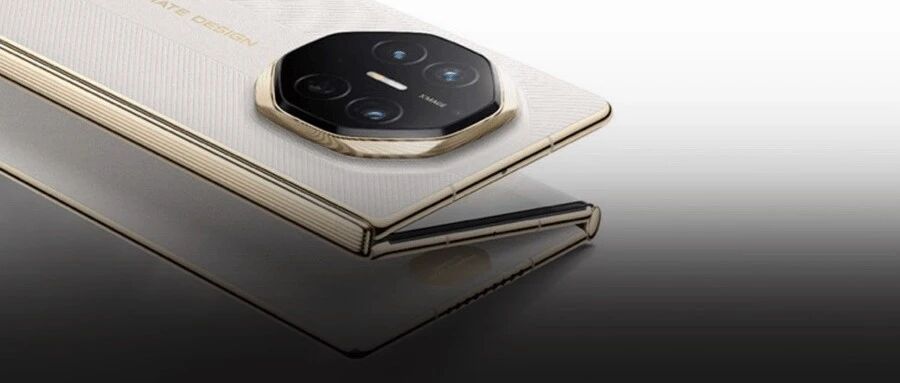
华为Mate XTs非凡大师价格公布
Zheng Quan Shi Bao Wang· 2025-09-04 07:50
Core Points - Huawei has launched its second foldable smartphone, the Huawei Mate XTs, with a starting price of 17,999 yuan and a maximum price of 21,999 yuan, compared to the previous generation Mate XT which was priced between 19,999 yuan and 23,999 yuan [1] Pricing Summary - The starting price of Huawei Mate XTs is 17,999 yuan [1] - The maximum price for Huawei Mate XTs is 21,999 yuan [1] - The previous generation Mate XT was priced from 19,999 yuan to 23,999 yuan [1]
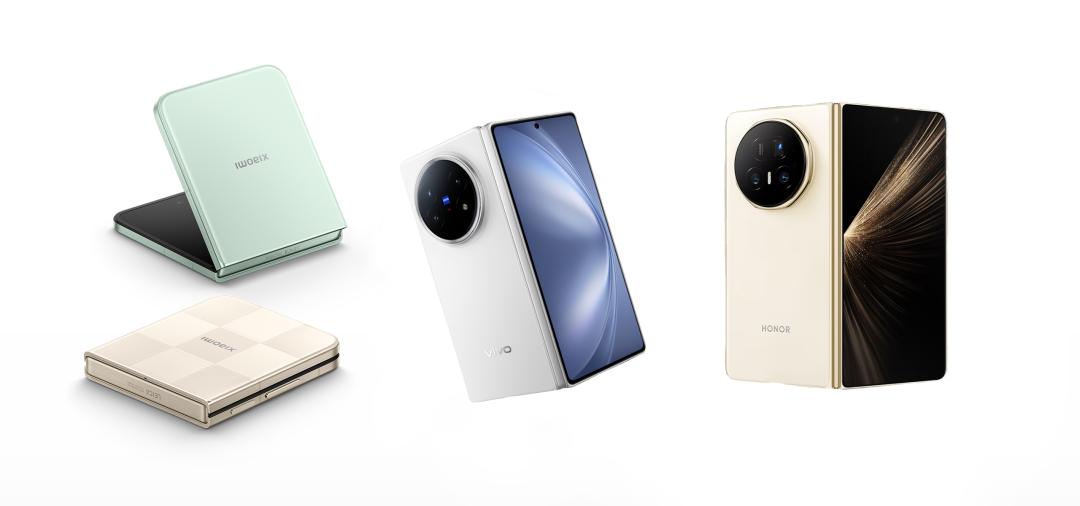
苹果折叠机倒计时,荣耀、vivo们抢抓窗口期
3 6 Ke· 2025-07-23 09:17
Core Insights - Apple has decided to abandon its self-developed solution for its first foldable iPhone, opting instead to use Samsung Display's technology, with plans for mass production in the second half of 2026 [1][14] - The move to collaborate with Samsung's suppliers, particularly for the hinge technology, is likely aimed at shortening development time and avoiding further delays in product launch [1][14] - The foldable iPhone's anticipated release has prompted domestic competitors like Xiaomi, Vivo, and Honor to accelerate their own product launches in the foldable segment [1][4] Group 1: Market Dynamics - From June 24 to July 2, Xiaomi, Vivo, and Honor launched new foldable models, indicating a strategic push against Apple's market position [2][5] - Apple's market share in China has declined from 21% to 15% between Q4 2023 and Q1 2025, attributed to the rise of domestic brands and slow advancements in AI and foldable technology [12][14] - IDC data predicts that Apple will hold an 18.7% market share in 2024, surpassing Samsung for two consecutive years, despite recent challenges [2] Group 2: Competitive Landscape - The introduction of the foldable iPhone is expected to intensify competition in the foldable smartphone market, which is currently considered a niche segment [9][11] - Domestic brands are focusing on breaking Apple's ecosystem barriers, with features that enhance compatibility with Apple devices [10][11] - The foldable iPhone's launch could significantly elevate the overall market perception and acceptance of foldable smartphones, potentially expanding the market size [9][12] Group 3: Product Features and Innovations - The new foldable models from Xiaomi, Vivo, and Honor emphasize lightweight design, battery capacity, and AI capabilities, with Honor's Magic V5 being the thinnest at 8.8mm and featuring a 6100mAh battery [5][10] - The competitive edge of these brands lies in their ability to offer differentiated features while targeting high-value users who may be considering a switch from Apple [8][11] - The foldable iPhone's collaboration with Samsung is seen as a strategic move to leverage Samsung's advanced technology while maintaining Apple's brand strength [14][15] Group 4: Future Outlook - The foldable smartphone market is entering a phase of heightened competition, with Apple’s entry marking a significant shift [11][22] - As the market evolves, companies will need to focus on software integration and user experience to differentiate themselves beyond hardware specifications [22] - The anticipated release of the foldable iPhone presents both opportunities and challenges for existing players in the market, necessitating innovative strategies to maintain relevance [11][22]