
单抗药物

Search documents
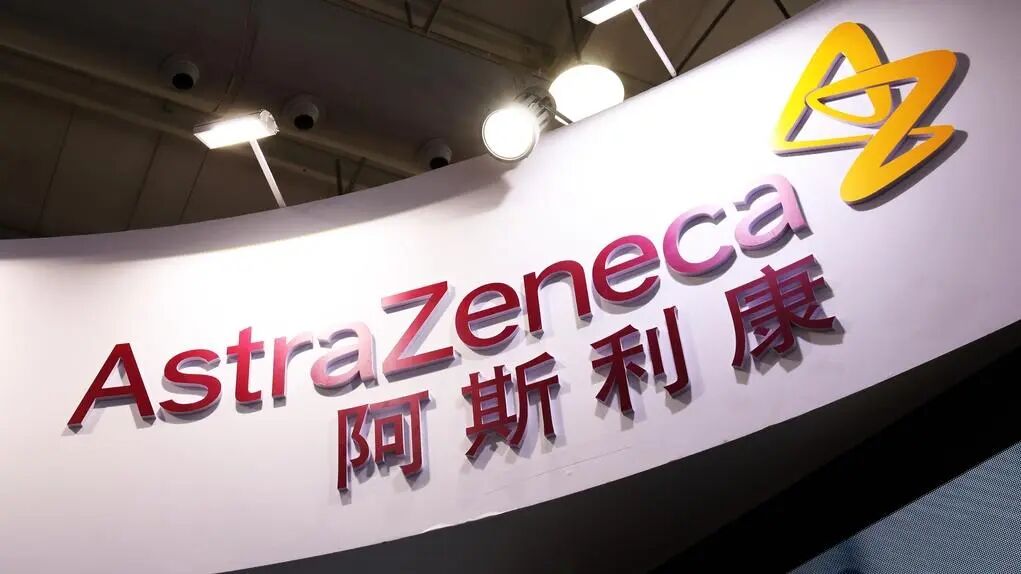
豪掷1000亿,阿斯利康为何重仓江苏这两座城市?
3 6 Ke· 2026-02-03 12:49
Core Insights - AstraZeneca plans to invest over 100 billion RMB in China by 2030, focusing on cell therapy and radiolabeled drugs, marking a record for foreign pharmaceutical investments in the country [1][5] - The investment will primarily target Wuxi and Taizhou, with a strategic emphasis on these locations rather than spreading investments across multiple cities [1][5] Group 1: Investment Strategy - AstraZeneca's investment in Wuxi is significant as it has been the company's base in China since 1993, evolving into its largest production and packaging hub in the Asia-Pacific region [3][5] - Wuxi's established biopharmaceutical industry, with over 500 enterprises and a market size exceeding 200 billion RMB, provides a conducive environment for AstraZeneca's operations, reducing costs and improving efficiency [5][6] - The company aims to transform Wuxi into a leading digital pharmaceutical center, enhancing its global manufacturing network [5][6] Group 2: Regional Focus - In addition to Wuxi, AstraZeneca is investing in Taizhou, known for its strengths in vaccines and high-end formulations, with plans to expand its production capabilities in antibody-drug conjugates (ADCs) and monoclonal antibodies [7][9] - The Taizhou facility has already received significant investment and is positioned to support AstraZeneca's future growth in biopharmaceuticals, complementing Wuxi's small molecule drug production [9][10] - Qingdao is identified as a strategic point for AstraZeneca, focusing on inhalation aerosols and rare disease drugs, tapping into a growing market for rare diseases in China [10][11] Group 3: Financial Performance - AstraZeneca's revenue for 2024 is projected to reach approximately 54.07 billion USD, with a net profit of around 7.04 billion USD, indicating strong financial health to support its investment plans [15][20] - The Chinese market is crucial for AstraZeneca, contributing about 5.28 billion USD (approximately 37.5 billion RMB) in revenue for the first three quarters of 2025, making it the company's second-largest market globally [18][20] - The oncology segment has become a key revenue driver, accounting for 43% of total revenue in the first three quarters of 2025, reflecting a 16% year-on-year growth [16][17]


青侨阳光25年度总结及展望
青侨阳光投资交流· 2026-01-13 11:56
Core Viewpoint - The article emphasizes the investment potential in the domestic high-value medical consumables and innovative pharmaceuticals sectors, highlighting significant growth opportunities and market undervaluation in these areas [1][6][34]. Group 1: Investment Logic of Core Assets - The primary investment direction for the fund is domestic high-value medical consumables, which have substantial growth potential and are currently undervalued in the market. The market capitalization disparity between domestic and international players is significant, with domestic high-value consumables having a maximum market cap of over 30 billion RMB compared to nearly 1 trillion RMB for their international counterparts [1][3]. - The penetration rate of high-value consumables in China is still low, indicating a potential for significant growth as domestic adoption increases and international markets are explored [3]. - The "innovation + internationalization" logic driving the revaluation of innovative drugs also applies to domestic high-value consumables, with rapid growth in overseas revenues for listed cardiovascular high-value consumables companies, indicating increasing international recognition [4]. Group 2: Domestic Innovative Pharmaceuticals - Domestic innovative pharmaceuticals represent the second major investment direction, driven by strong market momentum. The revenue for Hong Kong-listed innovative drugs is expected to grow from less than 10 billion RMB in 2020 to nearly 100 billion RMB by 2026 [6]. - The deep medical reform initiated in China since 2015 is expected to create a long-term growth cycle for innovative pharmaceuticals, similar to the one experienced in the U.S. after its reforms in the 1980s [6][8]. - The transition from the first half of the cycle (2015-2025) to the second half (2025-2035) will require identifying underpriced potential blockbuster products to sustain excess returns in innovative drug investments [7][8]. Group 3: U.S. Biotechnology - The third major investment direction is U.S. biotechnology, where many early-stage biotech companies have not yet been fully valued despite their significant growth potential. The focus is particularly on intracellular therapies, which have seen dramatic price fluctuations [10][11]. - The fund prioritizes liver-targeted siRNA and gene editing technologies, with the former showing clearer commercialization prospects and rapid valuation recovery [11]. Group 4: Undervalued/Barrier Assets - The fourth major investment direction is undervalued barrier assets, which are currently less popular compared to innovative pharmaceuticals. These assets are expected to experience a trend of recovery in the next three years, making them attractive for investment [13][14]. - The fund has adjusted its structure to focus on undervalued assets in the pharmaceutical distribution sector, which are expected to have clear value propositions due to anticipated performance acceleration [14]. Group 5: Investment Review and Reflection - In 2025, the fund underestimated the revenue growth pressures on non-innovative pharmaceutical assets and the scale of innovative drug licensing deals [16]. - The fund's performance was impacted by lower-than-expected revenue growth in domestic high-value consumables, highlighting the need for better research efficiency and timely coverage of promising stocks [20][21]. Group 6: Industry Trends and Outlook - The pharmaceutical industry's profitability is expected to restart rapid growth, with current market valuations not reflecting this potential, indicating possible investment opportunities [34]. - The overall pharmaceutical sector may shift from being dominated by innovative drugs to a more balanced growth model that includes a wider range of pharmaceutical assets [34][31].

趋势研判!2025年中国单抗药物行业产业链、发展背景、市场规模、竞争格局及发展趋势分析:国产化替代进程加速[图]
Chan Ye Xin Xi Wang· 2025-08-27 01:21
Overview - The monoclonal antibody (mAb) market in China is still in its early stages, with many overseas mAbs not yet approved domestically. The high cost of these drugs limits accessibility for many patients with lower payment capabilities. However, the market penetration of mAbs is gradually increasing due to their significant advantages over traditional drugs, updates to the national medical insurance catalog, and rising national income levels. The market size of China's mAb industry is projected to reach 131.5 billion yuan in 2024, representing a year-on-year growth of 30.85% [1][5]. Industry Chain - The upstream of the mAb industry includes suppliers of raw materials such as cell culture media, enzymes, antibodies, reagents, consumables, and packaging materials, as well as core equipment suppliers like bioreactors and purification devices. The midstream consists of mAb research and production companies, while the downstream includes hospitals, DTP pharmacies, retail pharmacies, and online channels. Hospitals are the most critical distribution channel for mAbs in China, especially for drugs listed in the medical insurance catalog [3][5]. Development Background - The application of mAbs in cancer treatment is widespread, with the number of new cancer cases in China projected to reach 5.064 million in 2024, a year-on-year increase of 2.61%. This growing cancer population drives the demand for mAbs. Additionally, mAbs have shown efficacy in treating other diseases, such as asthma and inflammatory bowel diseases, providing new development opportunities for the mAb industry [4][5]. Current Status - Since the launch of the first therapeutic mAb in 1986, the mAb market has rapidly developed, with significant products like trastuzumab and adalimumab emerging. By 2024, the global mAb market size is expected to reach 273.3 billion USD, with a year-on-year growth of 9.15% [4][5]. Competitive Landscape - In the global pharmaceutical market, mAbs are becoming a cornerstone of biopharmaceuticals, with 8 mAbs appearing in the top 20 global drug sales rankings in 2024. The success of mAbs in treating tumors and immune diseases is notable, and advancements in biopharmaceutical technology may expand their role in treating infectious diseases [5][6]. Domestic Market Dynamics - In 2024, only 7 mAbs are among the top 30 chemical and biological drugs sold in Chinese hospitals, indicating significant room for growth in the domestic mAb market. The market is expected to expand further as domestic companies gain market share [7][8]. Company Analysis - Domestic companies like BeiGene, Innovent Biologics, Junshi Biosciences, and others are increasingly capturing market share previously dominated by multinational corporations. For instance, BeiGene's Tislelizumab leads in the PD-1 mAb market in China, while Innovent's Sintilimab and Junshi's Toripalimab also hold significant positions [8][9]. Future Trends - The quality and efficacy of domestic mAbs are expected to improve with ongoing advancements in research and production technologies. This may lead to a further increase in market share, breaking the monopoly of multinational companies. Additionally, the application of mAbs is anticipated to expand beyond cancer and autoimmune diseases to include infectious and transmissible diseases [11].


东吴证券给予新诺威买入评级,持续加码研发,全面布局ADC、mRNA和单抗药物
Mei Ri Jing Ji Xin Wen· 2025-08-17 14:39
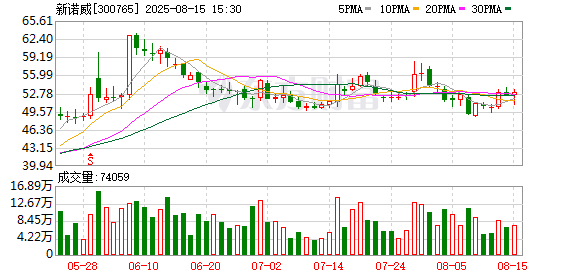
Group 1 - The core viewpoint of the report is that Dongwu Securities has given a "buy" rating for XinNuoWei (300765.SZ) based on its performance and potential in the biopharmaceutical sector [2] - The company experienced a slight revenue growth in H1, but a significant decline in profits [2] - The EGFR ADC data presented at the AACR conference is seen as a potential "blockbuster" drug, indicating strong future prospects [2] - The company is actively increasing its investment in research and development, focusing on ADC, mRNA, and monoclonal antibody drugs [2]

新诺威(300765):持续加码研发,EGFRADC下半年有望启动首个海外注册临床
Soochow Securities· 2025-08-17 14:22
Investment Rating - The report maintains a "Buy" rating for the company [1] Core Insights - The company is continuously increasing its R&D investments, with a comprehensive focus on ADC, mRNA, and monoclonal antibody drugs. In the first half of the year, three new ADCs entered clinical stages domestically, and three ADCs received FDA clinical approval. The clinical progress of multiple ADCs is rapid, with SYS6010 completing the first patient enrollment in a Phase 3 clinical trial for 2L+ EGFRmt NSCLC in April, with expectations for market launch as early as 2027. The overseas clinical trials are accelerating, with over 100 patients enrolled, and the first overseas registration clinical trial is expected to start in the second half of the year, representing a potential blockbuster product [3][9] - The company achieved total revenue of 1.05 billion yuan in the first half of 2025, a year-on-year increase of 7.99%. The revenue from functional foods and raw materials was 933 million yuan, a slight decrease of 0.69%, while biopharmaceutical revenue contributed 94 million yuan. R&D expenses increased by 80.81% to 455 million yuan, and selling expenses rose by 70.96% to 125 million yuan. The net profit attributable to the parent company was -3 million yuan, a decline of 102% [8][9] - The EGFR ADC has shown promising data at the AACR conference, with a total of 232 patients enrolled by the end of 2024, including 137 NSCLC patients. The overall safety profile is favorable, with a 90% objective response rate (ORR) in 2L EGFRmt NSCLC patients and a 41.5% ORR in 3L+ EGFRmt NSCLC patients [8][9] Financial Projections - The company forecasts revenues of 2.39 billion yuan for 2025, 2.77 billion yuan for 2026, and 3.29 billion yuan for 2027, maintaining the "Buy" rating [1][9] - The report provides detailed financial metrics, including a projected net profit of 57.3 million yuan for 2025, with an EPS of 0.04 yuan per share [1][10]
石药集团(01093)上涨2.07%,报9.86元/股
Jin Rong Jie· 2025-08-05 03:58
Group 1 - The core viewpoint of the article highlights the performance and strategic focus of CSPC Pharmaceutical Group Limited, emphasizing its strong product portfolio in various therapeutic areas and its innovative drug development strategy [1][2][3] Group 2 - As of the first quarter of 2025, CSPC Pharmaceutical Group reported total revenue of 7.015 billion yuan and a net profit of 1.478 billion yuan [2] - The company’s stock price increased by 2.07% to 9.86 yuan per share, with a trading volume of 0.852 billion yuan as of 11:40 AM on August 5 [1]