卫星物联网终端

Search documents
通宇通讯(002792) - 002792通宇通讯投资者关系管理信息20251201
2025-12-01 10:00
Group 1: Company Overview and Business Model - The company is a leading enterprise in the field of communication antennas and RF devices, focusing on the R&D, production, and sales of base station antennas, RF devices, and microwave antennas, serving major global mobile communication operators and equipment integrators [2][3]. - The company has established a comprehensive product coverage from 2G to 5G networks, collaborating with domestic operators like China Mobile, China Telecom, and China Unicom, as well as international partners such as Ericsson, Nokia, and Samsung [3]. Group 2: Strategic Investments and Developments - The company has invested a total of 120 million CNY in the aerospace industry fund, with an initial investment of 20 million CNY in Shanghai Jingji Communication Technology Co., Ltd., which focuses on commercial aerospace [4]. - The fund plans to invest 100 million CNY in Beijing Lingkong Tianxing Technology Co., Ltd., a company dedicated to hypersonic technology services and product development [4]. Group 3: Product Innovations - The company has launched a satellite IoT terminal for remote area power grid communication, enhancing operational efficiency through precise data collection, efficient operation of renewable energy stations, intelligent inspection of transmission lines, and remote monitoring of equipment [5][6]. Group 4: Strategic Considerations in Satellite Communication - The company's investments in satellite communication are part of a systematic and forward-looking strategy to strengthen its position in key upstream components and communication payloads, ensuring a solid technological and supply foundation for the entire industry chain [7]. - Collaborations with local governments and the establishment of investment funds aim to integrate into regional industrial ecosystems and enhance the company's competitive edge in the satellite communication sector [7]. Group 5: Competitive Advantages - The company holds over 700 authorized patents in the RF communication field as of June 30, 2025, establishing a strong intellectual property barrier [8]. - The company’s robust R&D capabilities enable quick market responses and efficient new product development, while its reliable product quality has garnered long-term recognition from numerous domestic and international clients [8].

【财经早报】一周大涨39%!商业航天热门股发声
Zhong Guo Zheng Quan Bao· 2025-11-30 23:45
Group 1: Economic Indicators - In November, the Manufacturing Purchasing Managers' Index (PMI) rose to 49.2%, an increase of 0.2 percentage points from the previous month [1] - The Non-Manufacturing Business Activity Index decreased to 49.5%, down by 0.6 percentage points from the previous month [1] - The Composite PMI Output Index fell to 49.7%, a decrease of 0.3 percentage points compared to the previous month, indicating overall economic stability [1] Group 2: Company News - Tongyu Communication announced that its stock price had abnormal fluctuations, with a cumulative increase of over 20% in two consecutive trading days, but confirmed that there were no undisclosed significant matters [7] - Xiaomi Auto reported the opening of 17 new stores in November, bringing the total to 441 stores across 131 cities, with plans for 36 more stores in December [8] - Aorede plans to sign a comprehensive technical service agreement worth approximately 635 million yuan, aimed at enhancing its capabilities in providing computing power services [8] - ST Tianrui announced that its controlling shareholder is planning a change in control, leading to a temporary suspension of its stock trading [8] - China Shenhua's subsidiary successfully completed a 168-hour trial run of its power generation unit, with further expansions planned to enhance regional power supply [9] - Daqian Ecology's chairman resigned for personal reasons, with no impact on the board's operation or company management [9] Group 3: Market Trends - According to a report by Galaxy Securities, funds are shifting from high-valuation growth stocks to undervalued cyclical stocks and dividend assets, indicating a rising appeal for defensive sectors [10] - CITIC Construction Investment anticipates an early spring market rally, recommending investments in technology growth and resource sectors, with a focus on non-ferrous metals, AI, new energy, and innovative pharmaceuticals [11]
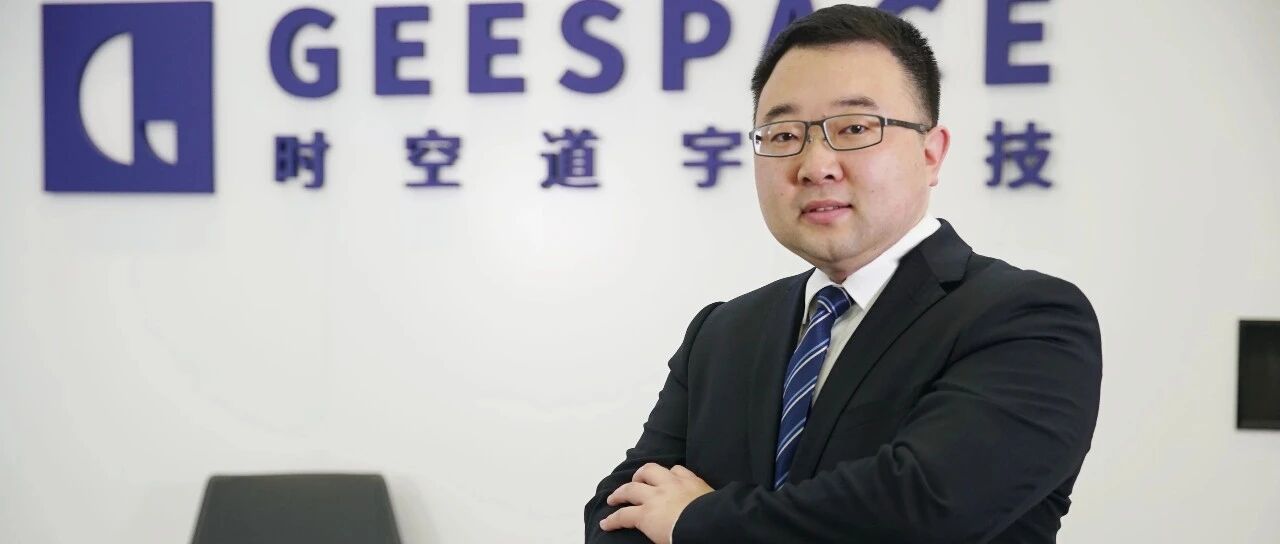
时空道宇王洋:12年,打造中国版民营星链
财富FORTUNE· 2025-09-26 14:49
Core Viewpoint - The article discusses the evolution of technology from being exclusive to the elite to becoming accessible to the general public, highlighting the successful deployment of the "Geely Constellation" satellite network by the commercial space company, Time Space Dao Yu, which signifies a shift in satellite technology from a national asset to a common utility for everyday people [5][6][8]. Group 1: Historical Context of Technology - The invention of the automobile by Karl Benz in 1886 was initially a luxury item, but Henry Ford's mass production techniques made it affordable for the average American family [3]. - Similarly, the aviation industry transitioned from being an elite activity to a mass-market service with the introduction of the Boeing 707 in 1958, which democratized air travel [4]. - The internet also followed this trajectory, evolving from a niche academic tool to a household necessity through the efforts of companies like AOL in the late 1990s [5]. Group 2: Time Space Dao Yu and Its Vision - Time Space Dao Yu, under the leadership of CEO Wang Yang, aims to make satellite technology accessible to the public, transforming it from a "national heavy weapon" to a "common tool" [6][8]. - Wang Yang's background includes significant experience in both Huawei and the Chinese Academy of Sciences, where he recognized the potential for satellite technology to serve a broader audience [9][10]. - The company has successfully completed multiple satellite launches, marking a significant milestone in China's commercial space industry [5][6]. Group 3: Team and Organizational Structure - Time Space Dao Yu's founding team consists of 18 members, predominantly engineers with an average of 15 years of experience in the aerospace sector, contributing to a robust foundation for the company [17][20]. - The company employs a dual-track system that combines rigorous aerospace engineering management with agile development practices from the tech industry, fostering innovation [18][21]. - The team has expanded to over 500 members, with a strong emphasis on research and development, making it one of the most competitive forces in China's commercial space sector [20]. Group 4: Innovations in Satellite Manufacturing - Time Space Dao Yu has established China's first satellite super factory, aiming for a production capacity of one satellite per day, significantly reducing manufacturing costs [23][25]. - The company has implemented standardization and automation in satellite production, allowing for the simultaneous production of various satellite models and reducing costs by 45% [25][26]. - Innovations in supply chain management have enabled the company to utilize automotive-grade components, making satellite production more cost-effective and reliable [26]. Group 5: Market Applications and Ecosystem - The company targets the automotive industry, which constitutes 10% of China's GDP, as a primary market for its satellite services, exemplified by the integration of satellite communication in vehicles [29][31]. - Time Space Dao Yu's satellite technology enhances vehicle navigation and communication, providing critical services for autonomous driving and other applications [31][32]. - The company is building a comprehensive ecosystem that includes ground control stations and global satellite networks, aiming for a sustainable business model that integrates satellite technology into everyday life [32][33]. Group 6: Future Outlook and Global Strategy - Time Space Dao Yu is positioning itself to compete globally in the commercial space sector, with plans to provide satellite services to various regions, including the Middle East and Southeast Asia [36][37]. - The company anticipates that by 2025, it will have 64 satellites in orbit, contributing to the development of a comprehensive communication network for the upcoming 6G era [38]. - Wang Yang envisions a future where satellite technology is as ubiquitous as 5G, fundamentally changing how people interact with technology and space [39][40].