
国产化率提升

Search documents
三大指数集体飘绿,算力及半导体板块跌幅居前;港股走强,阿里巴巴涨1.05%,千问将面向全球推出多款AI硬件产品 | 股市早盘
Mei Ri Jing Ji Xin Wen· 2026-02-27 04:27
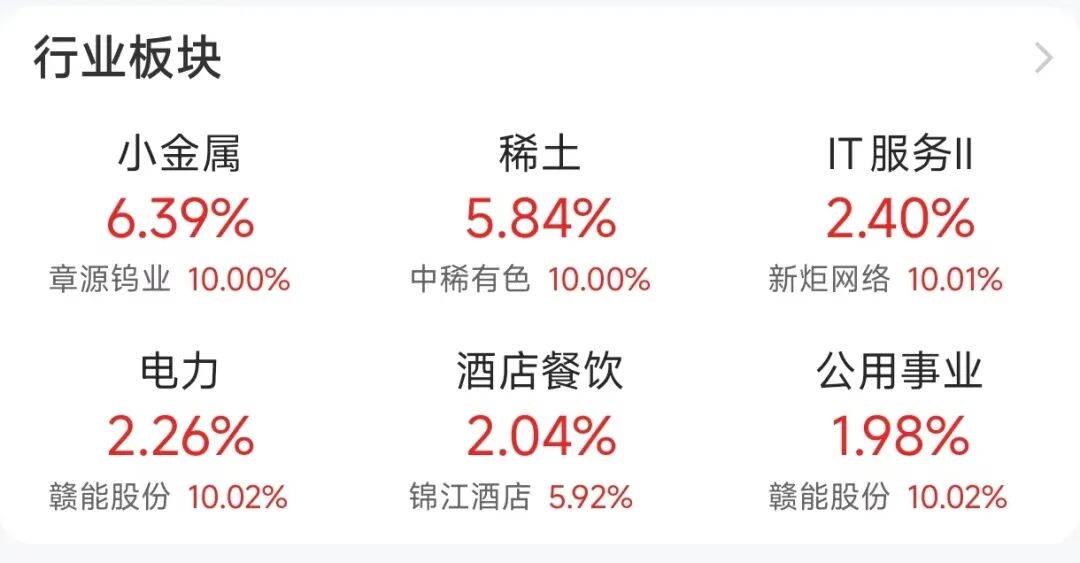
Market Overview - A-shares opened lower with the Shanghai Composite Index down 0.17%, Shenzhen Component down 0.68%, and ChiNext Index down 1.46% at midday [1] - The total trading volume in the market reached 1.60 trillion yuan, with over 2900 stocks declining [1] Sector Performance - The computing power and semiconductor industry chain experienced a pullback, with notable declines in stocks such as Shengmei Shanghai down 8.74%, Yuanjie Technology down 6.59%, and Saiwei Electronics down 6.02% [1] - The circuit board and CPO sectors led the decline, while high-voltage transmission, consumer electronics, and commercial aerospace themes weakened [1] - Small metals and rare earth sectors showed renewed strength, and IT services and power concept stocks rebounded [1] Investment Outlook - According to a report by Galaxy Securities, the construction of AI infrastructure is expected to remain strong through 2026, with a focus on increasing domestic localization rates [1] - Continued optimism is noted for investments in semiconductors and related components, including domestic computing chips, storage chip price increases, PCB, semiconductor manufacturing and equipment, advanced packaging, and semiconductor materials [1] Hong Kong Market - The Hang Seng Index rose by 0.75% and the Hang Seng Technology Index increased by 1.03% [3] - The trading volume in Hong Kong reached 121.83 billion yuan, with 870 stocks declining and 661 stocks rising [4] AI Hardware Development - Alibaba's AI assistant "Qianwen" is set to enter the AI hardware market, launching various products globally this year [6] - The first product, AI glasses, will be unveiled at the 2026 Mobile World Congress in Barcelona, with online and offline reservations starting on March 2 [6] - Additional products such as AI rings and AI headphones are also planned for release within the year [6]


中国银河证券:半导体行业销售额再创新高 长期逻辑稳固
智通财经网· 2026-02-27 00:35
Core Viewpoint - The report from China Galaxy Securities indicates that the construction of AI infrastructure in China will continue to be strong through 2026, with a focus on increasing the domestic production rate, leading to positive investment opportunities in semiconductors and related components [1] Industry Data Tracking - Semiconductor sales reached $78.9 billion in December 2025, with a month-on-month growth of 2.7% and a year-on-year growth of 37.1%. The overall semiconductor sales for 2025 hit a record high of $791.7 billion, reflecting a year-on-year increase of 25.6%. All regions except Japan saw growth in semiconductor sales [2] - The global semiconductor manufacturing equipment sales are projected to reach a historical high of $133 billion in 2025, with a year-on-year growth of 13.7%. The market for semiconductor back-end equipment is expected to perform exceptionally well, with sales of testing equipment and packaging equipment anticipated to grow by 48.1% and 19.6%, respectively [2] - The demand for storage is surging due to the explosion of AI demand and supply bottlenecks, leading to an overall upward trend in storage prices. DRAM prices, crucial for AI servers, are expected to rise significantly, driven by high demand for HBM and limited supply of standard DRAM like DDR4 [2] Industry News - Storage demand remains robust, with SK Hynix's DRAM and NAND inventory reduced to about four weeks of supply. TSMC has announced strategic agreements with Micron Technology to establish a long-term relationship for advanced DRAM packaging [3] - ASML researchers have discovered a method to enhance the power of key chip manufacturing equipment, potentially increasing chip production by up to 50% by 2030. SK Hynix has introduced a new H3 architecture concept that integrates high-bandwidth memory (HBM) into a single design [3] Sector Tracking - Over the past month, the semiconductor index underperformed the CSI 300 index by 3.86 percentage points and the electronics index by 1.44 percentage points, with the semiconductor index showing a decline of 3.15% [4] - Over the past year, the semiconductor index outperformed the CSI 300 index by 27.08 percentage points and the electronics index by 1.22 percentage points, with the semiconductor index increasing by 46.38% [4]

从德州仪器看模拟芯片趋势
2026-01-29 02:43
Summary of Texas Instruments Conference Call Company Overview - **Company**: Texas Instruments - **Industry**: Semiconductor, specifically Analog Chips Key Points and Arguments Revenue Growth Expectations - Texas Instruments anticipates a **2% quarter-over-quarter revenue growth** and approximately **10% year-over-year growth** in Q1 2026, indicating a sustained recovery in downstream demand [1][2][14] Market Performance Insights - **Industrial Market**: - Experienced a slight quarter-over-quarter decline but is in a recovery phase with signs of inventory replenishment starting from Q1 2025 [1][3] - Expected to maintain upward momentum despite being at lower levels compared to historical highs [3] - **Automotive Market**: - Characterized by volatility with ongoing inventory sales; however, demand from Chinese electric vehicles is expected to drive growth in Q3 2024 [1][4] - Anticipated slight decline in Q1 2026 due to the Chinese New Year, but overall trend remains positive with expected high single-digit year-over-year growth [4] - **Data Center Business**: - Strong performance with approximately **5% quarter-over-quarter growth** and nearly **70% year-over-year growth**, contributing **9%** to total revenue [1][7] - AI data centers significantly boost demand for analog chips [1][7] Pricing Trends in Analog Chip Industry - The analog chip industry is experiencing upward price trends due to: - Low inventory levels following a prolonged period of inventory sales, leading to a replenishment effect driven by recovering demand in sectors like industrial and AI [6][8] - Rising manufacturing costs due to increased prices of precious metals and supply constraints in 8-inch wafers, which are being passed on to customers [10][13] Challenges Facing the Semiconductor Industry - The semiconductor industry is currently facing several challenges: - Tight capacity for 8-inch and 12-inch wafers, making it difficult to increase production quickly [13] - Cost pressures being transmitted from wafer and packaging plants to design companies, with varying impacts based on different companies' gross margins [13] - Potential further increases in raw material prices, which could continue to elevate production costs [13] Future Outlook for Analog Chip Market - The analog chip market is expected to see revenue growth in 2026, driven by strong industrial demand and data center needs, alongside low inventory levels [14][15] - Companies with a higher proportion of industrial and automotive segments are likely to benefit from increased domestic production rates and consistent inventory replenishment cycles [15] - Lower-margin products are expected to benefit first from price increases, while high-margin companies may face increased pricing pressure if supply constraints persist [15]

下游资本开支上行-国产化率提升-看好半导体设备新机遇
2026-01-07 03:05
Summary of Semiconductor Equipment Industry Conference Call Industry Overview - The global semiconductor equipment market is expected to reach $133 billion by 2025, growing by 14% year-on-year, primarily driven by front-end wafer fabrication [1][4] - By 2026, the market is projected to grow to $145 billion, with a 10% increase, driven by AI, advanced logic storage, and advanced packaging [1][4] - The market is anticipated to further increase to $156 billion by 2027 [1][4] Key Insights - China is becoming increasingly significant in the global semiconductor equipment market, expected to exceed 40% market share in Q3 and Q4 of 2025, maintaining a range of 30%-40% in 2026 [1][5] - Major players like SMIC and Hua Li are actively expanding advanced logic capacity, with SMIC's capacity utilization reaching 95.8% and ongoing capital expenditure [1][6][7] - Changxin Storage (CXMT) has applied for an IPO on the Sci-Tech Innovation Board, planning to raise approximately $30 billion for technology expansion and DRAM production line upgrades, with projected revenue of $58 billion by 2025 [1][8] Investment Opportunities - Two main investment directions in the semiconductor equipment industry are identified: 1. Front-end wafer fabrication, with significant capital expenditure expected in 2026, particularly in memory and advanced logic plants, leading to a substantial increase in orders for etching and thin film deposition equipment. New order growth is conservatively estimated at 20%-30%, with a neutral to optimistic estimate of 40%-50% [2] 2. Domestic AI computing-related testing machines and advanced packaging equipment, with companies like Huafeng, Changchuan, and Maiwei positioned for growth [2] Market Dynamics - The unit investment cost in semiconductor manufacturing is rapidly increasing with advancing process nodes, with the cost for 5nm nodes reaching $3 billion per 10,000 wafers, indicating a trend of rising capital expenditure [2][9] - The domesticization rate in the semiconductor equipment industry is crucial, expected to reach 22% by 2025, driven by sanctions and national policy support [2][11] Competitive Landscape - There is competition among semiconductor equipment companies, but differentiation is achieved through specialization in various etching and deposition technologies [2][13] - Recommended companies in front-end semiconductor equipment include North Huachuang, Zhongwei Company, Tuojing Technology, Weidao Nano, and Maiwei Technology, each focusing on different processes and showing significant order growth [2][14] Emerging Areas - Current low domesticization rates in areas such as metrology, photoresist coating, and ion implantation equipment are highlighted as potential growth segments, especially with increased storage expansion [2][12] - Investment opportunities in domestic AI computing are emphasized in advanced packaging and testing fields, with key companies identified for potential growth [2][15]
2026年首个交易日实现“开门红”,科技催化驱动下港股科技板块仍是中长期投资主线,恒生科技ETF广发(513380)盘中涨近4%
Xin Lang Cai Jing· 2026-01-05 03:03
Group 1 - The Hong Kong stock market started 2026 positively, with the Hang Seng Index closing up 2.76% and the Hang Seng Tech Index rising 4% [1] - Semiconductor stocks experienced significant gains, with Hua Hong Semiconductor up approximately 9% and SMIC up about 5% [1] - The global semiconductor market is expected to reach a record high in 2025, with a projected growth of 9% to $760.7 billion in 2026, driven by AI [1] Group 2 - Under the backdrop of loose monetary policies, both foreign and southbound capital are expected to continue net inflows, leading to a potential increase in profitability for Hong Kong-listed companies [2] - The technology sector remains a long-term investment focus, with expectations of a rebound in valuations due to multiple favorable factors [2] - As of January 5, 2026, the Hang Seng Tech ETF has seen a 21.09% increase over the past year, with significant inflows of 1.50 billion yuan over the last eight trading days [2] Group 3 - The Hang Seng Tech ETF (513380) covers high-quality technology leaders in the Hong Kong stock market, focusing on companies highly related to technology themes [3]
半导体设备零部件迎来新一轮fab扩产周期,板块如何布局?
2025-12-29 01:04
Summary of Semiconductor Equipment and Components Conference Call Industry Overview - The global memory chip market is currently in a high prosperity cycle, with prices continuously exceeding expectations, benefiting domestic memory manufacturers such as Yangtze Memory Technologies and Changxin Memory Technologies [1][3] - If memory chip prices remain high next year, large-scale expansions will shorten the investment payback period, making next year a significant year for domestic memory expansion [3] Key Insights - The semiconductor equipment market outlook is positive for 2026, driven by increased shipments of domestic AI chips and a peak demand for advanced processes [1][5] - The end of this year and the beginning of next year is a critical period for ordering semiconductor equipment, with a delivery cycle of 6-8 months [5] - SMIC has completed its expansion plan for the SN1 factory at 35,000 wafers per month, with plans to continue expanding the SN2 factory by the same amount [6] - Hua Hong Semiconductor has made significant progress in its 7th and 9th factories, each ramping up to 40,000 wafers per month, with the remaining capacity of the 9th factory expected to be operational next year [6] Production Capacity and Goals - Yangtze Memory's monthly production capacity is approximately 130,000 wafers, while Changxin Memory exceeds 200,000 wafers [7] - The goal for both companies is to catch up with SK Hynix's 500,000 wafers per month and Micron's 300,000 wafers per month by expanding their capacities by over 200,000 and 100,000 wafers monthly, respectively [7][8] - Domestic memory manufacturers have significantly greater expansion flexibility compared to logic manufacturers [8] Investment Opportunities - Companies such as Tuojing Technology, Zhongwei Company, Huahai Qingke, and Northern Huachuang show high certainty in investment potential [9] - From an investment sequence perspective, it is recommended to first focus on upstream AI chips, followed by wafer manufacturing, semiconductor equipment, and component materials [2][9] - The enhancement of domestic production rates is a crucial factor for industry development, with only four processes exceeding a 30% domestic rate, while critical processes like deposition and CMP coating remain below 20% [4][10] Areas of Focus - Low domestic production rates in high-value segments such as metrology and lithography present significant investment opportunities [4][10] - Companies like Zhongke Feimeng and Jingce Electronics have established competitive advantages in metrology, while Xinyuan Micro is noteworthy in the coating and developing segment [10]

从100万跌至10多万,口腔CBCT狂打价格战,拖累上下游
3 6 Ke· 2025-11-14 01:04
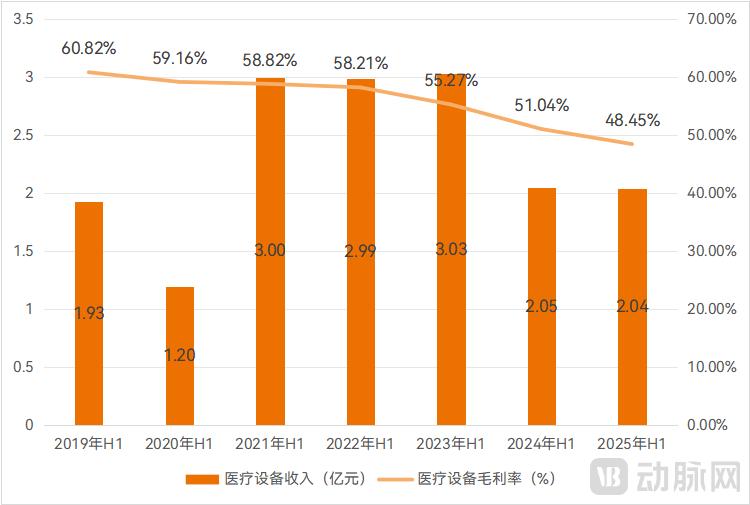
Core Insights - The domestic dental CBCT market has experienced explosive growth, particularly with the rapid increase in localization rates and the entry of competitively priced products, leading to a significant rise in penetration rates among small and medium-sized private dental institutions [1][2] - However, a crisis centered around price wars is emerging, causing operational difficulties for CBCT companies, impacting the daily operations of dental institutions, and exposing upstream core component suppliers to bad debt risks [1][2] Market Dynamics - As of now, there are 85 valid CBCT registration certificates in China, with 60% being domestic products [2] - Initially, imported CBCT devices dominated the market due to high prices, primarily purchased by well-funded dental specialty hospitals and large general hospitals, while private dental clinics relied on traditional imaging equipment [2] - The rise of domestic CBCT has broken the price monopoly of imported brands, leading to increased adoption among private dental clinics and a growing recognition of domestic equipment by dental specialty hospitals and general hospitals [2] Price Competition - From 2019 to mid-2024, the average price of domestic CBCT devices dropped from 1.02 million to 572,300, a decline of over 43%, with some products experiencing annual price drops exceeding 20% [3] - Major companies, including Meiya Optoelectronics, have reported significant fluctuations in performance, with their medical equipment segment's gross margin dropping from 60.82% to 48.45% between 2019 and 2025 [4][6] - Smaller CBCT companies are adopting aggressive pricing strategies, with some products priced as low as 100,000, and promotional tactics such as "zero down payment" and "buy one get one free" [6] Impact of Price Wars - The price war has led to profit shrinkage for equipment manufacturers, resulting in operational difficulties and potential supply disruptions [7] - While larger companies can absorb temporary revenue and margin declines, smaller startups are particularly vulnerable, facing challenges such as factory shutdowns and service interruptions [7] - The focus on market promotion over technological upgrades due to price pressures may lead to a long-term decline in industry competitiveness [7][8] Supply Chain Challenges - The domestic supply chain for core CBCT components has made significant progress, achieving full localization in key areas such as X-ray generators and detectors [10] - However, the ongoing price war is affecting upstream suppliers, with cases of bad debts emerging, such as a lawsuit from a core component supplier against a CBCT manufacturer for overdue payments [10][11] Future Strategies - The industry recognizes the unsustainability of low-price strategies and is beginning to seek ways to break this negative cycle [12] - Companies are encouraged to establish a reasonable pricing system and focus on creating irreplaceable product and service value [12] - Innovations such as multi-functional CBCT devices and applications in other medical fields are being explored to enhance competitiveness and meet market demands [13][14] - Emphasizing quality, service, and technological advancements will be crucial for long-term success in the CBCT market [15]
扩产周期与自主可控共振,半导体设备成为核心资产
2025-10-09 14:47
Summary of Semiconductor Equipment Industry Conference Call Industry Overview - The semiconductor equipment industry is expected to experience significant growth, particularly in the storage and advanced logic sectors, with a major expansion anticipated in 2026 [1][2] - International sanctions, particularly from the U.S. against Chinese semiconductor equipment, and China's countermeasures on rare earth elements, indicate an improvement in China's self-sufficiency and an increasing domestic production rate [1][3] Key Insights and Arguments - **Growth Projections**: - Storage manufacturers are expected to expand production by 50,000 wafers each in 2026, with total capital expenditure elasticity projected at over 60%, potentially reaching around 70% when including factors like Changxin HBM expansion [1][6] - Advanced logic is expected to grow by 25% in 2026 [1][6] - **Order Growth**: - Companies are seeing substantial order growth: - Zhongwei's orders are expected to grow by at least 45% in 2026 [6] - Tuojing is expected to maintain a growth rate of 40-50% [6] - Huachuang anticipates orders reaching 50 billion, with a significant portion from advanced logic [6] - Huajingke's order growth is projected at around 50% [6] - Jinyi Equipment's order growth is expected to be about 30% [6] Government Initiatives - Local governments, particularly in Shanghai and Beijing, are actively promoting advanced logic node capacity, which is expected to increase demand for related equipment and strengthen the industry's fundamentals [5] Market Valuation and Future Outlook - The domestic semiconductor equipment market is projected to reach $40 billion by 2030, with leading companies like Huachuang, Zhongwei, and Tuojing having significant future growth potential [3][7] - Current valuation of semiconductor front-end equipment is around 17 billion, with an estimated 20% growth potential remaining [8] - The advanced packaging sector is expected to see significant development in 2026, driven by projects like Changxin's HBM expansion [9] Investment Recommendations - The three leading companies (Huachuang, Zhongwei, Tuojing) are prioritized for investment based on their growth potential and market position [3][7] - Jinyi Equipment is also recommended with a market value target of 20 billion [3][7] Overall Market Sentiment - The overall sentiment for the semiconductor industry remains optimistic, with expectations of substantial improvements in both storage and advanced logic chip sectors over the next year [10]
A股多个指数下跌,半导体设备3个月涨超50%
2 1 Shi Ji Jing Ji Bao Dao· 2025-09-26 08:11
Market Overview - On September 26, A-share indices weakened, with the ChiNext index dropping over 2.5%. The total trading volume in the Shanghai and Shenzhen markets was 2.17 trillion yuan, a decrease of 225.7 billion yuan from the previous trading day, with over 3,400 stocks declining [1] Sector Performance - Wind power equipment, chemical fiber, agricultural chemical products, soybeans, and textile manufacturing sectors saw the highest gains, while gaming, computing hardware, photolithography machines, and consumer electronics sectors experienced the largest declines [1] Semiconductor Industry - The semiconductor industry chain continued to rise, with equipment and wafer foundry sectors leading the gains. Huahong Semiconductor surged to a historical high. The semiconductor equipment sector experienced explosive growth, rising over 16% in three days, over 30% in half a month, and over 50% in three months [2] Factors Driving Semiconductor Growth - The establishment of Changcun Phase III Integrated Circuit Co., Ltd. on September 5 is a significant marker for the expansion of semiconductor equipment domestic production rates [3] - The price increase of memory chips exceeded market expectations, likely driving global memory chip capacity expansion [4] - Recent exhibitions of photolithography machines at the Industrial Expo positively influenced market sentiment [5] - The demand for catch-up growth in semiconductor equipment is also a key factor for the recent surge in the semiconductor equipment index [6] Market Correction and Future Outlook - On September 25, the semiconductor equipment index experienced a correction, viewed as a temporary pause in a strong upward trend. The long-term growth trajectory remains clear, driven by AI demand [7] - Analysts believe that the current adjustment in the semiconductor equipment sector is a rational correction after an overheated sentiment, with expectations of a rebound after short-term fluctuations [7] - The long-term trend of increasing domestic production rates and capital expenditure expansion is expected to benefit the profitability of related companies [7] - The semiconductor sector's recent rise is attributed to a combination of surging demand, mid-term technological breakthroughs, and long-term ecosystem development [8] Investment Opportunities - The semiconductor industry is a key focus of national policy support, with a positive development outlook. Significant adjustments may present a good investment opportunity [8] - Companies involved in high-performance testing machines, advanced packaging equipment, bonding equipment, and semiconductor etching equipment are recommended for attention [8] - The growth potential in the semiconductor equipment sector remains strong, particularly in areas with core technologies, supported by AI computing demand and downstream capacity expansion [8]
中信证券:我国企业出海的三大新趋势将对出口增速形成支撑
Xin Lang Cai Jing· 2025-08-13 00:20
Core Viewpoint - The report from CITIC Securities highlights the increasing demand for Chinese companies to expand overseas due to slowing domestic economic growth and ongoing trade frictions since 2015 [1] Group 1: Trends in Overseas Expansion - Chinese companies are transitioning from the 1.0 phase of overseas expansion, characterized by methods such as re-export trade, changing export destinations, relocating production capacity, and upgrading technology, to a 2.0 phase that emphasizes resilience and efficiency in response to heightened tariffs [1] - The new trends in overseas expansion include the normalization of re-export trade and diversification of regional layouts, which are essential strategies for companies to cope with tariffs [1] Group 2: Technological Advancements and Market Opportunities - High-tech products with rapidly increasing domestic production rates may create sufficient price advantages to mitigate tariff impacts, while traditional products can explore domestic gradient transfer and technology improvements to reduce costs and enhance efficiency [1] - There is a focus on actively expanding export markets in Belt and Road Initiative countries as part of the new strategies for overseas expansion [1] Group 3: Macroeconomic Impact - The three new trends in overseas expansion are expected to support export growth, with an estimated combined contribution of 3-5 percentage points to export momentum [1] - The report anticipates that China's exports may achieve a positive growth rate of 2.5% in the second half of the year [1]
