吐鲁番葡萄

Search documents
新疆:五年增绿,沙海治理惠民生
Xin Lang Cai Jing· 2026-02-12 20:34
Core Viewpoint - Xinjiang has made significant progress in ecological development and economic growth, showcasing a model of green and prosperous development through various initiatives and projects [1][2][4]. Group 1: Ecological Achievements - Xinjiang has established a 3,046 km ecological defense line along the edge of the Taklamakan Desert, recognized as one of the "Top Ten Global Engineering Achievements" by 2025 [1]. - Over the past five years, Xinjiang has completed afforestation of 9.69 million acres, improved grassland on 2.32 million acres, and rehabilitated 3.13 million acres of desertified land, increasing forest coverage from 5.5% to 5.6% and grassland vegetation coverage from 40.7% to 42.33% [2][4]. - The establishment of the Karalamari National Park marks a significant milestone in Xinjiang's ecological protection efforts, contributing to the region's recognition as a world-class natural conservation area [2]. Group 2: Economic Impact - Xinjiang's fruit industry has become a vital economic sector, producing 9.8 million tons of fruit annually with a total output value of 72 billion yuan, making it a key pillar for rural revitalization [2][3]. - The average net income from fruit farming for 5 million farmers is 5,600 yuan per person, accounting for 28.8% of the per capita disposable income of farmers [2]. - The development of the wine industry in Xinjiang has created a brand for "Xinjiang Wine," with sales expected to reach 710 million yuan by 2025, reflecting a 12% growth [3]. Group 3: Institutional and Technological Support - Xinjiang has implemented a five-level forest chief system ahead of the national schedule, appointing over 30,000 forest chiefs to oversee ecological management [4][5]. - The region has established nine national ecological monitoring stations and a key laboratory, promoting 89 new technologies and varieties to enhance ecological restoration efforts [5]. - The introduction of various policies and regulations has strengthened legal frameworks for ecological governance, ensuring sustainable development practices [4][5].
巨变70年丨天山南北“丰”景如画
Xin Hua She· 2025-09-24 09:36
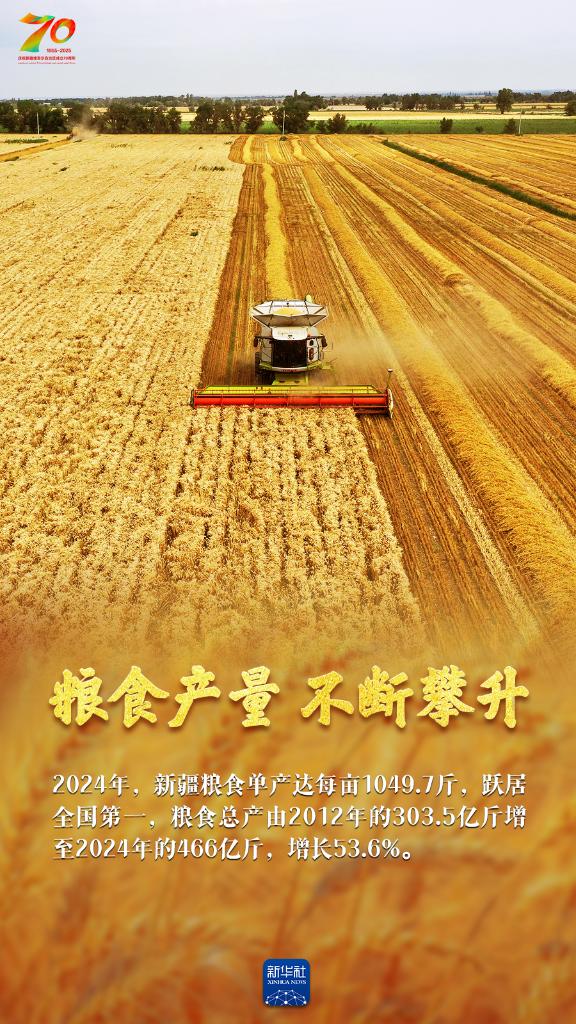
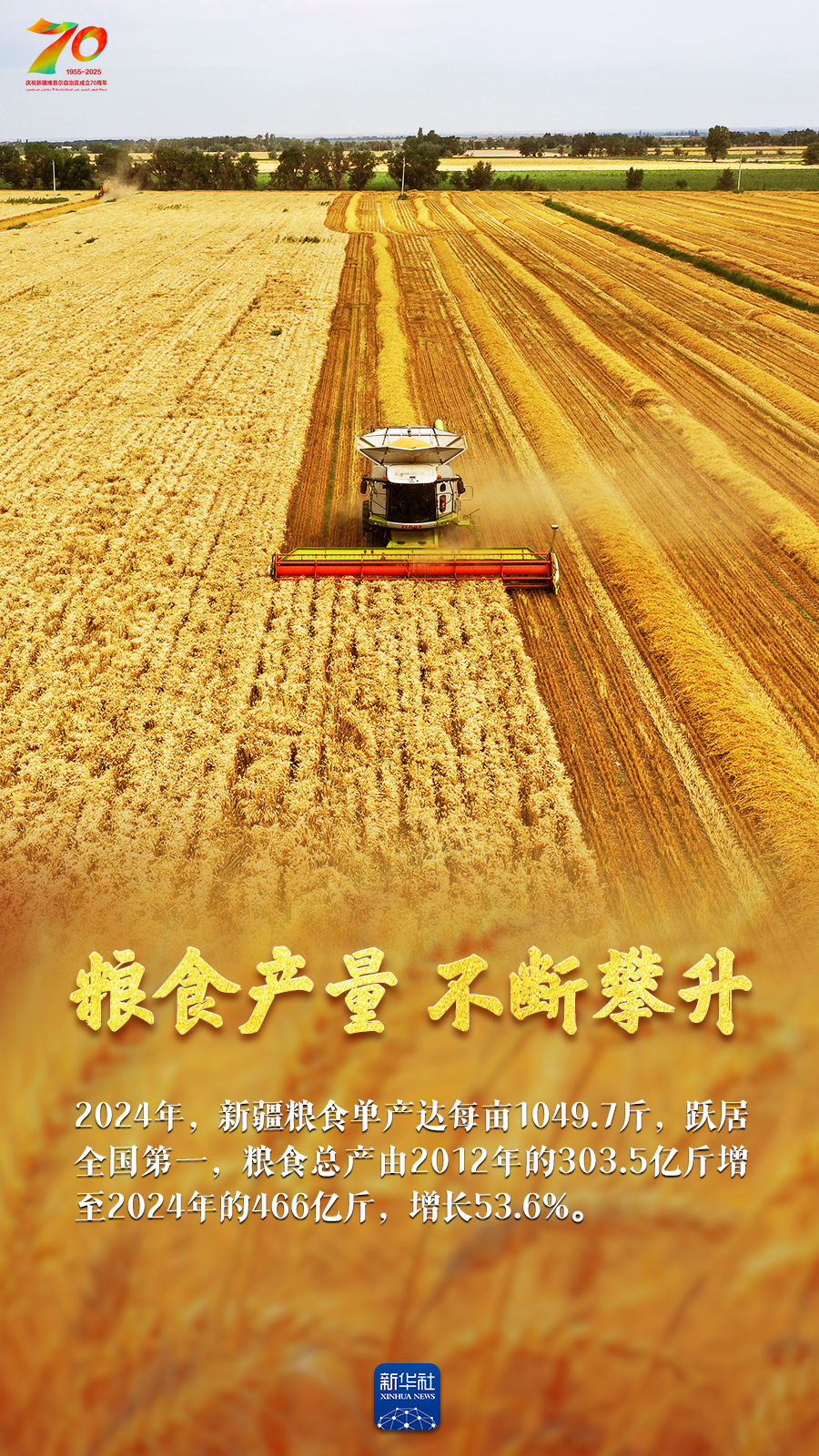
Group 1 - Xinjiang's agricultural production has significantly transformed over the past 70 years, with per capita grain consumption increasing from less than 200 kg to achieving the highest grain yield in the country [1] - In 2024, Xinjiang's grain yield reached 1049.7 jin per mu, with total root crop production increasing from 30.35 billion jin in 2012 to 46.6 billion jin in 2024, a growth of 53.6% [2] - Xinjiang cotton production in 2024 totaled 5.686 million tons, accounting for 92.3% of the national total, maintaining its position as the leading cotton-producing region for 32 consecutive years [3] Group 2 - Modern technology has transformed livestock farming in Xinjiang, making it a major producer of high-quality livestock products [4] - Xinjiang's fruits, such as Hami melons, Turpan grapes, Korla pears, and Aksu apples, are highly favored in the national fruit market, benefiting from unique climatic conditions that enhance their sweetness and aroma [7] - In 2024, Xinjiang's aquatic product output reached 192,500 tons, with the region becoming known for its diverse seafood offerings [9]

巨变70年|天山南北“丰”景如画
Xin Hua She· 2025-09-24 07:26
Group 1 - Xinjiang's grain yield per mu reached 1049.7 kg in 2024, ranking first in the country, with total root crop production increasing from 30.35 billion kg in 2012 to 46.6 billion kg in 2024, a growth of 53.6% [3] - In 2024, Xinjiang's cotton production totaled 5.686 million tons, accounting for 92.3% of the national total, maintaining the top position for 32 consecutive years, with a comprehensive mechanization rate of 97% [5] - Xinjiang has transformed from relying on natural conditions for livestock farming to utilizing modern technology, becoming a major producer of high-quality livestock products in China [7] Group 2 - Xinjiang's fruits, such as Hami melons, Turpan grapes, Korla pears, and Aksu apples, are favored in the national fruit market, benefiting from unique climatic conditions that enhance their sweetness and aroma [9] - The region has over 4.6 million acres of suitable fishing waters, with a total aquatic product output of 192,500 tons in 2024, contributing to its reputation as a significant seafood exporter [14]
葡萄架下的故事,真实又动人——访“三农”主播吾买尔·热西提
Ren Min Ri Bao Hai Wai Ban· 2025-09-19 14:06
Core Insights - The article highlights the success of a local farmer, Wumai'er, who has leveraged short videos and live streaming to promote his agricultural products, particularly grapes, and has gained significant popularity as a "three rural" (agriculture, rural areas, and farmers) influencer [1][2]. Group 1: Wumai'er’s Journey - Wumai'er, a 56-year-old farmer from Turpan, Xinjiang, transitioned from traditional selling methods to using social media platforms for marketing his grapes, significantly expanding his reach [1]. - Initially nervous about creating content, Wumai'er gained 16,000 likes on his first video, and subsequent videos received up to 500,000 likes, showcasing the effectiveness of his authentic and spontaneous approach [1][2]. Group 2: Impact on Local Economy - Wumai'er has amassed over 1.14 million followers on Douyin, and during a live stream, he attracted 2 million viewers, resulting in nearly 30,000 orders [2]. - His efforts have not only increased his own sales but have also helped local villagers expand their agricultural product sales through live streaming, with some families reportedly doubling their annual income [2]. Group 3: Tourism Growth - In the first eight months of this year, Turpan received over 28.5 million domestic and international tourists, indicating a growing interest in the region's agricultural and cultural offerings [3].
助推新疆吐鲁番水果迈向全国
Zhong Guo Chan Ye Jing Ji Xin Xi Wang· 2025-08-11 03:22
Core Viewpoint - The Turpan grape industry is set to advance significantly through a series of events, including the 31st Silk Road Turpan Grape Festival and the 4th Gansu, Xinjiang, Mongolia, and Qinghai Regional Cultural Tourism Alliance Conference, starting from August 7, 2025, aimed at promoting the "Turpan Grape" brand nationwide [1][27]. Group 1: Event Overview - The "Turpan Grapes are Ripe" online sales season was launched on August 7, 2025, with the event organized by the Turpan Municipal Bureau of Commerce and other local authorities [3][5]. - The event attracted representatives from major fruit wholesale markets across China, establishing a new platform for production and sales cooperation [1][5]. - A cross-regional grape production and sales cooperation agreement was signed during the event, promoting online and offline collaboration for local agricultural products [7][27]. Group 2: Promotion Activities - The "Fragrant Fruits of the Silk Road" Xinjiang Fruit Promotion Conference showcased various high-quality Turpan grape varieties, including seedless white, blue sapphire, and rose fragrance [10][12]. - The event included tasting displays, speeches, business negotiations, and signing of purchase intention agreements, highlighting the quality and appeal of Turpan grapes [10][20]. - A total of 14 local enterprises and cooperatives expressed purchasing intentions for over 27,300 tons of Turpan grapes during the event [22]. Group 3: Strategic Goals - The activities aim to enhance the visibility of Turpan grapes, facilitate market access, and support local farmers' income and brand value [14][27]. - The event is part of a broader strategy to digitalize and brand the Turpan grape industry, injecting new vitality into the local agricultural economy [27].