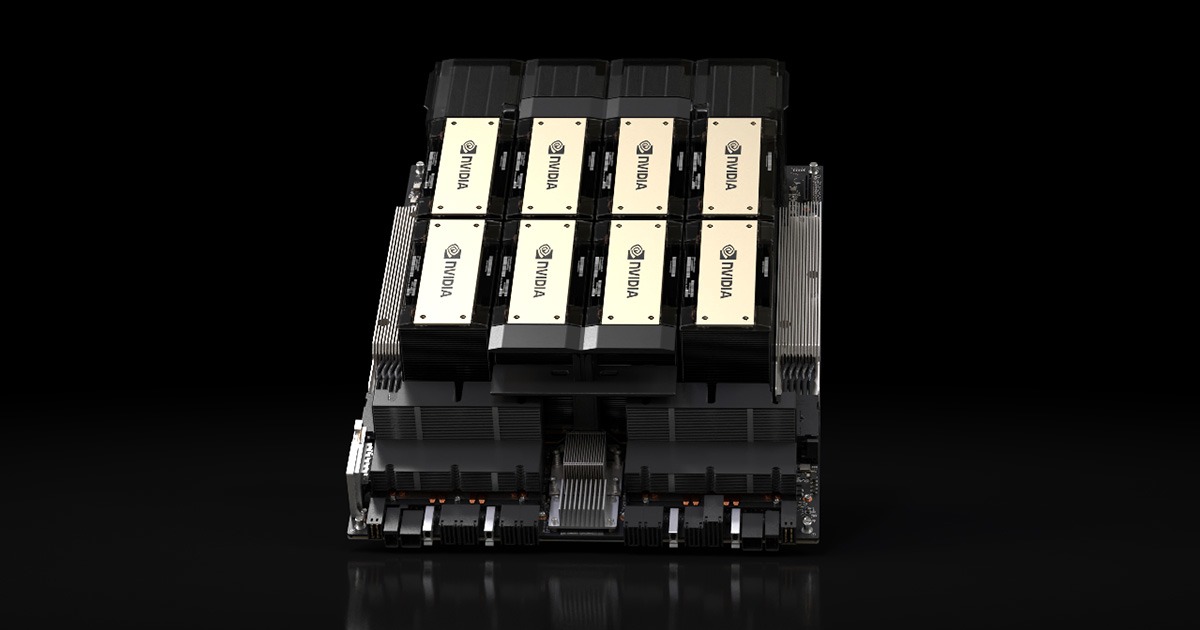
含光芯片

Search documents
平头哥上市,马云再迎IPO
Sou Hu Cai Jing· 2026-01-22 13:51
Core Viewpoint - Alibaba's chip company, Tsinghua Unigroup, has officially initiated its IPO process, marking a significant milestone for Jack Ma's core asset and indicating the maturity of Alibaba's AI strategy [1] Group 1: IPO and Valuation - Tsinghua Unigroup's valuation has exceeded $20 billion, significantly higher than most independent chip design companies [4] - The IPO is seen as a pivotal moment for Alibaba, showcasing its ability to capitalize on its technological advancements [1][4] Group 2: Unique Advantages - Tsinghua Unigroup is not just a standalone chip company; it is deeply integrated into Alibaba's vast commercial ecosystem, providing a unique competitive edge [5] - The company has two distinct scenarios: its self-developed AI chips, such as含光 and 倚天, directly support the training and inference capabilities of the Tongyi Qianwen model, enabling deep collaboration between chips and models [5] - Alibaba's origins in B2B business allow Tsinghua Unigroup to meet the urgent demand for high-performance, low-cost computing power from millions of enterprise clients [5] Group 3: AI Ecosystem - Tsinghua Unigroup is positioned within a complete "AI ecosystem pyramid," where its chips provide the foundational computing power, the Tongyi model serves as the system layer, and applications like Taobao, Tmall, and Alipay represent the user-facing layer [5] - This "computing power + model + scenario" structure enables rapid iteration and large-scale deployment of Alibaba's AI capabilities [6] Group 4: Market Impact - The rapid development of Tongyi Qianwen is attributed to the collaborative release of the entire ecosystem rather than a single technological breakthrough [8] - The narrative of "Tongyi folding Alibaba" is misleading; instead, the true picture is that Alibaba's ecosystem is flourishing with the power of AI, with Tsinghua Unigroup acting as the "energy engine" of this transformation [8] - Tsinghua Unigroup's IPO is not just a milestone for a chip company but also a demonstration of China's capability to build a complete AI sovereignty system from foundational hardware to upper-layer applications [8]

黄仁勋称CPU将死,英伟达想靠GPU制霸,科技巨头们不答应
3 6 Ke· 2025-12-09 07:53
Core Insights - The U.S. government has allowed NVIDIA to sell its H200 AI chips to "approved customers" in China and other regions, with a condition of a 25% revenue share to the U.S. government [1] - Jensen Huang, NVIDIA's CEO, expressed uncertainty about the future necessity of CPUs in an AI-driven era, suggesting that GPUs may eventually replace CPUs [1] - NVIDIA's revenue from data center GPUs is projected to surge from $15 billion in 2023 to $115.2 billion in the fiscal year 2025 [1] Industry Trends - The GPU market is experiencing a surge in interest, highlighted by the significant stock price increase of Chinese GPU company Moore Threads on its debut [3] - The demand for GPUs is rising due to the explosion of large model training, but the complete replacement of CPUs by GPUs is debated [4][6] - CPUs remain essential for complex task management, while GPUs excel in parallel computing tasks [4][6] Competitive Landscape - Major tech companies are accelerating the deployment of new GPU clusters, with Alibaba Cloud and Baidu developing their own chips to enhance AI capabilities [7][9] - Amazon and Google are also investing in self-developed chips to reduce dependency on NVIDIA, focusing on efficiency and cost control [9][10] - The shift towards GPU dominance in cloud computing is evident, but companies are also developing their own solutions to avoid being solely reliant on NVIDIA [9][10] Future Directions - The transition of AI tasks from cloud to local devices is reshaping the computing architecture, with GPUs becoming increasingly important in smartphones and PCs [10][11] - The rise of AI PCs emphasizes the importance of GPU performance over traditional CPU metrics [11] - The automotive industry is also leveraging GPUs for real-time data processing in autonomous driving applications [11] Ecosystem Development - CPU manufacturers like Intel and AMD are not retreating; they are adapting by enhancing their AI processing capabilities and developing competitive ecosystems [14][15] - NVIDIA's strength lies in its established ecosystem, particularly with CUDA, which poses challenges for competitors [15] - The competition in the computing sector is shifting towards who can build a comprehensive AI ecosystem, with companies like Huawei making significant strides [15][16]