启力

Search documents
现在的问题是,东鹏饮料到底会增长到什么时候?
晚点LatePost· 2026-02-07 11:36
Core Viewpoint - Dongpeng Beverage has successfully listed on the Hong Kong stock market, raising approximately HKD 10.14 billion with a share price of HKD 248, reflecting its strong growth potential in the energy drink market [4][5]. Market Position and Growth - Dongpeng's market share in China's energy drink sector is 40.1% by volume, with a CAGR of 28.5% over the past three years, while its main competitor, Huabin Red Bull, holds a 22.0% market share with a CAGR of only 3.9% [4][5]. - By 2025, Dongpeng's total revenue is projected to reach approximately CNY 21.4 billion, with Dongpeng Special Drink contributing CNY 16.2 billion, indicating a growth rate of about 22% [5]. Profitability and Efficiency - Despite a decrease in growth rate to 22%, Dongpeng's profitability remains strong, with a gross margin of around 44% and an increase in net margin by 1 percentage point in the first three quarters of 2025 [5][10]. - The company's sales expense leverage has been steadily increasing, indicating improved efficiency in converting sales expenses into revenue [5][10]. Competitive Landscape - Other competitors in the energy drink market, such as Dali's Lehu, Wahaha's Qili, and Huabin's Zhanma, have struggled to compete, with many experiencing stagnation or decline [7][9]. - The lack of competition is attributed to limited market size, insufficient capital investment, and weak promotional efforts from these companies [9]. Channel Strategy and Expansion - Dongpeng has a robust channel incentive structure, allowing for significant growth in its distribution network, with over 4.3 million retail outlets and more than 3,200 distributors as of Q3 2025 [14]. - The company plans to expand its retail network to 5 million outlets by 2026, focusing on regions with lower maintenance rates for sales personnel [14][15]. Future Projections - Dongpeng aims for a revenue target of CNY 27 billion to CNY 29 billion in 2026, with Dongpeng Special Drink expected to generate CNY 20 billion to CNY 21 billion [15]. - The company is also diversifying its product offerings, with new products set to launch in 2025 and 2026, which could replicate the success of its existing high-growth products [14][15]. Consumer Demographics - The demand for energy drinks is expanding beyond traditional consumers like drivers and laborers to include white-collar workers and students, driven by increased work hours and the appeal of sugar as a quick energy source [16][17].

一线饮料品牌释放“价格战”信号,2026饮料行业或将再迎来降价潮
Xin Lang Cai Jing· 2025-12-05 11:37
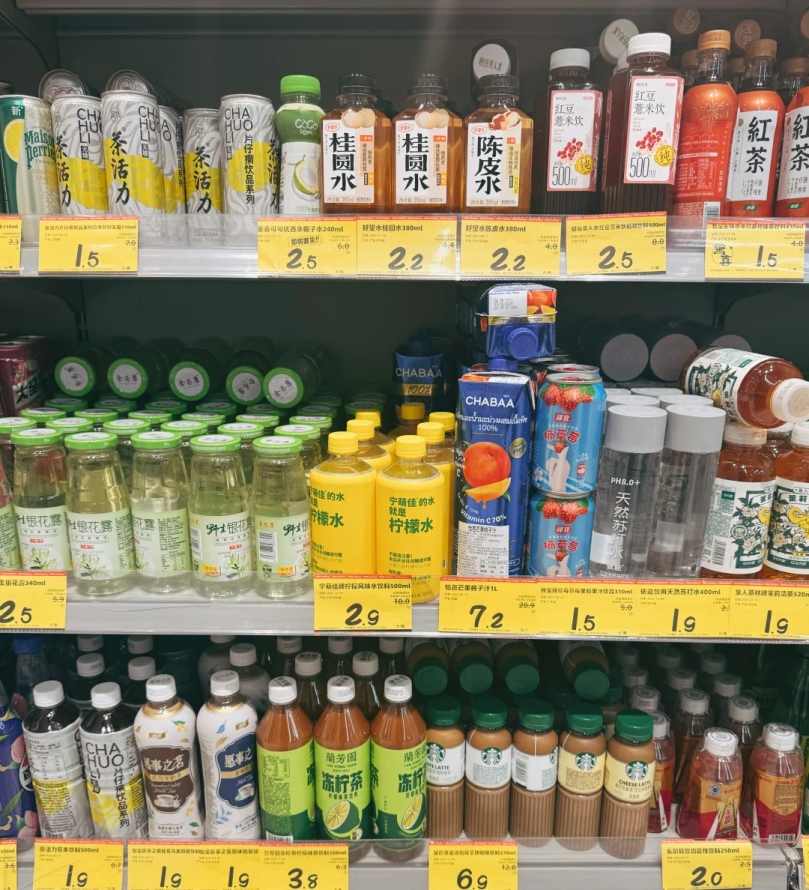
Core Insights - A leading beverage company in China has proactively lowered its growth target for 2026, indicating a significant reduction compared to its historical growth rates, while simultaneously pursuing aggressive expansion plans, suggesting the initiation of a "price war" [1][3] - Another major beverage player has announced a clear and aggressive strategy for the coming year, focusing on expanding market share through "internal competition" and seeking breakthroughs in new categories via price wars [1][3] Price War Dynamics - Historical trends show that when industry giants initiate internal competition, it often compels other players to follow suit, leading to a downward spiral into price wars [3] - The price decline in the beverage market has already begun to manifest, with average prices for sugar-free tea and "health water" dropping from approximately 5.6 yuan and 0.9 yuan per 100ml in 2023 to about 5.15 yuan and 0.86 yuan in 2025 [4][6] Pricing Strategies - New products in the health beverage category launched in the first half of the year have an average price of about 5 yuan per bottle, a 12% decrease from the 2024 average of 5.7 yuan [6] - Promotions such as "second bottle for 1 yuan" have led to actual transaction prices for health beverages dropping to between 3 and 5.5 yuan per bottle, representing a decline of over 40% [6] - The bottled water sector is also experiencing price reductions, with major brands like Nongfu Spring and Wahaha temporarily pausing before second-tier brands like Master Kong and Yili continue to push low-price strategies [8] Market Sentiment and Consumer Behavior - Distributors are feeling the impact of price reductions directly, with reports indicating that previously popular beverages priced at 6-8 yuan are now generally below 5 yuan [10] - The shift in pricing power from distributors to brand owners is evident, as brands are forced to lower prices to maintain market share and relationships with distributors amid high inventory levels [10][12] Promotional Tactics - Brands are employing sophisticated pricing strategies, including large packaging and "one yuan exchange" promotions, to capture market share without directly undermining existing price structures [12][15] - Some companies have officially announced price reductions by launching newly priced products, such as a major international cola brand introducing a 400ml product priced lower than its previous 500ml offerings [15] Industry Outlook - The signals from industry giants indicate that the beverage sector will become increasingly competitive in 2026, with price wars expected to be a primary battleground [16][20] - The ongoing price war is likely to impact all segments of the supply chain, including small brands, distributors, and consumers, with potential negative consequences for profit margins and product quality [20][22]





这个软饮赛道,增长最快
首席商业评论· 2025-08-05 04:18
Core Viewpoint - The energy drink market in China is experiencing significant growth, with major brands like Dongpeng and Red Bull reporting substantial revenue increases, indicating a robust demand for functional beverages that enhance energy and alertness [4][6][9]. Group 1: Market Performance - Dongpeng Beverage reported a revenue of over 10 billion yuan in the first half of 2025, marking a year-on-year growth of 36.37%, with its flagship product, Dongpeng Special Drink, generating sales of 8.36 billion yuan [4]. - Red Bull's revenue for 2024 reached 21 billion yuan, exceeding its initial targets, while Monster Beverage Corporation reported a 40.1% year-on-year increase in net sales in China for Q1 2024 [6][9]. - The energy drink segment accounts for approximately 70% of the functional beverage market, which has been the fastest-growing category in China's soft drink sector over the past five years [9][12]. Group 2: Industry Dynamics - The energy drink market in China has evolved since Red Bull's entry in 1995, with numerous domestic brands emerging and initially mimicking Red Bull's product and packaging [15][18]. - Dongpeng's rise can be attributed to its focus on blue-collar workers, competitive pricing, and innovative packaging, which helped it capture market share from Red Bull [18][20]. - The competitive landscape has intensified, with brands like Dongpeng and others employing aggressive marketing strategies, including sponsorship of sports events and targeted promotions to attract younger consumers [21][22]. Group 3: Consumer Trends - The consumption of energy drinks is increasingly common among various demographics, including blue-collar workers, office employees, and students, with the top three consumption scenarios being sports (31.21%), night shifts (30.12%), and late-night studying (29.44%) [26][28]. - The demand for energy drinks is driven by the fast-paced lifestyle of modern consumers, leading to a broader acceptance and habitual consumption of these beverages [28].
新晋饮品之王,干翻东方树叶
创业邦· 2025-07-31 10:42
Core Viewpoint - The energy drink market in China is experiencing significant growth, with major players like Dongpeng and Red Bull achieving impressive revenue increases, indicating a robust demand for functional beverages that enhance energy and alertness [3][5][31]. Group 1: Market Performance - Dongpeng Beverage reported a revenue exceeding 10 billion yuan in the first half of 2025, marking a year-on-year growth of 36.37%, with its flagship product, Dongpeng Special Drink, generating sales of 8.36 billion yuan [3][10]. - Red Bull's revenue for 2024 reached 21 billion yuan, surpassing its initial targets, while Monster Beverage Corporation reported a 40.1% year-on-year increase in net sales in China for Q1 2024 [5][6]. - The energy drink segment accounts for approximately 70% of the functional beverage market, which is the fastest-growing category in China's soft drink sector [7][34]. Group 2: Industry Dynamics - The energy drink market in China has evolved since Red Bull's entry in 1995, with numerous domestic brands emerging and competing for market share [14][19]. - Dongpeng's rise can be attributed to its strategic focus on blue-collar workers, competitive pricing, and innovative packaging that differentiates it from Red Bull [20][21]. - The competitive landscape has intensified, with brands like Yili and Dali Foods launching their own energy drinks and employing aggressive marketing strategies to capture market share [24][26]. Group 3: Consumer Trends - The primary consumers of energy drinks have expanded beyond traditional blue-collar workers to include office workers, students, and fitness enthusiasts, driven by the need for quick energy boosts [31][34]. - The top three consumption scenarios for energy drinks are sports (31.21%), night shifts (30.12%), and late-night studying (29.44%) [31]. - The trend towards functional and cost-effective beverages is likely to sustain the growth of the energy drink market, as more consumers seek affordable options to alleviate fatigue [34][35].