
地震预警系统

Search documents
中国地震局:2026年将重点聚焦防震减灾规划编制等
Xin Hua She· 2026-01-09 04:30
Core Insights - The China Earthquake Administration will focus on earthquake disaster prevention and mitigation planning, response, and early warning capabilities in 2026 [1] - The "14th Five-Year" national disaster prevention and mitigation plan will be released in 2026, covering various aspects such as technological innovation, international cooperation, legal construction, talent development, and public disaster avoidance capabilities [1] Summary by Categories Disaster Prevention and Response - The earthquake emergency response plans at all levels will be revised, and a rapid assessment system for post-earthquake disaster situations will be established [1] - A cross-regional joint prevention and construction system will be improved, along with a system for summarizing and reviewing earthquake responses [1] Earthquake Safety Resilience - The focus will be on enhancing urban and rural earthquake resistance capabilities and improving the seismic resilience of major engineering projects [1] - An exploration of a full lifecycle seismic resilience assessment for major engineering projects will be conducted [1] Earthquake Early Warning System - By 2025, the earthquake early warning system is expected to have over 240 million users, with 300 warnings issued, serving over 18 million people [1] Seismic Safety Improvements - The program includes the renovation of 141,000 urban dilapidated houses and seismic upgrades for 75,000 rural households, indicating a continuous improvement in earthquake resistance capabilities [1]
坚持统筹推进 强化示范引领!推动山东地震预警服务工作提质增效
Qi Lu Wan Bao· 2025-09-26 12:05
Core Viewpoint - The launch of the Shandong Earthquake Early Warning System marks a significant advancement in earthquake preparedness and response in the province, enhancing public safety and risk management capabilities [1][5]. Group 1: System Development and Implementation - Shandong has established 1,468 earthquake warning stations, positioning itself among the top provinces in China for network density [1]. - The provincial government has developed a comprehensive work plan with 27 specific measures to ensure the effective implementation of earthquake warning services [2]. - A collaborative approach involving multiple departments has been adopted to enhance the integration of earthquake warning information with emergency response mechanisms [2]. Group 2: Institutional Standards and Operational Efficiency - The Shandong Earthquake Bureau has created a robust system of regulations and standards to ensure the safe and efficient operation of the earthquake warning system [3]. - A quarterly risk assessment mechanism has been established to identify and rectify potential hazards in the early warning operations [3]. - The operational efficiency of the warning stations is maintained at a high level, with a running rate of approximately 99.7% [3]. Group 3: Service Channels and Public Engagement - The Shandong Earthquake Bureau has expanded service channels to enhance the coverage and accessibility of earthquake warning information, including partnerships with telecommunications and media companies [4]. - The user base for the Shandong earthquake warning WeChat mini-program has reached 2.84 million, making it the largest among provincial earthquake bureaus in China [4]. - A network of 1,329 high-quality warning terminals has been established across the province, ensuring comprehensive coverage in key industries [4]. Group 4: Practical Outcomes and Social Benefits - The earthquake warning system has demonstrated its effectiveness during actual seismic events, providing timely alerts that have facilitated emergency responses [5]. - Following a 5.5 magnitude earthquake, the system generated internal warning information within 7 seconds, significantly aiding emergency management efforts [5]. - Collaborative initiatives with educational institutions and critical infrastructure sectors are underway to enhance the customization and effectiveness of warning services [5].
一眼支付、一机识诈、一网预警:硬核应用走进现实 政策“组合拳”推动创新成果加速落地
Yang Shi Wang· 2025-09-26 02:55
Core Insights - The article highlights the emergence of advanced technologies such as AI fraud prevention, iris payment systems, and earthquake early warning systems showcased at the China International Information Communication Exhibition held in Beijing [1] Group 1: Technology Applications - AI fraud prevention technology can automatically identify scam calls and provide real-time risk alerts during conversations, generating a risk analysis report post-call [4] - The iris payment system integrates biometric recognition and VR technology, allowing users to select products and complete transactions with gestures and eye blinks in a metaverse supermarket [3] - A 5G+AI industrial platform features robotic systems for inspection and quality control, demonstrating the application of AI in manufacturing processes [5] - The earthquake early warning system, the largest of its kind globally, utilizes communication networks and tower resources to enhance disaster response capabilities [6] Group 2: Policy and Development - The Ministry of Industry and Information Technology is implementing policies to accelerate the integration of advanced technologies into daily life, promoting innovation and industrial application [7] - The Chief Engineer of the Ministry emphasized the need to enrich the 5G-A product system, advance 6G technology research, and foster a new generation of information technology innovations, including AI, quantum information, and blockchain [9] - There is a focus on deepening the integration of information technology and industrialization, promoting the development of industrial internet applications, and expanding the use of information communication technology in smart cities and digital rural areas [11]


“眨眨眼”就买单 AI接电话反诈 这些科技应用太顶了
Yang Shi Xin Wen· 2025-09-25 23:28
Group 1 - The article highlights the emergence of advanced technology applications such as AI fraud prevention, iris payment systems, and earthquake early warning systems showcased at the China International Information and Communication Exhibition [1][2] - The iris payment system, which integrates biometric recognition and VR technology, boasts a recognition error rate of less than one in a million, significantly outperforming traditional password payments [1] - An AI fraud prevention model embedded in mobile phones can automatically identify scam calls with an accuracy rate of 90%, providing real-time risk alerts during calls and generating risk analysis reports post-call [1][2] Group 2 - The industrial sector is leveraging a 5G+AI intelligent platform where robots perform tasks such as inspection and sorting, all managed through a centralized control system [1] - The earthquake early warning system in China is the largest globally, utilizing communication networks and tower resources to ensure rapid data transmission to the national earthquake bureau [2] - The earthquake intensity meter can transmit data to the China Earthquake Administration's server within seconds, enhancing the speed of national alerts [2]
突破60余项关键技术 我国建成全球规模最大地震预警系统
Mei Ri Jing Ji Xin Wen· 2025-09-25 14:43
Core Insights - The "14th Five-Year Plan" for emergency management has achieved significant milestones ahead of schedule, with notable reductions in safety incidents and disaster impacts [1][2][4] Group 1: Safety Production Achievements - The number of deaths from production safety accidents in 2024 has decreased by 28.4% compared to the end of the "13th Five-Year Plan," with major accidents dropping to single digits, a 43.8% reduction [1] - The number of production safety accidents and fatalities continues to decline this year [1] Group 2: Natural Disaster Management - From 2021 to 2024, the average number of people affected by natural disasters, the number of deaths and missing persons, and direct economic losses as a percentage of GDP have decreased by 31.3%, 23%, and 34.3%, respectively, compared to the "13th Five-Year Plan" [1] - The establishment of a national natural disaster risk database and risk mapping has enhanced disaster prevention capabilities [2] Group 3: Emergency Response Enhancements - The emergency management department has improved early warning systems and response coordination, leading to faster and more precise evacuation efforts [3] - A rapid disaster relief fund mechanism has been established, allowing for immediate financial support post-disaster, with a 39.6% increase in central emergency material reserves compared to the end of the "13th Five-Year Plan" [3] Group 4: Earthquake Preparedness - The comprehensive defense capability against earthquake disasters has significantly improved, with over 1,000 emergency responses initiated for major earthquakes during the "14th Five-Year Plan" [4][5] - The construction of over 18,000 monitoring stations has solidified the largest warning system globally, enhancing monitoring capabilities [5] Group 5: Technological Advancements - Key research advancements include the release of the world's first earthquake wave model with over one billion parameters and breakthroughs in over 60 critical technologies for earthquake early warning [6]
高质量完成“十四五”规划丨走好新时代中国特色应急管理之路——国新办发布会聚焦“十四五”时期应急管理改革发展成就
Xin Hua Wang· 2025-09-24 22:55
Core Viewpoint - The article highlights the achievements in emergency management reform and development during the "14th Five-Year Plan" period in China, emphasizing a shift towards proactive prevention and enhanced response capabilities in emergency management [1][3]. Group 1: Prevention and Safety Measures - The number of casualties from electric bicycle fire accidents has decreased by 86% after targeted rectification efforts [3]. - The central emergency rescue material reserves have increased by 39.6% compared to the end of the "13th Five-Year Plan," achieving full coverage of emergency material reserves at provincial, municipal, and county levels [3]. - Over 7,600 hazardous chemical enterprises, 3,300 coal mines, 3,800 industrial and trade enterprises, and 1,200 fireworks production enterprises have implemented online monitoring [3][4]. Group 2: Emergency Response Efficiency - A national emergency command headquarters has been established, maintaining 24-hour audio and video communication with emergency command centers at provincial, municipal, and county levels [5]. - During the "14th Five-Year Plan" period, 85 national disaster relief emergency responses have been initiated, effectively addressing major disasters such as the Sichuan Luding earthquake and severe floods in the Beijing-Tianjin-Hebei region [6]. Group 3: Team Capability Enhancement - As of August 2023, the number of emergency responses by the firefighting and rescue teams reached 10.27 million [8]. - A total of 3,538 new urban fire stations have been built, increasing the total to 11,500, a 44% increase compared to the "13th Five-Year Plan" [8]. - The national comprehensive firefighting and rescue team has grown to nearly 220,000 personnel, with the establishment of six national regional emergency rescue centers [8]. Group 4: Support and Guarantee Mechanisms - China has established the world's largest earthquake early warning system, covering over 90% of key hazardous areas with second-level alerts [9]. - A rapid disbursement mechanism for central disaster relief funds has been implemented to address urgent needs in disaster-stricken areas [9]. - The proportion of mandatory safety production standards has been increased to 90% through the revision of laws and regulations, enhancing safety levels [9].
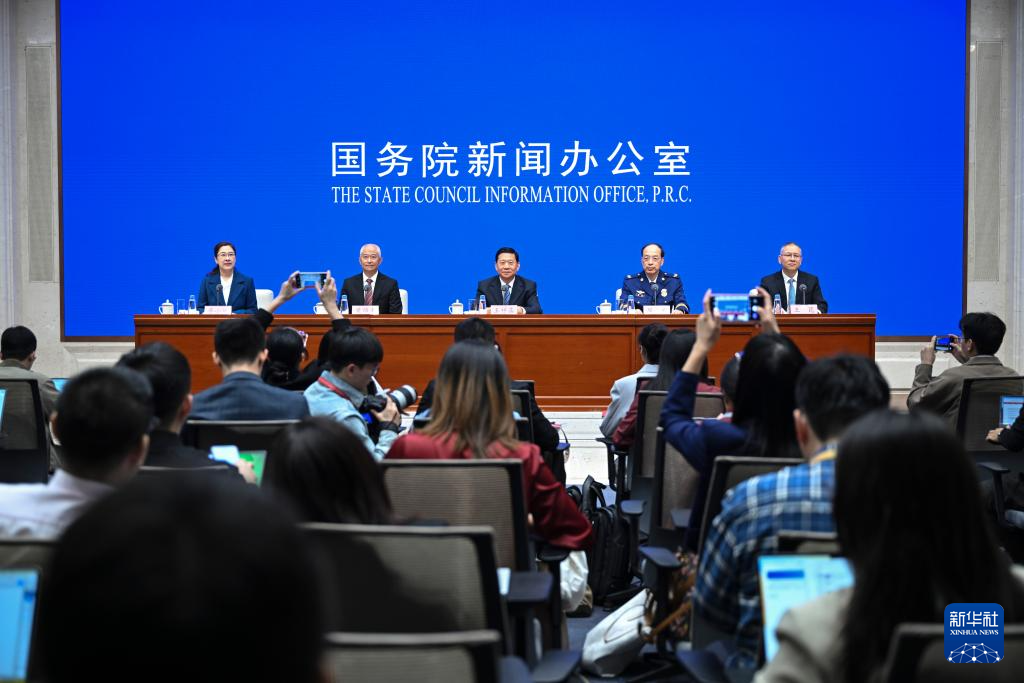
高质量完成“十四五”规划 | “十四五”时期我国应急支撑保障更加有力
Xin Hua She· 2025-09-24 14:29
Group 1 - The core viewpoint of the news is that during the "14th Five-Year Plan" period, China's emergency management capabilities have significantly improved, focusing on proactive prevention and enhanced support systems [1][2] - The proportion of mandatory safety production standards has increased to 90% through the revision of laws and regulations and the improvement of various special plans [1] - The emergency management governance model is shifting towards preemptive measures, with nine key projects implemented to enhance natural disaster prevention capabilities [1] - Following special rectification efforts regarding electric bicycle fire incidents, casualties have decreased by 86% compared to before the measures were implemented [1] Group 2 - The China Earthquake Administration has established the world's largest earthquake early warning system, covering over 90% of key hazardous areas with second-level alerts [1] - Since the system's implementation, 359 earthquake warnings of magnitude 4 and above have been issued, providing critical time for disaster prevention and emergency response [1] - During the "14th Five-Year Plan" period, the emergency rescue and disaster relief material guarantee system has been continuously improved, with central reserves increasing by 39.6% compared to the end of the "13th Five-Year Plan," achieving full coverage of emergency material reserves at provincial, municipal, and county levels [1] Group 3 - During the "14th Five-Year Plan" period, 3,538 new urban fire stations have been built, bringing the total to 11,500, a 44% increase compared to the "13th Five-Year Plan" [2] - Additionally, 6,692 new government professional fire brigades have been established, with 114,000 new government professional firefighters recruited, resulting in a total of 255,000 firefighters [2]
数读“十四五”答卷|已建成全球最大规模地震预警系统!一组数据读懂应急管理改革历史性成就!
Yang Guang Wang· 2025-09-24 12:29
Core Insights - The press conference highlighted significant achievements in emergency management reforms during the "14th Five-Year Plan" period, including a historic drop in major accidents and comprehensive risk assessments for natural disasters [1][3]. Group 1: Accident Statistics - The number of major accidents has decreased to single digits for the first time, showing a 43.8% reduction compared to the end of the "13th Five-Year Plan" [5]. - The average number of disaster-affected individuals, fatalities, and direct economic losses due to disasters has decreased by 31.3%, 23%, and 34.3% respectively compared to the "13th Five-Year Plan" period [9]. Group 2: Disaster Risk Assessment - The first national comprehensive risk survey for natural disasters has been completed, establishing a risk database and zoning map to enhance disaster prevention capabilities [13][15]. - The emergency management department has set up a robust communication system in remote areas, ensuring basic communication equipment is available in over 10.27 million disaster-prone villages [18]. Group 3: Fire Safety Improvements - The number of electric bicycle fire incidents has significantly decreased from 5.6 incidents per million to 2 incidents per million after targeted safety measures were implemented, resulting in an 86% reduction in casualties from fire accidents [11]. Group 4: Earthquake Early Warning System - The earthquake early warning system has achieved over 90% coverage in key risk areas, providing timely alerts and support for rescue operations, with 359 alerts issued for earthquakes of magnitude 4 or higher since its implementation [21].

“十四五”时期我国应急支撑保障更加有力
Xin Hua She· 2025-09-24 11:41
Core Insights - The "14th Five-Year Plan" period sees strengthened emergency management support in China, with mandatory safety production standards rising to 90% through revised laws and improved special plans [1] - The emergency management governance model is shifting towards proactive prevention, with nine key projects aimed at enhancing natural disaster prevention capabilities and a three-year action plan for safety production [1] - The establishment of the world's largest earthquake early warning system covers over 90% of key hazardous areas, having issued 359 warnings for earthquakes of magnitude 4 and above [1] - The emergency rescue and disaster relief material guarantee system is being continuously improved, with central reserves increasing by 39.6% compared to the end of the "13th Five-Year Plan" [1] Group 1 - During the "14th Five-Year Plan" period, 3,538 new urban fire stations were built, bringing the total to 11,500, a 44% increase compared to the "13th Five-Year Plan" [2] - The establishment of 6,692 new government professional fire brigades and the recruitment of 114,000 government professional firefighters, totaling 255,000 [2]
高质量完成“十四五”规划丨“十四五”时期我国应急支撑保障更加有力
Xin Hua Wang· 2025-09-24 10:07
Core Points - The Ministry of Emergency Management has reported that during the "14th Five-Year Plan" period, China's emergency support and guarantee capabilities have significantly strengthened, with mandatory safety production standards increasing to 90% [1] - The governance model for emergency management is shifting towards proactive prevention, with nine key projects aimed at enhancing natural disaster prevention capabilities and a three-year action plan for addressing safety production issues [1] - Following special rectification efforts for electric bicycle fire incidents, casualties have decreased by 86% compared to before the measures were implemented [1] - China has established the world's largest earthquake early warning system, covering over 90% of key hazardous areas, and has issued 359 earthquake warnings of magnitude 4 or above since its implementation [1] - The emergency rescue and disaster relief material guarantee system has been continuously improved, with central reserves increasing by 39.6% compared to the end of the "13th Five-Year Plan," achieving full coverage of emergency material reserves at provincial, municipal, and county levels [1] - During the "14th Five-Year Plan" period, 3,538 new urban fire stations have been built, bringing the total to 11,500, a 44% increase compared to the "13th Five-Year Plan" period; additionally, 6,692 new government professional fire brigades have been established, with 114,000 new professional firefighters recruited, totaling 255,000 [1]