
地面公交

Search documents
2月24日北京多条地铁线路继续延时运营
Xin Lang Cai Jing· 2026-02-23 17:36
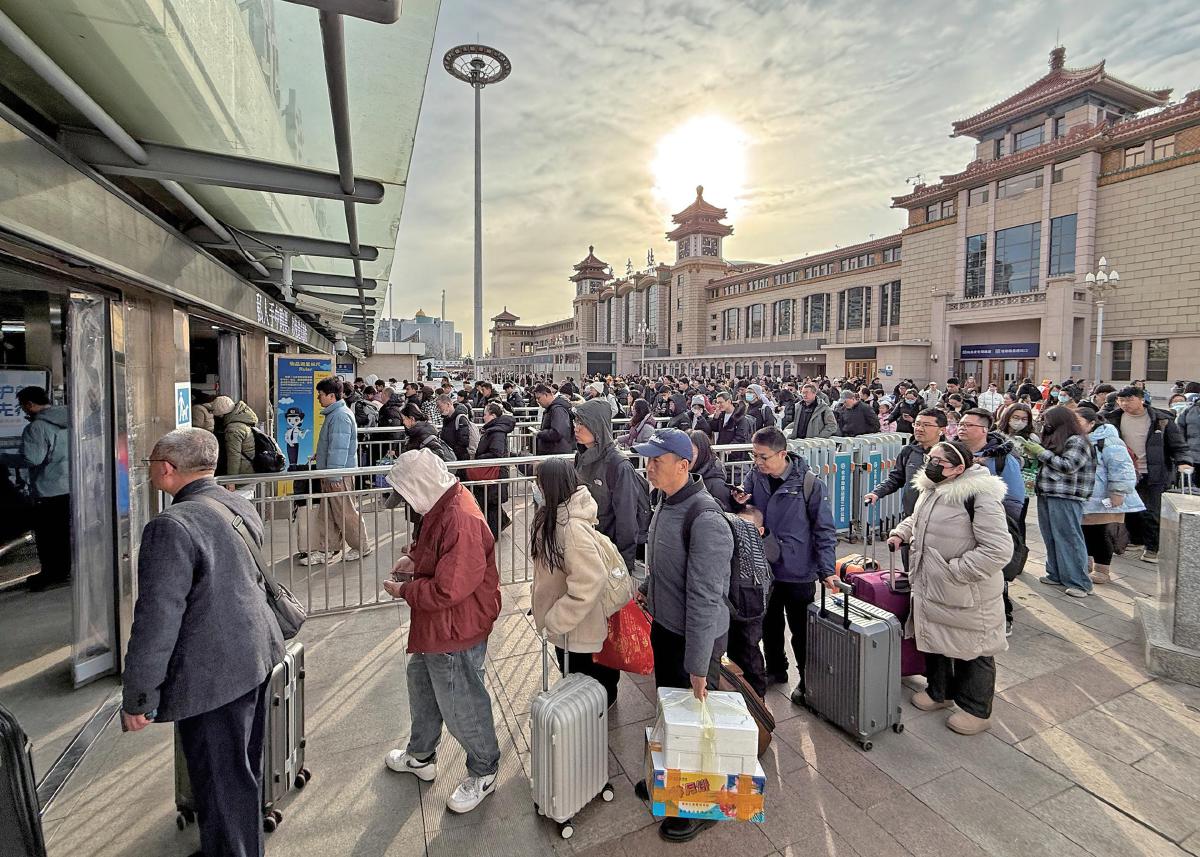
Core Insights - The Beijing transportation system is preparing for a significant increase in passenger flow during the 2026 Spring Festival, with an expected total of over 12 million travelers at the "Eight Stations and Two Airports," representing a 10% increase compared to 2025 [1] Group 1: Passenger Flow Predictions - During the last day of the Spring Festival holiday on February 23, 2026, a peak of over 1.8 million travelers is anticipated at the "Eight Stations and Two Airports" [1] - The China Railway Beijing Bureau forecasts sending 1.33 million passengers on February 23, with 505,000 departing and 935,000 arriving in the Beijing area [1] Group 2: Infrastructure and Service Upgrades - The Beijing Key Station Area Management Committee is collaborating with multiple departments to enhance both hard and soft services across the "Eight Stations and Two Airports" [2] - A new ride-hailing pickup area at Beijing Station has been established, featuring a 1,700 square meter space with amenities such as a 36-meter canopy and comfortable seating [2] - The introduction of a smart "calling" system at Beijing North Station allows real-time display of ride-hailing information, improving the passenger experience [3] Group 3: Heating and Efficiency Improvements - At Qinghe Station, a 43-meter heated shelter has been installed to cover the taxi dispatch area, providing warmth and refreshments for travelers [4] - The Beijing South Station has implemented a new traffic organization model that enhances travel efficiency by connecting east and west drop-off platforms [4] - The addition of a dedicated right-turn lane on Majiabao East Road has reduced vehicle wait times by an average of 10 minutes during peak hours, improving traffic flow by approximately 15% [4] Group 4: Night Transportation Enhancements - To accommodate nighttime passenger flow, Beijing's subway system has initiated a peak connection support mode, extending operations for nine lines and opening five lines earlier [5] - Specific subway lines, including Line 2, 7, and 3, will operate until 2:00 AM from February 21 to 24, ensuring coverage for late-night arrivals [5] Group 5: Taxi and Ride-Hailing Coordination - The transportation committee is coordinating various transport modes, including taxis and ride-hailing services, to ensure sufficient capacity during peak return periods [8] - During the peak return day, approximately 1,400 taxis are expected to participate in nighttime support operations [8] - The integration of ride-hailing services with traditional taxis is aimed at enhancing passenger convenience and reducing wait times [9]

地铁18条段地面高架线降速
Xin Lang Cai Jing· 2026-01-18 07:06
Group 1 - The transportation authority has implemented "segmented operation and flexible scheduling" for 334 mountain bus routes in response to snowfall conditions [1][2] - Ground and elevated subway lines will operate under manual driving mode as needed, with speed reduction measures in place to ensure safety [1] - The subway system has a tailored guarantee plan for 18 ground and elevated lines, including snow melting device activation and real-time monitoring of passenger flow [1][2] Group 2 - The transportation department is enhancing safety management by enforcing speed reduction and distance control on icy road sections for bus drivers [2] - Real-time monitoring of congestion points and bus stop passenger flow is being conducted through video surveillance and on-site inspections [2] - Increased operational capacity for ground buses is being ensured to maintain smooth and orderly public transport for citizens during the snowfall [2]
截至2025年底,北京巡游出租车新能源化率已达100%
Xin Jing Bao· 2026-01-04 09:00
Group 1 - The core viewpoint of the articles highlights Beijing's commitment to transforming its transportation sector towards greener alternatives, aiming for significant reductions in energy consumption and carbon emissions by 2025 [1][2] - By the end of 2025, the proportion of new energy vehicles in the city's transportation sector is expected to exceed 46%, with 100% of taxi operations transitioning to new energy vehicles [1] - The total energy consumption in the transportation sector is projected to be around 2.5 million tons, a decrease of approximately 21% compared to the end of the 13th Five-Year Plan [1] - Carbon emissions from operational vehicles are expected to be controlled at around 2.9 million tons, reflecting a 30% reduction from the end of the 13th Five-Year Plan [1] Group 2 - By 2025, the green travel ratio in the central urban area is anticipated to reach 76.5%, indicating a growing public willingness to adopt environmentally friendly transportation options [2] - The city is focusing on establishing a green freight transport system that integrates rail and new energy vehicles, with a target of achieving a 12% green transport ratio for goods by 2025 [2] - Ongoing efforts include enhanced management of road cleanliness, with a reported 12% reduction in mechanical cleaning debris and a 21% reduction in manual cleaning debris on the Fifth Ring Road [2] - The automotive repair industry is undergoing pollution prevention improvements, with a shift to more efficient technologies for paint and coating processes [2] - Looking ahead to the 15th Five-Year Plan, the city aims to further optimize travel, transport, and energy structures, targeting a carbon emission cap by 2030 that does not exceed historical peak levels [2]
本市交通部门增配运力保障市民出行需求
Xin Lang Cai Jing· 2025-12-31 16:59
Core Viewpoint - The Beijing Transportation Commission anticipates increased travel demand during the New Year holiday period in 2026, leading to heightened traffic pressure in key areas such as train stations, airports, parks, and commercial districts [1][2] Group 1: Travel Demand and Traffic Pressure - The expected travel demand during the New Year holiday is projected to increase by 8% compared to the 2024 holiday, with daily passenger flow significantly rising compared to the 2025 holiday [1] - Major highways will see an average daily traffic volume of 2.29 million vehicles, an 8% increase from the 2024 New Year holiday [2] - Key highways such as Jingha, Jinggang'ao, Jingzang, Jingxin, and Jingcheng will experience increased traffic pressure during peak hours [2] Group 2: Transportation Measures - The transportation department plans to enhance subway capacity on multiple lines, including Line 1, Line 2, and Line 4, to accommodate increased passenger flow [2] - Ground public transport will adjust vehicle deployment to ensure adequate service for routes passing through major tourist attractions and train stations [2] - Ride-hailing platforms like Didi will reserve 300 vehicles to form an emergency support fleet for high-demand areas after subway service interruptions [2]
北京上半年已完工17项市级疏堵工程,中度拥堵天数减少17天
Bei Jing Ri Bao Ke Hu Duan· 2025-07-14 05:29
Group 1: Traffic Improvement Metrics - The average road traffic index during peak hours in central urban areas decreased by 6.47% year-on-year to 5.64, with moderate congestion days reduced by 17 days [1] - Daily average travel volume in the city and central urban areas increased by 1.9% and 0.2% respectively, reaching 55.18 million and 34.21 million trips [1] - The 50-meter connection rate for public transport has improved to 90%, significantly reducing transfer distances and time costs for citizens [1] Group 2: Public Transport Enhancements - Beijing optimized 62 conventional bus routes, increasing network coverage by 46.6 kilometers and reducing duplicate route lengths by 122.2 kilometers [1] - 23 school bus routes were optimized, and 15 new elderly care routes were established to support special groups [2] Group 3: Infrastructure Development - The construction of the remaining sections of Line 17 and the southern extension of Line 6 has been completed, enhancing the rail transit network [1] - 28 "broken roads" have been successfully connected, improving urban traffic microcirculation [3] Group 4: Parking and Traffic Hub Developments - Over 20,000 new parking spaces were added in the central urban area, including 10,304 shared parking spaces [5] - Major transportation hubs like the city sub-center station and Wangjing West hub are nearing completion, facilitating efficient transfers between various transport modes [5] Group 5: Traffic Order and Environmental Improvements - Traffic order at 161 key intersections is being improved, with a 37.8% increase in enforcement actions against violations by non-motorized vehicles and pedestrians [6] - The average travel time for vehicles on the newly opened auxiliary road in the Dujia Kankan congestion management project was reduced from 40 minutes to 19 minutes [7] Group 6: Digital and Green Initiatives - The number of registered users for Beijing's MaaS 2.0 has exceeded 5.67 million, contributing to a cumulative carbon reduction of over 830,000 tons [7] - The city is exploring comprehensive traffic governance strategies to create a more convenient and efficient travel environment for citizens [8]