夏澜机器人

Search documents
深圳机器人八企突围记
2 1 Shi Ji Jing Ji Bao Dao· 2026-02-27 23:08
Group 1 - Cartwheel Robotics, a humanoid robot company founded in 2022, has ceased operations due to failed financing [1] - In contrast, Shenzhen's robot industry is thriving, with eight key companies achieving significant milestones in financing and technology commercialization [2][3] - The Shenzhen government aims to accelerate the development of a global AI hub, targeting over 10% growth in the AI industry cluster [2] Group 2 - The total financing in the embodied intelligence sector exceeded 50 billion yuan by October 2025, marking a growth of over 400% compared to the previous year [3] - Companies like Zhihui Square and Zhuji Dynamics have completed substantial funding rounds, with Zhihui Square's valuation surpassing 10 billion yuan [4] - UBTECH, recognized as the "first stock of humanoid robots," has raised over 7.4 billion HKD since its IPO, indicating strong market confidence in its commercial potential [4] Group 3 - Zhihui Square launched the GOVLA 0.5 model and the AlphaBot series, achieving over 50,000 hours of fault-free operation [5] - Zhuji Dynamics introduced the TRON 2 robot and the LimX COSA system, showcasing innovation in embodied intelligence [6] - UBTECH's Walker S2 robot features autonomous battery swapping technology, enhancing its operational efficiency in industrial settings [7] Group 4 - Shenzhen's "Robot Valley" benefits from a robust ecosystem of universities and research institutions, facilitating rapid development and innovation in robotics [8][9] - The city has established a financial service system to support the entire lifecycle of technological innovation, including a 2 billion yuan fund for AI and robotics [9][10] - By 2025, Shenzhen's robot industry is projected to achieve a 31.4% increase in added value, with industrial robot production expected to grow by 43.1% [10] Group 5 - Shenzhen's action plan aims to cultivate over 1,200 companies in the embodied intelligence sector by 2027, with a focus on creating more billion-dollar enterprises [10] - The city is committed to strengthening its position in AI technology, emphasizing the development of core technologies in algorithms, models, and intelligent robots [10]

T台惊现“机械超模”!全球首届机器人模特大赛启动!
机器人大讲堂· 2026-02-04 12:00
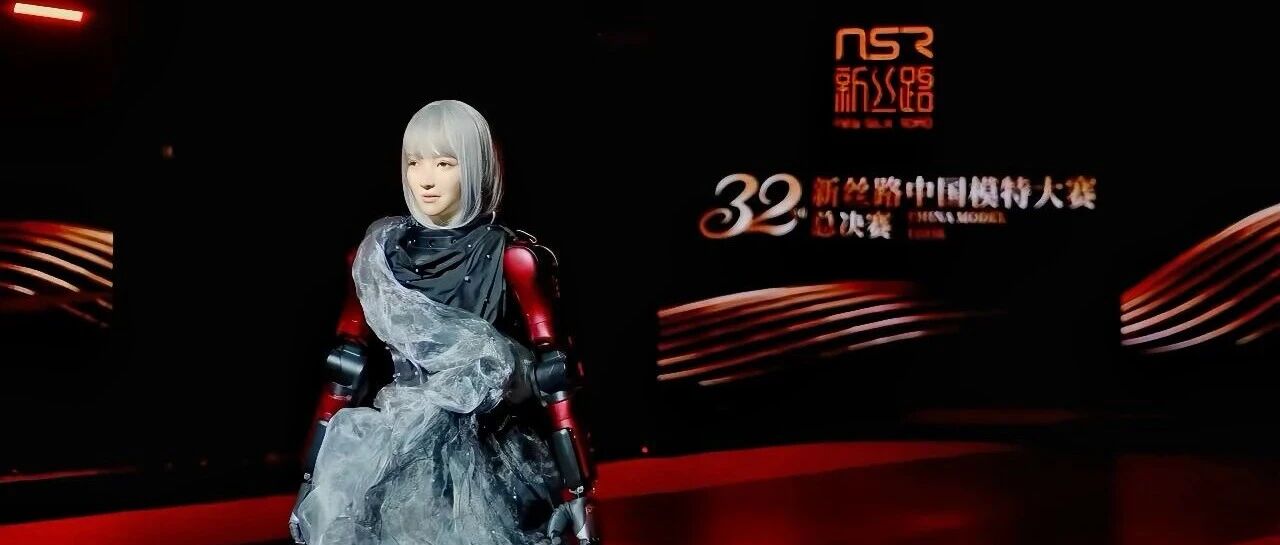
Core Viewpoint - The collaboration between New Silk Road and Digital Huaxia marks a historic turning point in the integration of the fashion and robotics industries, signaling a new era where technology enhances aesthetics and fashion is deeply empowered by technology [10]. Group 1: Event Overview - The first global Robot Model Competition has been officially launched, co-hosted by New Silk Road, a leader in the modeling industry, and Digital Huaxia, a rising star in embodied intelligence [2]. - The chairman of New Silk Road, Su Wenbin, and the founder of Digital Huaxia, Shen Jian, announced this groundbreaking event, indicating a strategic intent to expand into the technology sector [2]. Group 2: Redefining Robot Competitions - The Robot Model Competition redefines the boundaries of robot competitions, shifting the focus from physical tasks to "soft skills" such as expressiveness, creativity, and empathy [5]. - Robots will be evaluated not only on precision but also on elegance and aesthetic appeal, utilizing advanced technologies like Digital Huaxia's micro-expression restoration and emotional computation engine [7]. Group 3: Fashion Expression Paradigm - The competition aims to explore diverse forms of fashion expression, including independent robot runway shows and human-robot collaborative performances, challenging traditional notions of creation and interaction [8]. - The interaction between human models and robot models raises questions about their roles as tools versus equal creative partners, blurring the lines between natural and mechanical, life and bionic [9]. Group 4: Broader Implications - This collaboration is set against a larger backdrop of the deep integration of AI, robotics, and embodied intelligence, moving beyond simple labor replacement to reshape high-end creative industries and complex interactive experiences [9]. - The Robot Model Competition is seen as just the beginning, with potential ripple effects extending beyond the fashion industry to provide unique insights into the future of human-robot coexistence [9].

直击WRC | 像真人一样表情生动!数字华夏多款人形机器人亮相
Xin Lang Cai Jing· 2025-08-08 12:12
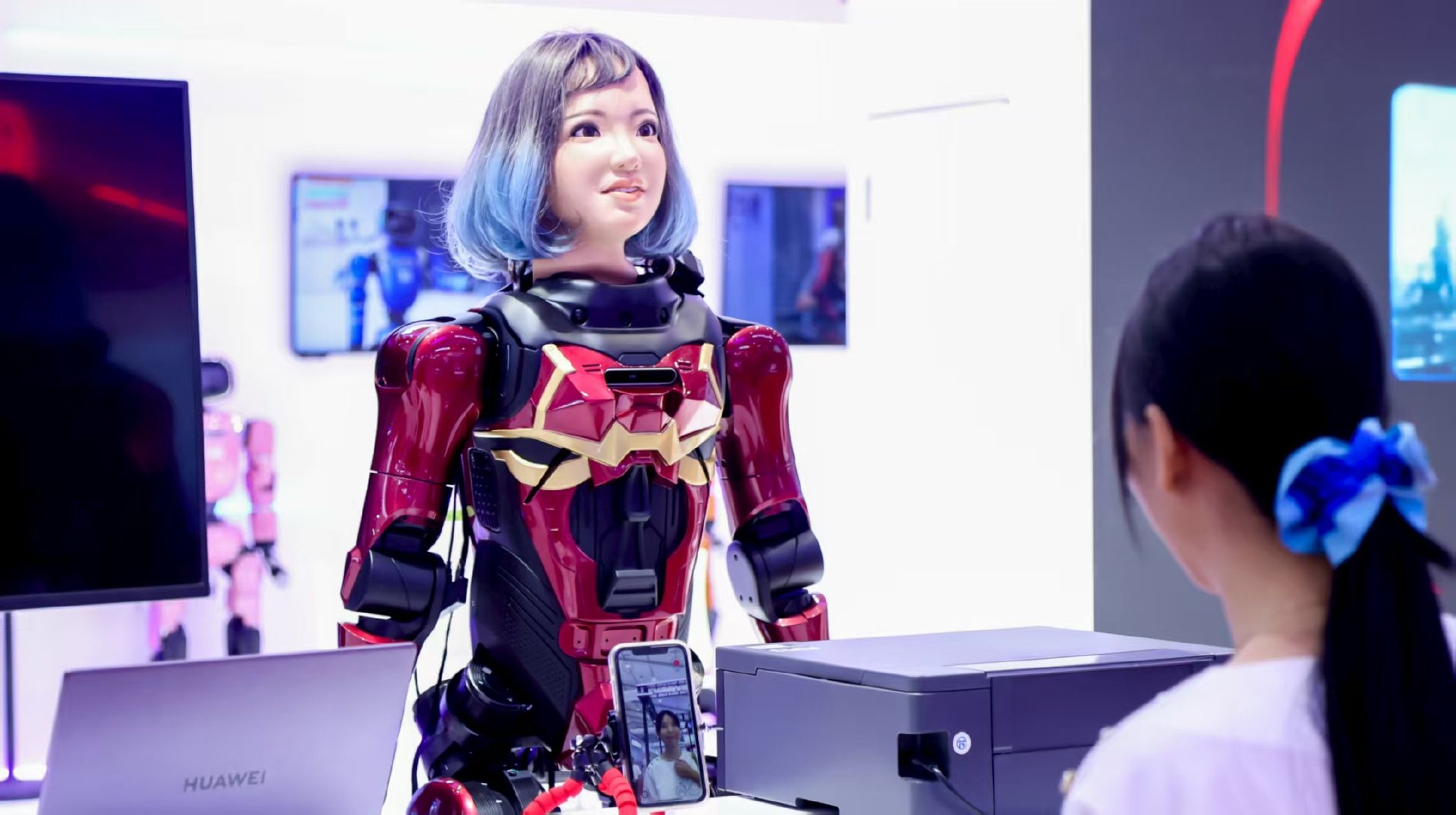
Core Insights - The 2025 World Robot Conference (WRC) opened in Beijing on August 8, showcasing advancements in robotic technology [1] Company Developments - Digital Huaxia presented its latest robot product line, including models such as Xiaolan, Xiaoqi, Xingxingxia, and Weixiaolu [1] - The Xiaolan robot has upgraded bionic interaction technology, adding 22 types of expressions and mimicking human facial expressions, equipped with electronic skin to sense touch, temperature, and pulse changes [1] - The Xingxingxia robot is a customizable IP robot with over 10 hours of battery life and a dual-mode design for various applications, currently receiving hundreds of orders [1] Industry Applications - The Xiaolan robot performed singing to attract audience attention, while Xingxingxia conducted educational demonstrations for children [1] - The Weixiaolu collaborated with Xiaoqi to complete item transportation tasks, showcasing multi-machine cooperation capabilities [1]
国风DNA动了!文博会黑科技有多好玩?
21世纪经济报道· 2025-05-23 04:27
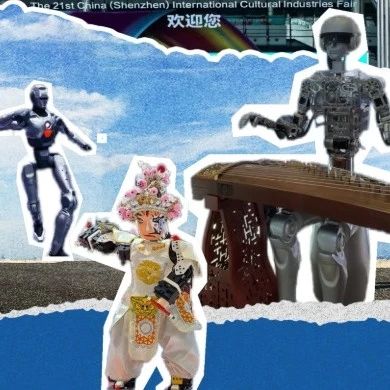
Core Viewpoint - The integration of AI and traditional culture is reshaping the cultural landscape in China, with Guangdong leading the way in AI innovation and cultural applications [1][3][7]. Group 1: AI and Cultural Innovation - The 21st China (Shenzhen) International Cultural Industries Fair (Cultural Fair) featured AI and intelligent robots as the main attractions, with over 60 renowned AI companies participating [1][3]. - The National Museum of China introduced interactive AI installations, such as the "Clothing Seen as Old Friends" AI dressing experience, allowing visitors to virtually try on ancient costumes [3][4]. - Tencent's "Remarkable Oracle Bone Inscriptions" program aims to popularize oracle bone script knowledge through interactive experiences and has developed a database of 143,000 oracle characters [4][6]. Group 2: Embodied Intelligence and Robotics - "Embodied intelligence" robots, capable of real-time interaction with their environment, have become a market focus, showcasing their capabilities at the Cultural Fair [6][7]. - Notable robotic performances included traditional martial arts and musical performances, highlighting the fusion of technology and culture [6][7]. - The "Xialan" robot from Digital Huaxia, known for its lifelike facial features, has already begun commercial deployment in various sectors [6][11]. Group 3: International Participation and Cultural Exchange - The Cultural Fair has expanded its international presence, with 305 overseas exhibitors from 65 countries and regions, marking a 20% increase in international participation [1][9][10]. - The event serves as a platform for cultural dialogue, exemplified by the "Da Vinci Secret Realm" exhibition, which combines Eastern and Western cultural elements [9][10]. - The participation of countries along the Belt and Road Initiative has reached a historical high, with over 50 countries represented [10][12]. Group 4: Cultural Products and Global Reach - The fair also featured a cultural export zone, promoting Chinese cultural products and services to a global audience, particularly in the realm of digital content [14]. - The popularity of Chinese micro-short dramas and games has surged internationally, with significant download numbers and revenue growth reported [14].