
大科学装置

Search documents
怀柔硬科技对接香港国际派,京港合作开辟创新协同新范式
Xin Jing Bao· 2025-11-14 04:05
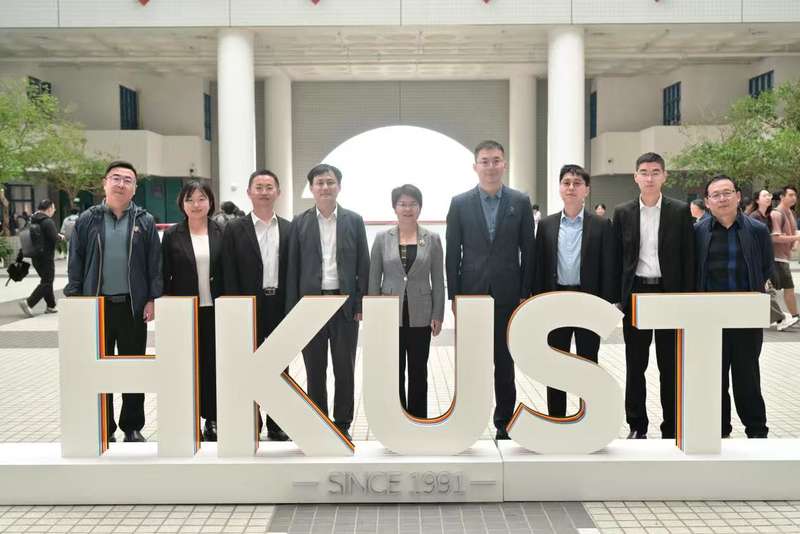
Core Insights - The 28th Beijing-Hong Kong Cooperation Conference serves as a platform for the Huairou District delegation to showcase its "hard technology" capabilities and explore collaboration opportunities with Hong Kong's international advantages [1] Group 1: Collaboration Opportunities - The Huairou District delegation visited Hong Kong Cyberport, which hosts over 400 tech companies, including 10 newly listed firms this year, highlighting the potential for collaboration in the tech sector [3] - A significant opportunity was identified between Hong Kong Cyberport's AI supercomputing center and Huairou Science City’s large scientific facilities, indicating a natural complementarity in their capabilities [3] - Discussions included specific areas for collaboration such as joint research in key technologies and talent exchange programs [3] Group 2: Academic Partnerships - The delegation's visit to the Hong Kong University of Science and Technology (HKUST) revealed potential for collaboration in semiconductor and sensor research, leveraging Huairou's major national research facilities [4] - Initial cooperation discussions focused on research talent exchange and the use of large scientific instruments, aiming to establish a regular communication mechanism for future joint research [4] Group 3: Financial Support for Innovation - The delegation engaged with Far East Horizon, a comprehensive group spanning finance and industry, to explore solutions for financing challenges faced by tech startups in Huairou [4] - Far East Horizon's vice president indicated plans to discuss the establishment of a tech investment fund to support Huairou's industrial development in high-end instruments [4] - The essence of the exchange was captured in the statement that cooperation between Huairou and Hong Kong is not a "multiple-choice question," but rather an "addition question," emphasizing the mutual benefits of collaboration [4]

从探索未知到守护人民健康 大科学装置具有三大“硬核”本领
Yang Shi Xin Wen Ke Hu Duan· 2025-10-13 02:23
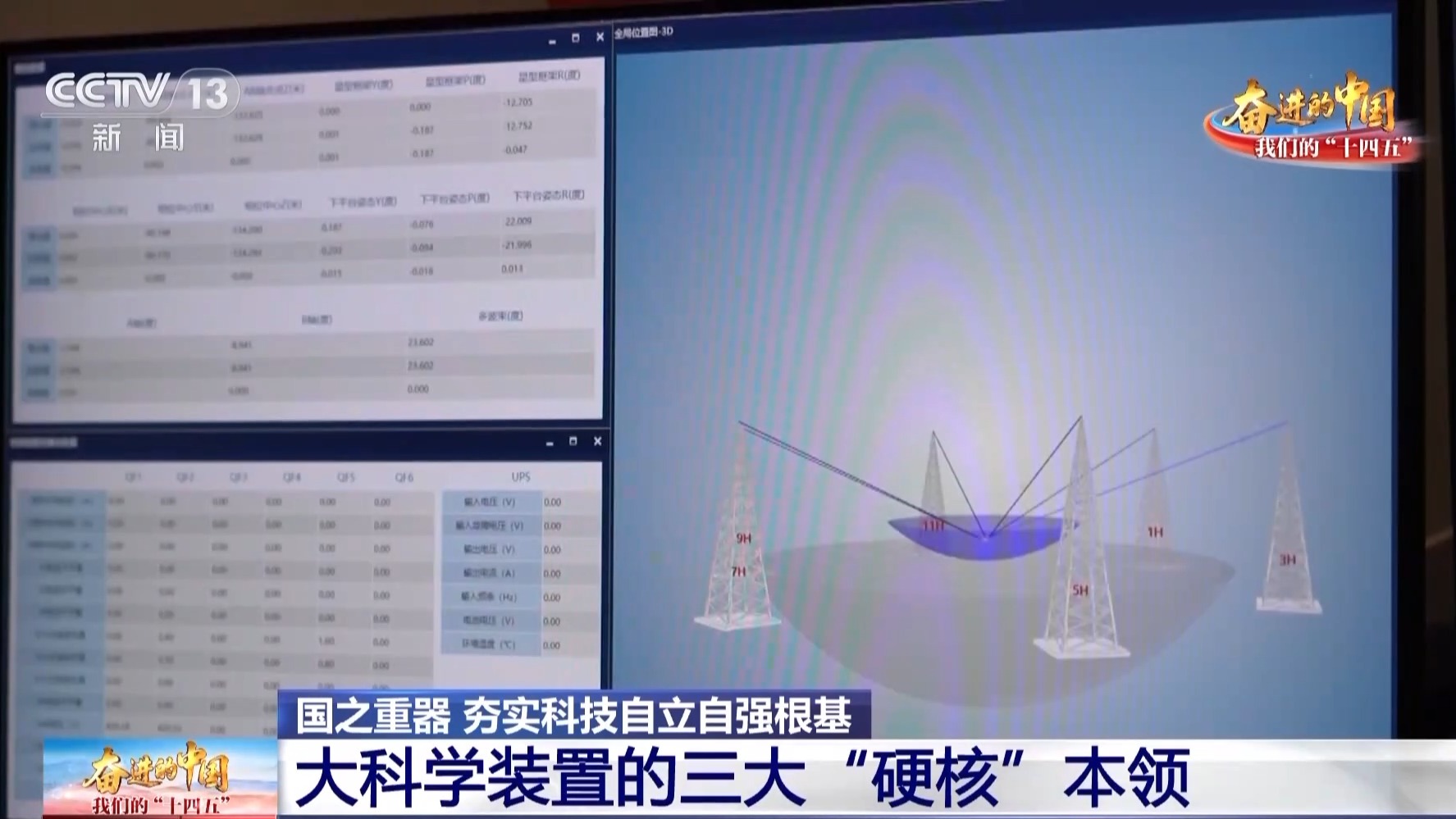
Core Viewpoint - The "14th Five-Year Plan" marks a significant milestone in China's technological development, emphasizing the enhancement of scientific innovation capabilities and the solidification of the foundation for becoming a technology powerhouse [1]. Group 1: Fundamental Scientific Challenges - Large scientific devices represent the highest level of human engineering technology, serving as "national heavy instruments" to explore the unknown and tackle fundamental scientific issues [3]. - To achieve breakthroughs from 0 to 1 in basic research, China must propose and solve major scientific problems, expanding extreme detection capabilities and making breakthroughs in fundamental scientific laws [4]. Group 2: Innovation and Technological Breakthroughs - Large scientific devices are the source of original innovation, capable of spawning disruptive and transformative technologies [5]. - For instance, the use of neutron scattering sources can study internal stresses in materials, providing critical data for high-end manufacturing sectors such as aerospace and high-speed rail [7]. - These platforms can halve the research and development cycle and costs for new materials, aiding breakthroughs in key areas like chips and renewable energy, addressing critical technological challenges faced by the nation [7]. Group 3: Public Health and Well-being - Large scientific devices are closely related to daily life and public health [8]. - They can accelerate the design of targeted drugs for diseases like cancer and Alzheimer's by analyzing protein structures [8]. - Technologies derived from particle accelerators, such as proton and heavy ion therapy, can precisely kill cancer cells, while synchrotron radiation techniques are used to develop more sensitive medical imaging devices, widely applied in disease diagnosis [8]. Group 4: Investment in Future and Well-being - Investment in large scientific devices not only enhances the country's future technological competitiveness but also contributes to the convenience, safety, and well-being of human life [10]. - Such investments are seen as crucial for sustainable development and the welfare of humanity [10].
“十四五”大国科技取得“硬核”成绩 高水平科技自立自强“加速跑”
Yang Shi Wang· 2025-10-12 08:28
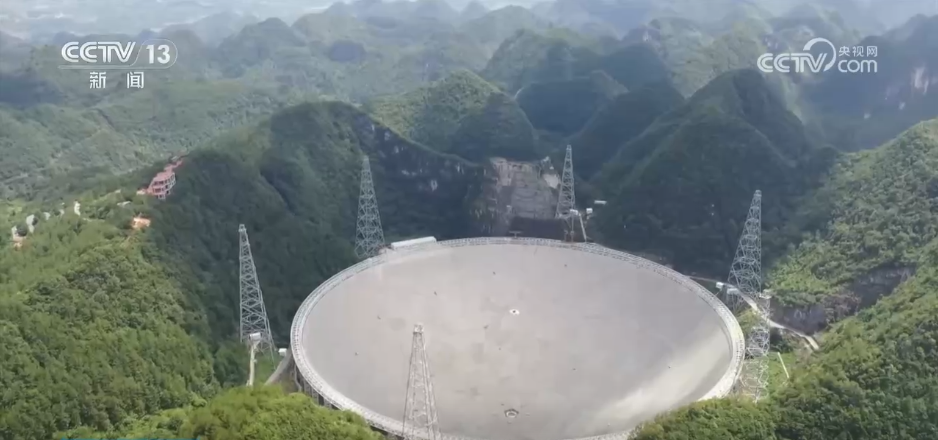
Core Viewpoint - The "14th Five-Year Plan" marks a milestone in China's technological development, emphasizing the importance of large scientific facilities in driving innovation and addressing fundamental scientific challenges [1][5]. Group 1: Investment in Scientific Infrastructure - Large scientific facilities are crucial for national innovation, requiring significant investment and long-term commitment [3]. - China's R&D investment is projected to exceed 3.6 trillion yuan in 2024, reflecting a steady increase in technological innovation capabilities [5]. Group 2: Core Competencies of Large Scientific Facilities - **Competency 1: Addressing Fundamental Scientific Questions** Large scientific facilities represent the pinnacle of engineering technology, essential for exploring unknowns and tackling fundamental scientific issues, such as those addressed by the Tianyan and Jiangmen neutrino experiments [7]. - **Competency 2: Catalyzing Disruptive Technological Breakthroughs** These facilities serve as sources of original innovation, enabling significant advancements in materials science and reducing the development cycle and costs of new materials, particularly in critical areas like semiconductors and renewable energy [8][9]. - **Competency 3: Enhancing Public Health** Large scientific facilities are directly linked to public health, facilitating the development of targeted therapies for diseases like cancer and Alzheimer's through advanced techniques such as protein structure analysis and proton therapy [11][13]. Group 3: Broader Implications - Investment in large scientific facilities not only enhances national technological competitiveness but also contributes to the well-being and sustainable development of humanity, making it a vital area for future investment [13].
半导体设备商中科仪冲刺北交所IPO 客户涵盖台积电/中芯国际/长江存储等
Ju Chao Zi Xun· 2025-06-12 09:06
Group 1 - The China Academy of Sciences Shenyang Instrument Co., Ltd. (referred to as Zhongke Instrument) has completed the counseling report for its public offering of stocks and listing on the Beijing Stock Exchange, as disclosed by the China Securities Regulatory Commission [1] - Zhongke Instrument has established a governance structure, accounting foundation, and internal control system necessary for becoming a listed company, and its key personnel are well-versed in the legal responsibilities and obligations related to the issuance and operation in the securities market [1] - The company's IPO journey has undergone several adjustments, initially applying for the Sci-Tech Innovation Board in December 2020, withdrawing the application in May 2021, and later restarting its listing plan in January 2023, ultimately deciding to change its application to the Beijing Stock Exchange by April 2025 [1] Group 2 - Zhongke Instrument primarily engages in the research, production, and sales of dry vacuum pumps and vacuum instruments, which are essential for creating a clean vacuum environment in semiconductor manufacturing processes [2] - The company's vacuum instrument products are categorized into three main types: large scientific devices, vacuum film instruments, and new material preparation equipment, with services including maintenance and technical support for these products [2] - The technical service business focuses on providing maintenance and support for dry vacuum pumps and vacuum instruments to integrated circuit and photovoltaic product manufacturers, with subsidiaries established in Shanghai and Wuhan for efficient customer service [2] Group 3 - The subsidiaries Shanghai Shangkai Instrument and Wuhan Shangkai Instrument are qualified suppliers for major integrated circuit manufacturers such as TSMC, SMIC, Changjiang Storage, and Dalian Intel, directly handling maintenance and repair orders for dry vacuum pumps [3] - These subsidiaries manage the entire process of receiving customer equipment, performing repairs, replacing parts, and testing before returning the equipment to clients [3]
