天轶机器人

Search documents
从秀场到职场,机器人出厂“打工”
Xin Jing Bao· 2026-01-29 01:13
Core Insights - The article emphasizes the rapid development and integration of robotics in various sectors, particularly in household cleaning and industrial applications, driven by advancements in AI technology [1][2][3] Group 1: Robotics in Household Applications - The household sector is identified as the primary battlefield for consumer-grade robots, with cleaning robots achieving significant market penetration [4][5] - Products like window cleaning robots and floor cleaning robots have gained popularity due to their ability to meet user needs effectively, with sales expected to grow over 30% by 2025 on platforms like Tmall [4][5] - The competitive edge in the market is shifting towards automation and integrated solutions, with companies focusing on user-friendly designs and safety features [5] Group 2: Industrial Robotics - The industrial sector is witnessing a shift as robots become integral to manufacturing and smart management, with companies like Tianyi Robotics and others deploying robots for material handling and sorting tasks [7][8] - Major orders for humanoid robots are anticipated in 2025, indicating a significant move towards automation in manufacturing [8][10] - The core value of robots in factories lies in their ability to gather data and improve algorithms, which can enhance productivity and address labor shortages [8][10] Group 3: Market Dynamics and Challenges - Chinese brands dominate the Southeast Asian market for cleaning robots, holding over 80% market share, highlighting the competitive landscape [6] - The industry faces challenges in scaling up applications, with many robots still in the trial phase and primarily performing simple tasks [13][14] - Reliability and efficiency remain critical concerns, with current robots not yet surpassing human efficiency in many tasks, although they can maintain consistent performance over extended periods [13][14] Group 4: Future Outlook - The robotics industry is projected to grow significantly, with estimates suggesting the market could exceed $100 billion by 2028 [17] - The competition will increasingly focus on the ability to deploy robots in real-world scenarios and continuously optimize their performance through data feedback [17][18] - Companies are urged to be cautious about large orders that may not translate into immediate deliveries, as many are framework agreements rather than binding contracts [18]

中国经济一月纪事丨人形机器人的“七十二变” 看人形机器人如何从“跑起来、动起来”变成“用起来、干起来”?
Yang Guang Wang· 2026-01-25 10:25
Core Viewpoint - The development of humanoid robots is gaining momentum in China, with 2025 being seen as a pivotal year for mass production, while 2026 will focus on bridging the gap between laboratory demonstrations and practical applications [1][2]. Industry Overview - The Central Economic Work Conference in 2025 emphasizes innovation-driven growth and the cultivation of new economic drivers, with humanoid robots identified as a promising sector [1]. - The Beijing Humanoid Robot Innovation Center is leading efforts in developing standards for embodied intelligence, which is crucial for the advancement of humanoid robots [3][6]. Technological Advancements - The "Big and Small Brain" collaboration is essential for humanoid robots to achieve stability and coordination, enabling them to perform complex tasks [3][6]. - The center has developed a comprehensive data base, RoboMIND, which has been downloaded over 140,000 times, indicating strong interest from academic and industrial sectors [5]. Application Scenarios - Humanoid robots are being tested in various practical applications, including logistics and manufacturing, with robots like "Tian Gong" and "Tian Yi" demonstrating capabilities in sorting and package handling [2][15]. - The industry is exploring the use of humanoid robots in diverse fields such as healthcare, logistics, and elder care, with the potential for widespread adoption as technology matures [17]. Future Directions - The Beijing Humanoid Robot Innovation Center plans to launch a pilot demonstration factory to address challenges in scaling up production and application [13]. - The industry aims to enhance the service experience of humanoid robots and promote their deployment in high-demand sectors, thereby alleviating human labor in hazardous environments [12][18].
参赛队谈机器人运动会:检验自身、学习交流、共同进步
Zhong Guo Xin Wen Wang· 2025-08-18 03:31
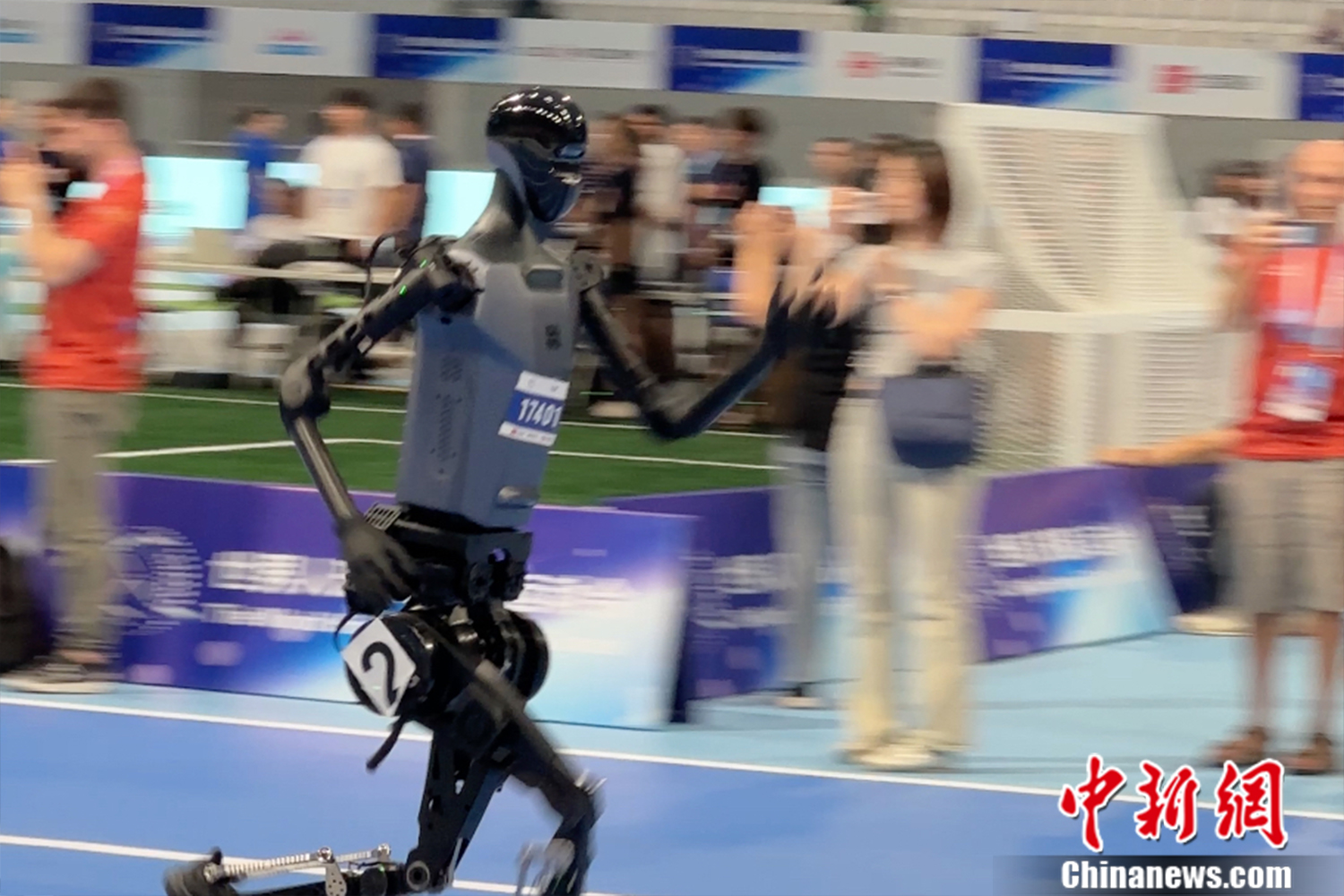
Group 1 - The 2025 World Humanoid Robot Games took place from August 14 to 17 at the National Speed Skating Stadium, featuring over 400 competitions across 26 events, showcasing a unique sports experience for the audience [1] - Participating teams expressed that the event provided a platform for competition and collaboration, which is essential for progress in the robotics industry [2] - The event aims to inspire more young people to engage in the field of artificial intelligence, fostering a culture and trend towards innovation and engineering practice [4] Group 2 - The Beijing Humanoid Robot Innovation Center showcased multiple robots, with a focus on learning from competitors to enhance their capabilities in walking and running [2] - The event serves as a testing ground for companies to assess their technological advancements and to engage in international exchanges to promote the development of humanoid robotics [7] - The opening ceremony featured robots saluting the Chinese flag, symbolizing the confidence and technological breakthroughs of China's robotics sector on the global stage [7]