慧思开物

Search documents
对话“天工”负责人熊友军:机器人的春天来了
机器人圈· 2026-03-30 09:41
Core Viewpoint - The article discusses the advancements and applications of humanoid robots, particularly focusing on the "Embodied Tiangong 3.0" robot developed by the Beijing Humanoid Robot Innovation Center, highlighting its debut at the Boao Forum and the shift from showcasing technology to practical industrial applications [2][4][6]. Group 1: Technological Advancements - The "Embodied Tiangong 3.0" was released in February 2026 and is noted as the youngest robot to participate in the Boao Forum [2]. - The Beijing Humanoid Robot Innovation Center has been established for less than three years and aims to break through key common technologies in the industry [6]. - The "Tiangong Ultra" humanoid robot won the first global half-marathon for humanoid robots in April 2025, demonstrating its advanced motion control capabilities [6][8]. Group 2: Open Source Initiative - The center has adopted an open-source approach, allowing over 2 million downloads of its latest technologies, which is intended to promote industry-wide innovation [10][12]. - The open-source strategy aims to connect various industry players and enhance the overall technological ecosystem, breaking down barriers and avoiding low-level competition [16][22]. - The center's open-source platform has enabled multiple companies and research institutions to participate in competitions, fostering collaboration and innovation [12][14]. Group 3: Industry Vision and Future Outlook - The center envisions a future where humanoid robots become integral to daily life, serving as companions and assistants [20][39]. - The goal is to create a comprehensive ecosystem similar to Android or Windows, positioning the center as a leader in the humanoid robotics field [20][39]. - The center emphasizes the importance of collaboration among various stakeholders to avoid redundant efforts and to focus on high-level innovations in specific verticals [18][34].



1000亿政府基金,都投给了哪些机器人企业?
机器人大讲堂· 2026-03-28 04:00
Core Insights - Beijing State-owned Capital Operation Management Co., Ltd. has established a new investment model, managing a total of 100 billion yuan across eight municipal government investment funds, focusing on high-tech industries and future sectors [1][2] Investment Focus - The funds are divided into two batches, with the first four funds set to launch by the end of 2023 and the second batch by mid-2024, emphasizing the integration of industrial, innovation, financial, and policy chains [1][2] - Two specific funds are dedicated to robotics and embodied intelligence, each with a scale of 10 billion yuan, targeting AI infrastructure, algorithms, and applications in various sectors [1][2] Investment Strategy - The funds primarily adopt a direct investment model without sub-funds, utilizing a project recommendation system to identify quality enterprises, ensuring a balance between industrial direction and market expertise [2] - The funds have a maximum duration of 15 years and focus on investing in early-stage hard technology companies during market downturns, covering various niches within the robotics sector [2] Key Investments - Beijing Humanoid Robot Innovation Center received over 700 million yuan in its first round of market financing, aiming to create a comprehensive platform for humanoid robots [4] - Yushu Technology, a leader in quadruped robots with a nearly 70% market share, has expanded into humanoid robotics, supported by strategic investments from the Beijing Robotics Fund [6][7] - Galaxy General Robotics, a prominent player in embodied intelligence, has raised nearly 7 billion yuan in funding, developing a groundbreaking end-to-end embodied model [9] - Songyan Power, a pioneer in consumer-grade humanoid robots, completed a 1 billion yuan B-round financing, marking a shift towards commercial viability in the humanoid robotics sector [11] Emerging Companies - Yanshen Technology, a leader in four-legged robots, is transitioning to humanoid robotics, having developed advanced navigation and control systems [13] - Xingdong Era, a fully self-developed enterprise from Tsinghua University, has achieved significant commercial success with its humanoid robots and has received substantial funding [15][16] - Xinhai Technology, focusing on flexible tactile sensors, has seen a tenfold increase in the shipment of its electronic skin products for humanoid robots [30] Market Trends - The Beijing government investment funds are actively supporting the development of humanoid robots and related technologies, indicating a strong commitment to advancing the robotics industry in China [1][2][3] - The investment landscape is characterized by a focus on high-tech, consumer-oriented solutions, with companies like Cloud Whale and Rosenbot leading innovations in household and medical robotics [32][34]
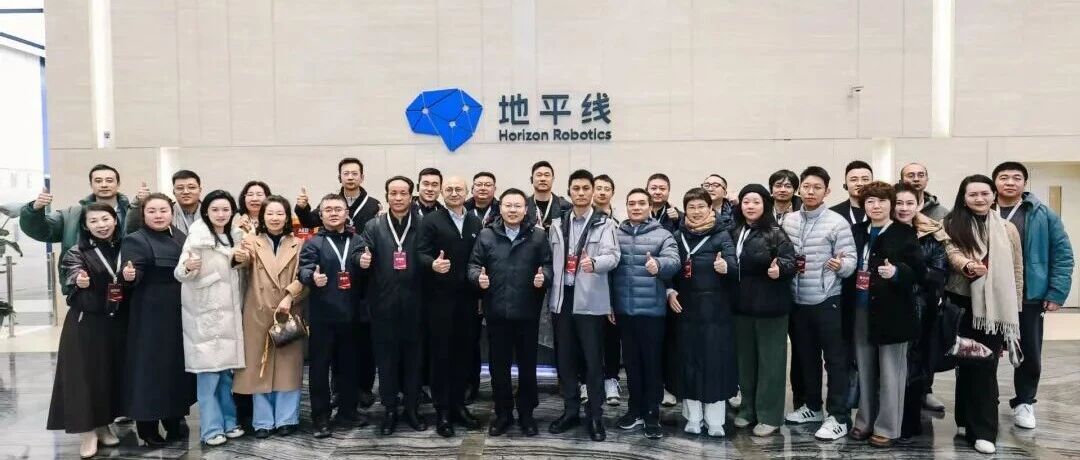
游学地平线、北京人形机器人创新中心(天工机器人):泽平宏观商学2月站
泽平宏观· 2026-03-08 16:05
Group 1: Horizon Robotics - The smart driving industry is at a critical turning point, with China's smart vehicle penetration rate reaching high levels, shifting from basic ADAS to advanced NOA, expected to double by 2025 [6] - The market is transitioning from configuration competition to user value creation, with consumers willing to pay a premium for features that significantly reduce commuting effort [6] - Horizon Robotics emphasizes "soft and hard collaboration" in chip performance, focusing on actual output efficiency rather than just raw computational power, creating a competitive edge through deep integration [8] - The diverse demand in the automotive sector leads to a moderately concentrated market, allowing independent third-party service providers like Horizon to thrive [8] - Horizon Robotics is expanding into the commercial robot market, leveraging its AI architecture and models to transition from automotive applications to broader use cases [10] Group 2: Beijing Humanoid Robot Innovation Center - The center aims to define a new height in fully autonomous robotics, focusing on the "3D" scenarios: Dirty, Dangerous, and Dull, with partnerships for practical applications [21] - The center has rapidly built a strong innovation team since its establishment in November 2023, with over 380 employees, 70% of whom are R&D personnel [17] - The humanoid robot "Embodied Tiangong 2.0" is the world's first full-size, all-electric humanoid robot capable of running, generating significant market interest [17] - The center's hardware and software platforms are designed for open collaboration, allowing developers to create applications across various industries [24][26] - The global humanoid robot market is projected to reach $5 trillion by 2050, driven by increasing social demand and technological advancements [23]
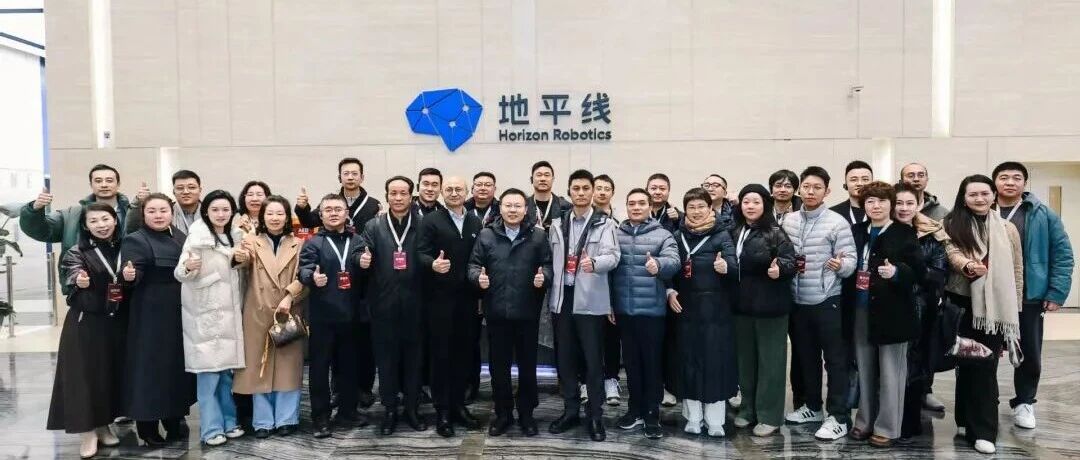
游学地平线、北京人形机器人创新中心(天工机器人):泽平宏观商学2月站
泽平宏观· 2026-03-07 16:00
Group 1: Horizon Robotics - The smart driving industry is at a critical turning point, with China's smart vehicle penetration rate reaching high levels, shifting from basic ADAS to advanced NOA, expected to double by 2025 [6] - The market is transitioning from configuration competition to user value creation, with consumers willing to pay a premium for features that significantly reduce commuting effort [6] - Horizon Robotics emphasizes "soft and hard collaboration" in chip performance, focusing on actual output efficiency rather than just raw computational power, achieving competitive vehicle performance at lower power and cost [8] - The diverse demand in the automotive sector leads to a moderately concentrated market, allowing independent third-party service providers like Horizon to thrive [8] - Horizon Robotics is expanding into the commercial robot market, leveraging its AI architecture and models to transition from automotive applications to broader use cases [10] Group 2: Beijing Humanoid Robot Innovation Center - The Beijing Humanoid Robot Innovation Center aims to define a new height in fully autonomous robotics, focusing on the "3D" scenarios: Dirty, Dangerous, and Dull [21] - The center has rapidly built a high-level innovation team since its establishment in November 2023, with over 70% of its 380 employees in R&D, many with overseas backgrounds [17] - The center's humanoid robot, "Embodied Tiangong 2.0," is the world's first full-size, all-electric humanoid robot capable of running, which has garnered significant market attention [17] - The center is developing a comprehensive data collection and training facility, expected to produce over 10 million data points annually to support technology iteration and application [13] - The global humanoid robot market is projected to reach $5 trillion by 2050, driven by increasing social demand and technological breakthroughs [23] - The center's strategy includes open-sourcing core technologies to lower industry barriers and promote collaboration among developers and small enterprises [21] - The center's software platform, "Wisdom Open," supports multi-scenario applications and is designed to be compatible with various robotic systems [26] - The center has demonstrated superior performance in industry tests, with its models achieving high task completion rates and winning competitions, showcasing its technological capabilities [28]
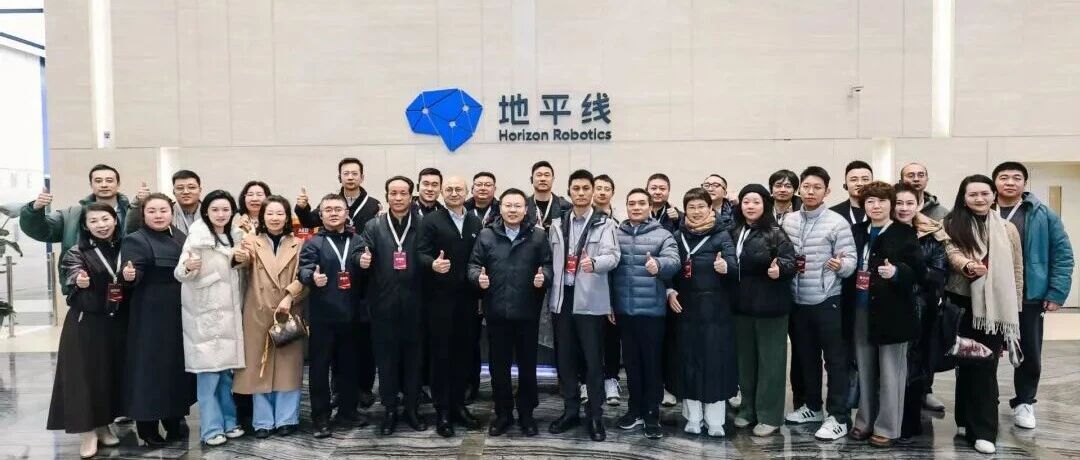
泽平宏观商学2月北京站:地平线、北京人形机器人创新中心(天工机器人)
泽平宏观· 2026-03-06 16:00
Group 1: Horizon Robotics - The smart driving industry is at a critical turning point, with China's smart vehicle penetration rate reaching high levels, shifting from basic ADAS to advanced NOA, expected to double by 2025 [6] - The market is transitioning from configuration competition to user value creation, with consumers willing to pay a premium for features that significantly reduce commuting effort [6] - Horizon Robotics emphasizes "soft and hard collaboration" in chip performance, focusing on actual output efficiency rather than just raw computational power, creating a competitive edge through deep integration [8] - The diverse demand in the automotive sector leads to a moderately concentrated market, allowing independent third-party service providers like Horizon to thrive [8] - Horizon is expanding its technology base into commercial robotics, leveraging its AI architecture to tap into a trillion-dollar market beyond smart driving [10] Group 2: Beijing Humanoid Robot Innovation Center - The center, established in November 2023, aims to define a new height in fully autonomous robotics, focusing on the "3D" scenarios: Dirty, Dangerous, and Dull [21] - The center has rapidly built a high-level innovation team, with over 70% of its 380 employees in R&D, leading to the launch of the world's first full-size, all-electric humanoid robot [17] - The center's hardware platform "Embodied Tiangong" and software platform "Wisdom Open" are designed to support a wide range of applications, emphasizing open-source technology to lower industry barriers [24][26] - The global humanoid robot market is projected to reach $5 trillion by 2050, driven by increasing social demand and technological breakthroughs [23] - The center is collaborating with major enterprises to validate its technology across various applications, enhancing the adaptability of humanoid robots in real-world scenarios [30]
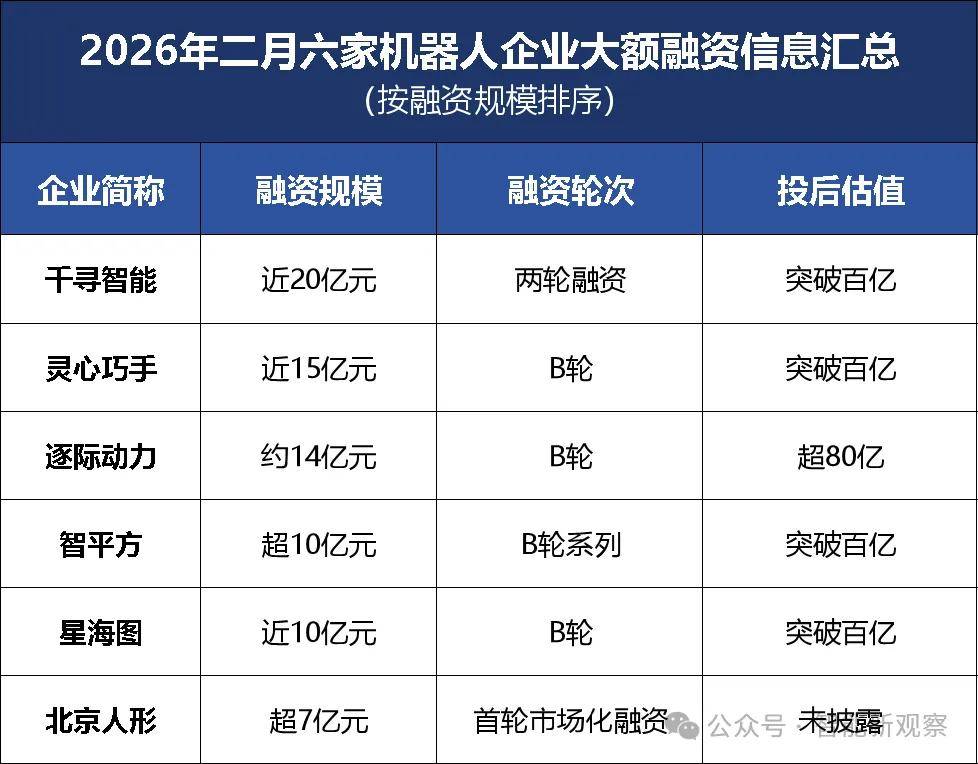
大额融资再度爆发:2月六家机器人企业狂氪资本近80亿!
Sou Hu Cai Jing· 2026-02-26 03:56
Core Insights - The domestic robotics sector continues to attract significant investment, with six companies raising a total of 7.6 billion yuan in February 2026, marking a strong trend in financing within the industry [1][31] - Four of these companies have achieved post-financing valuations exceeding 10 billion yuan, entering the "unicorn club" of robotics [1] Company Financing Summaries - **Qianxun Intelligent**: Raised nearly 2 billion yuan in two rounds of financing, achieving a post-financing valuation exceeding 10 billion yuan. The funding was led by top-tier institutions, and the company plans to enhance its investment in embodied foundational models and real data systems [2][5] - **Lingxin Qiaoshou**: Completed nearly 1.5 billion yuan in B-round financing, with a total financing amount exceeding 2 billion yuan since its establishment. The company focuses on dexterous robotic hands and aims to deliver 50,000 to 100,000 units in 2026 [8][10] - **Zhujidi Power**: Announced approximately 1.4 billion yuan in B-round financing, led by JD.com. The company has established a strong capital base and aims to enhance R&D and market investment for product commercialization [11][13] - **Zhi Ping Fang**: Secured over 1 billion yuan in B-round financing, becoming Shenzhen's first unicorn in embodied intelligence. The company has completed 12 rounds of financing and focuses on end-to-end large model technology [18][20] - **Xinghai Tu**: Raised nearly 1 billion yuan in B-round financing, becoming the first unicorn in its region. The company has launched a "plug-and-play" VLA integrated platform and aims to serve a wide range of industries [23][25] - **Beijing Humanoid Robot Innovation Center**: Completed over 700 million yuan in its first round of market financing, focusing on the development of core platforms for embodied intelligence and promoting the industrial application of humanoid robots [26][30] Industry Trends - The recent wave of financing reflects a collective industry shift towards making robots practical tools for real-world applications, moving beyond laboratory settings [31] - Companies are increasingly adopting platform and ecosystem strategies, aiming to create foundational infrastructures that support the intelligent transformation of various industries [31]

凯龙高科与北京人形机器人创新中心合作 推动具身智能技术落地环保检测与汽车智造领域
Zhong Zheng Wang· 2026-02-12 14:20
Core Insights - Kaierong High-Tech Co., Ltd. signed a strategic cooperation agreement with the Beijing Humanoid Robot Innovation Center to collaborate on the national-level general embodied intelligence platform "Wisdom Opens Things" focusing on environmental detection and intelligent manufacturing in the automotive sector [1][2] Group 1: Strategic Cooperation - The partnership aims to leverage each party's strengths to implement the "Wisdom Opens Things" platform in practical applications within environmental detection production lines and automotive parts manufacturing workshops [1] - The cooperation will enhance the intelligent upgrade of both sectors by integrating intelligent robots into industrial production practices [1] Group 2: Technological Advancements - The Beijing Humanoid Robot Innovation Center possesses core advantages in embodied intelligence technology, having developed a general embodied intelligence platform capable of "one brain, multiple functions" and "one brain, multiple machines" [1] - This platform addresses key software technology challenges for robots, enabling them to understand tasks, decompose actions, and autonomously correct errors, thus facilitating a transition from single-scene operations to multi-scene and multi-task adaptability [1] Group 3: Company Background and Vision - Kaierong High-Tech has extensive experience in the environmental detection equipment and automotive parts sectors, having entered the robotics field in 2025 with three core initiatives [2] - The company established a humanoid robot testing center in collaboration with research institutions, launched intelligent devices for precise detection of robotic hand performance, and invested in a humanoid robot manufacturing company, becoming its largest shareholder [2] - The chairman of Kaierong High-Tech emphasized the company's practical approach to transformation, focusing on real problems and seeking genuine technology solutions to integrate robots into their operations effectively [2]

行业首发!北京人形联合中国电科院推出全自主电力作业具身智能解决方案
机器人圈· 2026-02-12 10:23
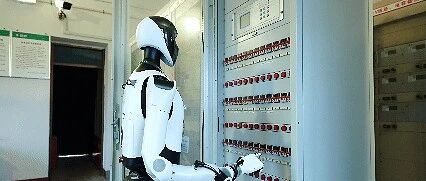
Core Viewpoint - The article discusses the collaboration between Beijing Humanoid Robotics Innovation Center and China Electric Power Research Institute to develop a fully autonomous intelligent solution for power operations, marking a significant advancement in the integration of artificial intelligence with the energy sector [2][12]. Group 1: Development of Autonomous Intelligent Solutions - The collaboration aims to create a "Fully Autonomous Power Operation Intelligent Solution" that can be validated in real scenarios and quickly replicated, enhancing the efficiency and safety of power operations [2][3]. - The solution addresses the limitations of current power robots, which often rely on preset paths and fixed targets, by enabling them to autonomously understand and execute tasks in dynamic environments [3][4]. Group 2: Technological Innovations - The development includes the "Wisdom Open Object" platform and the XR-1 VLA model, which facilitate a rapid feedback loop from perception to action, allowing robots to autonomously navigate and perform complex tasks such as equipment operation and state recognition [3][4]. - The intelligent model integrates multi-modal data for precise spatial awareness, enabling robots to operate effectively in crowded environments and perform tasks with high accuracy [4][5]. Group 3: Practical Applications and Testing - The intelligent robots have been successfully deployed in various power companies, completing tasks such as circuit operations and equipment adjustments autonomously, demonstrating their robustness and adaptability in real-world scenarios [8][9]. - The collaboration has led to the establishment of a joint laboratory that simulates standard operational scenarios, validating the technology and laying a foundation for future applications in complex environments [8][12]. Group 4: Strategic Importance and Future Directions - The initiative aligns with national strategies to promote the integration of AI in the energy sector, aiming for predictive maintenance and enhanced operational efficiency by replacing manual labor in high-risk tasks [12][13]. - The ongoing development of intelligent robots is expected to transform the power maintenance landscape, making them essential components in the operational framework of the energy industry [12][13].
凯龙高科与北京人形机器人创新中心达成战略合作
Xin Lang Cai Jing· 2026-02-12 10:17
Group 1 - The core viewpoint of the article is the strategic cooperation agreement signed between Kailong High-Tech and the National Local Co-construction Intelligent Robot Innovation Center, focusing on the industrialization of the general embodied intelligent platform "Wisdom Opens Things" [1] - The collaboration will emphasize deep cooperation in vertical fields such as environmental monitoring and intelligent manufacturing in the automotive sector [1]
更开放!更好用!具身天工3.0为中国具身智能落地按下加速键!
机器人大讲堂· 2026-02-12 06:00
Core Viewpoint - The article highlights the launch of the new generation general-purpose robot platform, "Embodied Tiangong 3.0," by the Beijing Humanoid Robot Innovation Center, emphasizing its advancements in motion control, stability, and open software-hardware interfaces, which significantly lower the development barriers for humanoid robots [1][15]. Group 1: Product Features and Performance - The "Embodied Tiangong 3.0" is the first humanoid robot to achieve high dynamic motion control with touch interaction capabilities, showcasing significant breakthroughs in stability and motion control [1][14]. - The robot demonstrated impressive agility and balance by successfully performing complex tasks such as single-handedly climbing over a one-meter wall, which requires precise weight distribution and dynamic stability [2][4]. - In a full demonstration, the robot executed a variety of challenging movements, including single-handed support, push-ups, and flips, showcasing its advanced motion capabilities [7][11]. - The robot's hand dexterity is notable, as it can perform tasks like juggling ping pong balls and responding to fast-moving baseballs, highlighting its balance and real-time control abilities [9][11]. Group 2: Open Software-Hardware Ecosystem - The "Embodied Tiangong 3.0" addresses high development barriers in the humanoid robot industry by providing an open software-hardware ecosystem, allowing developers to easily integrate various external tools and adapt to diverse operational scenarios [15][16]. - The hardware design includes multiple expansion interfaces, enabling quick adaptation for special operations, industrial manufacturing, and commercial service applications [15]. - The software ecosystem, based on the "Wisdom Open Object" platform, offers comprehensive development documentation and tools, significantly reducing development costs and time for partners [15][16]. Group 3: Market Position and Financing - The Beijing Humanoid Robot Innovation Center has recently completed over 700 million yuan in market financing, indicating strong investor confidence in its commercialization potential [19][21]. - The center has established a humanoid robot pilot verification platform capable of producing 5,000 units annually, marking a critical phase for market entry [17][21]. - Recent collaborations with various companies in sectors such as pharmaceuticals, automotive manufacturing, and energy indicate a strategic push towards practical applications of humanoid robots in real-world scenarios [23][24].