妮维雅

Search documents
深挖中东美妆的3个真相:为何高增长与高门槛并行?
FBeauty未来迹· 2026-03-23 12:06
Core Viewpoint - The Middle East beauty market is characterized by strong growth potential and consumer resilience despite ongoing geopolitical tensions, necessitating a nuanced understanding of the region's unique market dynamics [2][3]. Market Overview - The beauty and personal care market in the MENA region has surpassed $46 billion, with projections indicating double-digit growth in key segments like fragrance, hair care, and skin care from 2015 to 2027 [3]. - The changing growth logic in the global beauty market highlights the Middle East as a rare area capable of supporting both scale growth and brand premium [3]. International Beauty Groups in the Middle East - Major beauty groups are increasingly recognizing the Middle East's strategic importance, with companies like L'Oréal, Procter & Gamble, and Amorepacific reporting significant growth in the region [4][5]. - L'Oréal's market share in the Middle East has grown by 10.9%, while Amorepacific's brands have seen a remarkable 41.5% increase [4]. - Procter & Gamble's sales in the IMEA region, which includes the Middle East, contributed 5% to its annual net sales, indicating strong performance [4]. Competitive Landscape - The Middle East beauty market features four main competitors: Western brands, Korean beauty brands, local Middle Eastern brands, and emerging Chinese brands [9]. - Western brands dominate the market due to their established distribution networks and brand recognition, while Korean brands excel through product detail and localization [9][10]. - Local brands leverage cultural relevance and social media influence to connect with consumers, exemplified by brands like Huda Beauty and Moonglaze [13][15]. Challenges for Chinese Brands - Chinese beauty brands are still in the exploratory phase in the Middle East, facing challenges related to brand recognition and consumer trust [18][21]. - Successful entry into the market requires not only product quality but also effective consumer education and localized marketing strategies [21][25]. - The regulatory landscape is complex, with varying compliance requirements across different countries, making it essential for brands to navigate these regulations effectively [22][23]. Consumer Preferences and Market Dynamics - Middle Eastern consumers exhibit a strong preference for high-quality, culturally relevant products, with sensitivity to product details such as scent and texture [26]. - The market's complexity necessitates a deep understanding of local consumer behavior, which differs significantly from other regions [26]. - Brands must establish trust and credibility through compliance, effective communication, and a genuine understanding of local culture to succeed in this market [24][26].





新消费行业周报(2026.3.2-2026.3.6):政府工作报告提出实施消费专项行动;全球美妆 TOP10 中国区表现分化-20260307
Hua Yuan Zheng Quan· 2026-03-07 14:56
Investment Rating - The industry investment rating is "Positive" (maintained) [1] Core Insights - The 2026 Government Work Report emphasizes the implementation of special actions to boost consumption, aiming to stimulate internal consumption and promote sustainable growth through various measures [4] - The global beauty market shows a clear "one strong, one super" pattern, with significant performance differentiation in the Chinese market among the top beauty brands [4] - The report highlights the robust growth of emerging consumer goods, reflecting new consumption concepts among the younger generation [21] Summary by Sections Government Initiatives - The report outlines several initiatives to enhance consumer spending, including plans to increase income for low-income groups, promote consumption upgrades, and support personal consumption loans [4] Beauty Industry Performance - In 2025, the total sales of the top ten global beauty groups reached 1,086.2 billion, with a year-on-year growth of 0.8%. L'Oréal leads with over 350 billion in sales, while Procter & Gamble and Estée Lauder are in the third tier with around 100 billion [4] - Performance in China varies significantly among brands, with L'Oréal showing a recovery in sales growth, while Estée Lauder achieved a 13% organic sales growth in the last quarter of 2025 [4] Gold and Jewelry Market - The report notes a price adjustment for Lao Pu Gold, with an increase of approximately 20-30%, which is expected to maintain high profit margins [4] - The consumption volume of gold jewelry showed a year-on-year decline in 2025, indicating market challenges [19] Investment Recommendations - The report suggests focusing on high-quality domestic brands in beauty, such as Mao Ge Ping and Shangmei, and on popular gold brands among younger consumers like Lao Pu Gold and Chao Hong Ji [21][5] - In the collectible toy sector, companies with strong IP creation and operation experience, such as Pop Mart, are recommended [5] - For ready-to-drink tea, leading brands with strong brand power and wide coverage, like Mixue Group and Gu Ming, are highlighted [5]
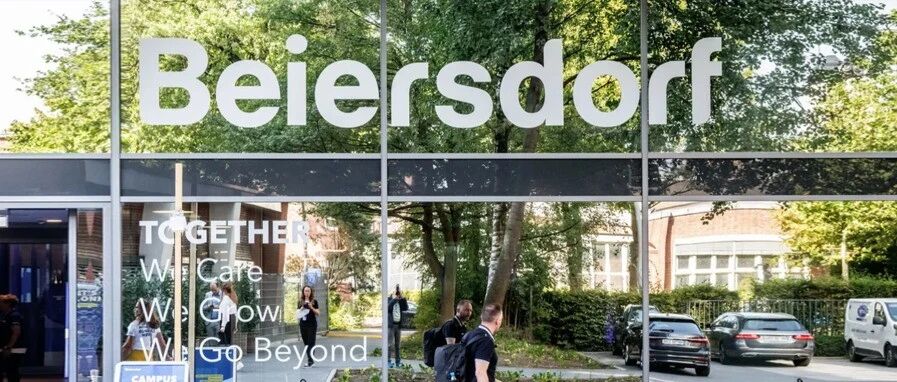
拜尔斯道夫“重仓”皮肤微生态,要更大胆在中国长期投资
FBeauty未来迹· 2026-03-06 11:27
Core Viewpoint - The international beauty industry, particularly for Beiersdorf, is facing significant challenges including conservative consumer behavior in Europe and the US, intensified competition in China, and fluctuations in high-end skincare demand. The traditional growth model of "big products + global distribution" is becoming ineffective, necessitating a reassessment of brand portfolio quality and growth stability [3]. Group 1: Performance Overview - Beiersdorf's performance trajectory over the past five years can be divided into two phases: from 2021 to 2023, the company achieved rapid growth through strong brands and market expansion, culminating in record performance in 2023. In 2024, despite global skincare market pressures, the company still achieved approximately 6.5% organic growth [4]. - In 2025, the global skincare market growth is expected to slow further to about 1.5% to 2%. However, Beiersdorf's results reflect a repositioning of growth quality rather than merely a decline in growth rate, with a sales figure of €9.9 billion and an organic growth of 2.4% [4][12]. Group 2: Brand Performance - The flagship brand Nivea maintained its scale but experienced a slight growth slowdown, with 2025 sales increasing by 0.9% to €5.5 billion. The CEO expressed higher expectations for Nivea, which is undergoing a critical adjustment phase aimed at balancing innovation and market depth [7][17]. - The Derma segment, driven by brands like Eucerin and Aquaphor, achieved sales of €1.5 billion in 2025, marking an 11.7% growth and demonstrating stable growth over five consecutive years [8]. - The high-end brand La Prairie faced market volatility, with organic sales declining by 4.5% to €478 million. However, there was a marginal improvement in the fourth quarter, indicating potential for long-term value [11]. Group 3: Strategic Adjustments - Beiersdorf's strategy in China for 2025 focuses on "deepening" and "investing," emphasizing localized operations and the introduction of key active ingredients like Thiamidol, which has completed its localization process [14][16]. - Nivea's strategic adjustment in China aims to shift focus from price-sensitive personal care to high-end skincare, utilizing digital channels for accelerated growth. This includes streamlining product offerings and optimizing distribution processes [17][19]. - Eucerin's brand in China also launched successful new products and marketing initiatives, resulting in a 29.35% increase in e-commerce sales in 2025 [21][23]. Group 4: Innovation and Research - Beiersdorf's sustained performance can be attributed to its long-term commitment to foundational scientific research and innovative technologies. The company has focused on three high-value research areas: pigmentation mechanisms, anti-aging solutions, and skin microbiome science [28][29]. - The company has developed a groundbreaking technology utilizing skin-derived probiotics aimed at treating acne-prone skin, with plans to launch a new product line in 2026 [29][30]. Group 5: Future Outlook - Despite a challenging market environment in 2026, Beiersdorf anticipates stable or slightly organic growth in net sales, with a focus on leveraging its strong brand matrix and deep skincare expertise [30].