
姜黄拿铁

Search documents
成本不到3元,溢价超300%!网红抗炎神器爆火,收割了谁
2 1 Shi Ji Jing Ji Bao Dao· 2025-12-25 12:54
Core Insights - The rise of turmeric drinks as a health trend is driven by consumer demand for wellness, but there are significant gaps between marketing claims and actual health benefits [1][5][6] - Turmeric's active ingredient, curcumin, shows potential anti-inflammatory properties in laboratory settings, but the effectiveness in humans is questionable due to absorption issues [2][3] - Many turmeric drinks on the market contain insufficient curcumin levels to achieve the claimed health benefits, leading to consumer misconceptions [3][7] Market Dynamics - The surge in turmeric drink popularity reflects a broader trend of consumers seeking quick and easy health solutions amid modern lifestyle pressures [5][6] - Marketing strategies often emphasize the exotic nature of turmeric combined with Western health trends, creating a high demand for these products [6][7] - The cost of turmeric drinks is significantly inflated, with production costs being low compared to retail prices, leading to high profit margins for companies [7] Consumer Awareness - Consumers often confuse turmeric drinks with health supplements, not recognizing that these products are essentially regular foods without proven health claims [5][8] - There is a need for consumers to critically evaluate product labels, focusing on curcumin content and sugar levels to avoid misleading marketing [8] - The emphasis on high sugar content in many turmeric drinks contradicts their purported health benefits, potentially leading to adverse health effects [4][8]

白女捧红的东方神水,难喝到怀疑人生
3 6 Ke· 2025-12-19 06:11
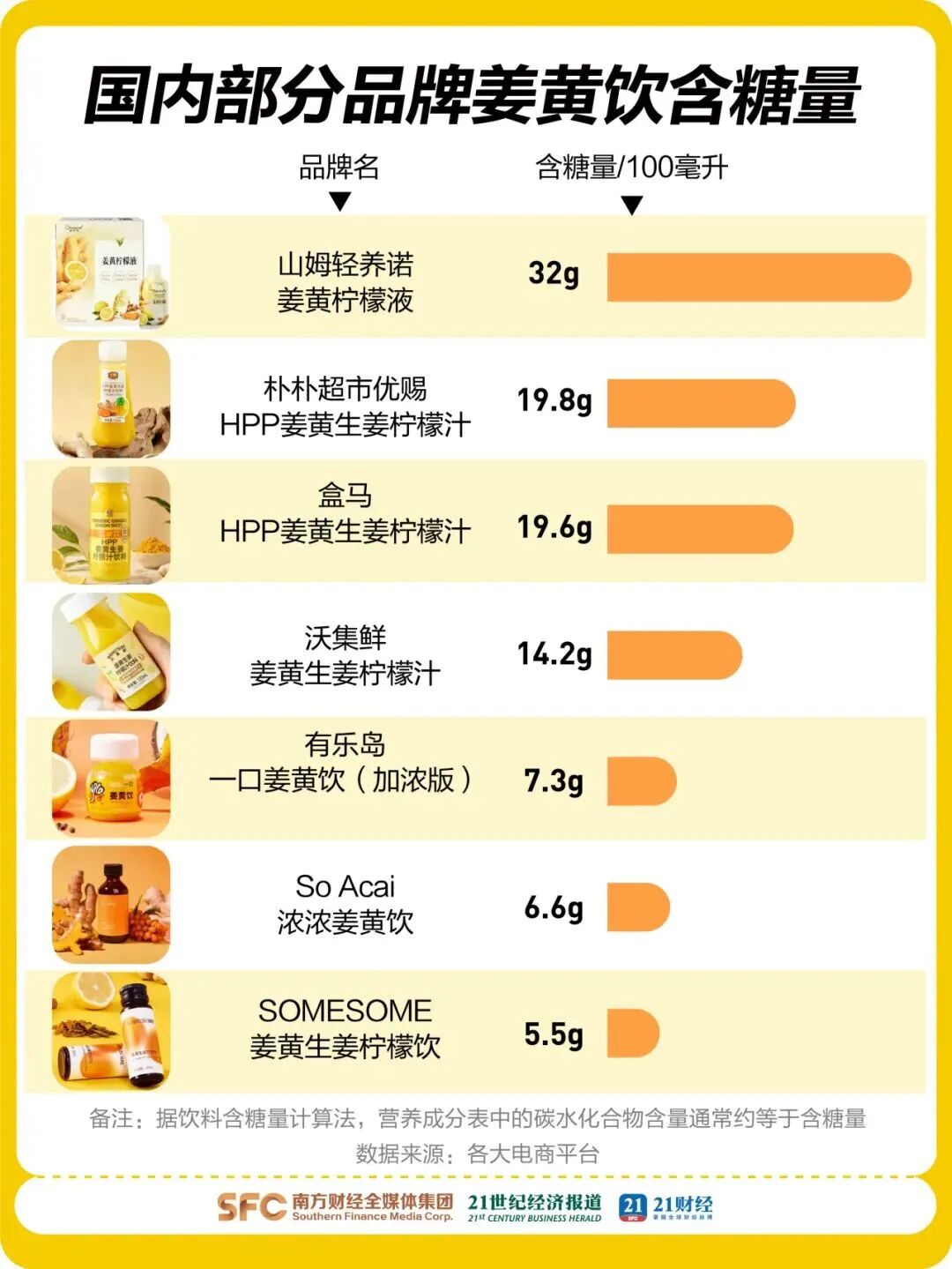
Core Insights - The rise of turmeric drinks is attributed to social media trends and health influencers promoting them as anti-inflammatory and beneficial for wellness [1][4][23] - Despite mixed reviews on taste, turmeric drinks have seen significant market demand, with sales increasing dramatically during promotional events [3][4] - There are ongoing debates regarding the actual health benefits of turmeric drinks, with some experts questioning their efficacy in delivering the claimed anti-inflammatory properties [15][4] Market Trends - Turmeric drinks are frequently sold out in major retailers like Sam's Club and Hema, indicating high consumer interest [3] - During the "Double Eleven" shopping festival in 2025, turmeric drink sales surged by 14 times compared to September [4] - The drinks are marketed with claims of being rich in Vitamin C and having various health benefits, which resonate with health-conscious consumers [4][15] Consumer Behavior - Many consumers, particularly younger individuals, are willing to overlook the unpleasant taste of turmeric drinks in pursuit of health benefits [11][23] - The perception of turmeric as a "superfood" has been shaped by both historical references and modern marketing strategies [22][29] - There is a growing concern that consumers may be paying a premium for products that do not deliver significant health benefits, leading to the concept of a "health tax" [28][27] Nutritional Content - Nutritional analysis of turmeric drinks reveals high sugar content, with some products containing up to 32g of sugar per 100ml, which raises questions about their health claims [16][15] - The actual turmeric content in some drinks is minimal, often not meeting the recommended daily intake of curcumin, the active compound in turmeric [17][15] Cultural Context - The popularity of turmeric drinks reflects a broader trend of Eastern ingredients being embraced in Western health narratives, creating a cycle of cultural exchange [29][30] - Turmeric's journey from a traditional spice to a trendy health drink illustrates the commercialization of wellness and the impact of social media on consumer choices [29][30]

口感辛辣古怪、价格居高不下、商超卖到断货 号称能“抗炎”!姜黄饮忽成养生顶流
Shen Zhen Shang Bao· 2025-12-18 17:21
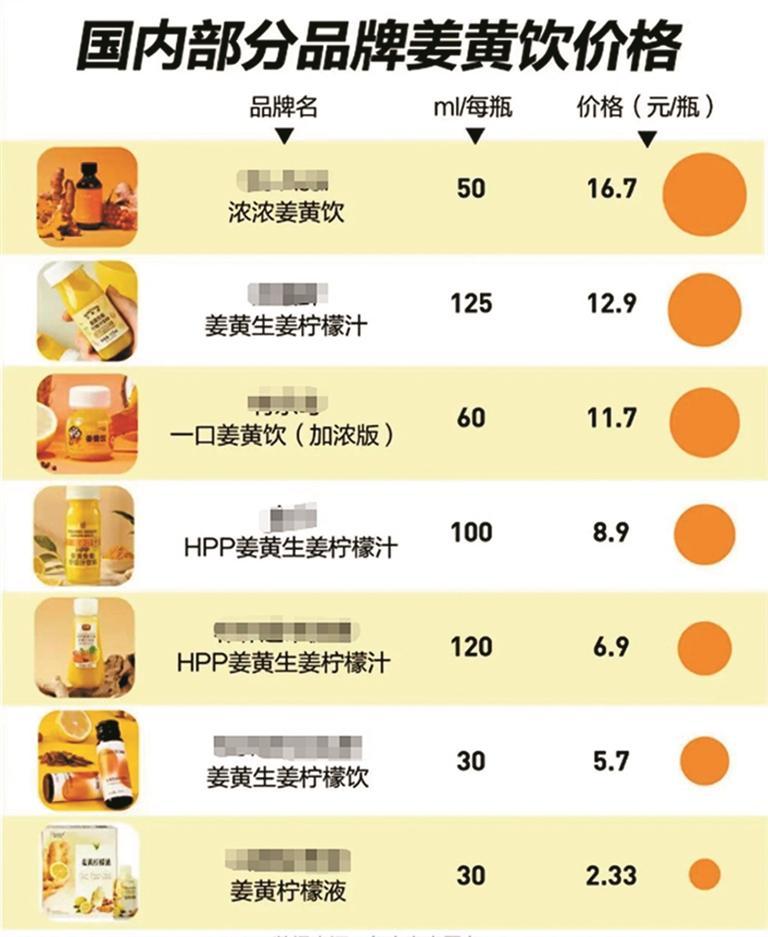
Core Insights - Turmeric drinks have surged in popularity, becoming a health trend with major retailers frequently selling out of stock, driven by marketing focused on anti-inflammatory benefits [3][4][6] - The global turmeric market is experiencing rapid growth, with a projected increase from $5 billion in 2022 to over $8 billion by 2025, reflecting strong demand in health foods and supplements [9] Product Characteristics - Turmeric drink products generally feature "small capacity, high price" characteristics, with volumes ranging from 30ml to 125ml and prices from 2.33 yuan to 16.7 yuan per bottle [5][6] - A popular product in the market contains at least 10.8g of turmeric per bottle, with a retail price of 7.65 yuan for a 125ml bottle [5] Consumer Behavior - The majority of consumers purchasing turmeric drinks are young professionals, with many expressing mixed feelings about the taste, often describing it as spicy and difficult to consume [6][7] - Despite taste complaints, the perceived health benefits, particularly related to inflammation, drive consumer purchases [6][7] Market Dynamics - The marketing strategy emphasizes the "anti-inflammatory" concept, with brands using modern language to reinterpret traditional health benefits [7] - The turmeric drink market is supported by technological advancements in product formulation, such as nano-delivery and high-pressure processing (HPP), which enhance flavor retention [6][7] Industry Trends - The turmeric market is expanding rapidly, with significant investments across the supply chain, from cultivation in regions like Hunan and Sichuan to high-value processing and diverse product offerings [9] - Future opportunities in the industry may lie in innovative culinary applications of turmeric, suggesting that the current trend of turmeric drinks may just be the beginning [9]
印度食品走向世界?
Jing Ji Ri Bao· 2025-08-09 21:56
Group 1 - Indian Prime Minister Modi expressed a vision for every household globally to have Indian food products on their tables, highlighting the government's push for food exports as a key strategy for economic growth [1][2] - The Indian government aims to boost food exports to over $51.9 billion by 2024, with significant investments in food processing and the establishment of around 200 food parks, targeting to become one of the top five food exporters by 2030 [1][2] - The strategy is seen as a way to enhance agricultural and manufacturing sectors, expand international trade, and elevate India's cultural influence globally [2] Group 2 - India's food export ambitions face external threats, particularly from U.S. sanctions against Russia, which could impact India's energy imports and economic stability [4][5] - Ongoing trade negotiations with the U.S. may require India to make concessions in sensitive areas like agriculture and dairy, potentially affecting its food export strategy [5] - Internally, the Indian food industry is struggling with the need for a comprehensive industrial chain to support food exports, as the government's Production Linked Incentive (PLI) scheme has not yielded the expected results [6][7] Group 3 - The PLI scheme, aimed at attracting foreign investment and enhancing manufacturing, has seen a decline in manufacturing's share of GDP, raising concerns about its future [7] - The Indian government has adopted protectionist measures in response to industry challenges, which may hinder the import of food products from other countries, reflecting a lack of self-critique and proactive solutions [7][8] - Addressing fundamental issues such as food safety is crucial for India's goal of becoming a global food exporter, suggesting a need for a more focused approach rather than a broad strategy [8]