娃娃

Search documents
“玩具广东造 千亿全球行”系列活动举办
Guang Zhou Ri Bao· 2026-01-15 10:09
Core Viewpoint - The event "Toys Made in Guangdong, Global Reach of Trillions" highlights Guangdong's dominance in toy manufacturing and export, particularly in Dongguan, which is a key hub for trendy toys in China [1] Industry Overview - Guangdong is the largest toy production and export base in China, with Dongguan producing nearly 85% of the country's trendy toys [1] - The scale of the toy industry in Dongguan accounts for 38% of the province's toy industrial output value, with over 5,000 companies involved in trendy toy production [1] Regional Focus - Shipaizhen, known as the "Trendy Toy Town," contributes approximately one-third of Dongguan's trendy toy output value and has been recognized as a key industrial cluster by the Ministry of Industry and Information Technology for 2025 [1] - The region is accelerating its development to become the largest trendy toy manufacturing base in the Greater Bay Area [1]
“K-POP猎魔女团”意外成就“史上最火”,奈飞首个青少年超级IP出现,下一个爆火玩具要来了?
Hua Er Jie Jian Wen· 2025-11-06 01:40
Core Insights - Netflix is experiencing unexpected success with its animated musical film "K-POP Hunter," which has garnered over 325 million views and dominated charts for over four months [1][2] - Retailers and toy manufacturers underestimated the film's potential, resulting in a missed opportunity for holiday sales as related merchandise will not be available until early next year [1][3] - The challenge for Netflix lies in transforming "K-POP Hunter" into a long-term children's IP, which could yield significant returns beyond just holiday toy sales [1][7] Retailers' Misjudgment - The film's rapid rise to popularity was unforeseen by its creators, with Netflix's marketing efforts initially receiving a lukewarm response from retailers [2][3] - Previous attempts to launch toys based on Netflix's children's content have largely failed, leading to skepticism among retailers [2][5] - The lack of successful toy lines from Netflix's popular IPs highlights the company's struggle in the merchandise space [2][7] Urgent Remedial Measures - Following the film's success, various companies, particularly from East Asia, have begun reaching out to Netflix for collaboration on merchandise [3][4] - The production of toys requires significant lead time, complicating the ability to capitalize on the film's popularity [3][5] - Major toy manufacturers have formed a rare agreement to share licensing rights, allowing them to produce and sell toys more efficiently [3][5] Marketing and IP Development - Netflix is actively working to maintain the film's momentum through social media campaigns and collaborations with food and beauty brands [6][7] - The company has plans for a sequel, which is crucial for establishing a lasting IP, with production timelines extending several years [6][7] - The success of the sequel and the timely release of merchandise will be critical for Netflix to solidify "K-POP Hunter" as a major children's IP [6][7]

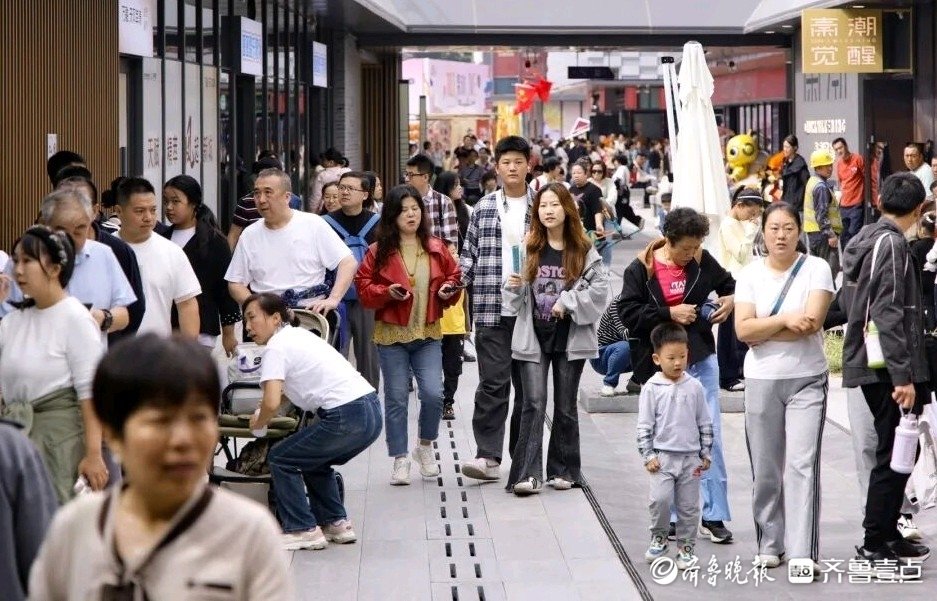
首店吸客、潮流圈粉,黄河新城国庆文旅消费热力拉满
Qi Lu Wan Bao Wang· 2025-10-04 09:23
Core Insights - The article highlights the vibrant activities and consumer engagement at the Queshan Ecological Cultural Zone in Jinan during the National Day holiday, showcasing its potential as a new cultural tourism hotspot [1][3][7]. Group 1: Visitor Engagement - The Queshan Ecological Cultural Zone attracted nearly 50,000 visitors on October 3, indicating strong consumer interest and engagement [1][17]. - The opening of multiple "first stores" in the area, such as the Nyonya restaurant and the Star Player toy store, significantly contributed to drawing in customers, with the Nyonya restaurant receiving around 300 orders daily [3][5]. - The Star Player store reported a daily footfall of approximately 5,000 visitors, leading to the rapid sale of 8,000 toys within three days [5][12]. Group 2: Economic Impact - The introduction of first stores in the Queshan Ecological Cultural Zone aligns with national policies aimed at promoting new consumption models and enhancing the service system for first-store economies [7]. - The presence of unique brands and dining options has not only filled commercial gaps but also revitalized the cultural tourism market in Jinan [7][12]. Group 3: Targeting Young Consumers - The integration of trendy elements such as anime, e-sports, and interactive experiences has effectively attracted a younger demographic, enhancing their overall spending and engagement [8][12]. - Events like the themed comic exhibition and the grassland music festival have become popular among young visitors, further driving foot traffic and consumption [10][14]. Group 4: Diverse Offerings for All Ages - The Queshan Ecological Cultural Zone features a variety of activities catering to different age groups, from science exhibitions for families to cultural showcases for seniors, thereby extending visitor stay duration [16][17]. - The combination of daytime educational events and nighttime entertainment, such as light shows and drone performances, has successfully broken traditional visitor limitations, encouraging longer visits and increased spending [17].