富国中证智选船舶产业ETF

Search documents
资金流向逆转 新发ETF纷纷上市
Shang Hai Zheng Quan Bao· 2026-02-08 17:31
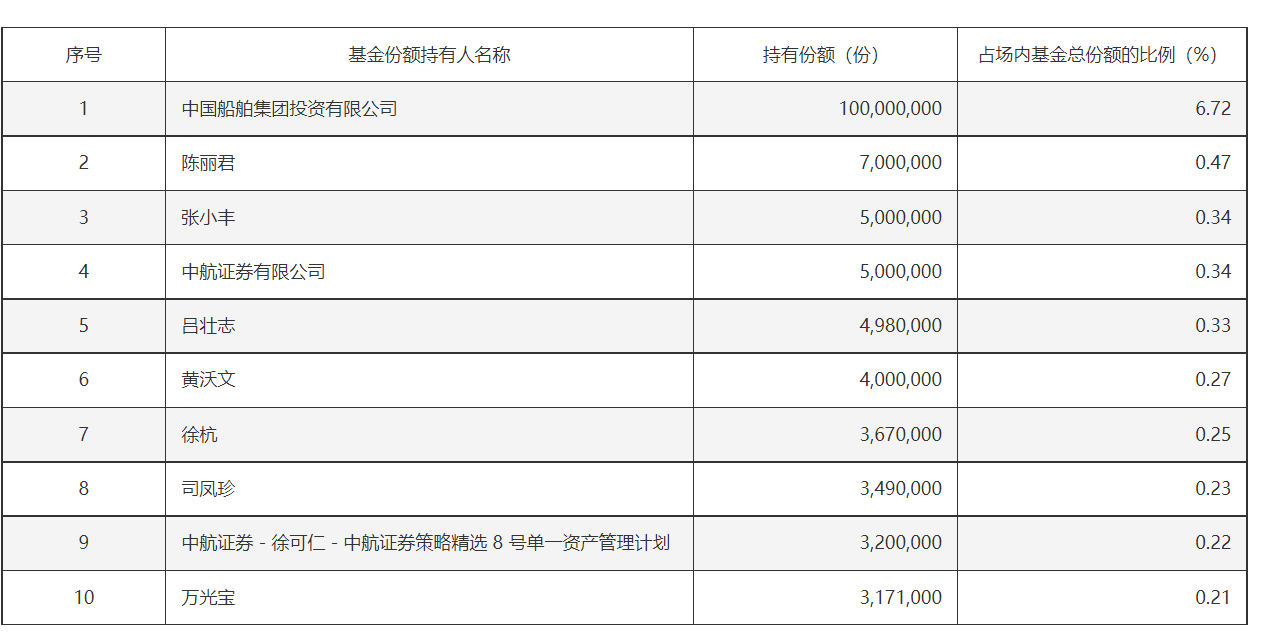
Group 1 - The reversal of significant net outflows from stock ETFs occurred, with a net inflow of 6.965 billion yuan on February 3, marking the first net inflow since January 14 [1] - From February 3 to 6, multiple broad-based ETFs saw substantial net inflows, including 2.549 billion yuan into the Huaxia Science and Technology Innovation 50 ETF and 1.763 billion yuan into the Huaxia CSI A500 ETF [1] - Conversely, resource-themed ETFs experienced notable outflows, with the Huaxia Nonferrous Metals ETF seeing a net outflow of 4.364 billion yuan [1] Group 2 - A total of 10 new ETFs were launched from February 2 to 6, with an additional 6 ETFs set to list between February 9 and 11, contributing to market liquidity [2] - Significant investments in newly launched ETFs were made by entities such as China Shipbuilding Group, which purchased 100 million yuan worth of shares in the Fortune CSI Selected Shipbuilding Industry ETF [2] - The ETF market is expected to continue expanding, with numerous new products being reported by fund companies, including the Hang Seng A-share Power Grid Equipment ETF [2]
次新基金上演“建仓加速度”
Zheng Quan Ri Bao· 2026-02-07 01:27
Group 1 - The core viewpoint of the articles highlights a significant trend in the fund market, where a large number of newly established funds are rapidly increasing their stock positions to seize market opportunities during the spring season [1][3] - As of February 6, 2023, out of 282 newly established funds, 81 have announced early closure of fundraising, indicating a shift in strategy to quickly deploy capital [1][3] - Active equity funds have shown notable net value fluctuations shortly after their establishment, with some funds achieving returns of 1.46% and 1.15% within a few weeks [1] Group 2 - Passive products, particularly ETFs, are also building positions rapidly, with some ETFs reaching stock asset ratios of 97.21% and 95.80% just before their listing [2] - The resurgence of "proportional allotment" in fund subscriptions reflects a strong demand for new funds, as seen with the Penghua Fund's rapid scale limit being reached [2][3] - Analysts suggest that the current favorable policies and abundant liquidity in the A-share market are encouraging quick positioning by fund managers, allowing them to capture low-risk opportunities [3] Group 3 - The phenomenon of early fundraising closures provides new funds with more market opportunities, allowing fund managers to quickly access capital and make timely investments [3] - The influx of incremental funds from both residents and institutions supports the issuance of new funds, enhancing the overall market liquidity [3] - Industry experts recommend that investors focus on the research capabilities of fund managers and product suitability rather than merely chasing fast-building and high-heat products [4]
81只产品提前结募 次新基金上演“建仓加速度”
Zheng Quan Ri Bao· 2026-02-06 16:16
Group 1 - The core observation is that a significant number of newly established funds are rapidly increasing their stock positions to capitalize on the spring market and structural opportunities, with 81 out of 282 new funds announcing early closure of fundraising as of February 6 [1][2] - Several actively managed equity funds have shown notable net value fluctuations shortly after their establishment, indicating that fund managers are quickly constructing core positions to capture market returns [1] - Passive products, particularly ETFs, are also building positions rapidly, with some ETFs reaching nearly full stock allocation before their listing, reflecting fund managers' focus on investment opportunities in specific themes [1] Group 2 - The willingness of new funds to build positions quickly is supported by a robust fund issuance market and enthusiastic capital subscriptions, exemplified by the re-emergence of "proportional allocation" due to overwhelming demand [2] - The phenomenon of early fundraising closures allows fund managers to access capital more swiftly, enabling decisive positioning at opportune moments without the delays associated with lengthy fundraising periods [2] - Current market conditions, characterized by favorable policies and ample liquidity, have attracted institutional investments, further supporting new fund issuances and enhancing the competitive landscape for equity funds [3]
新发ETF,背后“买主”浮出水面
Sou Hu Cai Jing· 2026-02-03 13:06
Group 1 - The core point of the article highlights the recent surge in newly launched ETFs, with significant investments from institutional players like China Shipbuilding Group Investment Co., which purchased 100 million yuan in the Fortune China Securities Intelligent Shipbuilding Industry ETF [2][3] - The Fortune China Securities Intelligent Shipbuilding Industry ETF is the first ETF focused on shipbuilding, comprising 40 representative listed companies in the shipbuilding industry, reflecting the overall performance of the sector [4][5] - As of February 2, 2023, the top ten holdings of the ETF include major companies such as China Power, China Shipbuilding, and China Ship Defense, indicating a strong focus on the industrial sector [5][7] Group 2 - Recent data shows a significant outflow from broad-based ETFs, with a net outflow of 16.349 billion yuan on February 2, 2023, particularly affecting the Southern CSI 500 ETF and Huatai-PB CSI 300 ETF [10] - In contrast, certain thematic industry ETFs have attracted substantial inflows, with the Guotai Communication ETF seeing a net inflow of 1.399 billion yuan on the same date [10] - From January 14 to February 2, 2023, stock-type ETFs experienced a cumulative net outflow exceeding 830 billion yuan, while some thematic ETFs attracted over 10 billion yuan each [10][11] Group 3 - The number of ETFs with assets exceeding 100 billion yuan has significantly decreased, with only three ETFs surpassing this threshold as of February 2, 2023 [11] - The market outlook suggests that sectors such as AI, solid-state batteries, robotics, and innovative pharmaceuticals are expected to present investment opportunities, with AI being a key focus area for 2026 [12]

连续涨停!明天全天停牌
Zhong Guo Zheng Quan Bao· 2026-01-29 13:05
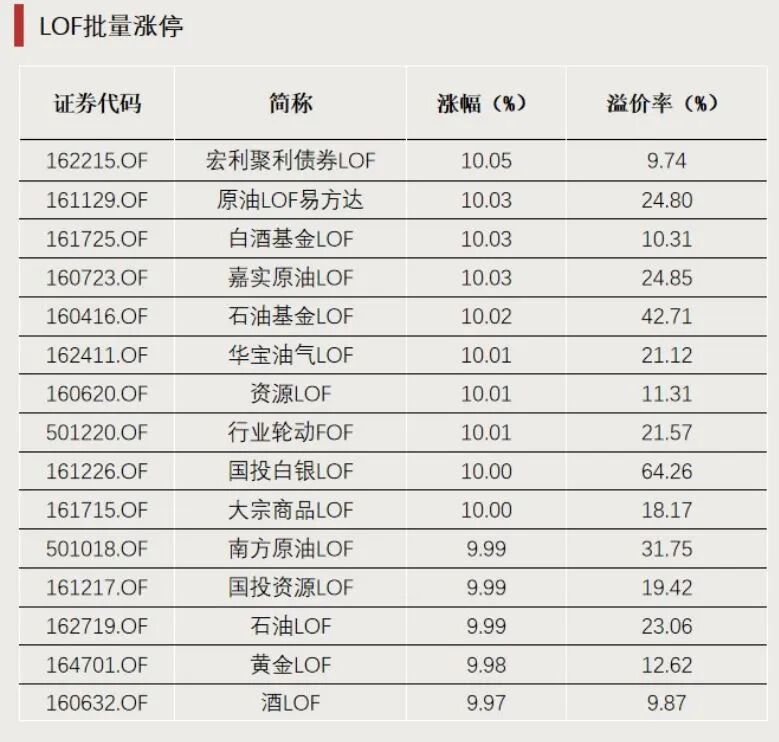
Core Insights - International gold and silver prices reached new highs on January 29, leading to significant increases in the prices of various commodities including oil, gas, copper, and aluminum, with multiple related ETFs and LOFs hitting the daily limit [1][2]. Group 1: LOF Market Activity - Several LOFs, including those focused on oil and silver, experienced consecutive trading halts due to high demand and rising premium rates [2][4]. - The National Investment Silver LOF announced a trading halt effective January 30, following a previous halt on January 22, with potential for further halts if premium rates do not decrease [4]. - A range of LOFs, such as the Easy Fund Oil LOF and the Jia Shi Oil LOF, are set to halt trading for one hour starting January 30, while large purchases and investments in certain oil-related LOFs will be restricted [5]. Group 2: ETF Performance - Major broad-based index ETFs saw a significant drop in trading volume, with notable declines in the trading amounts of the CSI 300 ETF and others [7]. - The gold ETF recorded a substantial increase in trading volume, with a net inflow of 30.38 billion yuan on January 28, contributing to a total net inflow of 128.33 billion yuan for the year [9][10]. - Other ETFs, including those focused on precious metals and chemicals, also saw significant net inflows, indicating strong investor interest in these sectors [10]. Group 3: New Fund Issuance - The recent issuance of new funds has been robust, with several funds raising significant amounts in a short period, indicating strong market demand [11].