结构性机会

Search documents
近期军工行业观点
2026-03-22 14:35
Summary of Military Industry Conference Call Industry Overview - The military industry is currently in a negative beta trading phase for 2026, primarily due to a reduction in expected defense budget growth from 7.2% to 6.5% and a lack of large-scale orders during the spring ordering session, reflecting a strong expectation but weak reality [1][2][3] - Historical patterns indicate that the transition period between five-year plans (2025-2026) has the potential for excess returns, with a new wave of orders expected around June 30, 2026, coinciding with the release of new models under the "14th Five-Year Plan" [1][2][3] Key Insights and Arguments - The "Two Machines" industry chain is experiencing the highest level of prosperity, with limited overseas production capacity and increased demand for gas turbines driven by AI data centers, leading to orders extending to 2030. Domestic companies involved in forging, casting, and blade subcontracting have strong performance certainty [1][2][3] - The commercial aerospace sector is set for significant catalysts in 2026, with SpaceX potentially going public in Q2-Q3, and over five domestic companies, including Blue Arrow and CAS Space, expected to IPO. The launch of reusable rockets like Zhuque-3 is anticipated [1][2][3][4] - Military trade is driven by escalating tensions in the Middle East, with increased demand for drones, long-range fire systems, and air defense systems from oil-producing countries. Recent orders from companies like LIGONG Navigation have confirmed the demand despite downward trends [1][2][4] Important but Overlooked Content - The recent adjustment in the military sector is attributed to a rebalancing of high valuations and fundamentals, suggesting a strategic investment window post-earnings season, particularly in companies with international subcontract orders and breakthroughs in commercial aerospace technology [1][2][5] - The military sector's price response to geopolitical tensions has been muted due to prevailing market expectations of declining industry prosperity. The sector typically performs better during data vacuum periods, such as May and June, rather than during earnings disclosure seasons [4][5] - Despite the overall industry facing adjustments, three specific areas remain promising: the aviation engine and gas turbine supply chain, commercial aerospace, and military trade exports, particularly in light of potential escalations in the Middle East [5]
对话吴任昊:拒绝宏大叙事,在四大核心板块寻找确定性机会
高毅资产管理· 2026-03-13 10:14
Core Viewpoint - The article emphasizes the importance of focusing on long-term industry logic and company fundamentals rather than macro narratives, especially in a volatile market environment [2]. Group 1: Market Overview - In 2025, global capital markets exhibited significant "high volatility" and "strong differentiation," with the Hang Seng Tech Index rising by 23.5% despite experiencing two near 20% pullbacks [7]. - The MSCI China Index increased by 28.1% in 2025, but performance varied widely across sectors, with only the communication services and materials sectors having over half of their stocks outperforming the index [7]. - The U.S. market also showed notable differentiation, with only 2 out of the "Big Seven" tech companies outperforming the S&P 500 in 2025 [7]. Group 2: Investment Strategy - The investment strategy for 2025 focused on "concentrating forces to fight major battles," increasing sector investment concentration despite market volatility [8]. - The approach emphasizes "diminishing macro judgments and focusing on internal growth of enterprises," aiming to identify high-quality assets with the best risk-reward ratios globally [8]. Group 3: Sector Focus - **Technology Hardware and Software**: The focus is on the AI industry, particularly on foundational manufacturing capabilities that support the entire ecosystem. Observing price changes in supply chain bottlenecks is crucial for identifying investment opportunities [9]. - **Commercial Infrastructure**: The strategy involves identifying true winners in the AI transformation, emphasizing the importance of companies with complete ecosystems and user data [9]. - **Advanced Manufacturing**: Attention is given to industries with long-term barriers, such as overseas aerospace engines, which are expected to remain in a supply-demand mismatch for the next three years [9]. - **Commodities**: Chinese resource companies are highlighted for their better fundamentals and lower valuations compared to their global counterparts, with a focus on when these companies can achieve reasonable global pricing [9]. Group 4: Hong Kong Market Opportunities - The Hong Kong market is experiencing positive changes on both the demand and supply sides, with increased attractiveness to overseas investors and a rise in quality IPOs from Chinese companies [11].


爆款频出、94%产品收正,“固收+”规模业绩双丰收
券商中国· 2026-03-12 08:19
Core Viewpoint - The equity market's slow bull trend has driven the secondary market for convertible bonds, making both key supports for the "fixed income +" fund net value, which has emerged as a significant direction for capital inflow amid the "deposit migration" backdrop [1][5]. Group 1: Performance of "Fixed Income +" Funds - As of March 11, 2023, 94% of nearly 1800 "fixed income +" products reported positive performance, with six funds achieving over 10% growth [3]. - The leading funds have increased their stock allocations significantly, with some holding up to 80% in convertible bonds, indicating a strong preference for assets with higher elasticity [3]. - The National Bond Index has risen approximately 5.5% year-to-date, with several convertible bonds seeing gains exceeding 50% [4]. Group 2: Market Trends and Future Outlook - The total scale of "fixed income +" funds reached 2.99 trillion yuan by the end of 2025, a 56% increase from the previous year, driven by new fund launches and strategic positioning by public fund institutions [5]. - Analysts express cautious optimism for 2026, suggesting that the high returns of convertible bonds in 2025 may not be replicated, emphasizing the need for a focus on structural opportunities [2][7]. - Investment strategies should consider a balanced approach, with an emphasis on sectors like AI, military, new energy, and innovative pharmaceuticals, as the market trends towards structural opportunities [8].

信用债市场周度回顾260309:利差低位尚有空间,下沉与结构性机会主导-20260309
GUOTAI HAITONG SECURITIES· 2026-03-09 09:06
Group 1 - The core view of the report suggests that the credit spread compression space is gradually narrowing, and the strategy should focus on "downward exploration + variety selection + structural opportunities" [1][7][8] Group 2 - In the primary market, net financing turned positive with a total issuance of 2,521.3 billion and a net financing of 919.8 billion, compared to a net repayment of 834.6 billion in the previous week [11] - The secondary market saw a significant increase in trading volume, with total transactions reaching 8,608.69 billion, up from 4,883.78 billion the previous week [14] - The yield on medium-term notes (MTN) generally declined, with the 3-year AAA MTN yield decreasing by 2.65 basis points to 1.79% [14][15] Group 3 - The report highlights a structural differentiation in credit spreads, with market sentiment shifting from short-term to medium and long-term bonds, indicating a preference for high-quality issuers [7][8] - The demand for credit bonds is expected to be supported by seasonal factors, including insurance premium inflows and the reopening of bond funds, which may lead to a low-level oscillation in credit spreads [8] - The report recommends focusing on short-term high-grade credit bonds for safety and liquidity, while also exploring opportunities in perpetual bonds and ETFs for potential valuation recovery [8][9]
债市专题研究:波动与避险情绪共振,哑铃策略应对高波环境
ZHESHANG SECURITIES· 2026-03-01 11:56
Core Insights - Recent geopolitical conflicts have heightened market uncertainty, leading to a "macro data vacuum + Two Sessions expectations" phase, where a barbell strategy may enhance risk-reward ratios [1] Group 1: Convertible Bond Market Overview - The convertible bond market has continued its oscillating recovery pattern, with a stable overall style. The mid-cap index outperformed the large-cap index by 0.01% while the small-cap index declined by 0.10% [2][11] - The upcoming "Two Sessions" has opened a policy-setting window, leading funds to prefer structural layouts around expected differences during this "policy vacuum" period [2][11] - Defensive convertible bonds are gaining attention due to their attributes amid external geopolitical conflicts and commodity price fluctuations [2][11] Group 2: Structural Opportunities in Convertible Bonds - The spring market still has room for structural opportunities, with momentum style showing strong upward elasticity. For instance, "Hangyu Convertible Bond" surged by 9.14%, contributing significantly to the portfolio [3][14] - The market is experiencing a complex pattern of oscillation and localized heat, with funds shifting towards undervalued sectors with industrial logic, such as aviation and metal processing [3][16] - Investors are advised to grasp sector rotation rhythms and selectively realize profits from high-positioned crowded varieties while exploring low-premium elastic targets [3][16] Group 3: Barbell Strategy in High-Volatility Environment - The strategy should focus on a barbell framework to enhance risk-reward ratios, with one end concentrating on low-valuation, high-profit certainty, and stable cash flow defensive varieties [4][22] - The other end should dynamically allocate to quality growth stocks with clear growth paths, capturing structural elasticity from pricing misalignments and valuation repairs [4][22] - The defensive base should focus on high-rated large-cap varieties like banks and public utilities, while event-driven and hedging themes should consider oil, precious metals, and military industries [4][22]
重点留意!节后三大翻倍方向,重仓股民拿稳别慌!
Sou Hu Cai Jing· 2026-02-21 09:27
Core Viewpoint - The market is showing signs of recovery post-holiday, with three major investment directions identified that are supported by policies, funds, and performance, indicating potential for significant gains in the near future [1][27]. Group 1: Market Conditions - The Shanghai Composite Index closed at 4082.07 points with a trading volume of 19,826.8 billion yuan on February 13, 2026 [3]. - The People's Bank of China conducted a 1 trillion yuan reverse repurchase operation with a 182-day term, providing liquidity to the market [3]. - Economic indicators show a recovery, with January's CPI rising by 0.2% year-on-year and core CPI by 0.8%, indicating steady consumer recovery [3]. Group 2: Investment Directions Direction 1: AI Computing and New Productive Forces - This sector is a key focus for the "14th Five-Year Plan," with support from the Ministry of Industry and Information Technology and the National Development and Reform Commission [4]. - Public funds increased their holdings in technology sectors by 42% in January [4]. - Over 60% of stocks in this sector are at low valuations, with PE and PB ratios below historical averages [6]. Direction 2: Consumption Recovery in Home Appliances, Liquor, and Tourism - The government is implementing measures to boost consumption, including subsidies for replacing old cars and home appliances [10]. - Post-holiday data shows a significant recovery in dining, tourism, and jewelry sectors [11]. - Leading companies in liquor and home appliances are valued reasonably, with strong performance and cash flow [12]. Direction 3: Low-Valuation Semiconductors and Specialized Enterprises - The semiconductor sector is crucial for technological self-reliance, with ongoing support from national funds [16]. - More than 50% of semiconductor stocks are currently at low levels, indicating substantial room for valuation recovery [17]. - Quality semiconductor companies are expected to report increased earnings, providing a solid fundamental support [18]. Group 3: Investment Strategies - Investors are advised not to chase high prices or sell at losses, as low-quality stocks present opportunities during market fluctuations [23]. - It is recommended to avoid frequent stock changes and focus on medium to long-term investments, as institutional investors are taking a similar approach [24]. - Monitoring official data such as central bank operations and economic indicators is more reliable than speculative information [25].

严力:从文明回归江湖,我的20条思考碎片丨2025尾声
暗涌Waves· 2026-02-14 02:04
Core Viewpoint - The article discusses the evolution of investment strategies and the importance of adapting to changing environments, emphasizing a return to grassroots principles and a focus on genuine engagement with industries [3][4]. Part 01: Cycles and Adjustments - Understanding historical patterns can alleviate anxiety about current turmoil, as short-term disruptions are part of a longer-term trajectory [10]. - Structural opportunities arise during periods of change, making it an ideal time to identify promising projects [11]. - The shift from a focus on platformization to a return to grassroots values is necessary to maintain organizational spirit and agility [11]. - Senior partners should return to frontline engagement to better understand industry dynamics and innovation [11]. - Adapting strategies to align with changing environments is crucial, as rigid approaches may hinder success [11]. Part 02: New Opportunities - The AI sector is transitioning from foundational development to innovative applications, presenting new investment opportunities [13]. - Successful ventures will integrate both hardware and software, as a balanced approach is essential for long-term success [13]. - Building infrastructure for international expansion is more critical than merely selling products abroad [13]. - Identifying and collaborating with industry leaders can create mutually beneficial partnerships [13]. - Investment success can stem from either innate insight or aligning with influential figures in the industry [13]. Part 03: Life Insights - Personal happiness is derived from incremental achievements and a deeper understanding of the world's workings [15]. - Opportunities for disruption arise when large organizations become bureaucratic and complacent [16]. - Continuous self-critique is essential for organizations to remain innovative and responsive to change [16]. - The complexity of the world provides unique opportunities for those willing to explore and seek truth [16]. - Recognizing personal strengths and limitations is vital for achieving one's potential [16]. - Supporting idealists who pursue greater causes can inspire and create significant impact [16]. - Maintaining personal connections and warmth in business relationships is crucial for long-term success [16]. - Engaging with challenges and uncertainties is essential for meaningful progress [18]. - The pursuit of complex, high-quality projects is more rewarding than seeking immediate gratification [18]. - Viewing investment as a strategic game allows for a deeper exploration of opportunities and collaboration with intelligent minds [20].

财信证券袁闯:估值驱动行情延续 节后把握结构性机会
Zhong Guo Zheng Quan Bao· 2026-02-14 01:18
Core Viewpoint - The A-share market is influenced by multiple factors, showing characteristics of valuation-driven and structural differentiation, with an upward trend expected to continue post-Spring Festival [1][2]. Market Dynamics - The A-share market is experiencing a clear upward trend supported by improving corporate earnings, increased willingness of residents to invest, and ongoing policies to optimize industry competition [2]. - Short-term market fluctuations are expected due to seasonal effects, particularly around the Lunar New Year, but the overall upward trend remains intact [2][4]. Market Structure Characteristics - Historical data shows that since 2009, the average spring market rally lasts 57 days with an average increase of over 20%, with value blue-chip sectors performing well before the Spring Festival [3]. - The equity market is currently in a bullish window until early March 2026, with a focus on risk management and strategic positioning [3]. Post-Spring Festival Outlook - The A-share market is anticipated to continue its upward trend post-Spring Festival, supported by macroeconomic recovery, stable policy environment, and regulatory measures to prevent overheating [4]. - There is potential for a "red envelope market" if consumer data exceeds expectations, reinforcing cyclical sector support [4]. Investment Strategies - The investment logic post-Spring Festival will focus on "value supporting growth," with a shift from low-risk to high-risk preferences, emphasizing technology and cyclical sectors [7]. - Five key investment themes are recommended: 1. AI industry chain focusing on application development and performance-driven investments [7]. 2. High dividend yield assets, particularly in stable cash flow sectors like home appliances and banking [7]. 3. Sectors benefiting from policy-driven improvements, such as coal, steel, and lithium [7]. 4. Core areas of domestic demand recovery, including health, sports, and travel industries [8]. 5. Investment opportunities in strategic and industrial metals, anticipating a rebound in prices [8].
次新基金上演“建仓加速度”
Zheng Quan Ri Bao· 2026-02-07 01:27
Group 1 - The core viewpoint of the articles highlights a significant trend in the fund market, where a large number of newly established funds are rapidly increasing their stock positions to seize market opportunities during the spring season [1][3] - As of February 6, 2023, out of 282 newly established funds, 81 have announced early closure of fundraising, indicating a shift in strategy to quickly deploy capital [1][3] - Active equity funds have shown notable net value fluctuations shortly after their establishment, with some funds achieving returns of 1.46% and 1.15% within a few weeks [1] Group 2 - Passive products, particularly ETFs, are also building positions rapidly, with some ETFs reaching stock asset ratios of 97.21% and 95.80% just before their listing [2] - The resurgence of "proportional allotment" in fund subscriptions reflects a strong demand for new funds, as seen with the Penghua Fund's rapid scale limit being reached [2][3] - Analysts suggest that the current favorable policies and abundant liquidity in the A-share market are encouraging quick positioning by fund managers, allowing them to capture low-risk opportunities [3] Group 3 - The phenomenon of early fundraising closures provides new funds with more market opportunities, allowing fund managers to quickly access capital and make timely investments [3] - The influx of incremental funds from both residents and institutions supports the issuance of new funds, enhancing the overall market liquidity [3] - Industry experts recommend that investors focus on the research capabilities of fund managers and product suitability rather than merely chasing fast-building and high-heat products [4]
开年股价遇冷,机构调研升温,2026年银行股怎么看?
Huan Qiu Wang· 2026-02-04 05:08
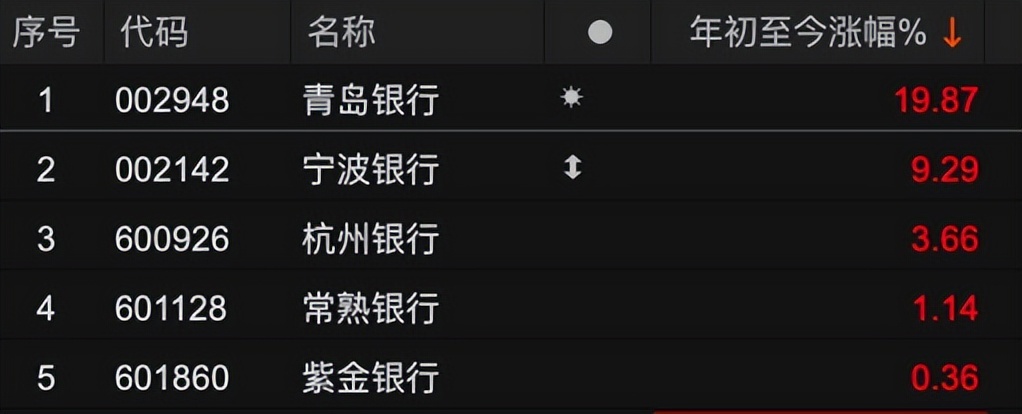
Core Viewpoint - The A-share banking sector has experienced a significant decline of 5.8% year-to-date, contrasting with a 1.1% increase in H-share Chinese banks, indicating a divergence in market performance [1] Group 1: Market Performance - The banking sector's performance has been weak, ranking last among 35 industries in the Wind secondary industry classification [1] - Despite the overall downturn, certain banks like Qingdao Bank and Ningbo Bank have shown strong performance, with increases of 19.87% and 9.29% respectively in January [2] - The average dividend yield for A-share banks remains at approximately 4.5%, which is higher than the 0.5%-2.0% returns of various risk-free assets, making bank stocks attractive for long-term investors [3] Group 2: Fund Flow and Market Sentiment - Since October 2025, there has been a cautious approach from funds towards the banking sector, leading to a period of consolidation [5] - Significant outflows have been recorded, with estimates showing that around 10% of the trading volume has been affected by net outflows from bank-related ETFs, totaling approximately 9111 billion yuan [6] - Despite short-term pressures, there is a belief that the fundamentals of the banking sector are improving, as indicated by increased institutional interest in bank credit issuance [6][9] Group 3: Long-term Opportunities - The banking sector is expected to see internal differentiation, with regional banks like Qingdao Bank and Ningbo Bank performing well against the backdrop of overall sector weakness [7] - Analysts predict that Qingdao Bank will maintain double-digit profit growth in 2026, supported by strong loan issuance capabilities and stable asset quality [8] - The demand for high-dividend assets remains strong, with expectations that insurance funds will inject over 2 trillion yuan into the market in 2026, further supporting bank stocks [9][10] Group 4: Investment Strategies - The current market adjustment reflects short-term fund disturbances, but the long-term outlook remains positive due to improving fundamentals [9] - Institutions are focusing on banks with strong asset quality and those that are improving their cost of liabilities and non-interest income [10] - The banking sector is anticipated to benefit from a stable dividend profile and recovery trading logic, especially as credit issuance continues to grow [10]