
小美AI

Search documents
透过AIE博览会看美的:多品类新品“AI含量”拉满 家电龙头再进化
Zhi Tong Cai Jing· 2025-12-05 13:47
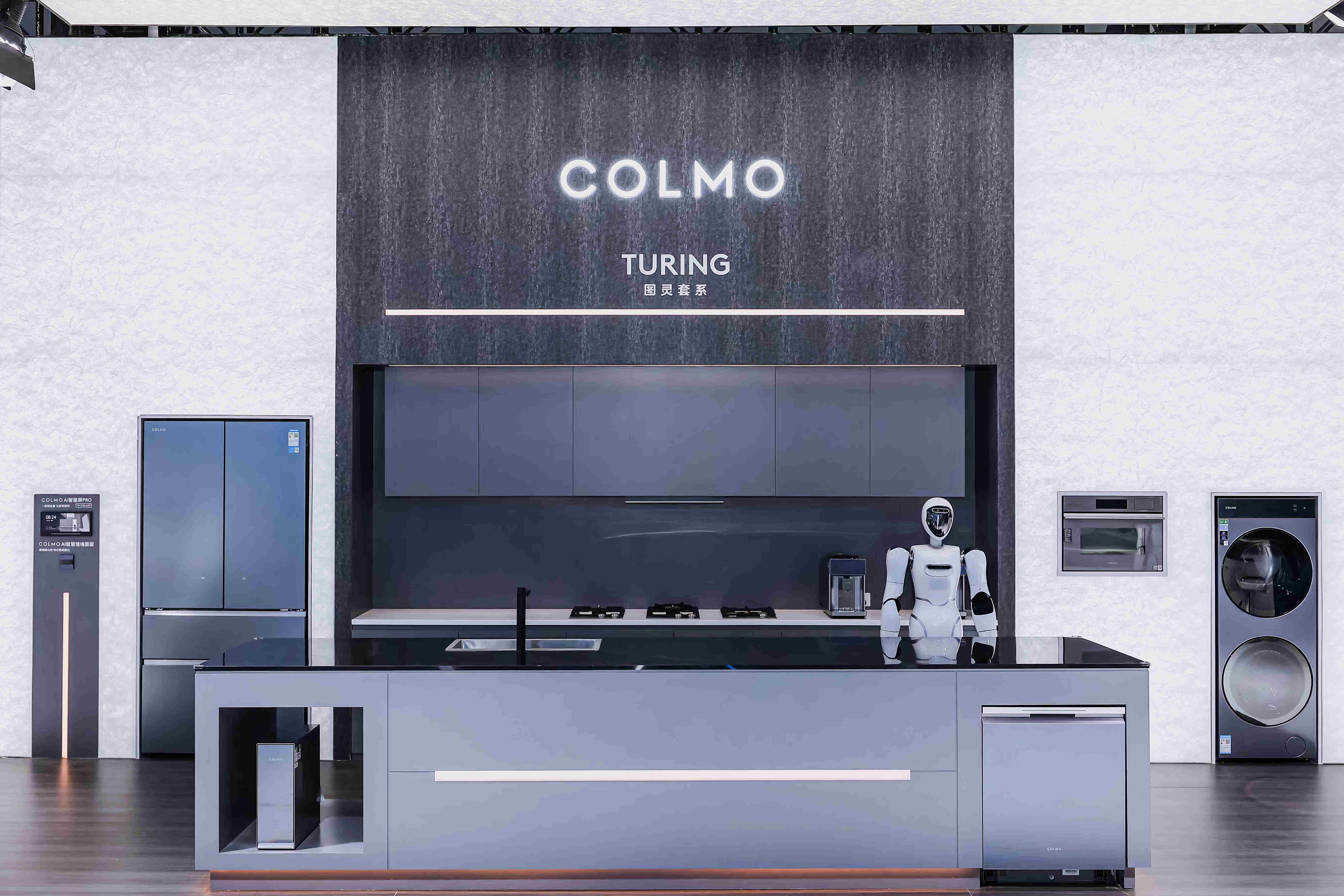
Core Viewpoint - The stock price of Midea Group has shown strong performance, with A-shares and Hong Kong shares rising over 10% and 20% respectively this year, indicating optimistic market expectations despite a lack of major news [1][12]. Group 1: Market Performance - Midea Group's stock price has reached new highs this year, outperforming the broader market during a period of adjustment [1]. - The company's stock performance is seen as a leading indicator of its future growth potential [1]. Group 2: AI Integration in Products - Midea showcased a range of AI-enhanced products at the AIE Expo, emphasizing its commitment to integrating AI across the entire home appliance value chain [2]. - The "Smart for Joy" concept was highlighted with the new version of the Midea Home App, which enhances home management efficiency and offers proactive decision-making capabilities [2]. Group 3: High-End Product Offerings - The COLMO brand presented its "AI HOME" ecosystem, featuring the COLMO Smart Control Screen Pro and a suite of high-end appliances designed for intelligent home solutions [3]. - The COLMO TURING 2.0 series includes 11 types of smart appliances, focusing on high-end market demands and providing comprehensive smart home solutions [3]. Group 4: Strategic Partnerships - Midea partnered with BYD to create a "Human-Car-Home" smart living experience, allowing users to control home appliances from their vehicles, showcasing the integration of AI and IoT technologies [7]. Group 5: Technological Leadership - Midea's long-standing focus on technology has positioned it as a leading global appliance manufacturer, with recent innovations reflecting its commitment to meeting diverse market needs [11]. - The company has made significant advancements in energy efficiency, health, and user experience, reinforcing its market leadership in the appliance industry [11]. Group 6: Investment Appeal - Midea's combination of a solid manufacturing foundation and a clear "technology leadership" strategy aligns with current market preferences for growth stocks, making it an attractive investment opportunity [12]. - The company has been actively repurchasing shares, indicating confidence in its growth prospects, with significant amounts already allocated to share buybacks [12].


从一场展会,看美的为何能重新定义“家”的万亿价值?
格隆汇APP· 2025-12-05 13:39
Core Viewpoint - The article emphasizes that Midea is transitioning from a focus on individual product features to creating a comprehensive ecosystem in the smart home sector, driven by AI and data integration [2][10]. Group 1: Midea's Smart Home Strategy - Midea showcased two distinct smart living "operating systems" at the AIE, targeting both high-end and broader consumer markets [4]. - The high-end system, centered around AI HOME, aims to provide integrated smart home solutions for affluent users, featuring advanced AI capabilities and a "smart home brain" that learns and adapts to user needs [5][7]. - The mass-market approach, branded as Smart for Joy, focuses on user-friendly products that simplify smart home experiences, appealing to younger consumers and lowering the entry barrier for smart technology [8][10]. Group 2: Strategic Partnerships and Ecosystem Development - Midea's collaboration with BYD aims to create a "people-car-home" smart ecosystem, integrating data and control between smart appliances and vehicles [11][13]. - This partnership is expected to generate a "data flywheel" effect, enhancing user experience through seamless interaction between home and vehicle environments, while providing Midea with valuable user behavior data [13][14]. - The integration of diverse business segments within Midea allows for innovative service models, potentially transforming the company from hardware sales to ongoing service and data monetization [14][15]. Group 3: Long-term Value and Market Positioning - Midea's dual strategy of high-end and mass-market offerings positions it to capture a wide consumer base while establishing a strong brand presence in the smart home sector [10][11]. - The company's focus on creating a cohesive ecosystem enhances customer retention and creates significant switching costs for users, thereby increasing customer lifetime value [14]. - Midea's ability to redefine living paradigms and leverage its extensive user ecosystem for service monetization is seen as a key driver of its long-term valuation potential [15].


透过AIE博览会看美的(000333.SZ,00300):多品类新品“AI含量”拉满 家电龙头再进化
智通财经网· 2025-12-05 13:37
Core Viewpoint - The stock price of Midea Group has shown strong performance, with A-shares and Hong Kong shares rising over 10% and 20% respectively this year, indicating optimistic growth expectations from investors despite a lack of major news catalysts [1][12]. Group 1: Market Performance - Midea Group's stock has reached new highs in both A-shares and Hong Kong shares, with year-to-date increases of over 10% and 20% respectively [1]. - The company's stock performance is particularly notable given the overall market's adjustment atmosphere, suggesting strong investor confidence [1]. Group 2: AI Integration in Products - Midea showcased a range of AI-enhanced products at the AIE Expo, emphasizing the importance of AI in the home appliance industry [2]. - The "Smart for Joy" concept was highlighted with the launch of the upgraded "Xiao Mei AI," which enhances home management efficiency and offers proactive decision-making capabilities [2]. - Midea's new products include the AI Tianpu Eye Protection Lamp and the flagship Fresh Air Machine T6, which aims to redefine value standards in a competitive market [2]. Group 3: High-End Product Offerings - The COLMO brand presented its "AI HOME" ecosystem, featuring the COLMO Smart Control Screen Pro and a suite of high-end appliances designed for comprehensive smart home solutions [3]. - The COLMO TURING 2.0 series includes 11 product categories, focusing on high-end market demands with advanced AI capabilities [3]. Group 4: Strategic Partnerships - Midea partnered with BYD to create a "Human-Car-Home" smart living experience, integrating AI and IoT technologies to allow users to control home appliances from their vehicles [7]. Group 5: Technological Leadership and Market Position - Midea Group has evolved from a small factory to a global technology leader, with a strong focus on innovation and meeting diverse market needs [11]. - The company has made significant advancements in core technologies related to health, energy efficiency, and user experience, reinforcing its market leadership [11]. - Midea is actively embracing new technologies, including generative AI, to reconstruct its traditional value chain and establish new competitive advantages [11]. Group 6: Investor Sentiment and Stock Buyback - The market's preference for growth stocks aligns with Midea's strong manufacturing foundation and clear "technology-leading" strategy, particularly in the AI and smart home sectors [12]. - Midea has been actively repurchasing shares, with significant amounts allocated to its buyback programs, indicating confidence in its growth prospects [12].
从一场展会,看美的为何能重新定义“家”的万亿价值?
Ge Long Hui· 2025-12-05 13:37
Core Viewpoint - The first Global Intelligent Machinery and Electronic Products Expo (AIE) in Zhuhai showcased Midea's vision for the future of smart home ecosystems, indicating a shift from basic functionality to integrated ecosystems and data fusion in the smart home market [1] Group 1: Midea's Smart Home Strategy - Midea presented two distinct yet complementary smart living "operating systems" at the expo: one targeting high-end users with AI HOME and the other focusing on broader accessibility with Smart for Joy [2][3] - The AI HOME system, centered around the COLMO brand, offers comprehensive smart home solutions, emphasizing user experience through autonomous learning and proactive service [3][5] - The Smart for Joy initiative aims to engage younger consumers by simplifying smart home technology, making it more accessible and user-friendly [6][8] Group 2: Market Positioning and Revenue Potential - Midea's high-end offerings are designed to enhance brand value and profitability by providing expensive, integrated smart home solutions to affluent customers, creating high switching costs and ongoing revenue opportunities [5] - The broader strategy aims to expand Midea's user base and cultivate an ecosystem, leveraging lightweight products to increase smart appliance penetration [8] Group 3: Strategic Partnerships and Data Integration - Midea's collaboration with BYD to create a "people-car-home" smart ecosystem represents a significant strategic advancement, integrating data and control between smart appliances and vehicles [10][12] - This partnership is expected to generate a powerful "data flywheel," enhancing user experience and enabling personalized smart services through continuous data flow [12][13] - The collaboration also opens avenues for innovative service models, such as energy and health management, transitioning Midea from hardware sales to ongoing service and data monetization [12][13] Group 4: Future Outlook - Midea's presentation at AIE signals a profound transformation in its business model, focusing on the potential for service monetization and the unique advantages of cross-scenario data assets [15] - The company's ability to define new living paradigms and convert them into reality will be crucial for its long-term value and market positioning [15]
智能家电打响“生态战”
Jing Ji Guan Cha Wang· 2025-11-14 05:13
Core Insights - The Chinese home appliance industry is entering an era of whole-home intelligence, with traditional appliance manufacturers and tech companies competing fiercely in this new landscape [1][2] Group 1: Market Dynamics - Traditional appliance companies like Midea, Gree, Haier, and Hisense are seeking new growth points through AI technology, product line expansion, and internationalization [1] - Tech companies such as Huawei and Xiaomi are intensifying competition in the appliance market by leveraging their established smart ecosystem advantages [1][2] Group 2: Consumer Behavior - Consumers are increasingly opting for smart appliances, with a notable shift from foreign brands to domestic brands, reflecting a growing expectation for intelligent features [3][4] - The demand for whole-home smart systems is primarily driven by high-end customers, while budget constraints limit broader consumer adoption [3][7] Group 3: Technological Advancements - Major appliance brands have developed independent smart systems, enhancing their products with AI capabilities, particularly in high-end models [2][5] - The evolution from "passive response" to "active service" in smart appliances is exemplified by Midea's AI system, which can proactively adjust settings based on user needs [5][6] Group 4: Industry Trends - The smart home market in China is projected to grow at double-digit rates from 2023 to 2025, with significant interest in smart security, lighting, and audio-visual products [7][8] - The boundaries of the home appliance industry are becoming increasingly blurred, with a trend towards integrating home appliances into a broader home ecosystem [8][9] Group 5: Competitive Landscape - Leading companies in the appliance sector include Gree, Midea, Haier, Hisense, and TCL, but the competition is shifting towards providing intelligent services rather than just hardware [8][9] - The release of technological potential in the appliance sector is expected to reshape the global competitive landscape, positioning Chinese appliance manufacturers more favorably in international markets [9]