AI空调

Search documents
今年三月空调业压货变难了,AI空调普及还需要时间
第一财经· 2026-03-18 10:27
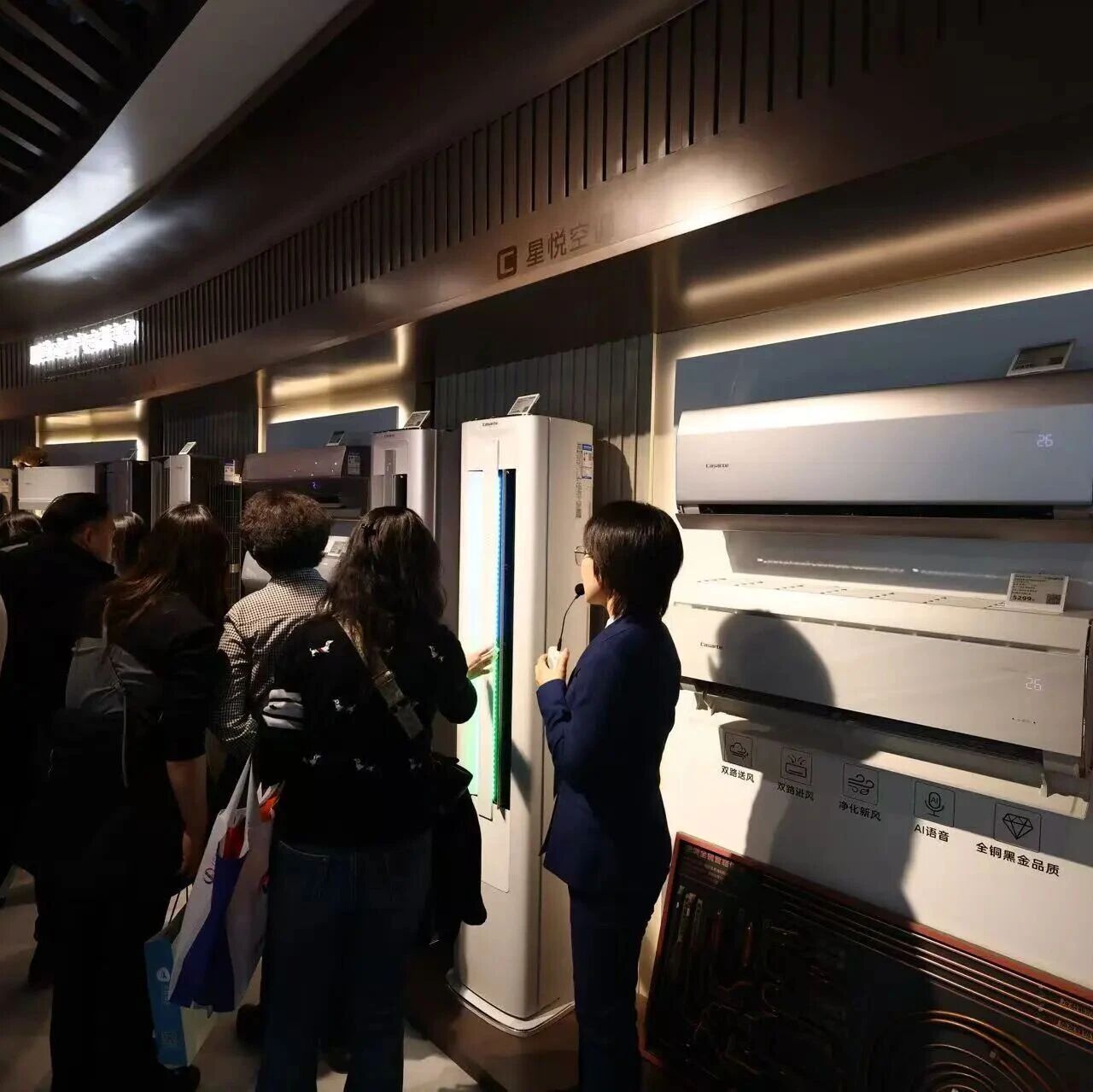
Core Viewpoint - The air conditioning market is facing challenges due to rising costs and a slowdown in growth, leading retailers to be cautious about inventory levels ahead of the peak season. AI air conditioners are seen as a potential growth point, but market cultivation will take time [3]. Retailers' Inventory Caution - Retailers are hesitant to stock up on air conditioners this year due to rising copper prices and concerns over market sales and price fluctuations. The retail market for split air conditioners is expected to decline by 6.9% to 219.5 billion yuan in 2026, with the average retail price dropping to 3,099 yuan [5][6]. - Gree Electric plans to allocate about 5% of its funds for offline channel support based on 2025 sales, while other companies like Midea, Haier, and TCL are promoting more energy-efficient AI air conditioners to stimulate the market [6][7]. - Retailers report slight price increases for certain models, but overall inventory levels are lower than last year due to market pressures [6][7]. AI Air Conditioners' Market Development - AI air conditioners are viewed as a new selling point and profit growth area, but they are typically 15%-20% more expensive than standard models, resulting in a limited current market share [6][8]. - Analysts predict that the air conditioning market will see diverse brand strategies, ongoing price competition, and potential growth in high-end AI products, with new brands entering the market [9][10]. Competitive Landscape - The competition in the air conditioning industry is shifting from price wars to multidimensional competition, with major brands focusing on high-end technology and smaller brands targeting cost-effective markets [10][11]. - The impact of rising raw material prices is significant, with costs expected to increase by 5%-10%. Leading brands can leverage premium pricing strategies, while smaller brands may face profitability challenges [10][11]. Market Structure and Trends - The overall structure of the domestic air conditioning market remains stable, with only minor adjustments in rankings and market shares. New brands bring innovation but do not significantly alter the market dynamics [11]. - The market is entering a phase of saturation or decline, leading distributors to adopt a cautious approach in product selection, making it difficult for manufacturers to stock up [11].

冬季电车之王,先过这一关
汽车商业评论· 2026-02-19 23:04
Core Viewpoint - The article emphasizes the critical importance of thermal management in electric vehicles, highlighting its significant impact on overall vehicle performance, energy consumption, and user experience, which is often overlooked compared to other factors like battery safety and charging speed [5][10]. Group 1: Importance of Thermal Management - Thermal management accounts for 15%-20% of the total energy consumption in electric vehicles, making it a key factor in vehicle performance and user satisfaction [5]. - Traditional thermal management systems operate in a "domain-specific" manner, leading to inefficiencies in energy and temperature management under complex conditions [6][7]. - The shift towards a "full-domain intelligent collaborative thermal management system" is identified as a new industry trend, aiming for a comprehensive restructuring of energy and thermal management capabilities at the vehicle and system levels [8][10]. Group 2: Industry Trends and Innovations - Experts from various sectors discussed the convergence of thermal management technologies and their integration with AI, emphasizing the need for flexibility and personalization in cabin comfort systems [10][11]. - The future of thermal management is expected to evolve towards more integrated and intelligent systems, potentially eliminating traditional air conditioning methods in favor of more holistic approaches to temperature and humidity control [21][46]. - The discussion highlighted the potential for new thermal management forms, such as using the vehicle's surface for cooling and heating, and the integration of features like air quality management and odor control [10][49]. Group 3: AI and Data Utilization - AI is seen as a transformative tool in thermal management, with applications ranging from predictive maintenance to personalized climate control based on user preferences [31][36]. - The concept of "digital twins" is being utilized to enhance the efficiency of thermal management systems by creating real-time simulations and data analysis [32][33]. - The integration of AI in thermal management is expected to lead to smarter, more efficient systems that can adapt to user needs without manual adjustments [37][39]. Group 4: Future Outlook and Challenges - The ultimate goal of thermal management systems is to achieve high efficiency and user comfort while minimizing energy waste, with a focus on intelligent and effective heat dissipation methods [45][55]. - Experts predict that as vehicles evolve into more integrated living spaces, thermal management will need to adapt to new user expectations and environmental conditions, potentially redefining its role in vehicle design [48][49]. - The industry faces challenges in standardizing thermal management systems across different manufacturers while still allowing for unique innovations and competitive differentiation [23][24].

云米科技2025年业绩增长显著,战略合作与业务聚焦推动发展
Jing Ji Guan Cha Wang· 2026-02-12 23:01
Core Insights - Yunmi Technology has undergone a series of strategic adjustments and business developments during 2025, which may impact stock market attention [1] Recent Events - For the first three quarters of 2025, Yunmi Technology reported revenue of 1.912 billion yuan, a year-on-year increase of 30.97%; net profit attributable to shareholders was 377 million yuan, up 50.04%. In Q3 2025, revenue reached 667 million yuan, with a gross margin of 47.97%. The growth in performance is primarily attributed to the continued expansion of the water purification business and structural optimization of cloud service revenue [2] Business Developments - On December 17, 2025, Yunmi signed a strategic cooperation agreement with JD.com to strengthen its smart home channel layout. On February 28, 2025, the company partnered with Malaysia's largest appliance retailer, Kanoah Home, to accelerate penetration into the Southeast Asian market. On May 16, 2025, Yunmi launched the Kunlun 4 mineral water purifier and plans to invest tenfold resources in the AIoT field over the next decade to enhance competitiveness through product innovation [3] Project Progress - After completing a business restructuring in August 2024, Yunmi divested certain IoT@Home assets to focus on its core water purification business. In 2024, revenue from the water purification business grew by 39%, and the company has an annual production capacity of 5 million units at its "super water purification factory," providing support for future growth [4] Recent Stock Performance - On November 10, 2025, Yunmi Technology's stock price surged by 5.01% to $3.18, with a trading volume of 239,600 shares. During the same period, the company disclosed that revenue for the first half of 2025 is expected to increase by over 70% (based on data from August 2025), reflecting an increase in water purification equipment sales and policy subsidies [5]
AI空调卷疯了:格力、美的、海尔集体押注,核心价值是「省钱省电」?
3 6 Ke· 2026-02-05 04:13
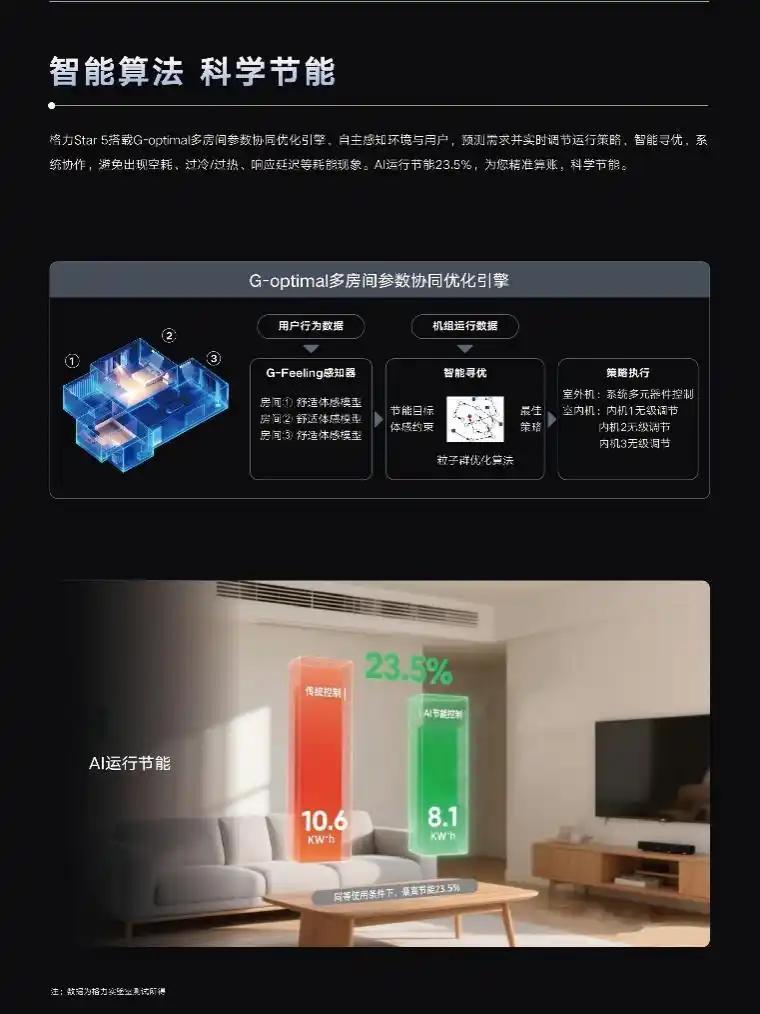
Core Viewpoint - The air conditioning industry is rapidly evolving with the integration of AI technology, moving from traditional cooling and heating systems to more intelligent solutions that focus on user comfort and energy efficiency [1][3][12]. Group 1: AI Integration in Air Conditioning - AI air conditioners, such as Gree's Star 5 AI, aim to enhance user experience by maintaining optimal comfort levels rather than just achieving set temperatures [3][4]. - Traditional air conditioning systems often waste energy and respond slowly to changes in user needs, while AI systems optimize energy use and adjust dynamically based on real-time conditions [4][6]. - Gree's Star 5 AI claims to achieve energy savings of up to 23.5% under ideal conditions, although actual performance may vary based on individual household factors [6][12]. Group 2: Competitive Landscape - Major appliance manufacturers, including Gree, Midea, and Haier, are heavily investing in AI technology, indicating a shift in the market towards algorithm-driven air conditioning solutions [12][15]. - The introduction of AI in air conditioning is expected to create a competitive divide, favoring companies with established data and technology capabilities, while smaller firms may struggle to keep up [16]. - As the market for household air conditioning approaches saturation, consumers are likely to prioritize smart features over cost when upgrading their systems [16].



CES中企展位最大面积背后:45岁的TCL,正站在全球化的新起点
Di Yi Cai Jing Zi Xun· 2026-01-07 07:03
Core Viewpoint - The China-Korea Business Forum held on January 5, 2026, highlighted the deepening economic cooperation between China and South Korea, with TCL as a key player in global market expansion and technological innovation [1][3]. Group 1: Economic Cooperation - The forum was attended by over 400 participants, including government officials and business leaders from both countries, emphasizing the importance of collaboration in various sectors [1]. - TCL aims to strengthen its global presence by collaborating with South Korean companies, particularly in technology-intensive industries [1][6]. - The cooperation between TCL and South Korean firms covers materials, equipment, and core electronic categories, enhancing supply chain stability [6][7]. Group 2: Technological Advancements - TCL is focusing on next-generation display technologies, including Mini LED and printed OLED, to enhance its product offerings and maintain competitive advantages [13][14]. - The company has made significant strides in AI integration, showcasing products like AI-powered air conditioners and AR glasses at CES [15][14]. - TCL's R&D efforts have led to breakthroughs in display technology, positioning the company as a leader in the global market [13][16]. Group 3: Market Position and Growth - TCL's global TV shipment volume is projected to reach 29 million units in 2024, ranking second worldwide, with a market share of 14.3% [16]. - The company has seen substantial growth in Mini LED TV shipments, with a year-on-year increase of 153.3% and a market share of 29.4% [16]. - TCL's strategic partnerships and technological advancements are expected to further enhance its market position and global influence [16].


前瞻CES 2026,TCL蝉联参展面积最大的中国企业
Huan Qiu Wang· 2025-12-31 05:07
Group 1 - The 2026 International Consumer Electronics Show (CES 2026) will take place from January 6 to 9 in Las Vegas, showcasing top global tech companies [1] - TCL will have the largest exhibition space among Chinese companies at CES 2026, occupying 2453 square meters and being the first Chinese exhibitor in the core exhibition area [1] - This marks TCL's 33rd participation in CES, where it will focus on two main themes: "Screen Universe" and "AI Life," highlighting innovations in display technology and artificial intelligence [1] Group 2 - TCL will showcase a range of AI smart terminal products, including AI/AR glasses, companion robots, AI air conditioners, refrigerators, washing machines, smart locks, and projectors [2] - The company aims to deepen its global presence and strengthen its industry depth, guided by the goal of "recreating five TCLs overseas" set by its founder and chairman, Li Dongsheng [2] - TCL's North American regional operating center is becoming a strategic hub for expanding into high-end global markets and upgrading its brand [2]
从一家企业的AI转型,看中国制造的“新铠甲”
Zhong Guo Xin Wen Wang· 2025-12-26 11:55
Core Viewpoint - In 2025, China's manufacturing sector is undergoing a significant transformation driven by emerging technologies like artificial intelligence, which are enhancing industrial upgrades and shifting the focus from scale advantages to quality and system advantages [1][2][3]. Group 1: Transformation of Manufacturing - The transformation is characterized by the emergence of 17,600 national "little giant" enterprises leading innovation, 140,000 specialized and innovative small and medium-sized enterprises laying the foundation for the industrial ecosystem, and 600,000 technology and innovation-oriented SMEs growing rapidly [3]. - The shift from "manufacturing" to "intelligent manufacturing" is evident, with companies like Changhong enhancing their AI strategies, resulting in a rise in their global brand rankings [3][5]. - Changhong's comprehensive AI strategy includes "AI + manufacturing, AI + products, and AI + operations," which has led to the development of smart appliances that understand consumer needs [5][6]. Group 2: Systemic Empowerment - The new development momentum is leading to a change in the path of industrial upgrades, moving from single product breakthroughs to systemic empowerment through platforms and ecosystems [8]. - Changhong's establishment of the first national "dual-cross" industrial internet platform in Sichuan exemplifies this systemic approach, enabling data-driven operations and enhancing collaboration among enterprises [9][10]. - The platform facilitates data sharing and operational integration for nearly 3,000 SMEs, significantly improving efficiency and reducing barriers to digital transformation [10]. Group 3: Technological Self-Reliance - The core strength of China's manufacturing transformation lies in the strategy of technological self-reliance, focusing on overcoming key technological challenges and nurturing "invisible champions" [11]. - Changhong has achieved significant milestones, such as being the global leader in compressor production and developing advanced technologies in various sectors, including rail and aviation [11][12]. - The dual-driven innovation system, combining internal and external collaboration, is crucial for breaking through technological barriers and fostering a robust industrial foundation [12].


排名攀升至279位,长虹22年蝉联“世界品牌500强”
2 1 Shi Ji Jing Ji Bao Dao· 2025-12-19 08:43
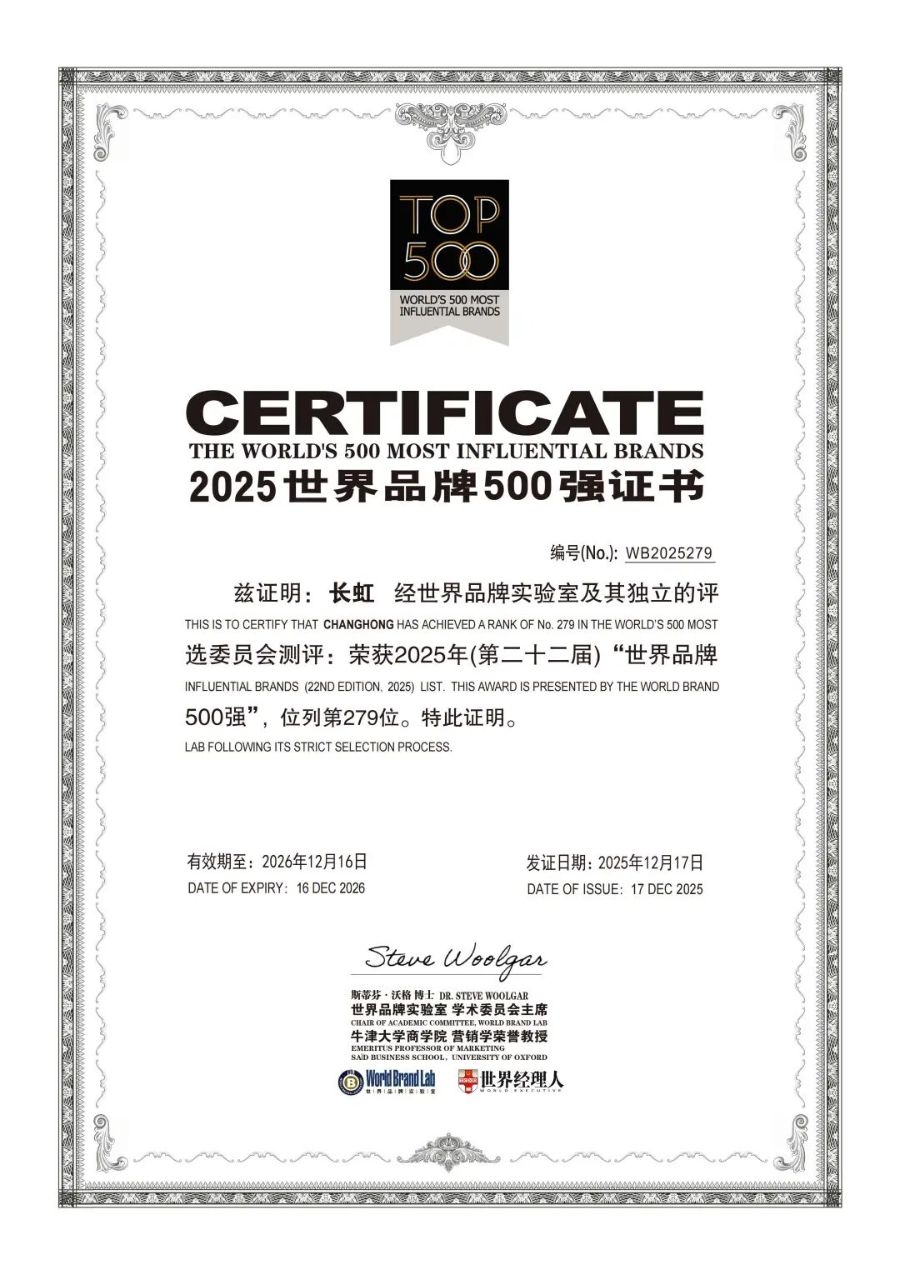
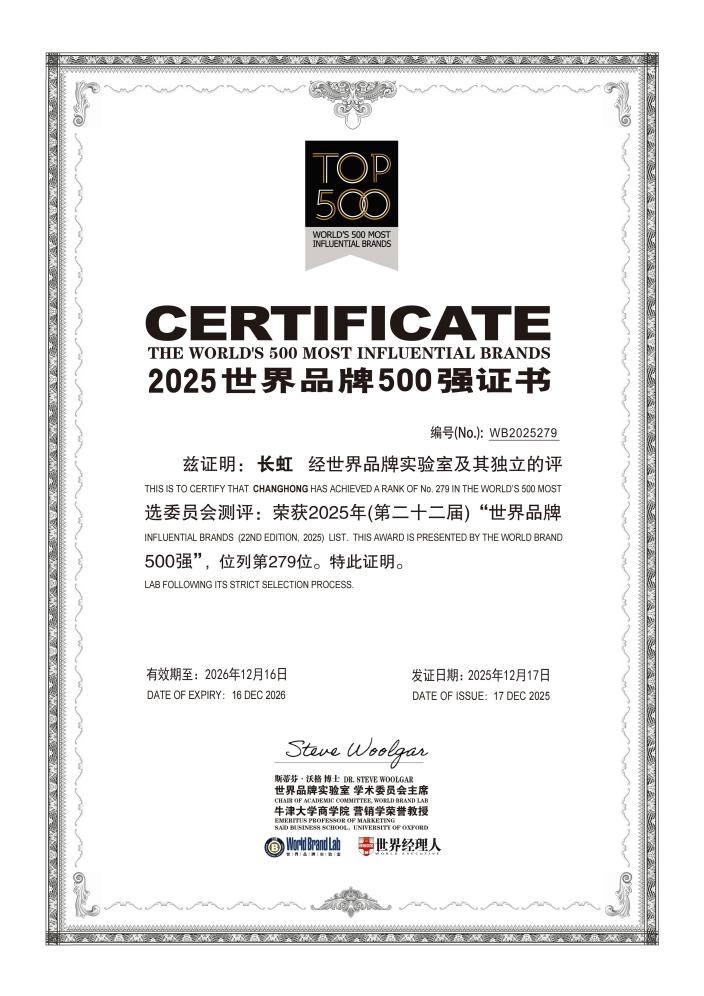
Core Viewpoint - The World Brand Lab announced the 2025 World's 500 Most Influential Brands list, with China having 50 brands, ranking third globally. Changhong ranked 279th, rising 4 places from 2024, and is the 22nd Chinese brand on the list, marking its 22nd consecutive year in the ranking [1][2]. Group 1: Brand Influence and Rankings - Changhong's brand influence has been consistently improving, attributed to over 20 years of international expansion, accelerated smart transformation, and a focus on digitalization and brand rejuvenation [5]. - In June 2025, Changhong's brand value was reported at 252.139 billion yuan, ranking 51st in the 2025 Asia Brand 500 list, establishing a solid foundation for its global brand positioning [12]. Group 2: Business Development and Innovation - Changhong has transformed from a single manufacturing entity to a diversified multinational group, focusing on smart home, digital industry, special equipment, green energy, and healthcare, with a market presence in over 160 countries [6][7]. - The company has implemented AI technologies across its product lines, including AI televisions and refrigerators, enhancing its smart home offerings [7][8]. Group 3: Manufacturing and Technological Advancements - Changhong is evolving from traditional manufacturing to "smart manufacturing," with a focus on automation and intelligent upgrades across its 22 global manufacturing bases [10]. - The company has invested over 2.5 billion yuan in smart factory construction, achieving significant improvements in productivity and efficiency, including a 43% increase in labor productivity and a 76% reduction in product defect rates [11]. Group 4: Marketing and Global Strategy - Changhong has engaged in sports marketing, becoming a title sponsor for international events, which enhances its brand visibility and aligns with its core values of technological innovation [12][13]. - The company has established a unique global brand strategy, covering various international sports events, thereby strengthening its market presence and brand image [13].
“世界品牌500强”发布,长虹全球排名跃升4位
Zhong Jin Zai Xian· 2025-12-17 11:16
Group 1 - The core viewpoint of the article highlights that Changhong has made significant strides in global brand rankings, now placing 279th in the World Brand Lab's 2025 World Brand 500 list, with a total of 50 Chinese brands represented, maintaining the third position globally [1][3] - Changhong's brand value reached 252.139 billion yuan, as reported in the 2025 China 500 Most Valuable Brands list, and it ranked 51st in the 2025 Asia Brand 500 list, marking a historical high [3] - The company has strategically positioned itself in the sports marketing arena, becoming a title sponsor for the FIS Ski Jumping World Cup, which enhances its brand visibility and connects with global audiences [4][6] Group 2 - Changhong's sports marketing strategy emphasizes a dual approach of local engagement and global outreach, having previously sponsored local leagues and now advancing to international events [6][8] - The integration of technology and sports is evident as Changhong's AI products enhance the viewing experience, aligning with the spirit of sportsmanship and innovation [10][12] - The company aims to create a complete loop of product experience, emotional resonance, and brand recognition, which has garnered attention from major media outlets [15][17]
冰雪主场,长虹“智”造:AI科技闪耀滑雪世界杯
Hua Xia Shi Bao· 2025-12-07 08:42
Core Viewpoint - The 2025-2026 season Longhong International Ski Federation Snowboard and Freestyle Skiing Big Air World Cup serves as a key event for qualification points for the 2026 Milan Winter Olympics, showcasing the integration of Chinese technology and international sports [2][10]. Group 1: Event Overview - The event features top athletes from China and abroad, including Su Yiming and Liu Mengting, and is held at Beijing Shougang Park [2]. - Longhong serves as the exclusive title sponsor, highlighting the company's commitment to the ice and snow economy and its innovative capabilities in smart home appliances [2][10]. Group 2: Longhong's Strategic Positioning - Longhong's partnership with the Snowboard World Cup has evolved from being an official partner in 2023 to the title sponsor in 2025, aligning with China's national strategy of promoting ice and snow sports [4]. - The ice and snow industry in China is projected to exceed 1 trillion yuan, reaching 10,053 billion yuan this year, indicating significant market potential [4]. Group 3: Product Showcase - Longhong showcased its AI home appliances, including AI TVs and air conditioners, at the event, creating an immersive experience for attendees [5]. - The presence of other brands like Meiling with their fresh kitchen series further emphasizes the innovation and competitive spirit in the home appliance sector [5]. Group 4: Brand Expansion and Recognition - Longhong has accelerated its international presence through sponsorship of global sports events, enhancing brand recognition and consumer affinity [8]. - The company has established a footprint in over 160 countries, with manufacturing bases in Indonesia and the Czech Republic, covering a full range of home appliances [8]. Group 5: Financial Performance - In Q3 2023, Longhong reported revenue of 81.889 billion yuan, a year-on-year increase of 5.94%, and a net profit of 1.008 billion yuan, up 192.49% [9]. - Longhong ranked 51st in the 2025 Asia Brand 500 list, improving by two positions from the previous year, and holds a brand value of 252.139 billion yuan, ranking 35th in the 2025 China 500 Most Valuable Brands [9].