
小鹏X9增程车

Search documents
小鹏市值超越吉利 估值真要对标特斯拉?|公司观察
Di Yi Cai Jing· 2025-11-11 09:43
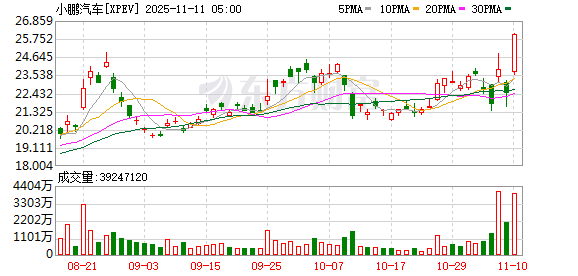
Core Viewpoint - Xpeng Motors (09868.HK) experienced a significant stock surge of nearly 18%, closing at HKD 108.5, with a market capitalization of HKD 202.2 billion, surpassing Geely Automobile (00175.HK) at HKD 183.3 billion, driven by the unexpected release of new products in artificial intelligence, robotics, and extended-range vehicles [2][3] Group 1: Stock Performance and Market Reaction - The surge in Xpeng's stock is attributed to the optimistic market sentiment surrounding its new product launches, particularly in robotics and AI applications [3][4] - Xpeng's recent announcements, including the second-generation VLA model, Robotaxi, and humanoid robots, have garnered significant attention and investor interest, contributing to the stock price increase [3][4] - Despite the positive market reaction, Xpeng's valuation is still primarily based on its AI narrative, with its sales volume significantly lower than competitors like Geely, which sold 307,100 vehicles in October compared to Xpeng's 42,000 [6][7] Group 2: Future Prospects and Challenges - Analysts remain optimistic about Xpeng's future, highlighting the potential for new electric and extended-range models to address range anxiety in colder regions and enhance competitiveness in overseas markets [5] - The company's valuation has not fully accounted for its advancements in AI and robotics, which could lead to significant valuation increases if these technologies are successfully commercialized [5][6] - Upcoming third-quarter earnings on November 17 are anticipated to reveal whether sales growth translates into improved gross margins and positive cash flow, with uncertainties surrounding these metrics [5][6] Group 3: Industry Context and Competitive Landscape - The AI and robotics sectors are expected to enhance efficiency and reduce costs across various industries, including manufacturing and services, as technology advances [4][5] - Xpeng's recent performance stands out in a generally subdued domestic automotive market, where many new energy vehicle manufacturers are facing sales pressures [4][6] - The competitive landscape is intensifying, with Xpeng's new products facing challenges from established players and new entrants in the high-end market, necessitating a focus on maintaining competitive advantages [7][8]


财通证券:首予小鹏汽车-W“增持”评级 长期成长逻辑清晰
Zhi Tong Cai Jing· 2025-11-06 07:24
Core Viewpoint - Xiaopeng Motors is at a growth inflection point driven by "product iteration + leading smart driving," with its robot business providing long-term potential and range-extended models ensuring stable sales in the short to medium term [1] Group 1: Smart Driving and Long-term Growth - Xiaopeng Motors is positioned as a core player in smart driving, with a clear long-term growth logic [1] - The penetration rate of smart driving features (L2 and above) in China is expected to reach 82.6% by the first half of 2025 [1] - The company has developed its own Turing AI chip and VLA/VLM large models, achieving nationwide "map-free" smart driving, leading the industry [1] - Future expansion plans include Robotaxi and humanoid robots, creating a three-stage growth curve of "smart driving - Robotaxi - robots" to solidify its core advantages in intelligence and form a closed industrial chain [1] Group 2: Sales Growth Driven by Range-Extended Strategy - The company has proposed a dual strategy of "range-extended + pure electric" to drive sales growth amid declining purchase tax and diverse user demands [2] - At least five range-extended models are planned, covering sedans and SUVs, with the first X9 range-extended model expected to go into production within the year [2] - This strategy, combined with popular pure electric models like Mona M03 and P7, aims to create a more balanced product matrix, with range-extended models expected to support stable sales and market share over the next 1-2 years [2] Group 3: Shift in Product Design Logic - The company has established "design" and "intelligence" as its dual strengths, shifting the R&D process from "engineering constraints first" to "design first" [3] - The new P7 model showcases differentiated results, with plans to enhance design while leveraging self-developed Turing chips and large models for upgrades in smart driving and smart cabin experiences [3] - Organizational adjustments and modular design will improve cost control, aiming to create a "no weaknesses, multiple strengths" framework in design, intelligence, and cost, with expectations to continuously launch high-tech and cost-effective popular models [3]
